
Filters
Level
Grade
Subject
Subject Area
Subject Topic
Standard(s)
Audience
Keyword
DurationMinutes
Lesson Plans

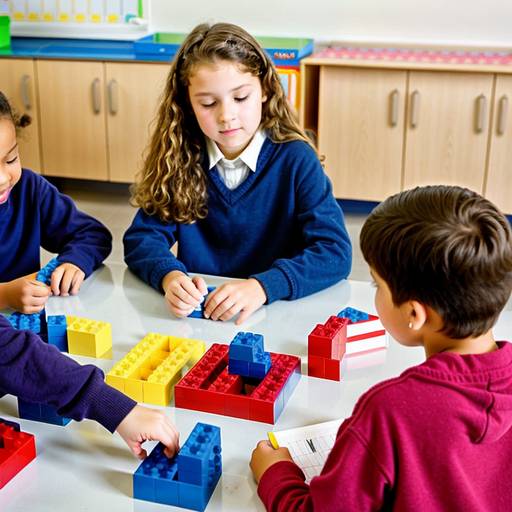
In this 3rd-grade math lesson, students will explore multiplication concepts and patterns through interactive and hands-on activities. The lesson begins by engaging students with skip counting to encourage them to identify patterns related to multiplication. Direct instruction will introduce multiplication as repeated addition, using practical examples to highlight the relationship between multiplication facts and patterns, particularly in the 5s and 10s tables.
Students will then participate in a hands-on activity where they create arrays using manipulatives to visually represent multiplication facts. Small group discussions will follow, allowing students to share their observations about patterns in their products. They will also complete worksheets that challenge them to identify and extend multiplication patterns.
To conclude, the lesson reinforces key takeaways through a brief review and encourages students to share their insights. Assessment will occur through monitoring group activities, evaluating worksheet completion, and reviewing independent practice to ensure understanding. Differentiation strategies will be implemented to support varying learning levels, ensuring all students can engage with the material effectively. By the end of the session, students should demonstrate confidence in recognizing and working with multiplication patterns.
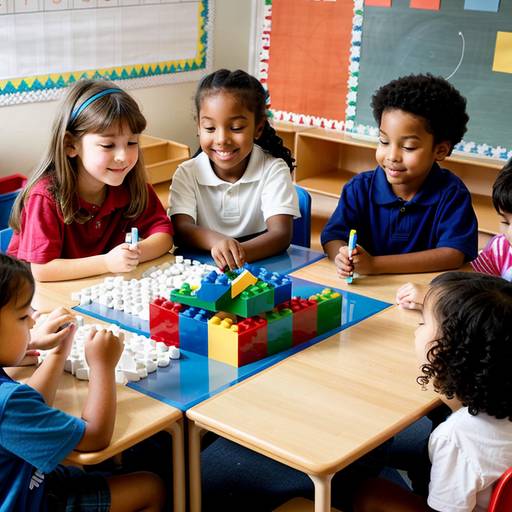
This Kindergarten math lesson focuses on introducing students to the concept of multiplication as repeated addition. The session begins with a warm-up activity that engages students in counting and creating groups with manipulatives, such as counting blocks. Through hands-on activities, students work in small groups to solve simple multiplication problems by visually representing them with blocks and drawings.
The lesson incorporates a storybook that reinforces the multiplication concept, encouraging students to identify groups within the narrative. After the group work, students complete a worksheet where they draw and solve multiplication problems visually.
The lesson concludes with students sharing their work with the class and participating in a fun game to reinforce their understanding. Assessment occurs through observation of group activities and review of worksheet answers, ensuring that students grasp the basic principles of multiplication in a concrete and engaging manner. Extensions for advanced learners are included to enhance their understanding further.
This lesson plan focuses on introducing 2nd-grade students to the concept of multiplication through the use of arrays. The objective is for students to understand multiplication as repeated addition, create their own arrays, and utilize them to solve simple multiplication problems. The lesson begins with an engaging discussion that connects everyday scenarios to multiplication, followed by direct instruction that explains arrays as visual representations of multiplication facts. Students then participate in guided practice, drawing their own arrays on grid paper and sharing their work with partners. Independent practice involves completing a worksheet that reinforces the lesson’s concepts, including word problems requiring array representation. The lesson concludes with a review and an exit ticket activity that encourages students to demonstrate their understanding by creating and illustrating a multiplication problem. Overall, the lesson aims to foster a deeper understanding of multiplication using arrays while promoting collaboration and creativity among students.
In this 3rd-grade math lesson, students will explore the concepts of multiplication and factors through interactive activities and visual aids. The lesson begins with a review of addition to establish a connection to multiplication as repeated addition. Students will engage in group discussions to identify real-life applications of multiplication. The teacher will model the use of arrays to visualize multiplication problems, further explaining factors as numbers that can be multiplied to reach a given product.
During guided practice, students will participate in an activity involving a Factor Wheel to determine the factors of chosen numbers. Following this, each student will create their own multiplication arrays on grid paper, identifying corresponding factors. The lesson wraps up with student sharing and reflections, reinforcing their understanding of multiplication facts and factors. Assessment will be conducted through observation and review of students' work, along with an exit ticket to gauge individual comprehension. Differentiation strategies will be employed to support varied learning needs.

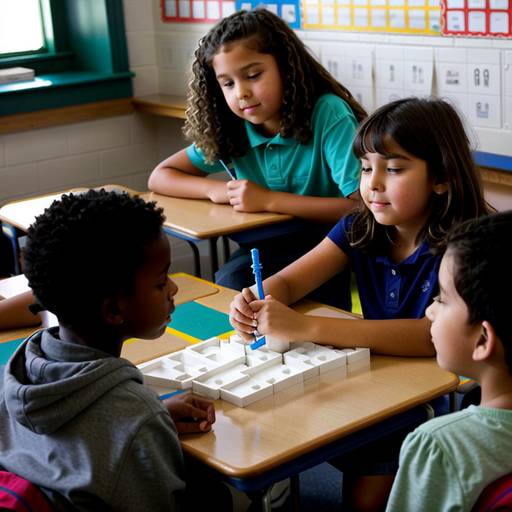
This lesson plan for third-grade social studies focuses on helping students understand the various roles individuals play within a community and how these roles contribute to the overall well-being of their neighborhoods. The class begins with a discussion about the concept of community and the different jobs that exist within it. Students then receive "Community Role Cards" to explore specific roles and share their insights with classmates.
In small groups, students create a visual representation, or collage, showcasing selected community roles, using magazine cutouts and drawings to enhance creativity. Each group presents their collage, explaining the importance of the roles they highlighted. The lesson concludes with a reflective discussion where students share what they learned and contemplate how to appreciate community members. Assessment includes observation of participation and a review of the group projects, allowing educators to gauge understanding and engagement throughout the lesson.
Through this engaging and interactive approach, students gain a deeper appreciation for the diverse individuals who contribute to their communities.

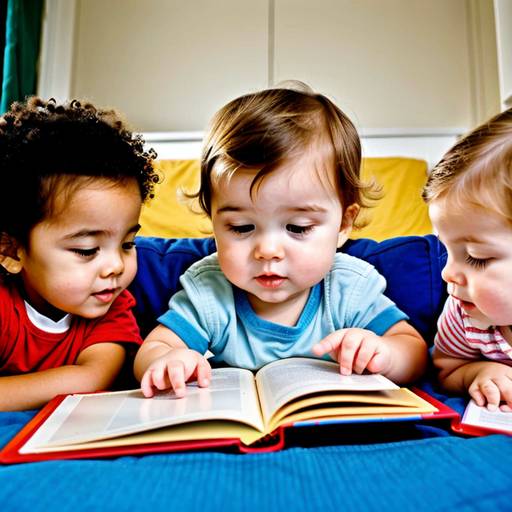
This lesson plan focuses on enhancing toddlers' pre-reading skills through a series of engaging activities designed to foster language development. The session begins with a welcoming song to create an inviting atmosphere, followed by interactive storytime where children listen to a picture book, point out objects, and participate in discussions. Phonemic awareness is promoted through hands-on activities using letter blocks or magnets, encouraging toddlers to recognize and repeat simple sounds. Flashcards are utilized to help children associate words with images, enhancing their vocabulary and recall abilities.
Creative expression is incorporated as toddlers draw their favorite character from the story, allowing for individual expression and conversation about their artwork. The session concludes with a closing circle where children sing a song related to letters or storytelling and recap the day’s activities, reinforcing their learning experience. The lesson emphasizes a supportive environment, encouraging parental involvement in reading and language activities at home. Adjustments are suggested to cater to diverse developmental levels, ensuring a nurturing space for exploration and participation.


This lesson plan aims to foster memory development in infants aged 6 to 12 months through engaging and interactive activities. The session begins with a brief introduction highlighting the importance of memory during early cognitive growth. Subsequently, caregivers and infants participate in activities that promote recognition of familiar faces by showing photographs of family members and engaging in a recognition game.
Infants explore various sensory stations with colorful toys and textures, encouraging manipulation and interaction while caregivers reinforce memory through naming and dialogue. The plan includes a musical memory game where infants shake instruments in response to a repetitive song, highlighting their recall abilities.
A storytime enhancement with a colorful fabric book invites caregivers to encourage infants to recognize and react to familiar images. The session concludes with discussions on how caregivers can continue memory-boosting activities at home, emphasizing the importance of reinforcing recognition through play and interaction. Throughout the lesson, observation of infants' responses helps assess their engagement and cognitive development in a nurturing environment.

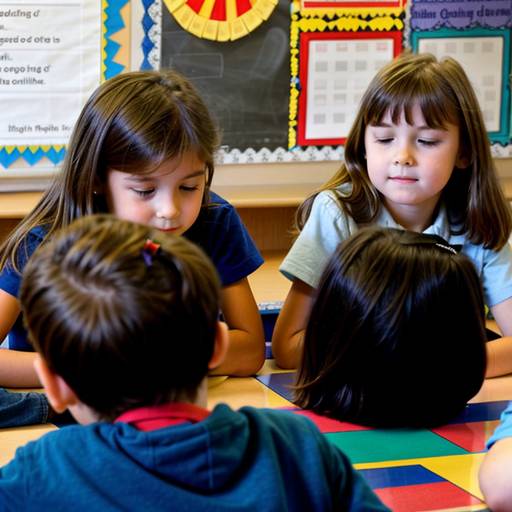
In this 1st-grade Language Arts lesson, students will explore the foundational elements of sentence structure, specifically focusing on subjects, verbs, and objects. The lesson begins with a fun song or video to pique interest, followed by a discussion to introduce what sentences are.
During direct instruction, the teacher models a simple sentence, breaking it down into its components. Students then engage in a guided practice activity where they work in small groups to create their own sentences using word cards. Following this, each student will independently compose a sentence on a strip of paper or large sheet, illustrating their work to enhance creativity.
The lesson concludes with a sharing session where students present their sentences to the class, reinforcing their understanding of sentence structure. Assessment will be ongoing through observations during activities and by evaluating the sentences students create, ensuring they grasp the essential components of complete sentences. Modifications are included to support diverse learners, allowing all students to participate and succeed. This interactive and engaging approach helps build students' confidence in their grammar skills.


This lesson plan focuses on enhancing social skills in infants aged 6 to 12 months through interactive social play activities. The session begins with a welcoming song and a demonstration of sharing a soft toy, prompting infants to pass toys to each other. Following this, infants engage in a ball game that encourages turn-taking as they roll and toss colorful, soft balls among themselves. Musical play is introduced next, where infants explore instruments and move rhythmically, promoting joint attention and cooperative engagement. The session continues with bubble play, allowing infants to chase bubbles and interact with peers in an exciting way. To conclude, infants engage with mirror play blocks, observing their reflections and those of their peers, while reinforcing social recognition. Throughout the activities, caregivers are encouraged to observe and support positive interactions, and suggestions for extending social play at home are provided. This plan fosters connection and social development through fun and age-appropriate activities.
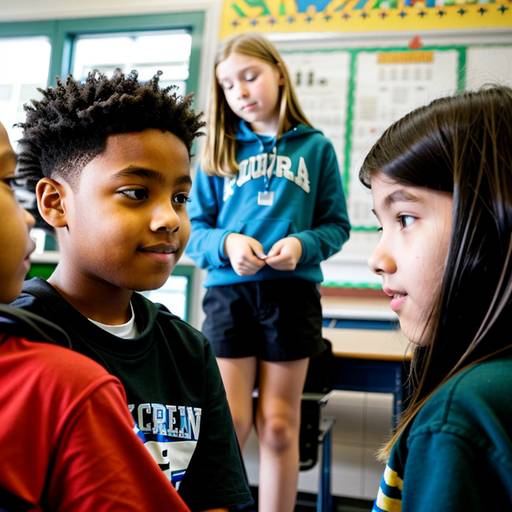
In this 5th-grade technology lesson, students will explore the fundamentals of robotics and engineering. The lesson spans two class periods, during which students will first learn about various types of robots, their components, and functions through engaging discussions and video presentations. They will work in small groups to brainstorm ideas for their own robot designs aimed at solving specific problems. Each group will present their concepts to foster collaboration and critical thinking.
In the second class, students will share their research on existing robots and then use provided robotics kits to create their own designs. The building session will encourage teamwork and creativity as students construct their robots based on their initial ideas. Finally, students will present their completed robots, explaining their functionality and the challenges they encountered during the building process. The lesson concludes with a reflective discussion, allowing students to articulate their learning experiences and insights gained about robotics, engineering, and collaboration. Assessment will focus on participation, presentations, and reflections, fostering a comprehensive understanding of the subject matter. Extensions may include guest speakers to explore careers in robotics further.