
Filters
Level
Grade
Subject
Subject Area
Subject Topic
Standard(s)
Audience
Keyword
DurationMinutes
Lesson Plans

In this 2nd Grade Language Arts lesson, students will explore the essential role of punctuation in writing, focusing on periods, question marks, and exclamation marks. The lesson begins with a discussion on the significance of punctuation, followed by direct instruction where students learn the purpose and usage of each punctuation mark through examples.
Students will engage in guided practice by working in pairs to add the correct punctuation to provided sentences. After that, they will independently write a short story or paragraph using all three punctuation marks, allowing for creativity and expression. To conclude, students will share their work with the class and receive certificates acknowledging their participation and learning. The lesson will be assessed through monitoring engagement and collecting written assignments to evaluate punctuation usage, with extensions available for students who finish early.
In this 4th-grade Language Arts lesson, students will learn about expository writing, focusing on its purpose to inform and explain. The lesson begins with a discussion to elicit students' understanding of expository writing, followed by a read-aloud of a sample text to identify its main idea and supporting details. The teacher will model the writing process by outlining a paragraph on a familiar topic using a graphic organizer. Students will then work in small groups to brainstorm and outline their own paragraphs on a selected topic. Afterward, they will write their individual expository paragraphs, incorporating their own facts and examples. The lesson concludes with students sharing their work with the class, followed by a recap of the key components of effective expository writing. Assessment will take place through observation of group work and the evaluation of written paragraphs based on organization and clarity. Optional extensions involve creating posters or presentations related to their writing.
In this 3rd-grade Language Arts lesson, students will explore the concept of persuasive writing through the creation of a persuasive letter. The lesson begins with an engaging discussion about personal experiences with persuasion, followed by an introduction to the structure of persuasive letters, highlighting essential elements such as greeting, introduction, body, and conclusion. Students will analyze sample letters to identify persuasive techniques, including facts, opinions, and emotional appeals.
They will then complete a graphic organizer to plan their letters, outlining their chosen topic, reasons for their stance, and a compelling concluding statement. After drafting their letters independently, students may illustrate their work to enhance their presentations. The lesson concludes with the opportunity for a few students to share their letters, reinforcing the key points discussed. Assessment will involve reviewing the letters and graphic organizers to ensure understanding of persuasive writing elements. An optional extension activity encourages students to extend their writing skills to address local community issues.

This lesson plan for 4th-grade students focuses on the concepts of digital citizenship and digital footprints. It aims to educate students about what a digital footprint is and the importance of maintaining a positive online presence.
The lesson begins with an engaging discussion where students share their ideas about digital footprints, followed by a presentation that defines the term and provides examples of both positive and negative online behavior. Students will learn practical tips for managing their digital footprints, such as thinking before posting and utilizing privacy settings.
In an interactive activity, students will work in pairs to evaluate various scenarios related to online behavior and discuss the implications of each. This encourages critical thinking about their digital actions and the effects on themselves and others. The lesson concludes with a reflection exercise where students commit to specific actions aimed at fostering positive digital citizenship.
Assessment will be based on participation in discussions and the completion of worksheets. The plan includes extensions for further exploration of digital citizenship resources and modifications to support diverse learning needs. Overall, the lesson equips students with essential skills for navigating the digital world responsibly.

In this 3rd-grade lesson plan, students will explore the concept of digital citizenship and online safety through the lens of their digital footprints. The lesson begins with an engaging discussion about students' experiences sharing content online, followed by a presentation that defines digital footprints, highlights safe online behaviors, and addresses the implications of their online actions.
Students will participate in group activities to analyze various scenarios related to digital footprints, fostering collaborative discussions on safety. To reinforce their learning, they will create an "Online Safety Pledge," where they commit to responsible online behaviors by writing or illustrating specific actions they will take to stay safe on the internet.
The lesson concludes with students sharing their pledges, promoting accountability for their digital actions, and reinforcing the importance of handling their online presence responsibly. Assessment will be based on participation and the quality of each student's pledge, and follow-up activities may include creating a class mural or exploring further topics in digital safety. Overall, the lesson aims to empower students with the knowledge and skills needed to navigate the digital world safely and responsibly.

This lesson plan aims to teach 5th-grade students about digital footprints and the importance of digital citizenship. The session begins with a class discussion to introduce the concept of a digital footprint, followed by a PowerPoint presentation that explains its types, implications, and the difference between positive and negative footprints. Students will engage in group activities where they'll analyze various scenarios related to digital footprints, discussing how individuals can manage and improve their online presence. To enhance creativity and personal reflection, students will create artistic representations of their ideal digital footprints, reflecting on their online identities. The lesson concludes with students completing a reflection worksheet to summarize their learnings and commit to positive changes in their digital behavior. Overall, the session emphasizes the significance of maintaining a responsible and positive online presence.


This lesson plan focuses on developing toddlers' gross motor skills through a series of engaging running activities. Designed for children aged 2-4, the session begins with a lively introduction that highlights the importance of running for physical development. A warm-up session featuring animal movements prepares the children for activity.
The main component involves navigating an obstacle course that includes zigzag running between cones, jumping through hula hoops, and kicking soft balls towards a target, culminating in a fun finish line sprint with colorful ribbons. Following this, a relay game reinforces teamwork as children take turns running back and forth while passing a baton.
The lesson concludes with a cool-down period that incorporates gentle stretches and breathing exercises, allowing children to relax after their energetic activities. The closing circle provides an opportunity for reflection, encouraging children to share their experiences and favorite moments from the session. Safety is emphasized throughout to ensure a secure and enjoyable environment for all participants. Overall, the plan promotes physical fitness, coordination, and social interaction in a fun, encouraging setting.
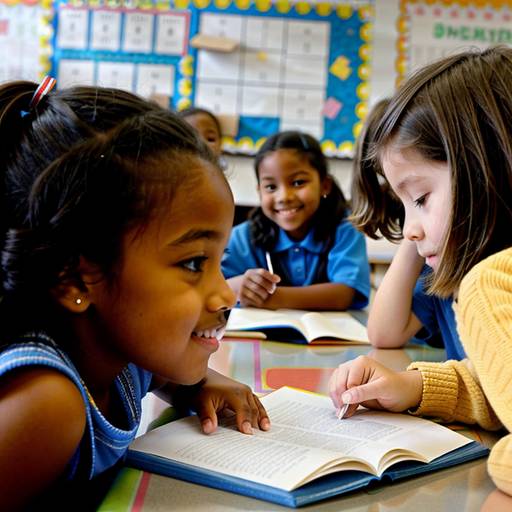
This 1st-grade Language Arts lesson focuses on reading fluency and comprehension. The lesson begins with a discussion about what reading fluency means, followed by an introduction of high-frequency words that will aid in students' reading development. The teacher models fluent reading with a short passage, demonstrating expression and speed.
Students then engage in a paired reading activity, where they take turns reading leveled texts aloud to each other for one minute, allowing them to practice fluency. Following the paired reading, the class participates in a discussion to assess comprehension by answering questions about the story.
For independent practice, students receive fluency exercise sheets to underline high-frequency words and reflect on the text. The lesson concludes with a group reflection, encouraging students to share their experiences and consider reading at home.
Assessment occurs through observation during partner reading, review of comprehension responses, and collection of the fluency sheets. The lesson includes extensions for advanced students and differentiation to support those who may need additional help, ultimately aiming to foster a love of reading and improve fluency skills in a fun and interactive manner.