
Filters
Level
Grade
Subject
Subject Area
Subject Topic
Standard(s)
Audience
Keyword
DurationMinutes
Lesson Plans


This lesson plan focuses on vocabulary building for infants aged 6-12 months, aiming to enhance their recognition of 10 everyday words related to their surroundings. The session begins with a warm introduction and a welcoming song, fostering a positive learning environment. Infants are then introduced to key vocabulary items through direct interaction with objects and pictures, encouraging them to repeat sounds and words.
An interactive sound game reinforces verbal connections, while storytime uses a large picture book to provide context and visual engagement. Sensory play allows infants to explore and identify objects, enhancing their word recognition in a hands-on manner. The lesson concludes with a closing song incorporating the new vocabulary, and parents receive handouts for at-home practice to reinforce learning.
Assessment focuses on observing infants' responses to the vocabulary and their engagement during activities, helping to guide future lessons and extensions for continued language development at home.

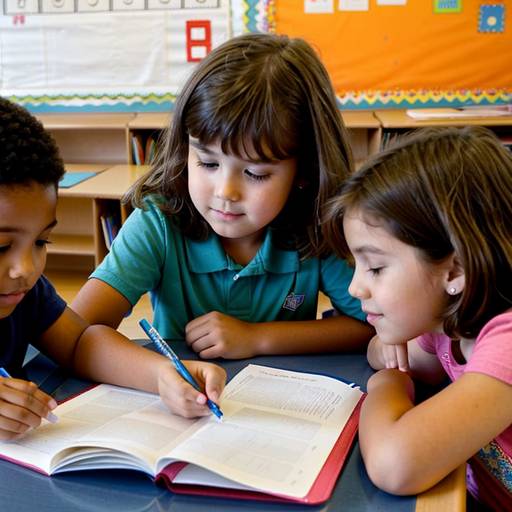
In this 1st-grade Language Arts lesson plan, students will explore the concept of synonyms, learning to identify and understand words with similar meanings. The lesson begins with a brief introduction to vocabulary and synonyms, using examples and visuals to engage the class. Students will participate in guided activities, including matching word cards that represent synonyms and collaborating in small groups to find synonyms for picture cards. Independent practice will involve completing worksheets where they write synonyms for provided words. The lesson concludes with a recap of the importance of synonyms and an option for students to share findings from a short story. Assessment will occur through observation during group activities and review of completed worksheets, with differentiation strategies in place to support individual learning needs. Students will also be encouraged to explore synonyms at home and share their discoveries in future classes.
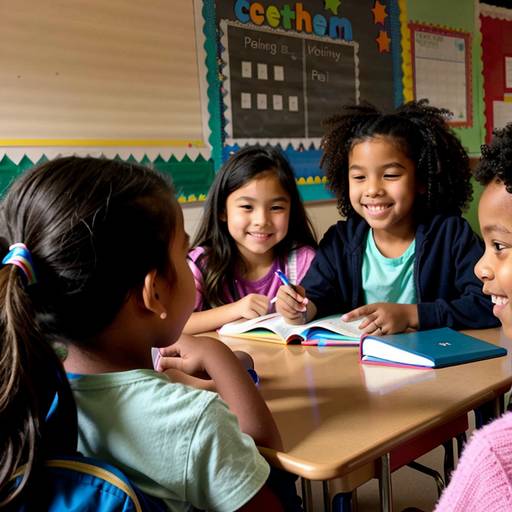
In this 1st-grade Language Arts lesson, students will learn about synonyms—words that have similar meanings. The lesson begins with an introduction to the concept of synonyms, using flashcards to illustrate examples. During a read-aloud of a simple storybook, students will participate by identifying synonyms for descriptive words used in the text.
Next, students will be divided into small groups to engage in a synonym matching activity with flashcards. After regrouping, they will share their matched pairs with the class, reinforcing their understanding through discussion. Students will then complete a worksheet that includes exercises related to identifying and using synonyms.
The lesson concludes with students sharing their favorite “word friends” from the day's activities, emphasizing the importance of synonyms in enhancing their communication. Assessment will be based on participation in group activities and the completed worksheets, while potential extensions include creating a classroom “Word Friends Wall” to display new synonyms discovered during reading. Differentiation strategies will be implemented to support varied learning needs.
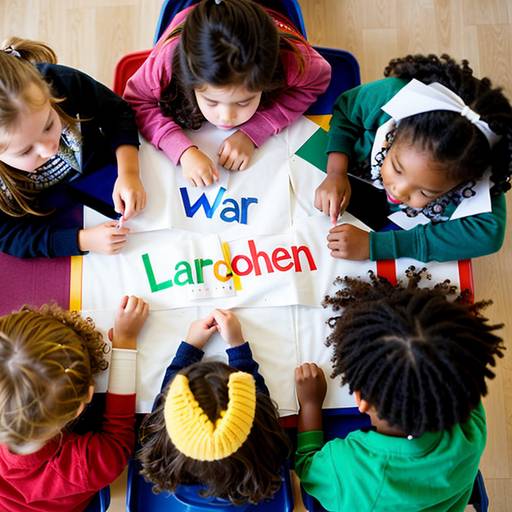
In this kindergarten language arts lesson, students will enhance their vocabulary by exploring new words related to nature, such as tree, flower, sun, and bird. The lesson begins with an engaging discussion about gardens, linking the concept to vocabulary growth. Students will actively participate in defining and discussing the words, sharing personal experiences to deepen their understanding.
Through a creative crafting activity, each student will create a "Word Garden" by decorating a paper cup as a plant pot filled with construction paper soil and seed cutouts. They will also complete a worksheet, illustrating one vocabulary word and writing it beneath their drawing. The lesson concludes with a review of the vocabulary words to reinforce learning, encouraging students to think about how to incorporate these words into their daily conversations. Observations of student participation and the evaluation of their worksheets will serve as assessment tools for understanding and creativity. Extension activities will further foster vocabulary development throughout the year.
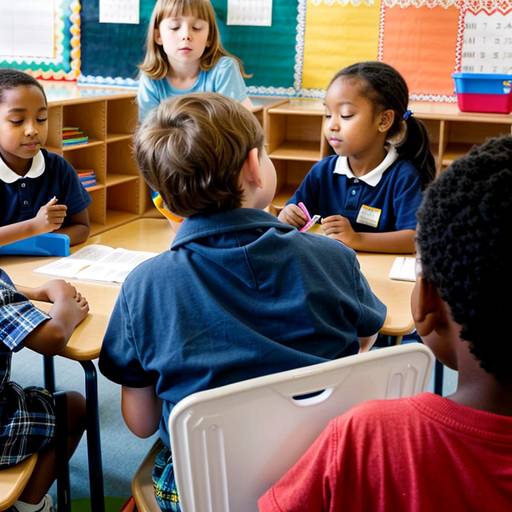
This Kindergarten Language Arts lesson focuses on expanding students' vocabulary through engaging activities and interactive learning. The lesson begins with an introduction to new vocabulary words, where students learn to recognize and understand the meanings of each word using picture cards. A story featuring these vocabulary words is then read aloud, allowing students to see the words in context.
Following the reading, students participate in a collaborative group activity where they create a vocabulary chart, illustrating the words with their own drawings. This visual reinforcement helps cement their understanding. The lesson also includes a matching game that encourages teamwork and discussion as students pair vocabulary words with corresponding pictures.
To conclude, the class reviews the vocabulary words and encourages students to use them in sentences, reinforcing their ability to communicate effectively. Informal assessments throughout the lesson provide insight into students' learning and understanding, with differentiated support available for those who may need it. Overall, this lesson promotes active engagement and a fun approach to language learning.
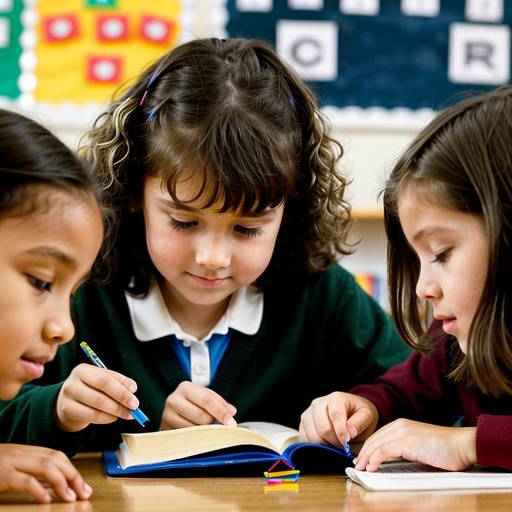
In this 2nd-grade language arts lesson, students will explore the concept of antonyms—words with opposite meanings. The lesson begins with an engaging introduction where students share what they know about antonyms, followed by a clear definition and examples from the teacher.
During guided practice, students participate in an interactive flashcard game to identify antonyms and then work in small groups to match words with their opposites using provided flashcards. For independent practice, students complete an "Antonyms Word Wizard" worksheet that includes matching tasks, sentence creation, and illustrations of antonym pairs.
The lesson concludes with a sharing session, allowing students to present their worksheet findings, reinforcing the importance of antonyms in everyday language and understanding. Assessment will be based on students’ worksheets and participation during discussions. Differentiation strategies will be employed to cater to various learning needs, and extension activities, such as storytelling and creating a mural, enhance student engagement and application of the concept. The teacher will reflect on the effectiveness of the lesson and adjust future plans based on student understanding.
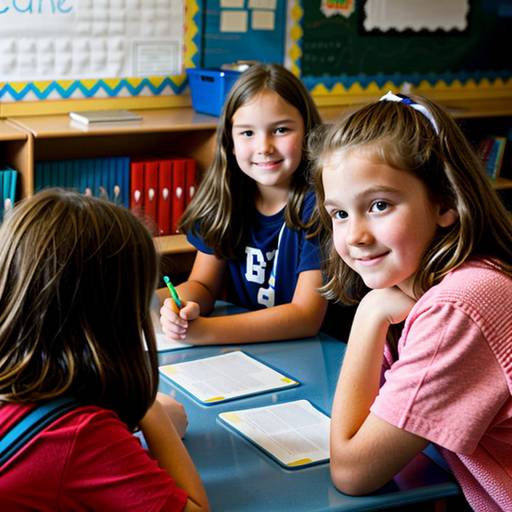
This lesson plan is designed for 5th-grade students to enhance their vocabulary skills through engaging activities and collaborative learning. The lesson begins with an interactive introduction that captures students' attention and prompts a discussion about the importance of vocabulary.
During direct instruction, students are introduced to a list of ten vocabulary words, focusing on their definitions, parts of speech, synonyms, antonyms, and contextual usage. Students practice using context clues to infer meanings of unfamiliar words through examples.
In guided practice, students work in pairs, using flashcards to discuss and create sentences with their assigned vocabulary words, which they then document in their journals. For independent practice, students create illustrated posters for selected vocabulary words, incorporating definitions, sentences, and illustrations to demonstrate their understanding.
The lesson concludes with a gallery walk, where students display their work and provide feedback to peers while sharing their favorite vocabulary words. Assessment includes observation of student engagement, review of journal entries, and evaluation of the vocabulary posters. Differentiation strategies are included to support all learners, and a follow-up activity encourages continuous vocabulary application in students' everyday lives.
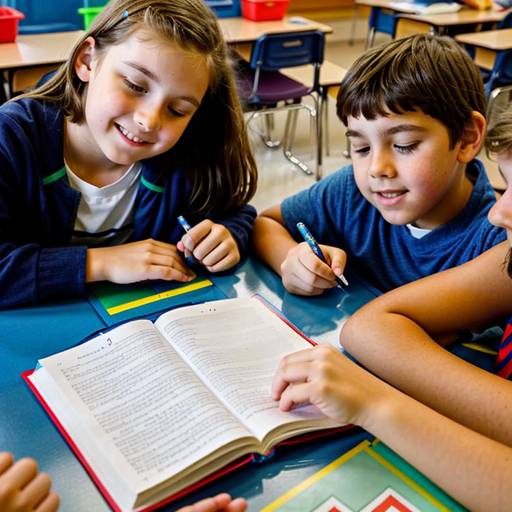
This 4th Grade Language Arts lesson focuses on teaching students the rules of capitalization. The session begins with an engaging riddle that emphasizes the importance of capitalization in writing. Key capitalization rules are introduced and reinforced through examples on the whiteboard, covering aspects such as the first word in a sentence, the pronoun "I," proper nouns, and titles.
Students engage in interactive pair activities where they create and share sentences that incorporate proper nouns, applying the rules in a collaborative context. They then complete an independent editing worksheet where they identify and correct capitalization errors in provided sentences. Peer review follows, allowing students to discuss their edits with a classmate.
The lesson concludes with a review of the rules learned and the distribution of certificates to celebrate the students’ achievements in mastering these concepts. Assessment is conducted through worksheet evaluations and observations of student participation, while extension activities provide opportunities for further practice. Overall, the lesson is designed to be interactive and enjoyable, fostering a solid understanding of capitalization in writing.

In this 4th-grade language arts lesson, students will enhance their vocabulary skills through various engaging activities. The lesson begins with a discussion on the importance of vocabulary, followed by the introduction of 10 new words related to a recently read text. Students will work in pairs to explore these words using a thesaurus to find synonyms and antonyms and create sentences demonstrating their understanding.
Next, they will engage in a context clue activity where they fill in the blanks of sentences with the vocabulary words, using context clues to infer meanings. This will be followed by a creative project where pairs create a mini poster for one selected vocabulary word, including its definition, synonyms, antonyms, and an illustration. Presentations of these posters will allow students to share their creativity and understanding with the class.
The lesson will conclude with a recap of the day’s activities, emphasizing the role of vocabulary in communication and comprehension. As homework, students will complete a treasure hunt worksheet, finding and defining five new words from their reading at home. Assessments will focus on participation, the completion of worksheets, and the creativity of the posters, with differentiation strategies in place to support diverse learners.

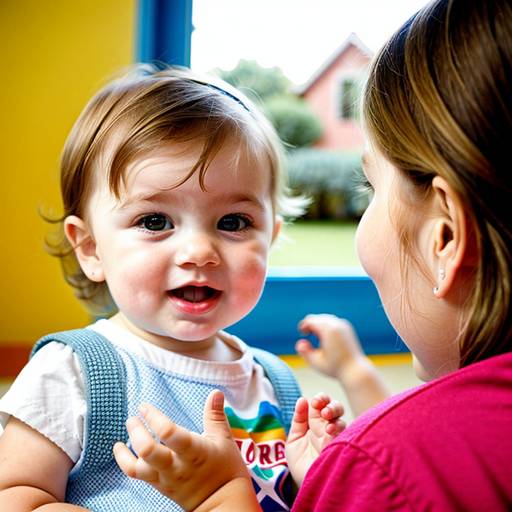
This toddler language development lesson focuses on enhancing vocabulary through interactive and engaging activities. The session begins with a circle time where children listen to a story featuring vibrant illustrations, during which new vocabulary words are introduced and highlighted. Following this, an interactive sensory bin activity allows children to explore everyday objects while practicing naming and describing them.
A creative element is incorporated as children draw their favorite items from the story or the sensory bin, fostering expressive language skills. The lesson also includes a musical game where children act out vocabulary words in a fun and energetic way. To conclude, the group collaboratively creates a word collage, reinforcing what they learned by labeling drawings with the new vocabulary words.
Throughout the lesson, children are assessed on their ability to identify and use new words, and they are encouraged to engage with peers in expressing their thoughts. To extend learning at home, parents receive a simple word list related to the day's theme, promoting continued vocabulary development through everyday interactions and reading. This comprehensive approach aims to create a joyful and stimulating environment for vocabulary building in young learners.