
Filters
Level
Grade
Subject
Subject Area
Subject Topic
Standard(s)
Audience
Keyword
DurationMinutes
Lesson Plans

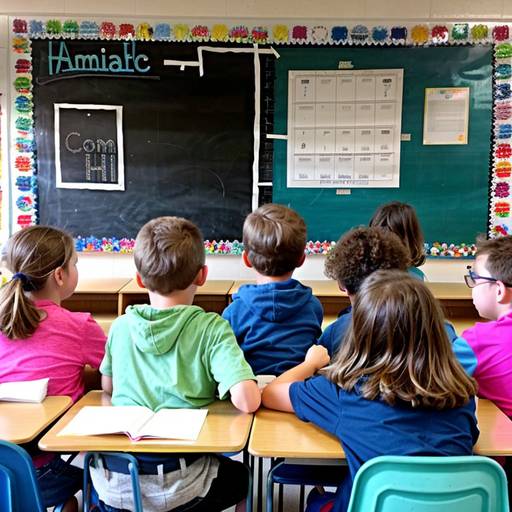
This 3rd-grade social studies lesson focuses on helping students understand the concept of community and the importance of rules. The lesson begins with a discussion about what constitutes a community, allowing students to share their insights and identify various community members. Students then learn about the significance of rules through a guided reading of common community rules.
In small groups, students brainstorm ideas for rules that would enhance their classroom community, encouraging them to think critically about the rationale behind each rule. The class collaborates to create a collective list of essential rules. To reinforce their commitment to these rules, each student crafts a personal "Community Pledge," which they decorate and display in the classroom as a reminder of their responsibilities.
The assessment of student understanding is based on participation in discussions, the relevance of the group's rule contributions, and the completion of the pledges. The lesson also includes extensions, such as inviting a community member to speak or organizing a field trip to explore community roles in action. Overall, this lesson fosters a sense of responsibility and belonging among students while highlighting the importance of cooperation in a community setting.
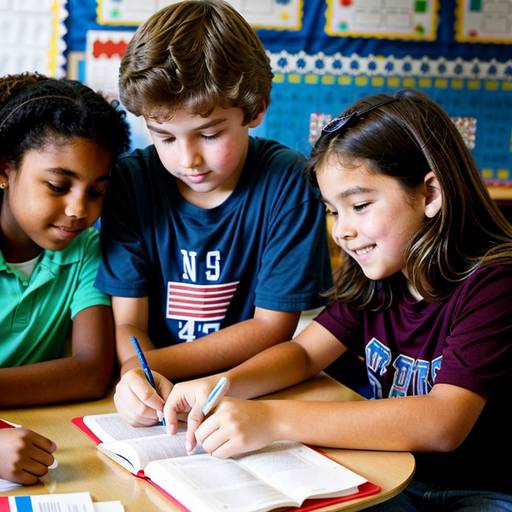
In this 4th-grade social studies lesson, students will explore the diverse roles within their community and understand how each contributes to its overall functioning. The lesson begins with a class discussion about the concept of community and the various jobs individuals perform. Students will be introduced to different community roles, such as police officers, teachers, and healthcare providers, through pictures and descriptions.
Working in small groups, students will select a role, discuss its responsibilities, and prepare a brief skit or presentation to demonstrate its importance. After each group presents, the class will engage in a discussion to reflect on the significance of these roles and the positive impacts they have on the community. To deepen their understanding, students will receive a worksheet to interview a community worker they know, allowing them to connect classroom learning to real-life experiences.
Assessment will be based on group participation and the completion of the worksheet. Adjustments will be made to accommodate different learning needs, ensuring that all students can engage with the lesson effectively. Finally, the lesson provides opportunities for follow-up activities, such as a field trip or guest speaker, to further enrich students' understanding of their community.

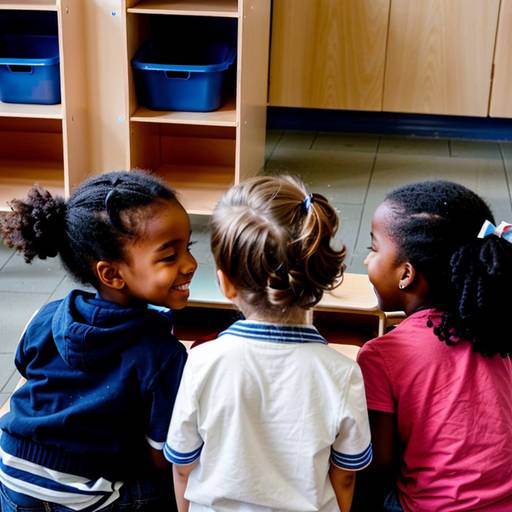
This preschool social studies lesson focuses on the concepts of kindness and building positive relationships within the community. It begins with a discussion to gauge students' understanding of kindness, followed by a read-aloud of a story that highlights how kind actions can positively impact others. Students then participate in a brainstorming session to identify various kind acts and create personalized “Kindness Cards” to express their own acts of kindness.
The lesson also includes a role-playing activity where students dress up as community helpers and act out scenarios demonstrating kindness in their roles. This interactive approach encourages collaboration and reinforces the importance of being good friends and helping others in their community. The lesson concludes with students sharing their Kindness Cards and reaffirming their commitment to choosing kindness. Opportunities for extensions, such as creating a “Kindness Wall” and initiating a "Kindness Challenge," are suggested to further encourage ongoing kindness and empathy in the classroom. Through engaging activities, students learn valuable social skills that will benefit them throughout their lives.

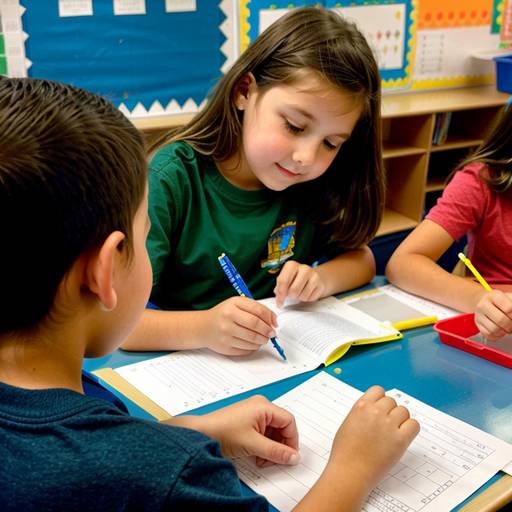
This 2nd-grade Language Arts lesson focuses on grammar and sentence structure, specifically teaching students about subjects and predicates. The lesson begins with an engaging introduction, where students explore simple sentences displayed on the whiteboard. Through guided instruction, they learn to identify and understand subjects and predicates, observing mixed-up sentences for clarification.
During guided practice, students work in small groups, using sentence strips to create their own sentences while identifying each part. They then illustrate their sentences on chart paper. The activity transitions to independent practice, where students complete a worksheet that reinforces their understanding of sentence structure by filling in blanks to form complete sentences and creating an original sentence of their own.
The lesson concludes with students sharing their sentences and reflecting on what they've learned. Assessment includes observation during group work, reviewing completed worksheets, and collecting exit tickets to gauge individual understanding of sentence components. Differentiation strategies are in place to support diverse learning needs. Overall, the lesson aims to build students' skills in constructing and understanding complete sentences.
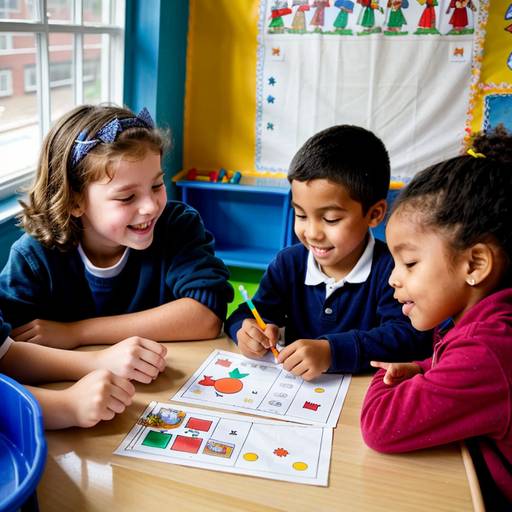
In this preschool language arts lesson, students will explore the basic elements of sentence structure by engaging in interactive activities designed to foster their understanding of subjects, verbs, and objects. The lesson begins with a group discussion about sentences, setting the stage for learning.
Students will participate in sentence-building activities using picture cards depicting nouns and verbs, allowing them to collaboratively create simple sentences. Each child will then form a new sentence using sentence strips, and they will draw corresponding illustrations to reinforce the connection between writing and visual expression.
The lesson concludes with a sharing session, where students present their sentences and artwork to the class, enhancing their confidence in communication and reinforcing their grasp of sentence structure. Assessment will be based on participation and the ability to create meaningful sentences, with opportunities for follow-up activities to continue building their language skills.

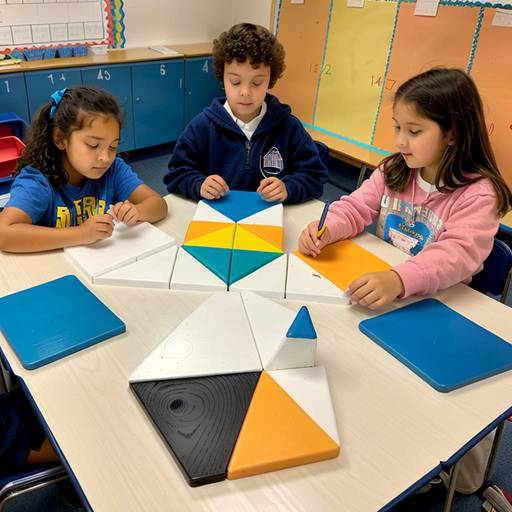
In this 3rd-grade math lesson, students will explore the concept of area through measurement and calculation involving squares and rectangles. The lesson begins with an introduction to area as the amount of space inside a shape, distinguishing it from perimeter. The instructor will demonstrate how to measure the sides of shapes using rulers and explain the area formula: Area = Length × Width. Students will engage in guided practice by measuring pre-prepared shape templates, calculating their areas, and representing them visually on graph paper. Following this, they will complete independent worksheets that reinforce the area calculation skills learned. The lesson concludes with a review of key concepts and their real-world applications, along with an assessment of students' understanding through worksheet evaluation. Optional extensions are provided for advanced learners to explore more complex shapes and applications. Overall, the lesson aims to provide hands-on learning experiences that foster a strong grasp of measurement and area principles.
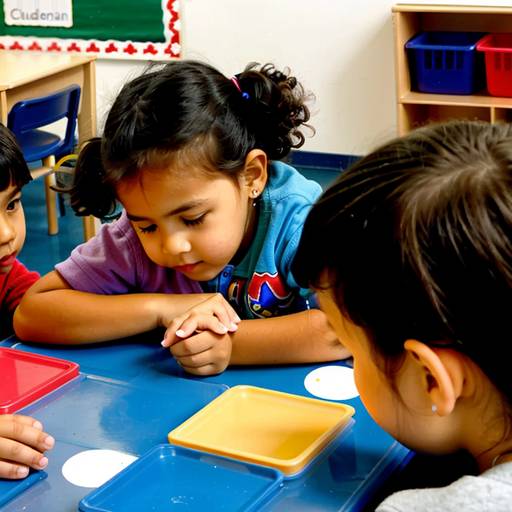
This lesson plan focuses on developing preschool students' recognition and understanding of sight words and vocabulary. The session begins with an engaging introduction where children are welcomed and prepared for a “sight word adventure.” Flashcards featuring key sight words, accompanied by visual aids, help children learn the words and their meanings. An interactive activity called “Word Hunt” allows students to find sight words around the classroom, encouraging them to identify and use these words in sentences.
The instructor will then read a large picture book that contains the sight words, prompting children to participate by chiming in when they encounter the words. This read-aloud fosters comprehension and engagement. Following the story, students will create their own sight word posters, illustrating chosen words, which allows for creativity and reinforces their understanding.
The lesson concludes with a review of the sight words learned, encouraging students to look for these words at home, and rewarding participation with stickers. Informal assessment occurs throughout the lesson, observing students as they identify and use sight words, along with evaluating their craft activity. Extensions for learning at home are provided, ensuring that literacy skills continue to develop beyond the classroom setting.
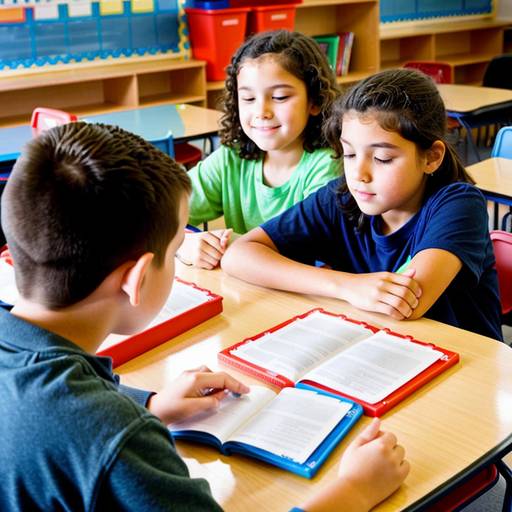
This lesson plan focuses on teaching 4th-grade students the fundamentals of grammar and sentence structure. It aims to help students identify key components of sentences, including subjects, predicates, and objects, while also differentiating between simple and compound sentences.
The lesson begins with an engaging discussion about what makes a good sentence, followed by a mini-lesson on breaking down sentence components using examples. Students participate in a guided activity where they work in groups to create their own simple sentences using sentence strips, sharing their work with the class.
For independent practice, students complete a worksheet that involves identifying parts of sentences and constructing their own examples. The lesson concludes with a sharing session to reinforce learning, where students present one of their created sentences and identify its components.
Assessment is conducted through the collection of worksheets to evaluate students’ understanding, with feedback provided during group sharing. Extension activities are suggested for advanced learners, encouraging them to create more complex sentences. The lesson wraps up with a reflection on student engagement and understanding to inform future instruction.
In this 5th-grade language arts lesson plan, students explore key components of sentence structure, including subjects, predicates, and objects. The lesson begins with an engaging introduction discussing the importance of grammar and sentence formation. Following the discussion, the teacher presents different types of sentences: simple, compound, and complex, with examples created collaboratively with the class.
Students then participate in an interactive activity where they work in small groups to build sentences using provided flashcards, ensuring they incorporate a variety of sentence types. Each group is tasked with writing a short story based on a given prompt, emphasizing the use of diverse sentence structures and proper grammar. After writing, groups share their stories with the class, encouraging discussion about the sentences used.
Assessment includes observation of group work, collection of worksheets to gauge individual understanding, and evaluation of the stories for sentence variety and grammatical correctness. Extension activities are suggested to reinforce the concepts learned. Reflection on the lesson's effectiveness is encouraged for future planning. Overall, the lesson aims to enhance students' writing skills while making grammar engaging and interactive.

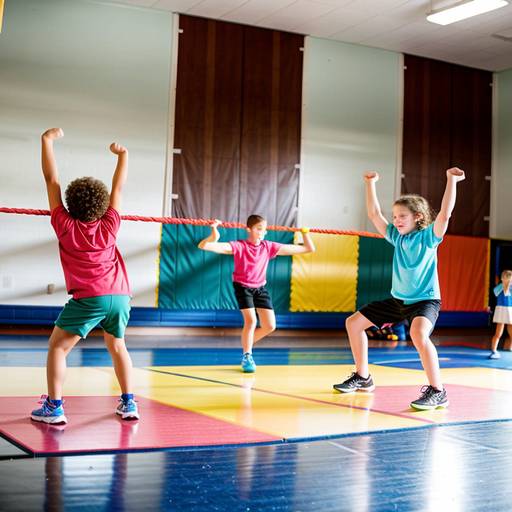
In this 3rd Grade Physical Education lesson plan, students will explore the concepts of fitness and strength through a series of engaging activities. The lesson begins with a warm-up that incorporates dynamic stretching and exercises to elevate their heart rate.
Students will then participate in five activity stations, each designed to enhance their strength and fitness levels. They will challenge themselves with hula hoop rotations, resistance band exercises, jump rope skills, bean bag tossing, and team push-up challenges. Each station promotes cooperation and encourages students to track their progress.
The lesson concludes with a cool-down period that includes group stretching and breathing exercises. Students will reflect on their experiences and learn the importance of being physically active while developing teamwork skills. Optionally, they have the opportunity to keep a fitness journal to document their physical activities over the week. Overall, this lesson aims to foster a fun and supportive environment for physical activity and strength-building.