
Filters
Level
Grade
Subject
Subject Area
Subject Topic
Standard(s)
Audience
Keyword
DurationMinutes
Lesson Plans

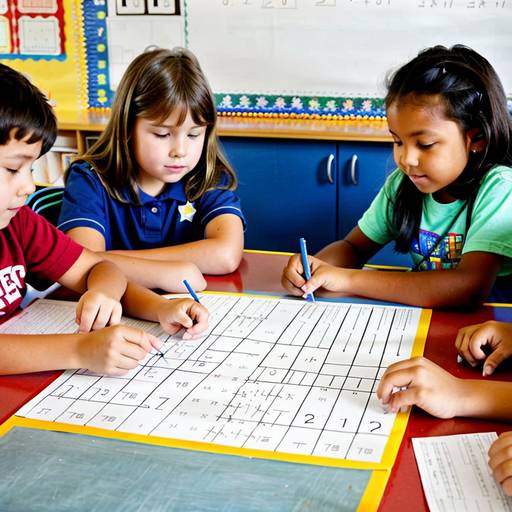
In this 2nd-grade mathematics lesson, students will explore the concept of addition with regrouping. The lesson begins with an engaging story that introduces a problem involving addition, prompting class discussion. Following this, the teacher will explain and demonstrate the regrouping process using examples on the whiteboard. Visual aids, such as base-10 blocks, will help illustrate how to manage carrying over when the sum exceeds ten.
Students will then participate in guided practice, working collaboratively to solve addition problems while applying the regrouping technique. The teacher will facilitate this process, encouraging students to share their strategies and approaches. Afterward, students will engage in independent practice with worksheets that feature problems requiring regrouping.
The lesson concludes with a recap of the main concepts and an exit ticket, where each student solves a simple problem to assess their understanding. Throughout the lesson, differentiation strategies will be employed to support both advanced learners and those who may need additional help. The teacher will reflect on the effectiveness of the lesson and consider adjustments for future instruction based on student performance and engagement.
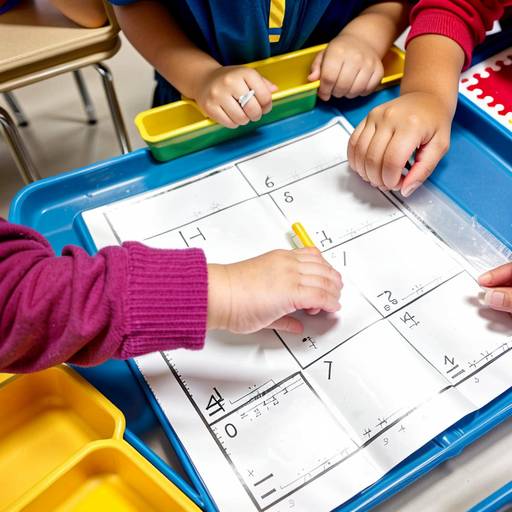
In this first-grade math lesson, students will explore the concept of addition using manipulatives to enhance their understanding through hands-on experience. The lesson begins with a review of counting, followed by a demonstration of addition using visual examples on the whiteboard. Students will work in small groups, where they will practice solving addition problems with blocks or LEGO, recording their equations on math mats. During guided practice, they will engage in collaborative problem-solving, while independent practice will encourage them to create their own addition problems. The class will then reconvene to share their work, facilitating discussion and reinforcing the concept of addition as putting together. Assessment will be based on observations during group activities and the accuracy of written equations on math mats, allowing for tailored support to address individual learning needs. The lesson aims to foster a solid foundation in addition while promoting teamwork and communication skills among students.
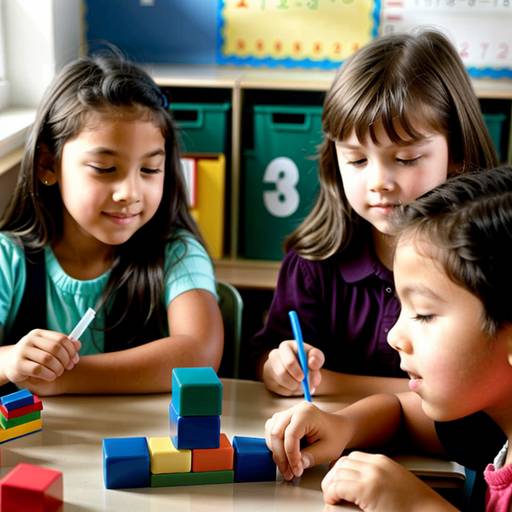
In this 1st-grade math lesson, students will explore the concept of addition with single-digit numbers through interactive and engaging activities. The lesson begins with a discussion to introduce addition, utilizing a number line to illustrate the concept. A storytelling session featuring a relatable children's book emphasizes the idea of combining quantities.
Following this, students will receive direct instruction on solving simple addition problems using manipulatives, allowing them to visualize and understand the concept hands-on. Small group and independent practice sessions will reinforce their learning as they use counting blocks and worksheets to solve addition problems, promoting cooperation and communication among students.
The lesson concludes with a brief sharing session where students reflect on what they learned and participate in a fun number game to reinforce their understanding. Assessment will be conducted through the review of worksheets and observation of group interactions, allowing for adaptation to individual student needs. This approach fosters a supportive and engaging environment as students build foundational skills in addition.
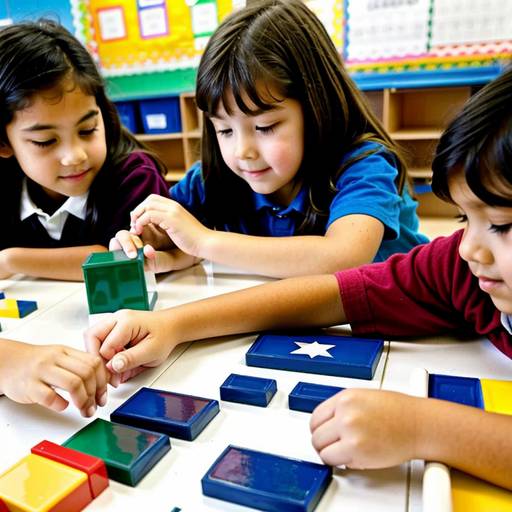
In this 2nd-grade math lesson, students will explore the concept of addition using hands-on manipulatives. The lesson begins with a review of addition basics, followed by a guided practice session where students work in groups to model addition problems using counting blocks. They will then participate in a series of “Addition Stations,” where they will solve different addition problems using manipulatives such as ten frames, number lines, and counting blocks. Each group will rotate through the stations, enhancing their understanding through interactive experiences. The lesson concludes with a discussion where students share their solutions and reflect on how manipulatives helped them grasp addition concepts. Assessment will be conducted through observation and completed worksheets, and accommodations will be provided for diverse learners. Extensions may include addition games and more advanced problems for those ready to challenge themselves.
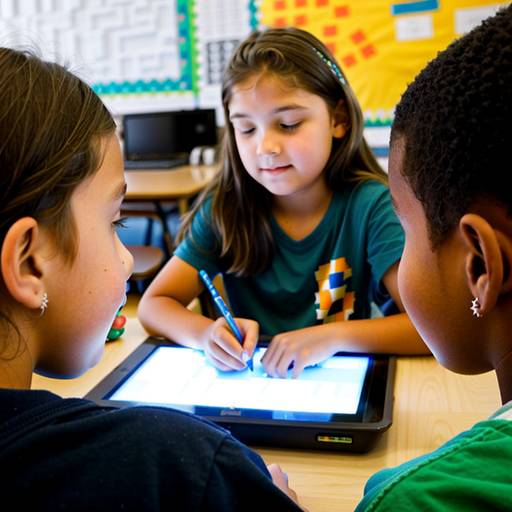
In this 5th-grade technology lesson, students will explore the fundamentals of coding through a hands-on, interactive approach. The lesson begins with a discussion about coding's significance, followed by an introduction to key concepts such as sequences, loops, and conditionals, supplemented by visual aids. Students will then familiarize themselves with a block-based programming platform, where they will create their own interactive projects in pairs. This activity encourages collaboration and practical application of the coding concepts learned. As the lesson concludes, students will share their projects with their classmates, fostering a sense of community and encouraging feedback. The lesson promotes problem-solving skills while igniting interest in computer science, with options for further exploration in future sessions.
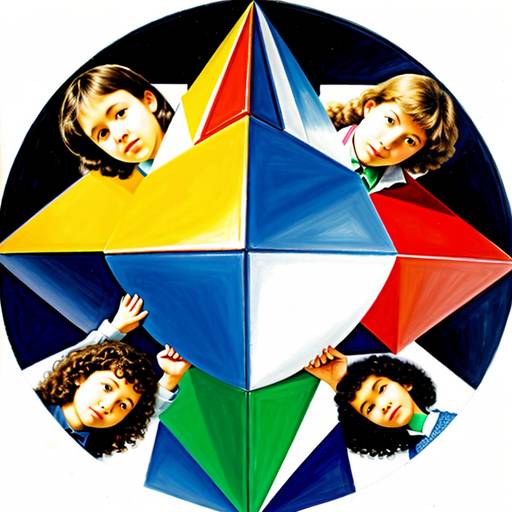
This lesson plan focuses on helping 5th-grade students explore and understand three-dimensional shapes, also known as solids. It aims to enable students to identify, describe, and compare various solids, including cubes, rectangular prisms, spheres, cylinders, cones, and pyramids, while recognizing their unique properties such as faces, edges, and vertices.
Initially, students engage with a video or presentation that connects 3D shapes to real-life objects, followed by the introduction of key geometric vocabulary. During direct instruction, students learn about the properties of each solid through hands-on interaction with models.
In groups, they create their own 3D shapes using building materials, culminating in a "shape walk" where they share and discuss their creations. To reinforce their understanding, students complete worksheets identifying and describing the shapes and their properties. The lesson concludes with a recap and an exit ticket to assess comprehension and find out what students learned.
Assessment is based on group participation, worksheet completion, and exit ticket responses. Extensions for advanced learners and modifications for those needing additional support are included to ensure all students can effectively engage with the material. Overall, the lesson promotes active learning and collaboration while solidifying key geometry concepts.

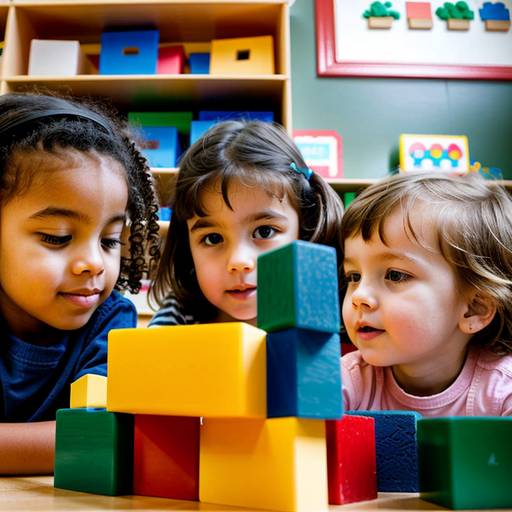
In this preschool science lesson, students engage in hands-on exploration of basic technology and construction concepts. The class begins with a circle discussion about various tools and buildings, using a poster for visual aids. Students are then divided into small groups, where they use a variety of building materials—like foam blocks, wooden blocks, and magnetic tiles—to create unique structures.
Following the building activities, the children are introduced to toy tools and practice using them safely on their projects, fostering teamwork and problem-solving skills. The session concludes with a group sharing, where students present their creations and reflect on their learning experiences. To further reinforce their creativity, an optional arts and crafts extension allows them to draw their favorite tools or buildings. Overall, the lesson aims to enhance critical thinking and cooperation while instilling an understanding of how technology plays a role in building and innovation.
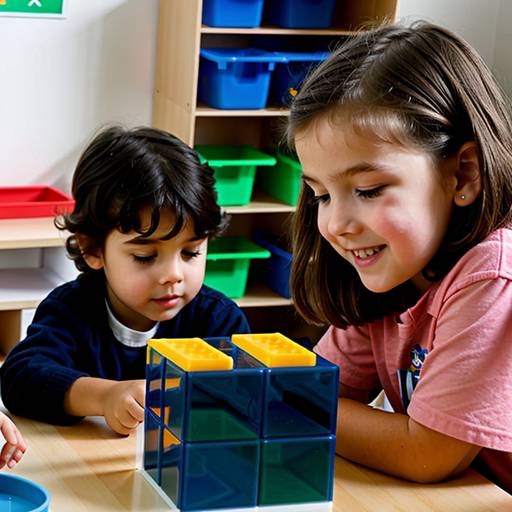
This lesson plan provides a structured approach for preschool students to explore foundational coding concepts through engaging, hands-on activities. Over the course of 45 minutes, children will learn about sequences, patterns, and problem-solving in a fun and interactive manner.
The lesson begins with a brief introduction to key terminology, using relatable examples to foster understanding. Students will then participate in group activities, where they will build structures using colorful blocks while following specific sequences. This collaborative effort encourages teamwork and enhances communication skills.
Subsequently, the class will engage in a movement coding activity, where students take turns being the "coder" and the "robot," following action cards to navigate a designated path. This physical representation of coding concepts reinforces their learning through active participation.
If technology is available, students will have the opportunity to explore a simple coding app, fostering independent problem-solving skills. The lesson concludes with a group reflection, encouraging students to share their experiences and insights gained throughout the activities. The overall aim is to provide a fun and accessible introduction to coding concepts, promoting critical thinking and creativity in young learners.
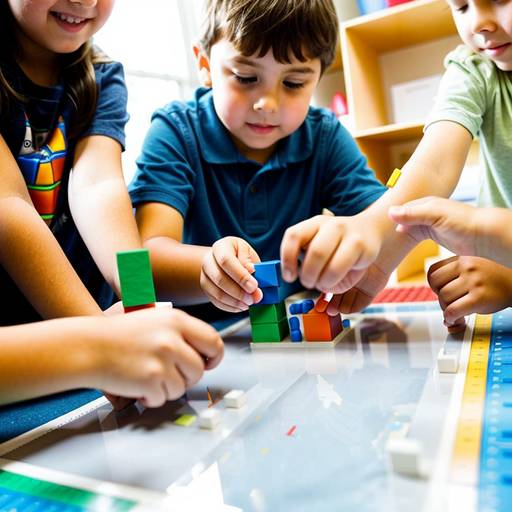
In this 2nd-grade math lesson, students will explore the concept of volume through hands-on activities and measurement. The lesson begins with a discussion about volume, encouraging students to estimate and compare the capacity of various containers. After demonstrating how to measure volume using non-standard units like blocks, students will work in small groups to measure and record the volume of different containers. They will then create drawings of their chosen container, including the volume measurement. The class will come together to share their findings, fostering collaboration and engagement. To assess understanding, teachers will observe group participation and evaluate students' drawings and measurements. The lesson allows for extensions and adaptations, making it accessible for all learners while connecting volume measurement to real-life applications.
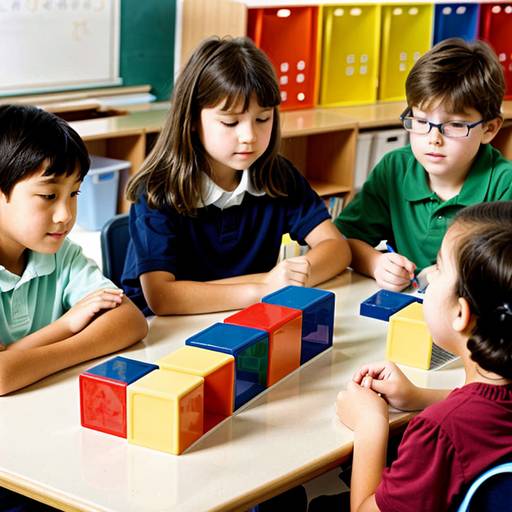
This lesson plan focuses on teaching 3rd-grade students the concept of multiplication through the use of arrays. It begins with an interactive discussion to connect multiplication with repeated addition. The instructor introduces arrays as a visual tool for organizing numbers, demonstrating how to represent multiplication problems using rows and columns. Students then engage in guided practice by creating various arrays with counters, promoting collaboration and understanding through peer discussions. Afterward, they work independently on a worksheet that requires them to draw arrays corresponding to specific multiplication problems. The lesson concludes with students sharing their arrays and the multiplication sentences they represent, reinforcing their understanding of the concept. Assessment is conducted through the review of worksheets and participation, with extensions for advanced learners and modifications for those who need additional support. The approach allows students to visualize multiplication and enhances their problem-solving skills in a hands-on manner.