
Filters
Level
Grade
Subject
Subject Area
Subject Topic
Standard(s)
Audience
Keyword
DurationMinutes
1st Grade Lesson Plans

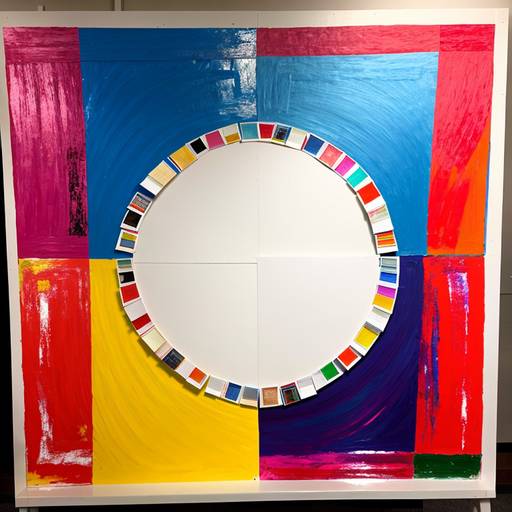
In this art lesson for first graders, students will explore the concept of mixed media by creating their own artwork using a variety of materials. The lesson begins with a group discussion about art to spark students' interest and understanding. A demonstration will follow, showcasing how to combine different items like paper, fabric, and natural elements to add texture and visual interest to their creations.
During the main activity, students will have the opportunity to gather materials and create their mixed media art pieces, allowing their creativity to flourish. As they work, the teacher will circulate to provide assistance and encouragement, fostering a supportive artistic environment.
After the art creation session, students will clean up their work areas and participate in a reflection portion where they can share their artwork and the inspirations behind their choices. Assessment will be based on participation and the uniqueness of their final pieces. Extensions of the lesson may include creating a class gallery to showcase their work or encouraging students to create additional pieces at home with recycled materials. Overall, the lesson emphasizes creativity, the use of various artistic techniques, and self-expression through different art forms.

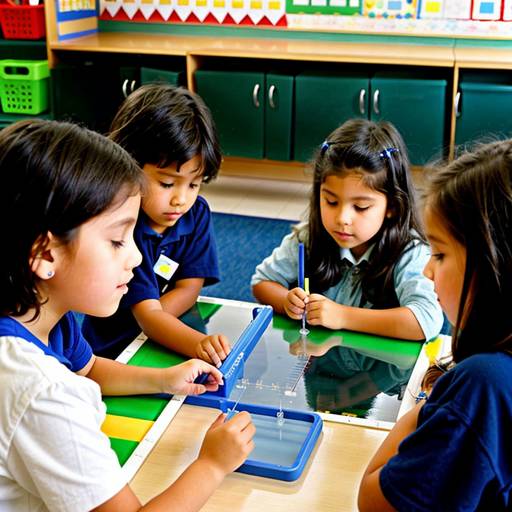
In this 1st-grade math lesson, students will explore the concepts of measurement and length through hands-on activities and discussions. The lesson begins with an introduction to the idea of measurement, where students will learn to use rulers and measuring tapes. After a guided demonstration, they will participate in a scavenger hunt around the classroom to measure various items, recording their findings on worksheets.
As they measure, students will practice identifying the lengths of objects, collaboratively sharing their observations in a group discussion. The class will create a chart to compare the lengths measured, reinforcing their understanding of terms like "longest" and "shortest." To conclude, students will reflect on the importance of measurement in real-life situations and will be assigned a simple homework task to measure and record three items at home.
Assessment will be based on participation during activities and the accuracy of worksheet completions, with accommodations provided to ensure all students can successfully engage in the lesson. Overall, the lesson aims to create an interactive and practical understanding of measurement and length for young learners.
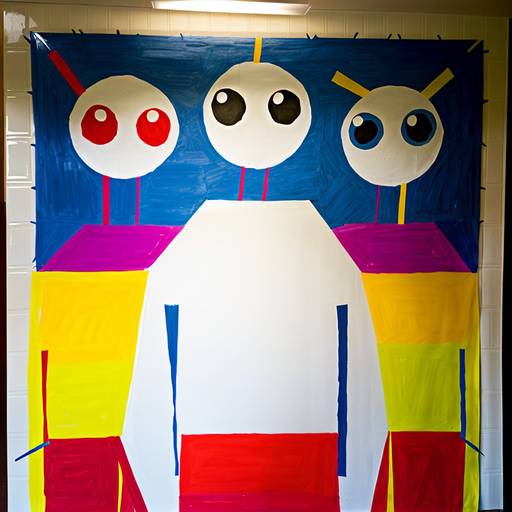
In this first-grade art lesson, students will learn about various types of lines and shapes while engaging in a creative drawing activity. The lesson begins with a discussion on identifying and describing straight, curved, and zigzag lines, along with circles, squares, and triangles. Following a demonstration of how to combine these elements to create a monster, students will sketch their unique creations using pencils. Once their sketches are complete, they will color their monsters with crayons or markers, adding details like textures or patterns.
The class will then come together to share their artwork, allowing each student to describe the lines and shapes used in their designs. The teacher will assess participation and understanding throughout the activity. The lesson concludes with artwork displayed in a "Monster Gallery" in the classroom, celebrating the creativity and individuality of each student. Extension activities may include storytelling or organizing a "Monster Parade" to showcase the creations to other classes.

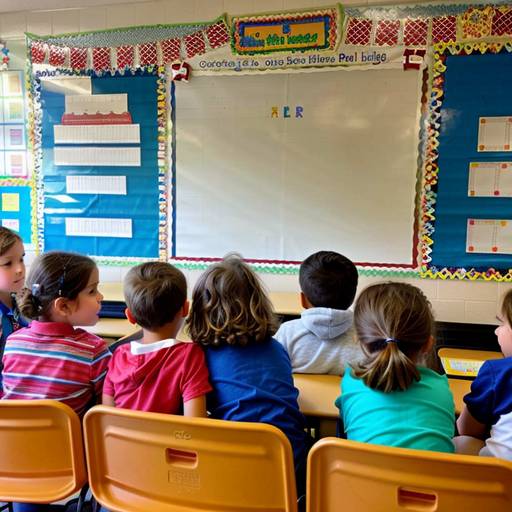
In this 1st-grade social studies lesson, students will explore the concept of community and the various roles of community helpers. The lesson begins with a read-aloud of a picture book that introduces different professions, followed by a discussion using a KWL chart to highlight what students know, want to know, and eventually learn about community helpers.
Students will participate in interactive role-play activities, rotating through stations that represent different community helper professions, allowing them to act out scenarios relevant to each role. They will then create artwork representing their chosen community helper, encouraging self-expression and creativity.
The lesson concludes with a review of what students learned, promoting appreciation for community helpers and discussing ways to show gratitude toward them. An optional video clip may be shown to further illustrate the roles within the community. Assessment will be based on student engagement, participation in discussions and activities, and their ability to articulate their understanding of community helpers. A follow-up activity may include inviting local community helpers for a presentation or organizing a field trip to enhance real-life learning experiences.
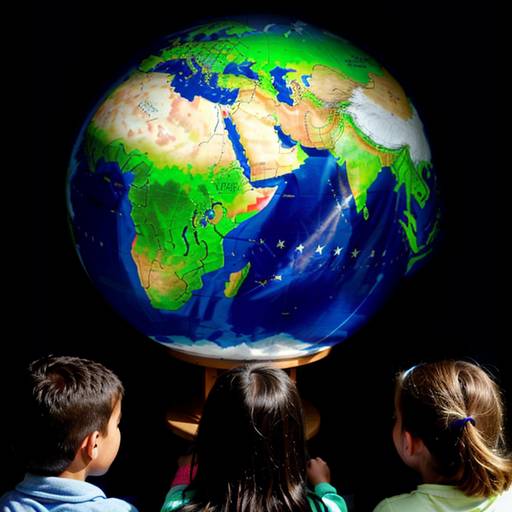
In this 1st-grade social studies lesson, students will embark on an exploration of various countries around the world, focusing on geography and cultural diversity. The lesson begins with a brief introduction to the concept of countries and geography, using a world map to highlight their own country. Educators will introduce selected countries, providing interesting facts and showing picture cards related to each country's flag, traditional clothing, and landmarks.
Students will then engage in a group activity where they locate the discussed countries on a map while discussing what makes each one unique. For the independent activity, each student will select a country of interest and create a poster that includes the country's name, a drawing or picture of a landmark, traditional food or cultural items, and a fun fact.
The lesson concludes with students sharing their posters with the class, fostering a sense of community and appreciation for global diversity. Assessment will be based on observation during the activities and the creativity demonstrated in the poster project. Optional extensions include a "Cultural Day" event, promoting further engagement with the material. The lesson aims to enhance students' understanding of different cultures and the world in which they live.
In this 1st-grade social studies lesson, students explore the concept of community helpers and the significance of the rules they follow to maintain a safe and healthy neighborhood. The lesson begins with a circle time discussion that prompts students to think about what makes a neighborhood a good place to live, leading into an introduction of various community helper roles such as firefighters, police officers, and teachers.
A read-aloud story featuring community helpers engages the students further, allowing for a discussion on the importance of these roles and the associated rules. Students then create a worksheet highlighting their favorite community helper, drawing an illustration and writing a simple sentence about their importance. This is followed by a fun, interactive role-playing activity where students can act out scenarios related to different community helpers while demonstrating the rules they follow.
The lesson concludes with a recap and review of the learned concepts, reinforcing how rules contribute to community safety and well-being. Assessment is based on participation, engagement, and a review of the completed worksheets. Additionally, potential extensions like field trips to local community services or guest speaker visits can enhance the learning experience.
This lesson plan for 1st-grade students focuses on understanding the concept of timelines and chronological order in history. Students begin by discussing the meanings of past, present, and future, followed by an introduction to timeline visuals. Through class discussions, they identify and arrange significant events from their own lives in groups. Each student then creates a personal timeline, illustrating three important life events in sequential order. The lesson culminates with a sharing session, where students present their timelines to the class. Assessment involves observing group activities and reviewing individual timelines. Extension activities are suggested, including creating a classroom timeline of the school's history. Overall, the lesson aims to help students recognize the importance of timelines in connecting personal and historical narratives.

This 1st Grade Earth Science lesson focuses on understanding different types of weather and the basic tools used to measure it. Students engage in a discussion about weather and explore vocabulary related to sunny, rainy, windy, and snowy conditions. The teacher introduces measurement tools such as thermometers, rain gauges, and anemometers, explaining their functions and importance in daily life.
Students then participate in guided practice by forming small groups, each assigned a specific weather tool. They head outdoors to observe current weather conditions and record their findings in a "Weather Observation Journal," where they draw and describe what they see. After sharing their observations with the class, the students reflect on how weather affects their lives and the significance of weather changes.
The lesson wraps up with a recap of key points and encourages students to continue observing weather at home. Assessment occurs through the review of their journal entries and participation in discussions. Extensions include keeping a weekly weather journal and contributing to a classroom weather chart. Overall, the lesson nurtures curiosity about the environment while providing foundational knowledge of weather and observation skills.
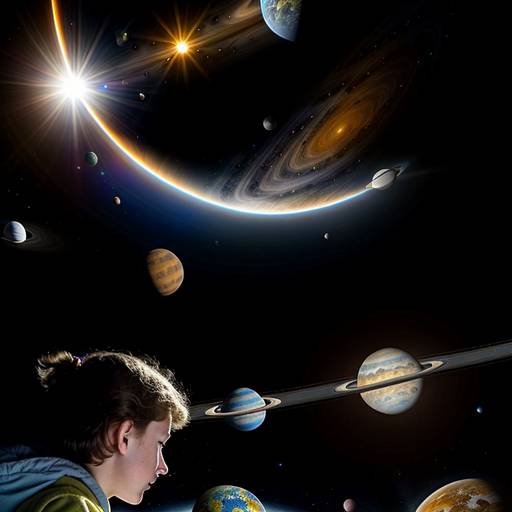
In this first-grade science lesson, students will embark on an engaging exploration of the solar system. The lesson begins with an interactive discussion where students share their prior knowledge about space and celestial bodies, followed by a visual introduction using a solar system poster. A read-aloud of a fun, educational book reinforces key facts about the planets, encouraging student participation through questions.
Students then engage in a hands-on craft activity, where they create their own painted representations of planets using Styrofoam balls and googly eyes. As they work, they learn more about their selected planet's characteristics. Following the craft, students participate in a movement-based "solar system dance," mimicking their planets' movements while sharing interesting facts.
The lesson concludes with a recap and a short review of the planets, allowing students to express what they've learned. Extension activities are provided for early finishers, emphasizing creativity and further exploration of the topic. Overall, the lesson combines reading, art, and movement to create a fun and memorable introduction to astronomy.
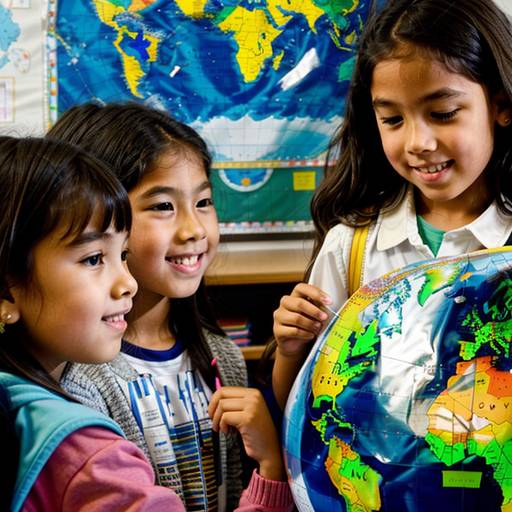
In this 1st grade social studies lesson, students will explore basic geographical concepts and the use of maps. The lesson begins with a discussion about maps and globes, allowing students to share their prior knowledge. Through direct instruction, they will learn about land, water, symbols, and the compass rose using a large world map.
During guided practice, students will work in pairs to identify and discuss symbols on printed maps. Following this, they will engage in a creative activity where they design their own simple maps of a room, incorporating recognizable symbols. The lesson concludes with students sharing their maps with the class, reflecting on what they learned by writing notes for a classroom display.
Assessment will be conducted through observation during activities and map collection for feedback. Additional extensions will be offered for students who quickly grasp the concepts, including creating treasure maps. The lesson aims to foster curiosity about geography and the importance of maps in understanding the world.