
Filters
Level
Grade
Subject
Subject Area
Subject Topic
Standard(s)
Audience
Keyword
DurationMinutes
1st Grade Lesson Plans

In this first-grade science lesson, students will explore the world of plants, focusing on their basic needs, structure, and growth processes. The lesson begins with an engaging discussion about plants, where students will learn key terms such as roots, stems, leaves, and flowers. Through group activities, students will observe and identify the parts of a potted plant, using drawing and labeling to reinforce their understanding.
Next, students will engage in a hands-on planting activity, where they will plant seeds in individual cups, while discussing the necessary conditions for growth. As they care for their plants, they will document their observations and actions on a growth chart. In the closure, students will reflect on their learning and share their discoveries about plants. Assessment will be based on participation, drawings, and a follow-up worksheet related to plant care. Additionally, students will create a Plant Growth Journal to track their plants' growth over time, fostering a deeper appreciation for nature and the environment.

In this first-grade social studies lesson, students explore the concept of community and the significance of rules that help maintain order and safety. The lesson begins with a discussion about what a community is, aided by photographs of various community elements. A storybook is read aloud to illustrate interactions within a community and the role of rules. Students engage in a discussion about the importance of rules, expressing their thoughts on how rules contribute to harmony and cooperation.
In a collaborative activity, students work in small groups to create a set of classroom rules that foster a positive environment. They then share their ideas, which are compiled into a large poster for the classroom. The lesson concludes with a reflection on the importance of rules and an assignment to draw a community scene while incorporating a rule that ensures safety and enjoyment. Throughout the lesson, students actively participate and develop a deeper understanding of their roles within their community.
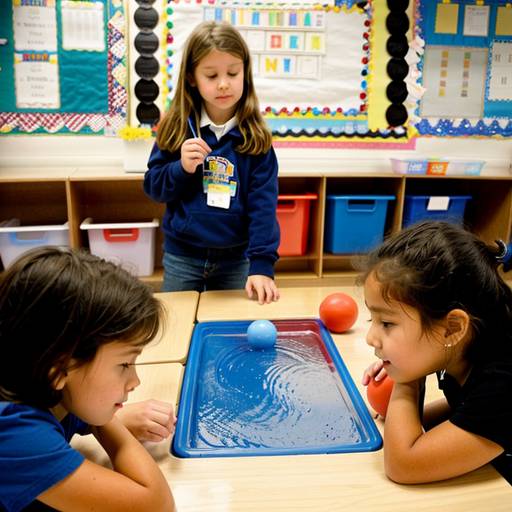
In this 1st-grade science lesson, students explore the fundamental concepts of force, specifically focusing on push and pull, and how these forces affect the motion of objects. The lesson begins with a discussion that engages students in sharing their ideas about what makes things move. They then learn the definitions of push and pull through simple demonstrations with toy cars.
In small group activities, students investigate various objects to determine whether they can push or pull them, fostering collaboration and hands-on learning. The lesson includes a hands-on challenge where students experiment with a ramp to observe how height affects the distance objects travel when pushed or pulled. Students also have the opportunity to measure forces using a spring scale if available.
As the lesson concludes, students reflect on what they learned by sharing insights with a partner and creating drawings that illustrate examples of push and pull. The instructor assesses understanding through observation during activities and by reviewing students' worksheets.
Extensions and adaptations are included to support diverse learning needs, promoting an inclusive and engaging environment. This lesson aligns with the Next Generation Science Standards for K-2 science, providing a foundational understanding of motion and forces.

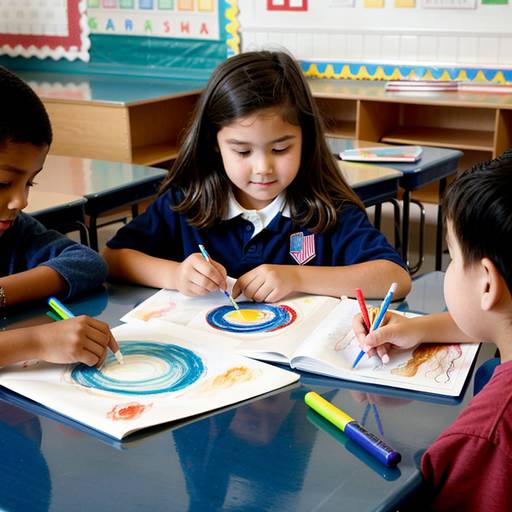
In this 1st-grade art lesson, students will explore how to express emotions through basic drawing techniques using shapes and lines. The lesson begins with a discussion about feelings and how they can be illustrated in art. Students will practice creating simple shapes and lines, learning to combine them into structures that represent different emotions.
After this guided practice, each student will select an emotion from illustrated cards and create their own imaginary world or scene that reflects that feeling. They will have the opportunity to use various colors to enhance their artwork, fostering creativity and individuality. As they work, the teacher will provide support and encouragement.
The lesson concludes with students sharing their drawings with the class, discussing the emotions represented and the techniques used. Assessment will be based on participation, creativity, and the application of art techniques in their work. Extensions to the lesson may include collaborative projects and storytelling activities.

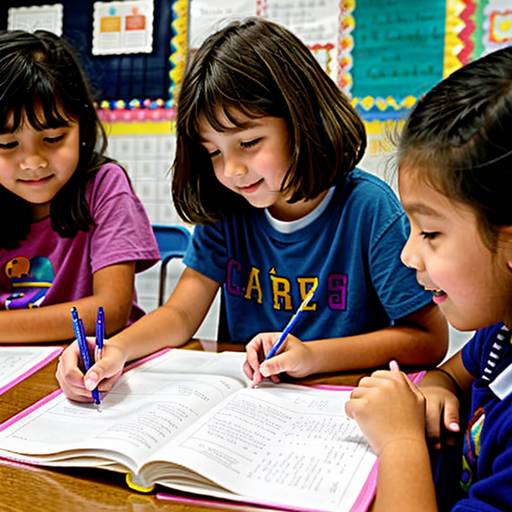
In this 1st Grade Language Arts lesson, students will explore the basic elements of storytelling, including characters, settings, problems, and solutions. The lesson starts with a discussion about favorite stories, emphasizing what makes them enjoyable. The teacher models narrative writing by creating a simple story as a group, showcasing how to organize it into a beginning, middle, and end while incorporating descriptive language. Students then select picture prompts to brainstorm their own stories, guided by a graphic organizer. After writing and illustrating their narratives in journals, they have the opportunity to share their stories with the class. The lesson concludes with a reflection on the storytelling process and the importance of using descriptive language. Assessment will focus on both participation in discussions and the quality of the students' written narratives. Modifications are provided to support diverse learning needs, ensuring all students can engage meaningfully in the writing activity.
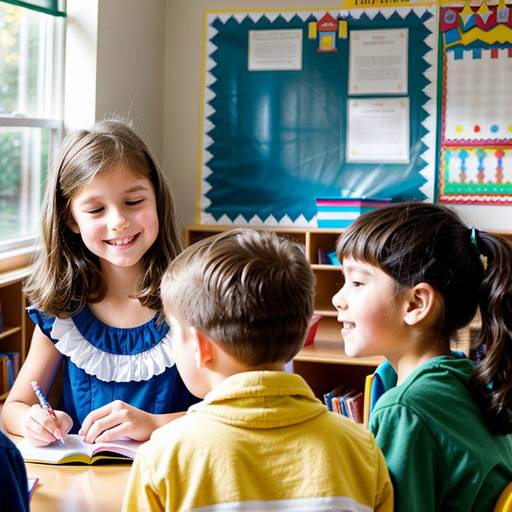
This 1st Grade Language Arts lesson plan focuses on writing and creative expression. Students begin by engaging with a picture book to spark their imagination, followed by a brainstorming session where they generate ideas for their own stories. Using a graphic organizer, they outline their characters, settings, and plots, before writing several sentences about their adventures. After writing, students illustrate a key scene from their stories, adding visual detail to complement their writing. Finally, they have the opportunity to share their stories with the class or in small groups, fostering collaboration and confidence in public speaking. The lesson emphasizes creativity, clarity in writing, and participation, with assessments based on engagement, completion of graphic organizers, and overall effort in both writing and illustration. Extension activities encourage ongoing creativity and community sharing of their stories.
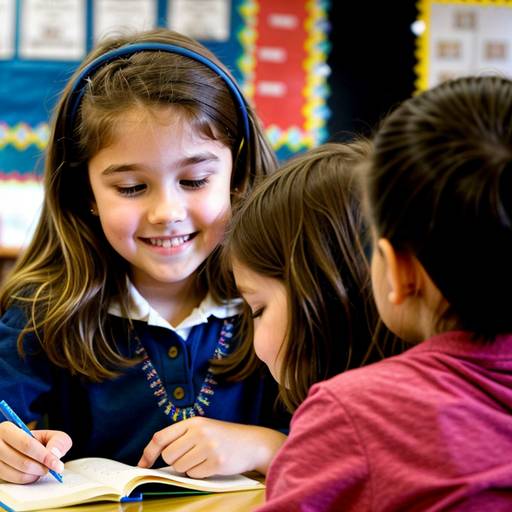
In this 1st grade Language Arts lesson plan, students will enhance their reading comprehension skills by identifying the main idea and key details of a story through engaging discussions and interactive activities. The lesson begins with a read-aloud of a selected story, during which students are encouraged to participate by predicting events and discussing the plot. After reading, the class will collaboratively explore the main idea and supporting details, which will be documented on the whiteboard. Students will then create their own Story Maps, where they identify the main idea and key details while illustrating their favorite parts of the story. The lesson culminates in a sharing session, allowing students to present their Story Maps to the class. Assessment focuses on participation and the clarity of the completed Story Maps, with differentiation strategies to support varying learning needs. The lesson concludes with a summary of the importance of stories and reading. For follow-up, students will select another story to create their own Story Map for future sharing.
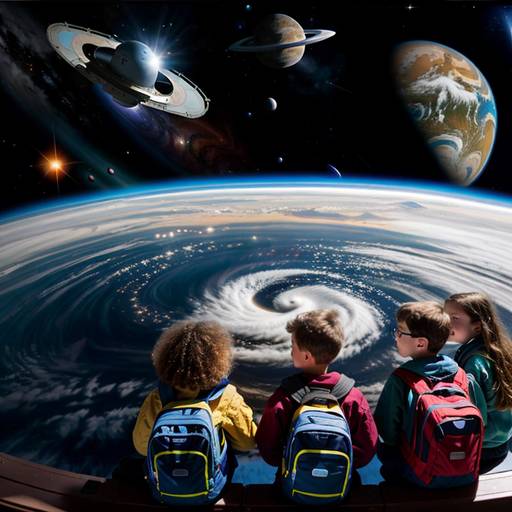
This lesson plan is designed for 1st-grade students to explore the solar system and learn about its components, including the sun and the eight planets. The lesson begins with a discussion to gauge prior knowledge, followed by a storybook reading that introduces key concepts. An interactive segment involves a hands-on activity where students work in small groups to create their own solar system models using craft materials, which fosters teamwork and creativity. As students work on their models, they learn unique facts about each planet. The lesson concludes with a discussion to reinforce learning and a takeaway activity where students create a personalized booklet about the solar system. The plan includes options for engaging videos or online games to further enhance learning. Assessment is based on observation during activities and the completion of the personalized booklets. Differentiation strategies are included to support all learners, ensuring an inclusive and engaging experience for every student.
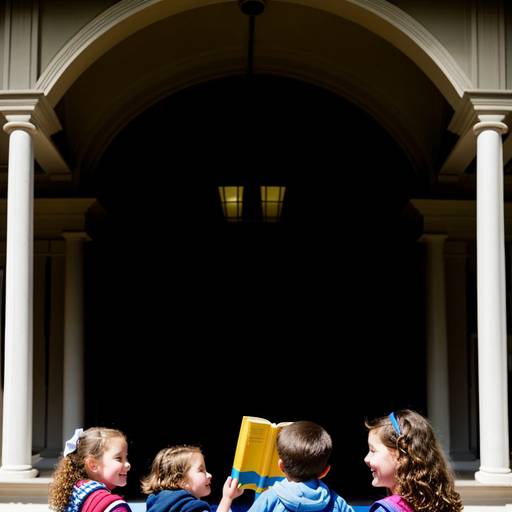
This 1st Grade Language Arts lesson plan focuses on introducing students to various genres of literature, including fiction, nonfiction, poetry, and fairy tales. The lesson begins with a group discussion about what genres are, followed by read-aloud sessions of picture books from each genre, allowing students to identify key characteristics. In a hands-on sorting activity, students work in small groups to categorize a selection of books according to genre. They then engage in a creative response activity, where they create a personalized “Storyland Passport,” illustrating their favorite genre and sharing their thoughts with the class. The lesson concludes with a brief recap of key concepts learned. Assessment is based on group participation and individual creative output, and extensions and adaptations are included for further learning opportunities and to accommodate diverse learners. This engaging approach helps foster a deeper understanding and appreciation for different types of stories.

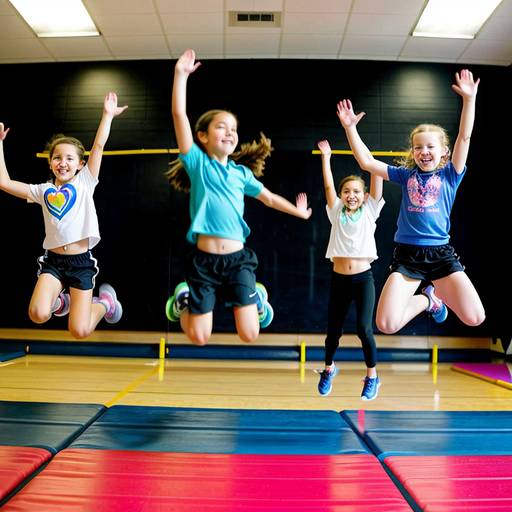
In this 1st-grade physical education lesson plan, students will engage in a 30-minute session focused on fitness and cardio through a series of fun and interactive activities. The lesson begins with a warm-up involving dynamic movements led by the teacher. Students will then learn about cardio exercise and its importance for heart health and physical activity.
The main part of the lesson includes two engaging activities: a jump rope challenge where pairs of students compete to see how many jumps they can accomplish together, and hula hoop fun, where students rotate through different hoops performing various cardio exercises. The class concludes with a cool-down session involving gentle stretches, allowing students to relax and discuss their heart rates after the activities.
Throughout the lesson, the teacher will monitor participation and engagement, providing positive reinforcement and adapting activities for varying skill levels. The session aims to promote teamwork, understanding of fitness, and the importance of staying active. Students will walk away with practical ways to incorporate movement into their daily lives.