
Filters
Level
Grade
Subject
Subject Area
Subject Topic
Standard(s)
Audience
Keyword
DurationMinutes
1st Grade Lesson Plans

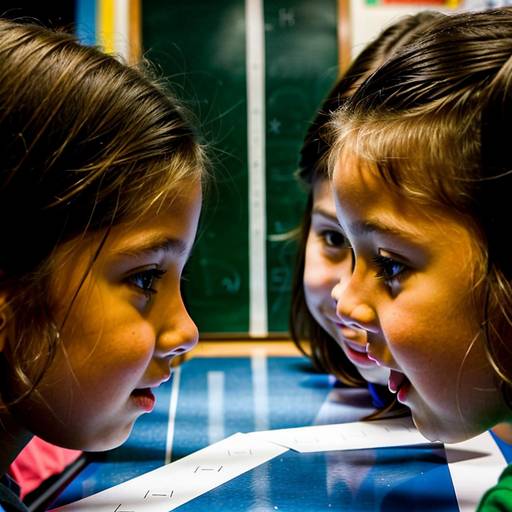
In this first-grade math lesson, students will explore the concepts of geometry by learning about different types of lines and angles. The session begins with an interactive discussion that prompts students to identify lines found in their environment. They will learn to differentiate between straight, zigzag, and curved lines, as well as understand the concept of right angles.
During guided practice, students will work in small groups to create and label their own lines using rulers and yarn, and they will search for objects in the classroom that display right angles. Following this, they will independently complete worksheets that reinforce their understanding of line types and angles through coloring and identification exercises.
The lesson concludes with a review that encourages students to share their findings, reinforcing the idea that lines and angles exist all around them. Assessment will be conducted through observation and worksheet review, ensuring that all students have engaged with the material effectively. Differentiation strategies will be in place to support varying learning needs, fostering an inclusive learning environment.
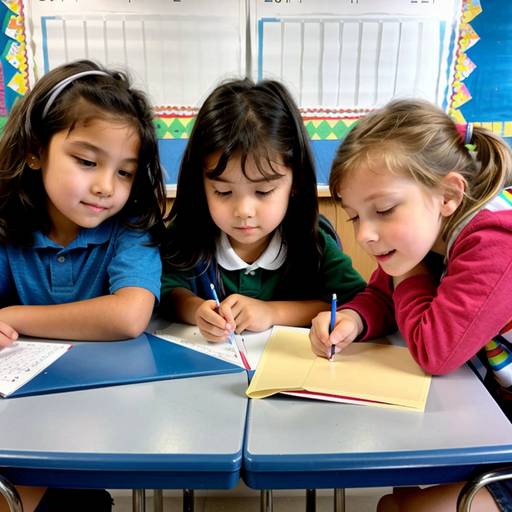
This 1st-grade math lesson focuses on geometry, specifically the identification and understanding of different types of lines and angles. The lesson begins with a read-aloud of a picture book that introduces lines and shapes, followed by a discussion on straight and curved lines, complete with visual demonstrations. Students then learn about three types of angles—right, acute, and obtuse—using flashcards and real-world examples.
In a guided practice activity, students work in small groups to create straight and curved lines using string or yarn, promoting teamwork and hands-on learning. They also embark on an "Angle Hunt" around the classroom to find and identify examples of the angles discussed. For independent practice, students engage in a craft activity where they create artwork featuring the lines and angles they learned about, encouraged to label their work.
The lesson concludes with a sharing session where students present their artwork and describe the lines and angles included. Assessment is conducted through observation during activities and by reviewing the finished art pieces. The lesson emphasizes interactive learning and aims to cultivate students' understanding of basic geometric concepts while also allowing for creativity and expression.

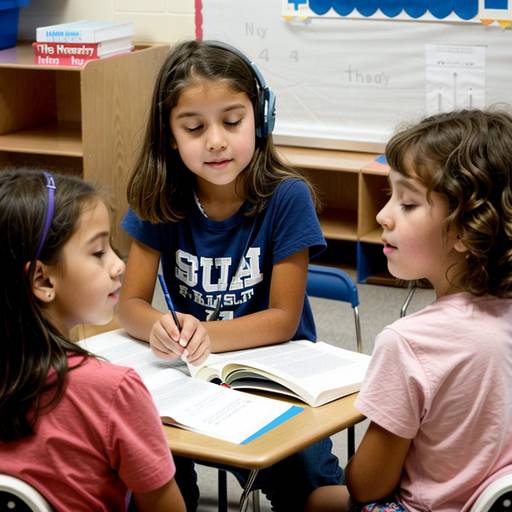
In this 1st Grade music appreciation lesson, students will explore the world of sound through listening activities and creative expression. The lesson begins with a discussion about music and the different instruments, using pictures to engage students and stimulate their interest. Students will listen to short clips from various musical genres and identify instruments they hear, discussing their feelings about the music afterwards. A group discussion will follow, allowing students to articulate their reactions and describe the emotions evoked by the pieces. They will then create artwork that visually represents their musical experience. To conclude, students will share their drawings and insights with the class, reinforcing their understanding of music’s emotional impact. This lesson aims to develop active listening skills and encourage personal expression through music.

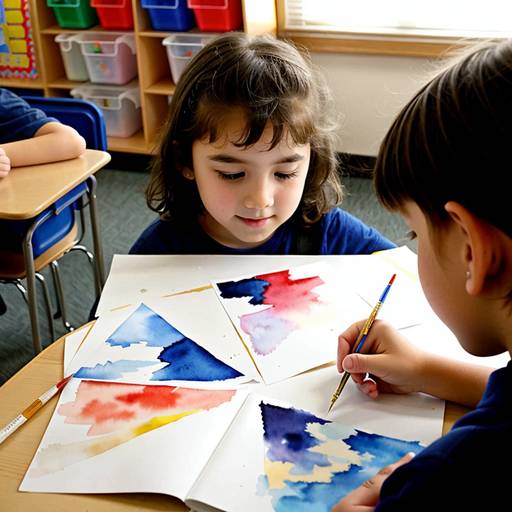
In this 1st Grade art lesson, students will learn basic techniques of watercolor painting, focusing on wet-on-wet and wet-on-dry methods. The lesson begins with a discussion and demonstration of these techniques, showcasing how colors blend and create textures. Students will then practice each technique before using them to create their own landscape paintings, incorporating primary colors and mixing them to form secondary colors. As they work, they will be encouraged to share their thoughts and artistic choices with the class. The lesson concludes with a reflection on their experiences and what they learned about watercolor techniques, along with a focus on cleaning up their work areas. Assessment will be based on observation during the activities and the final paintings, emphasizing creativity and the application of techniques. Extensions for future lessons will also be suggested to further explore watercolor art.
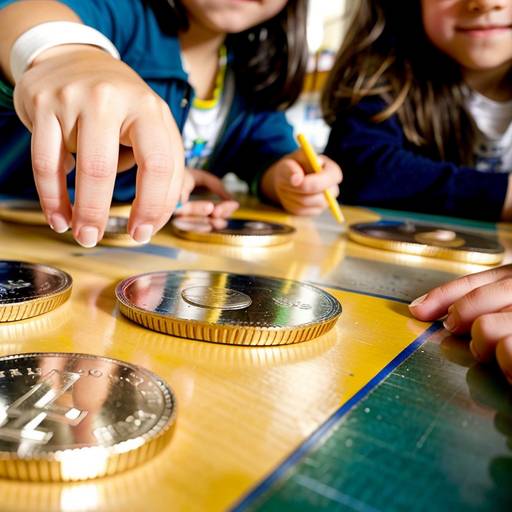
In this 1st-grade math lesson plan, students will explore the concept of money by identifying and differentiating between various coins: pennies, nickels, dimes, and quarters. The lesson begins with an engaging discussion on the use of money in everyday life, followed by hands-on activities that involve examining real or play coins to understand their values.
During direct instruction, students will participate in coin identification exercises and practice counting coins in groups. The highlight of the lesson is the setup of a classroom "store," where students can role-play as shoppers and cashiers, allowing them to apply their knowledge in a simulated buying experience. This interactive activity fosters understanding of how to use coins in transactions.
To conclude, students will reflect on what they have learned, and their understanding will be assessed through observational evaluation during the store activity and a simple worksheet that reinforces coin recognition and values. Differentiation strategies ensure that all learners can participate and benefit from the lesson.

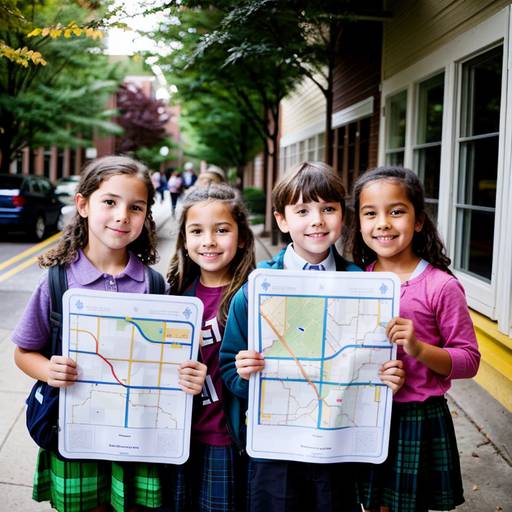
This lesson plan for 1st-grade social studies focuses on introducing students to basic geography and map concepts. It aims to help students understand important elements of maps, including symbols, legends, and cardinal directions. The lesson begins with a discussion about familiar locations in their neighborhood, leading to an exploration of map basics.
Students engage in identifying and discussing various symbols that represent different places. They then create their own neighborhood maps on blank paper, utilizing the symbols provided to accurately represent the locations and experiences they value. Through sharing their maps with peers, students develop communication skills while reinforcing their learning.
The conclusion part of the lesson involves a review of key concepts and encourages students to consider the significance of maps beyond their immediate surroundings. Assessment is based on participation and the creation of their maps, which serves to evaluate their understanding of the material. A follow-up activity suggests creating a collaborative classroom map, enhancing the lesson's focus on community and teamwork. Overall, the lesson combines creativity, engagement, and experiential learning in a structured format.
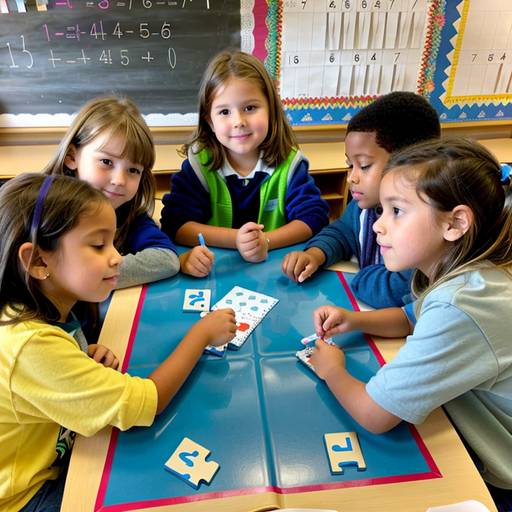
In this 1st-grade math lesson, students will explore the concept of addition through engaging word problems. The lesson begins with an introduction to addition, including a simple equation demonstration. Then, students learn about word problems, using a relatable scenario to illustrate how addition can be applied in real-life situations.
Afterward, students break into small groups to tackle word problem cards, using counters to visualize and solve the problems collaboratively. Following guided practice, they will complete worksheets independently, drawing pictures and writing equations to represent the problems they solve. The lesson wraps up with students sharing their work with the class, fostering a collaborative environment and reinforcing their understanding of addition.
Assessment will be based on observations during group work and the completion of worksheets, ensuring that each student's grasp of the topic is evaluated. Modifications will be provided for varying skill levels to ensure all students can participate meaningfully. Overall, the lesson aims to make addition fun and relatable through interactive problem-solving.

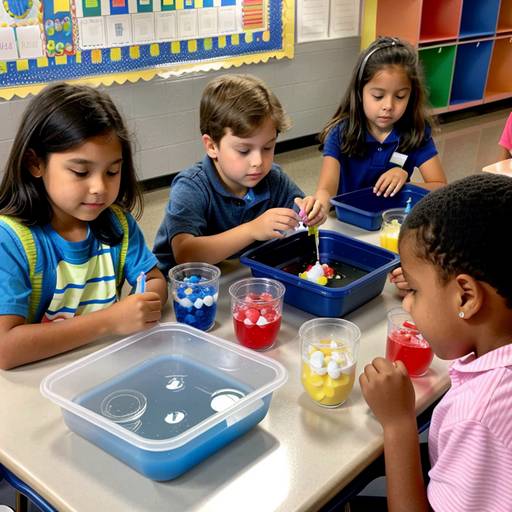
In this 1st grade science lesson, students will explore the concept of matter by identifying and classifying materials as solids, liquids, or gases. The lesson begins with a discussion where students share examples from their surroundings, followed by an explanation of the properties of each state of matter.
The class will then divide into small groups to engage in hands-on exploration at three different stations: observing solids with magnifying glasses, pouring water to understand liquids, and inflating balloons to demonstrate gases. After completing the stations, students will reconvene for a group discussion to share their findings, contributing to a class chart that summarizes the characteristics and examples of each state of matter.
An interactive sorting game will allow students to classify various objects into the appropriate category. The lesson concludes with a recap of the states of matter, encouraging students to reflect on their learning. For homework, students will find items at home that represent each state and prepare to share them in the next class. This engaging and interactive lesson fosters curiosity and a foundational understanding of physical science concepts related to matter.
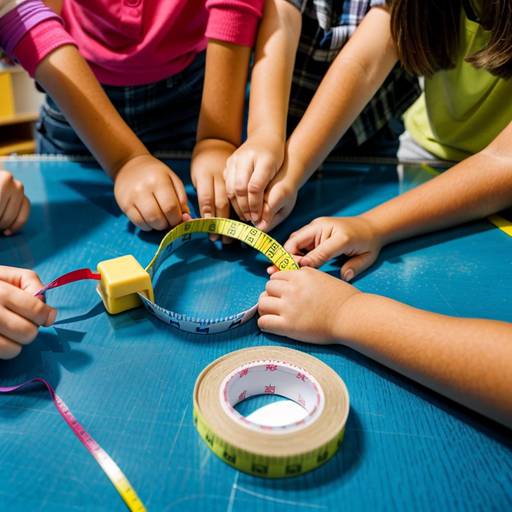
This lesson plan focuses on introducing 1st-grade students to the concepts of measurement and length using hands-on activities. The lesson begins with a discussion about measurement, where students learn key vocabulary such as inches and centimeters. Through guided instruction, students observe demonstrations of using a tape measure or ruler, and they practice measuring various classroom objects with a partner.
They then engage in independent practice by measuring different items depicted in worksheets and recording their findings. The lesson concludes with a classroom discussion where students share their measurements and reflect on their estimating abilities. Assessment occurs through observation during activities and by reviewing the completed worksheets. Additionally, extension activities are provided to challenge students further. Overall, the lesson emphasizes collaborative learning and practical application of measurement skills in an engaging manner.
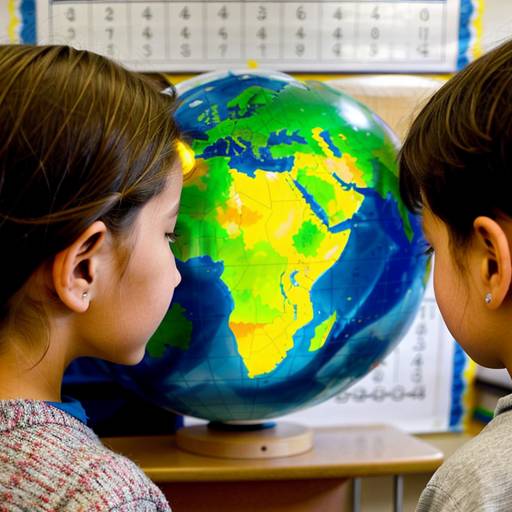
In this 1st Grade math lesson, students will learn about measurement and length through hands-on activities. The lesson begins with an engaging discussion to introduce the concepts of length and measurement. Students will then participate in a "Measurement Hunt," where they work in small groups to measure various classroom objects using non-standard units such as blocks and paperclips, encouraging collaboration and critical thinking.
After measuring, groups will share their findings, allowing students to compare measurements and discuss the differences. The lesson concludes with a recap of key concepts, and students will express what they've learned through an exit ticket. Observations of group participation and completed worksheets will help assess understanding. Extensions for early finishers and future lessons on standard measurement units are also included, providing opportunities for further exploration of the topic. This interactive approach aims to create a foundational understanding of length and measurement while making learning fun and engaging.