
Filters
Level
Grade
Subject
Subject Area
Subject Topic
Standard(s)
Audience
Keyword
DurationMinutes
1st Grade Lesson Plans

In this 1st-grade social studies lesson, students will explore the concept of countries and their significance within the world. The lesson begins with a discussion about what constitutes a country, using a large world map to highlight continents and specific nations. Students will engage in a guided activity where they match flags to the associated countries while learning interesting facts about each.
For the independent activity, each student will choose a country to research further and create a colored map that includes drawings or descriptions of three notable features, such as the flag, food, and a famous landmark. They will have the opportunity to share their findings with peers in small groups, fostering communication and collaboration.
The lesson will conclude with a class regrouping to allow students to share insights about what they learned, reinforcing their understanding of global diversity. The overall aim is to instill an appreciation for different cultures and geography while encouraging creativity and peer interaction. Assessment will be based on participation and the quality of the completed maps, with potential extensions for further cultural exploration in future lessons.

In this 1st-grade Language Arts lesson plan, students will explore the concept of synonyms, learning to identify and understand words with similar meanings. The lesson begins with a brief introduction to vocabulary and synonyms, using examples and visuals to engage the class. Students will participate in guided activities, including matching word cards that represent synonyms and collaborating in small groups to find synonyms for picture cards. Independent practice will involve completing worksheets where they write synonyms for provided words. The lesson concludes with a recap of the importance of synonyms and an option for students to share findings from a short story. Assessment will occur through observation during group activities and review of completed worksheets, with differentiation strategies in place to support individual learning needs. Students will also be encouraged to explore synonyms at home and share their discoveries in future classes.
In this 1st-grade Language Arts lesson, students will learn about synonyms—words that have similar meanings. The lesson begins with an introduction to the concept of synonyms, using flashcards to illustrate examples. During a read-aloud of a simple storybook, students will participate by identifying synonyms for descriptive words used in the text.
Next, students will be divided into small groups to engage in a synonym matching activity with flashcards. After regrouping, they will share their matched pairs with the class, reinforcing their understanding through discussion. Students will then complete a worksheet that includes exercises related to identifying and using synonyms.
The lesson concludes with students sharing their favorite “word friends” from the day's activities, emphasizing the importance of synonyms in enhancing their communication. Assessment will be based on participation in group activities and the completed worksheets, while potential extensions include creating a classroom “Word Friends Wall” to display new synonyms discovered during reading. Differentiation strategies will be implemented to support varied learning needs.
This lesson plan focuses on helping 1st-grade students understand the basic components of sentences, specifically the subject, verb, and object. It begins with an engaging introduction that encourages discussion about what constitutes a sentence. The teacher explains each component and demonstrates how they combine to form a complete sentence.
Students then work collaboratively in small groups using picture prompts to choose subjects, verbs, and objects, ultimately constructing their own sentences. Following guided practice, individual students complete a worksheet where they draw and write their chosen sentences. The lesson concludes with student presentations, fostering a supportive environment for sharing and feedback.
Assessment is based on participation during group activities and the completion of the worksheets. Extensions are provided for advanced learners, and post-lesson reflection encourages continuous improvement of instructional strategies. Overall, the lesson aims to build foundational grammar and sentence structure skills in a fun and interactive way.
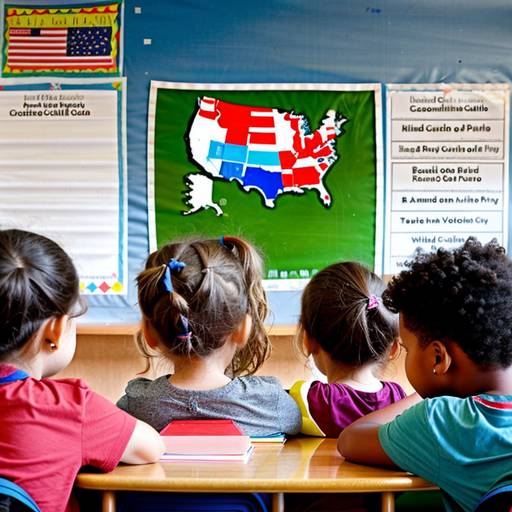
In this 1st Grade Social Studies lesson, students will explore geography and learn about various countries and their cultures. The lesson begins with an introduction to geography, using a world map or globe to discuss different countries and encourage students to share their knowledge. Students will then focus on a few selected countries, learning interesting cultural facts such as traditional foods, clothing, and landmarks through visual aids.
Following this exploration, students will engage in a hands-on craft activity where they will create a flag or cultural symbol representative of the chosen country. This activity will help reinforce their understanding and allow for creative expression. The lesson concludes with a wrap-up discussion where students share their crafts and insights, supporting language development and communication skills.
To assess understanding, the teacher will observe participation and collect crafted projects for feedback. Extension activities may include a family geography project and the introduction of online exploration tools, promoting continued learning about global cultures. The lesson aims to foster curiosity and appreciation for diversity among young learners.
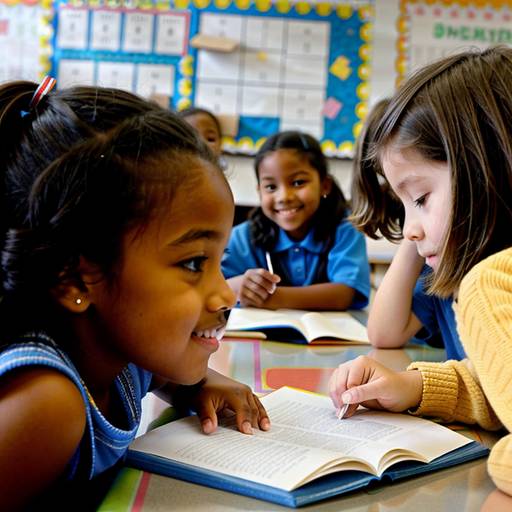
This 1st-grade Language Arts lesson focuses on reading fluency and comprehension. The lesson begins with a discussion about what reading fluency means, followed by an introduction of high-frequency words that will aid in students' reading development. The teacher models fluent reading with a short passage, demonstrating expression and speed.
Students then engage in a paired reading activity, where they take turns reading leveled texts aloud to each other for one minute, allowing them to practice fluency. Following the paired reading, the class participates in a discussion to assess comprehension by answering questions about the story.
For independent practice, students receive fluency exercise sheets to underline high-frequency words and reflect on the text. The lesson concludes with a group reflection, encouraging students to share their experiences and consider reading at home.
Assessment occurs through observation during partner reading, review of comprehension responses, and collection of the fluency sheets. The lesson includes extensions for advanced students and differentiation to support those who may need additional help, ultimately aiming to foster a love of reading and improve fluency skills in a fun and interactive manner.