
Filters
Level
Grade
Subject
Subject Area
Subject Topic
Standard(s)
Audience
Keyword
DurationMinutes
1st Grade Lesson Plans

In this 1st grade math lesson, students will explore the concepts of reading time on both analog and digital clocks. The lesson begins with a discussion on the importance of time in daily life, followed by a direct instruction segment demonstrating how to read different clock types. Students will practice reading clock times as a class using visual aids.
Next, they will engage in a guided practice activity focused on creating time patterns related to their daily routines. Afterward, students will work independently on worksheets that reinforce time recognition and pattern creation. The class will conclude with students sharing their routines and a summary of the key concepts learned.
Assessment will involve observing student participation and reviewing their worksheets to gauge their understanding of reading time and recognizing time patterns. The lesson also includes accommodations for students needing additional support and suggests follow-up activities to further reinforce learning. Overall, the lesson aims to make the concept of time interactive and relatable while building foundational math skills.
In this 1st-grade math lesson, students will explore the concept of telling time, focusing specifically on identifying hours and half-hours using both analog and digital clocks. The lesson begins with a discussion about the importance of time and proceeds to a demonstration of how to read a clock, highlighting the functions of the hour and minute hands. Students will engage in guided practice by setting their own paper clocks to various announced times, reinforcing their understanding through hands-on activity. Following this, they will complete a worksheet that allows them to apply their knowledge independently by writing down the times corresponding to clock images. The lesson concludes with a review of the key concepts and a possible extension activity for further reinforcement. Assessment will involve collecting worksheets and observing student participation to gauge comprehension. Differentiation strategies will be in place to support students at various levels of understanding.
This 45-minute lesson plan for first graders focuses on teaching students to identify and read both analog and digital clocks, emphasizing the concepts of hours and half hours. The lesson begins with an engaging discussion about the importance of time, followed by a storytelling session to illustrate time concepts in a fun context.
Students will then receive direct instruction on the parts of an analog clock and how to read various times. An interactive demonstration allows them to practice replicating time shown on a clock. During guided practice, students will work with time flashcards to reinforce their understanding, encouraging quick responses.
For independent practice, students will complete a worksheet where they draw clock hands to represent specific times and write the corresponding digital time. The lesson concludes with a wrap-up discussion where students share their work, allowing for reflection on key concepts. Optional extension activities include time games and a family connection activity to reinforce learning at home. Assessment will be based on observation during activities and evaluation of completed worksheets.

In this 1st-grade social studies lesson plan, students will explore the concept of timelines and their significance in understanding history. The lesson begins with an introduction to the idea of time and history, using a visual timeline to discuss key events. Students will then work in small groups to organize pre-printed event cards in chronological order, fostering collaboration and critical thinking. Next, each student will create a personal timeline by illustrating three significant events from their own lives, allowing for individual expression and creativity. The lesson concludes with students sharing their timelines and reflecting on the importance of personal and historical events. Assessment will be conducted through observation during group activities and the completion of personal timelines, with adaptations available for varying skill levels. Overall, the lesson effectively merges historical understanding with personal reflection, engaging students in the exploration of their own stories alongside broader historical contexts.
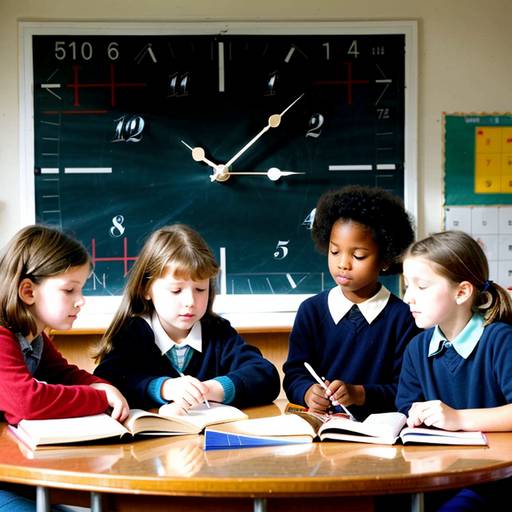
In this 1st-grade mathematics lesson, students will explore the concept of time by learning to read analog clocks and recognizing time patterns related to their daily routines. The lesson begins with a friendly introduction and a discussion about the importance of time. Students will engage in direct instruction that includes identifying clock components and practicing telling time to the hour.
Through guided activities, students will work in small groups to set their clocks to various specified times and collaboratively create time patterns on the board. For independent practice, they will complete worksheets that involve matching activities to the appropriate times and extending time sequences.
The lesson emphasizes interaction, with opportunities for sharing individual experiences related to time and routines. Student understanding will be assessed through observation during activities and by reviewing their worksheets. To further support learning, adaptations will be available for students needing extra assistance, ensuring that everyone can engage with the concepts being taught. The session will conclude with a brief review highlighting key points learned.
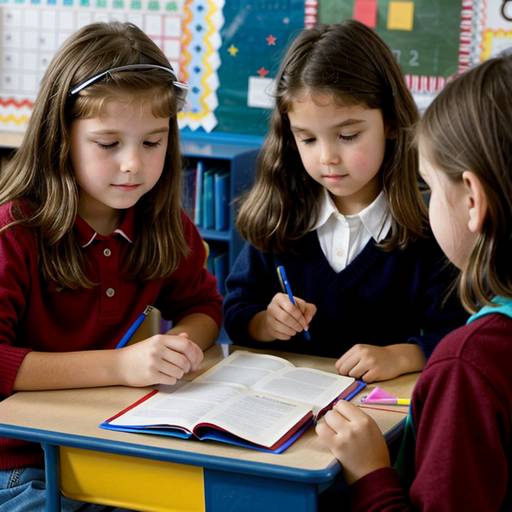
In this 1st grade math lesson, students will explore the concept of time and learn to tell time using both analog clocks and daily schedules. The lesson begins with a discussion about the importance of telling time in everyday life, followed by a demonstration of clock components, including the hour and minute hands. Guided practice allows students to customize their individual paper clocks to match various times called out by the teacher. A story reading reinforces the connection between time and daily activities. Following this, students will complete a worksheet that includes filling in their own daily schedules with corresponding times. The class concludes with a review of key concepts and sharing of student schedules. Assessment will occur through observation during activities and evaluation of the completed worksheets. Adaptations are suggested to support diverse learning needs, with optional extension activities available to further engage students in the topic.
This 1st-grade social studies lesson plan focuses on exploring the concepts of community and diversity. Students will begin by discussing what it means to live in a community and identifying their own neighborhoods. Utilizing a world map, they will see how varied cultures can coexist in one area. After a collaborative drawing activity representing different aspects of their community, the class will engage in a storytime session featuring a picture book about diversity.
Following this, students will learn about community helpers, role-play their chosen helpers, and share what they appreciate about these roles. They will then create a visual representation of their ideas by contributing to a classroom quilt made up of their artwork, symbolizing the uniqueness and unity of their diverse community. The lesson concludes with a reflection where students share what they learned about each other and the importance of diversity. Assessment will occur through participation and creativity demonstrated in their activities, with opportunities for extension through community engagement.

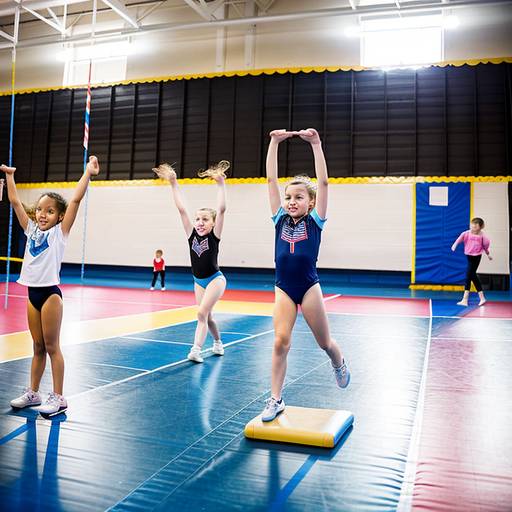
This 1st Grade physical education lesson plan focuses on introducing students to basic gymnastics movements and fostering teamwork through engaging activities. The lesson begins with a warm-up that includes fun animal walks and dynamic stretches to prepare students for physical activity.
Students then rotate through three different stations where they practice tumbling (forward and backward rolls), balancing (walking on a balance beam and performing various poses), and jumping (navigating over cones and into hula hoops). Each activity promotes skill development, coordination, and confidence.
Following the stations, students participate in a teamwork challenge involving a simple obstacle course that integrates the skills they have learned. The lesson concludes with a cooldown stretch where students reflect on their experiences, share what they enjoyed, and recognize the importance of teamwork in sports. Throughout the lesson, safety is emphasized, ensuring a supportive and inclusive environment for all participants.
In this 1st-grade social studies lesson plan, students will explore the concepts of community and diversity. The lesson begins with a discussion about what a community is and the diverse individuals that comprise it. Students will listen to a picture book that illustrates various cultures and participate in a discussion about the unique contributions of the characters.
Following this, students will engage in an interactive activity where they survey their classmates to learn about different traditions and backgrounds. The class will then create a collaborative community quilt, with each student designing a square that represents their family’s culture or aspirations. The lesson concludes with a reflection on how these diverse contributions strengthen and enrich the community. Assessment includes observing participation, reviewing surveys, and evaluating the quilt squares. Extensions may involve inviting guest speakers or organizing a cultural day, further deepening students’ understanding and appreciation of diversity within their community.

In this 1st-grade art lesson, students will explore basic watercolor painting techniques while creating their own vibrant ocean scenes. The lesson begins with a discussion about the colors and elements associated with the ocean, followed by a demonstration of watercolor techniques, including blending colors, creating textures with salt, and using plastic wrap for added effects. Students will then have the opportunity to apply these techniques in their artwork, focusing on creating a gradient effect in their paintings. After completing their artworks, students will engage in a gallery walk to showcase their creations and share their experiences. The lesson concludes with a reflection on their learning and a discussion about their artistic choices. Assessment will be based on their application of techniques and creativity in their final pieces. Extension activities may include writing a story about their scenes or exploring different painting mediums in future lessons.