
Filters
Level
Grade
Subject
Subject Area
Subject Topic
Standard(s)
Audience
Keyword
DurationMinutes
1st Grade Lesson Plans

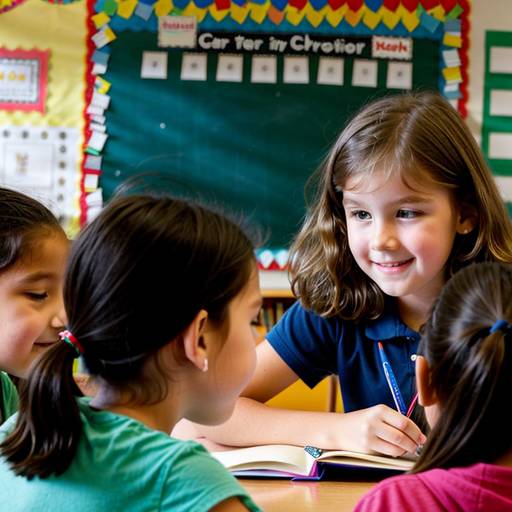
In this first-grade Language Arts lesson, students will engage in creative writing by crafting their own short stories. The lesson begins with a group reading of a picture book that highlights key story elements such as character, setting, and plot, prompting a discussion to identify these components. Students will then use a provided worksheet to brainstorm and outline their stories, focusing on the main character, setting, and sequence of events. After drafting their stories, they will illustrate a scene from their narratives. The lesson concludes with students sharing their stories in pairs or small groups, fostering a supportive environment for feedback. Assessment will involve observing participation and reviewing their worksheets for comprehension of story elements. The lesson encourages creativity and confidence in writing while emphasizing the joy of storytelling. Extensions are available for students needing further challenge or engagement.

In this 1st grade physical education lesson focusing on fitness and flexibility, students will engage in a variety of interactive activities designed to promote movement and increase flexibility. The lesson begins with an introduction to the concept of flexibility and its benefits, followed by a warm-up involving creative animal-themed stretches that encourage participation and fun.
Students will then participate in a relay race where they visit different stations to perform specific stretches and fitness activities, fostering teamwork and active engagement. Optional parachute exercises may be included to further enhance coordination and group dynamics.
The lesson concludes with a calming cool-down session that incorporates gentle stretches and deep breathing exercises, allowing students to reflect on their learning. Throughout the lesson, observational assessments will be utilized to ensure students are practicing movements safely and effectively. The overall goal is to instill an understanding of the importance of flexibility in a joyful and active environment.

This 1st-grade math lesson focuses on introducing students to the concept of subtraction through engaging activities and visual aids. The lesson begins with a storytelling session to capture students' interest, followed by a demonstration of subtraction using manipulatives and visual illustrations on the whiteboard. Students participate in small group activities to collaboratively solve subtraction problems, encouraging discussion and reasoning.
After guided practice, students complete a worksheet to reinforce their understanding of subtraction through independent work. The lesson concludes with a review of key concepts and an exit ticket where students express what they learned by creating a subtraction problem. Assessment is conducted through observation during activities, evaluation of worksheets, and review of exit tickets. Adaptations are included to support learners at different levels, ensuring all students can engage with the material effectively.
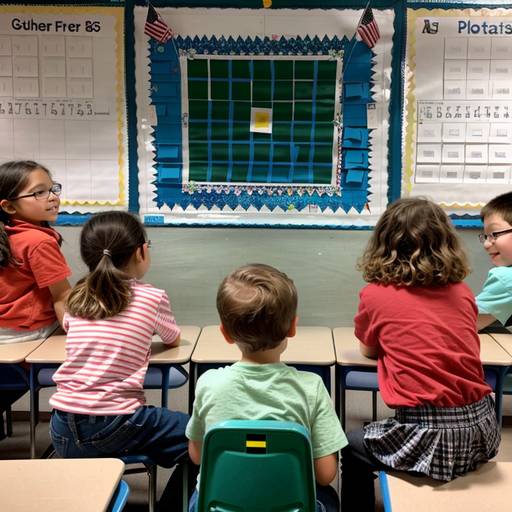
In this 1st-grade math lesson, students will explore the concept of subtraction through an engaging and thematic approach centered around outer space. The lesson begins with an introduction to subtraction as "taking away," using visuals and discussions about space to capture students' interest. Direct instruction includes demonstrating simple subtraction problems with manipulatives, allowing students to visualize the process. Guided practice occurs in pairs, where students solve subtraction problems involving tangible objects. Independent practice involves completing a worksheet with space-themed subtraction exercises. The lesson concludes with a class review of answers, reinforcing the subtraction concepts learned, and rewarding students with space-themed stickers for their efforts. Assessment is based on observation during activities and the evaluation of completed worksheets, while differentiation strategies are included to support students at varying levels of understanding. Extension activities further enhance learning, making subtraction enjoyable and memorable.
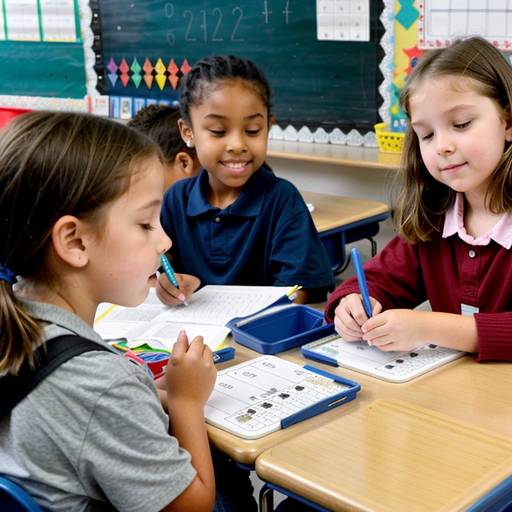
This 1st-grade math lesson focuses on introducing students to the concept of subtraction through interactive activities and hands-on learning. The lesson aims for students to understand subtraction as taking away and to solve simple subtraction problems using manipulatives, drawings, and games.
The session begins with a discussion on subtraction, where students share their thoughts on its meaning. The teacher then demonstrates subtraction using manipulatives, explaining the subtraction symbol and providing examples for the class to solve together.
Students are then guided through practice with manipulatives, reinforcing the concept by physically taking away items to find answers. The lesson includes three engaging math stations where students can explore subtraction in different ways: counting and taking away with manipulatives, drawing visual representations of subtraction problems, and playing a bingo game centered on subtraction equations.
In the closing segment, the teacher reviews key concepts with the class, encouraging students to share their favorite parts of the activities. Assessment occurs through observation during the stations and the review of completed worksheets and drawing activities. Differentiation is provided for advanced learners and those needing additional support to ensure all students grasp the concept of subtraction. Overall, the lesson promotes active learning and fosters a positive environment for math exploration.
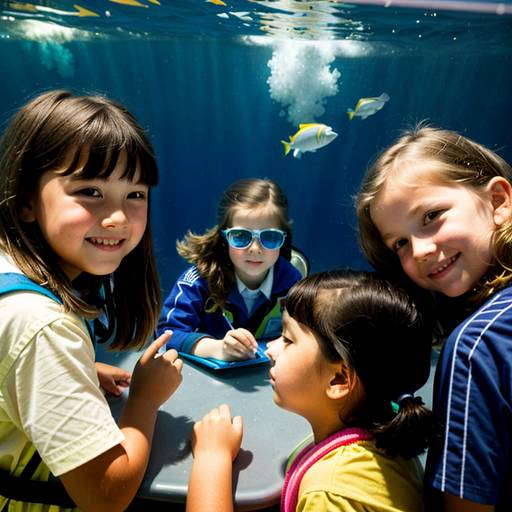
In this 1st-grade math lesson focused on subtraction, students will explore the concept of taking away through engaging activities and manipulatives. The lesson begins with an interactive ocean-themed song to capture students' attention, followed by direct instruction where the teacher demonstrates subtraction using visual aids like seashells and fish. Students will then participate in guided group activities, solving subtraction problems with their manipulatives.
Afterward, they will work independently on worksheets designed with ocean illustrations that reinforce their understanding of subtraction concepts. The class will reconvene to discuss answers and share strategies, followed by reading a subtraction-related storybook to deepen engagement. Finally, students will participate in an interactive game to practice subtraction with a partner. Assessment will occur through observation during group activities and the review of worksheets. Adaptations will be made for students needing extra support or those ready for advanced challenges. This lesson not only teaches subtraction but integrates creativity and collaboration, fostering a comprehensive learning environment.

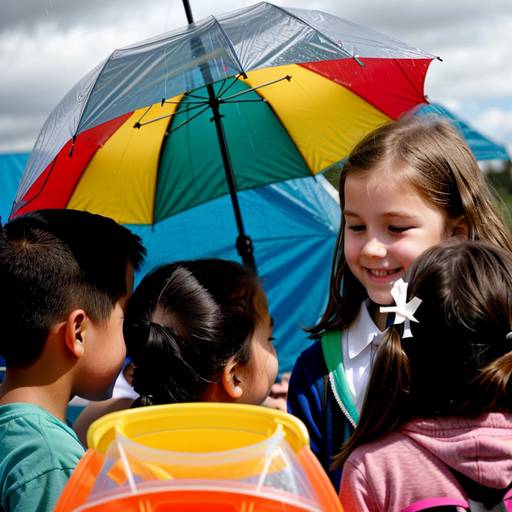
In this first-grade Earth Science lesson, students explore the concepts of weather and the water cycle. The lesson begins with a discussion about different types of weather, where students express their preferences and feelings associated with various conditions. Weather symbols are introduced to help students identify sunny, rainy, snowy, windy, and cloudy weather.
Next, the teacher presents a diagram of the water cycle, explaining its stages: evaporation, condensation, precipitation, and collection, potentially demonstrating these concepts with a simple experiment. Students then participate in an engaging activity where they create weather journals, illustrating their favorite weather and writing a sentence about what activities they enjoy during that weather.
After sharing their journals with classmates, the lesson concludes with a recap and an exit ticket activity, where students draw a weather symbol and describe something they learned. Throughout the session, students are assessed based on their participation, journal entries, and exit tickets, enabling them to actively engage with fundamental Earth science concepts while expressing their creativity. Extensions for the lesson may include outdoor observation and weather forecasting activities.
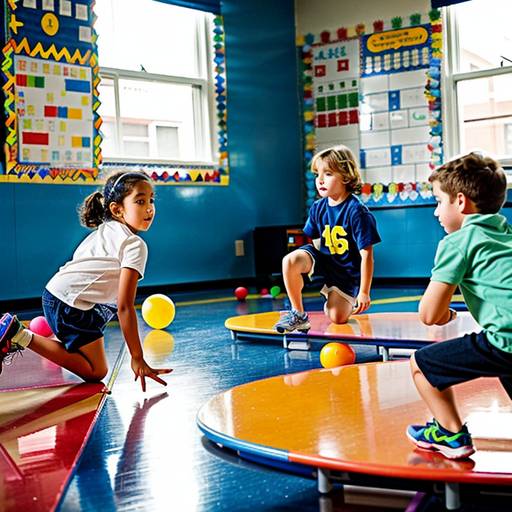
In this 1st-grade science lesson, students will explore the concept of motion through engaging, hands-on activities. The lesson begins with a discussion on motion, introducing key vocabulary such as "push," "pull," "slide," "roll," and "speed." Students are then divided into small groups to participate in three interactive stations: one focusing on rolling objects using toy cars and ramps, another on sliding objects across different surfaces, and the third on pushing and pulling various-sized balls. They will observe and record their findings, discussing how different factors affect movement. To reinforce their understanding, students will reflect on their observations and share their learning with the class. As an optional extension, they can conduct a "Motion Hunt" at home, identifying items that move and how they do so. The lesson encourages active participation and fosters an understanding of motion, distance, and speed through observation and collaboration. Assessment will involve monitoring student engagement and reviewing their notes and drawings to gauge comprehension.
In this first-grade technology lesson plan, students will explore the concepts of digital citizenship and online safety. The lesson begins with a discussion about their online activities, encouraging active engagement. Students will watch short, age-appropriate video clips that introduce key topics such as keeping personal information private, recognizing safe online interactions, and identifying trusted websites.
Following this, the class will enjoy a story that illustrates online behavior, prompting an interactive dialogue about what the characters did right and wrong. During a group activity, students will categorize different online scenarios as safe or unsafe, fostering critical thinking around their online choices.
To conclude, students will individually create a drawing of their favorite safe online activity, along with a written explanation. The lesson wraps up by summarizing the main points and providing resources to reinforce the importance of responsible behavior in the digital world. Overall, the lesson aims to equip young learners with the foundational skills and understanding they need to navigate online spaces safely and responsibly.
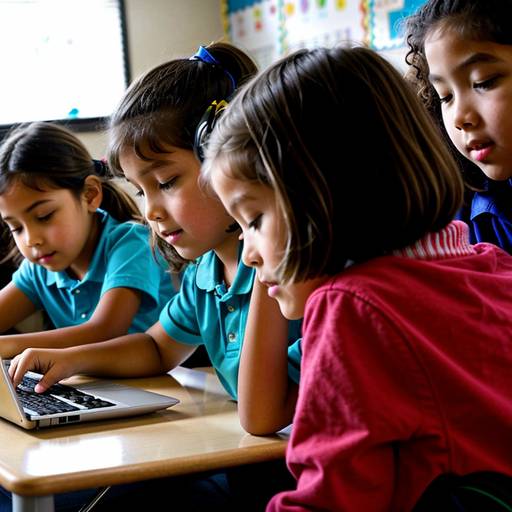
This 1st-grade technology lesson focuses on teaching students the importance of device maintenance and proper handling of technology tools. It begins by engaging students in a discussion about their favorite devices, followed by an overview of essential care practices, such as keeping devices clean, avoiding food and drinks near them, and handling them gently. Students participate in a "Do's and Don'ts" activity, where they create their own lists of device care practices. The lesson includes a hands-on component, allowing students to use tablets or laptops while reinforcing proper handling techniques. At the conclusion, students share their learnings, and the class collaborates on a poster of “Tech Care Rules” for display. Assessment is based on observations during the hands-on activity and the quality of group work. Overall, the lesson aims to instill a sense of responsibility and care toward technology in young learners.