
Filters
Level
Grade
Subject
Subject Area
Subject Topic
Standard(s)
Audience
Keyword
DurationMinutes
Preschool Lesson Plans


In this preschool art lesson, children will explore the colors and textures of nature related to the four seasons. The session begins with a group discussion about seasonal attributes, utilizing visual aids and real examples to stimulate engagement. Students will then embark on an outdoor or window-side exploration, gathering natural materials that represent the seasons. Using magnifying glasses, they will observe and discuss these items' colors and textures.
Back in the classroom, each child will select a construction paper color reflecting their favorite season and create artwork by painting the natural materials or crafting collages. Following the art creation, a 'show and tell' session will allow students to present their pieces, describe their seasonal choices, and the materials used. The lesson concludes with reflecting on the role of nature and seasonal changes in art. The artworks will be displayed around the classroom, celebrating the children's creativity and their connections to the natural world. Extensions include a storybook reading about seasons and the introduction of a sensory bin for further exploration. The lesson focuses on fostering artistic expression, engagement with nature, and the development of observational skills.

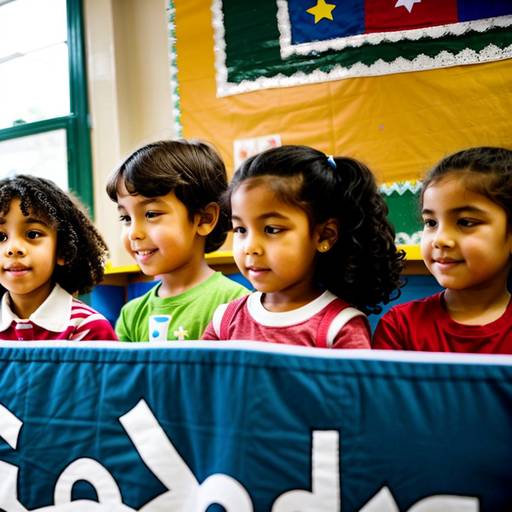
In this preschool lesson plan, students are introduced to the concept of community helpers and their significant roles within the neighborhood. The session begins with a circle discussion where children share their experiences with various community helpers, such as firefighters, doctors, and police officers. A storybook about community helpers is then read aloud, prompting interactive questions to deepen understanding.
The children participate in activities, including trying on community helper costumes to engage in role-play, allowing them to envision themselves in these vital positions. They also create simplified community maps illustrating their interpretations of where community helpers can be found, showcasing their creativity with crayons and paper.
To foster gratitude, students write or draw thank-you notes to community helpers in a designated mailbox, reinforcing their appreciation for these individuals. The lesson concludes with a closing circle, where each child shares something they learned or expresses their future aspirations related to community service.
Throughout the lesson, children are encouraged to actively engage and participate, providing opportunities for them to develop a sense of citizenship and recognize the importance of helping their community. Optional extension activities, such as a field trip to a local fire station or an invitation for a community helper to visit the classroom, can further enhance their learning experience. Overall, the lesson aims to instill an understanding of community, engagement, and the values of service and gratitude.

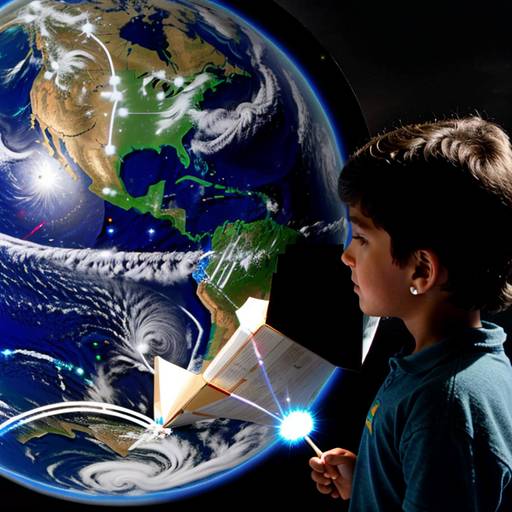
In this preschool science lesson, students will explore fundamental concepts related to Earth and space through engaging hands-on activities. The class begins with a discussion about Earth, using a large blue balloon to illustrate its features. Each child will then decorate a small balloon to represent a planet, allowing them to express their creativity while learning basic facts about the solar system.
Next, students will conduct a simple experiment using clear cups of water to represent Earth, adding cotton balls as clouds to observe how they form. The activity will include using flashlights to simulate sunlight, prompting discussions about day and night and the weather's role in our environment.
The lesson will culminate in a creative activity where students will create their own night sky on black construction paper, using stars and constellations to visually represent the cosmos. Throughout the lesson, students will be encouraged to share their discoveries and reflections on what they have learned.
The session aims to foster curiosity, promote vocabulary development, and enhance understanding of scientific principles related to Earth and space in a fun, interactive way.

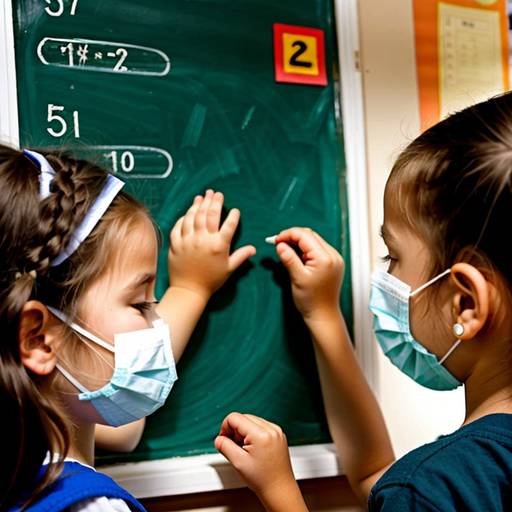
In this preschool math lesson, students engage in a fun and interactive exploration of counting through a theme centered around zoo animals. The lesson begins with a group discussion about different zoo animals, leading into a collaborative counting activity where each child brings their animal to the front and counts aloud with their peers. Students then split into two teams for a sorting game, where they pick animals and place them into baskets labeled with numbers, reinforcing their counting skills. An interactive counting story follows, encouraging movement and participation as students act out the animals being counted. The lesson concludes with a review of numbers 1-10, encouraging students to share their favorite animals and wrapping up with worksheets to further reinforce their counting knowledge. Throughout the lesson, students build social skills and engage in cooperative learning while developing their mathematical concepts.
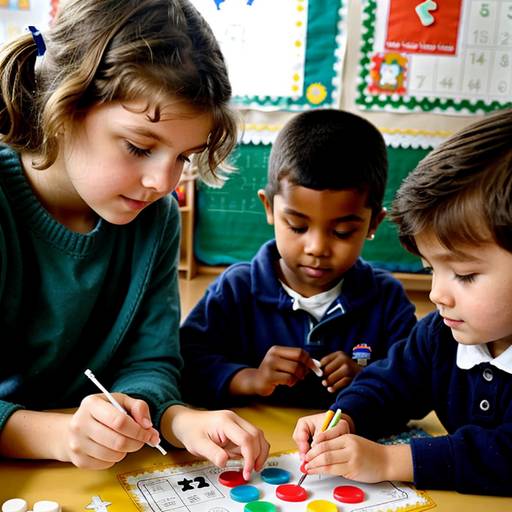
In this preschool math lesson, students engage in a variety of activities designed to enhance their number recognition skills. The lesson begins with a group circle time where children learn to identify numbers 1 through 10 by repeating after the teacher and answering related questions that encourage number awareness. Students then participate in an interactive exploration with toy critters, where they match the number of critters to corresponding number cards, reinforcing counting skills through hands-on practice.
Following this, the class engages in a group counting activity where they collectively identify and count critters chosen by their peers, further solidifying their understanding. An independent activity allows students to work with counting mats, placing the correct number of critters on each mat as they practice one-to-one correspondence.
The lesson concludes with a closing circle where students share their experiences, participate in a final review of the numbers, and receive stickers or stamps as rewards for their engagement and effort. Throughout the lesson, students build their number recognition and counting skills in a playful and supportive environment.
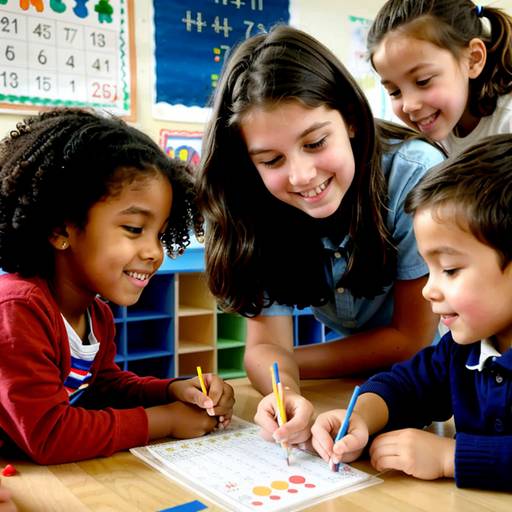
This preschool math lesson focuses on teaching students to count from 1 to 10 using animal representations. The session begins with an introduction that engages students by encouraging them to name different animals. During a hands-on activity, students use small animal toys to group and count their toys, reinforcing one-to-one correspondence while sharing their counts with the class.
To incorporate movement and music, the children participate in a song that includes counting down, which enhances their engagement. Following this, they complete a worksheet featuring various animal counting tasks, allowing the teacher to assess their understanding and counting skills.
The lesson concludes with a recap and reflection where students share their work and discuss their favorite animals. Throughout the session, informal assessments are made based on observation, and adaptations or extensions are provided to accommodate varying skill levels. The overall approach promotes a fun and interactive way to develop early counting skills in a thematic context.
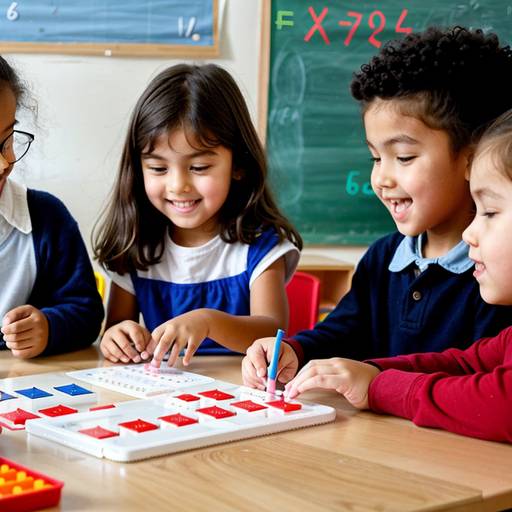
This preschool math lesson focuses on helping young children develop number recognition and counting skills through interactive activities. The session begins with a circle time, where students engage in a welcome song and are introduced to numbers 1-10 through visual aids.
In the first activity, children participate in a number match game, pairing number cards with corresponding counting manipulatives, which promotes both recognition and verbal counting skills. Following this, a counting song is introduced, allowing students to sing and engage with the numbers in a fun and memorable way.
Next, students experience a nature count walk, where they collect items to count together, further reinforcing their counting skills in a hands-on setting. If time allows, they may complete a simple worksheet to match numbers with images, solidifying their understanding.
The lesson concludes with a group reflection on their favorite activities, reinforcing the concepts learned. Throughout the session, observation and interaction provide insights into each child's understanding of numbers, fostering a collaborative and supportive learning environment. This engaging and dynamic approach encourages enthusiasm for math among preschoolers.
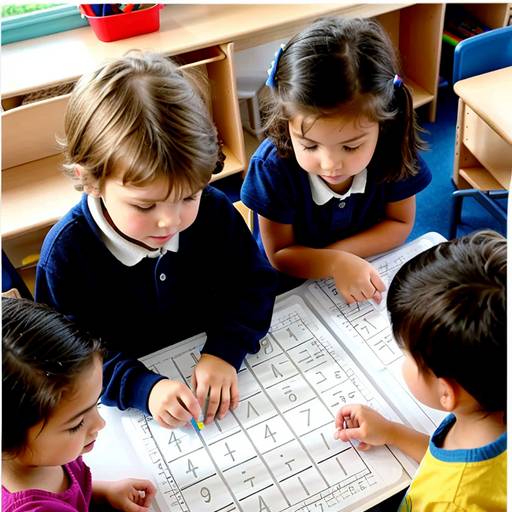
In this preschool math lesson, students engage in a fun and interactive experience that combines technology with foundational counting skills. The session begins with a circle time discussion about technology, where children share their experiences and preferences. The teacher introduces chosen math apps on tablets, demonstrating how to navigate and utilize the features for counting and number recognition.
Students then divide into small groups, where they explore the apps, reinforcing their learning through digital play. To connect their digital experiences with hands-on activities, children use counting manipulatives to illustrate the numbers they encountered on the tablets.
After exploring the technology, each student creates a drawing of a specific number of items using paper and crayons, which they later share with their classmates. The lesson closes with a class discussion to reflect on what they learned, emphasizing the relationship between digital counting and physical objects.
Assessment occurs through observation during activities and evaluating the students' drawings for accuracy. Extensions include suggestions for parents to explore math apps at home and introduce simple coding games for logical thinking. Overall, this lesson effectively integrates technology to make math engaging and relatable for preschoolers while fostering essential counting skills.
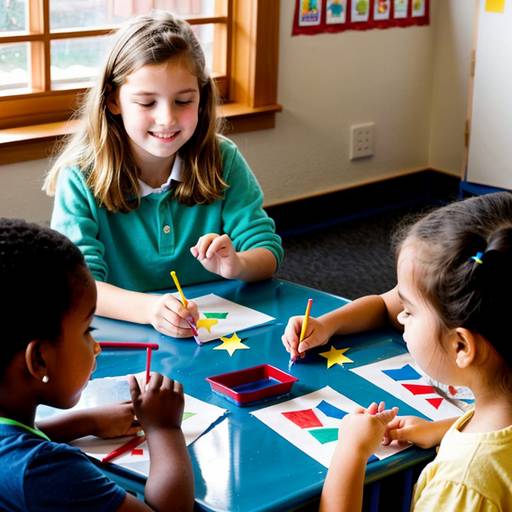
In this engaging preschool art lesson, students will explore basic geometric shapes and their creative applications through a collaborative mural project. The session begins with an introduction to various shapes, using visuals like flashcards to prompt discussion about shapes found in their surroundings. A demonstration follows, where children learn how to safely cut and glue shapes made from colorful construction paper.
During the main activity, students will create their own shapes and collaboratively arrange and decorate them on a large butcher paper mural. This process encourages teamwork, creativity, and fine motor skills as they work together to design the mural.
The lesson concludes with a group discussion about their creations, allowing students to reflect on their artistic choices and the importance of shapes in both art and everyday life. The activity will also include a cleanup phase, fostering responsibility in maintaining a tidy workspace. Potential extensions include a storytime session about shapes to reinforce the concepts learned during the lesson. Overall, this plan promotes hands-on learning in a fun, interactive setting.
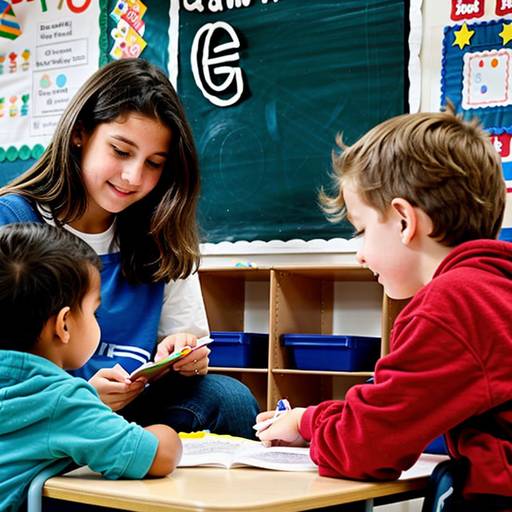
This preschool lesson focuses on fostering a sense of community and kindness among students. The session begins with a welcoming circle, where students are encouraged to share their thoughts on what being part of a community means. A story about kindness is read aloud, prompting discussions about how to show care for one another.
Students then participate in a craft activity, creating personal representations of caring, which are displayed on a bulletin board for a "gallery walk." The lesson includes an interactive "Fill the Bucket" activity, where each child contributes a kind idea, symbolically filling a class bucket with paper hearts.
The lesson concludes with a reflective discussion about ongoing ways to cultivate a caring environment in the classroom. Students leave the session with a deeper understanding of community and the importance of kindness towards others. Opportunities for ongoing kindness challenges and further exploration of community helpers are suggested for future engagements.