
Filters
Level
Grade
Subject
Subject Area
Subject Topic
Standard(s)
Audience
Keyword
DurationMinutes
Preschool Lesson Plans
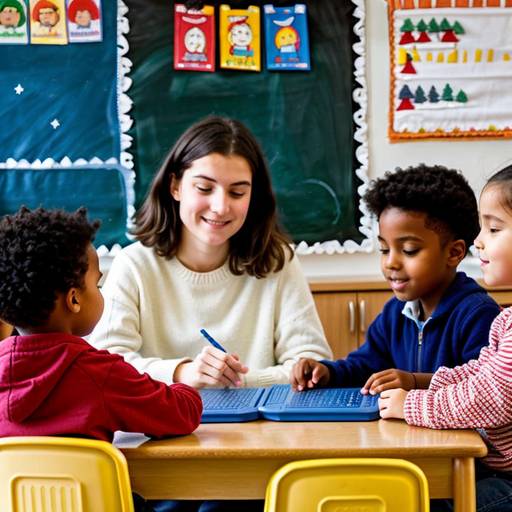
The lesson plan focuses on enhancing preschool students' literacy skills through an engaging storytelling experience. It begins with an interactive discussion about favorite story characters, fostering a creative mindset. The teacher reads a selected picture book aloud, encouraging prediction and interaction, and pauses to engage students in discussions about the story. Following the reading, students explore their favorite characters and contribute to a character profile chart.
The lesson includes imaginative play where students use props related to the story to act out scenes, promoting expressive language use. Collaborative sentence-building activities allow children to work together to organize phrases from the story, reinforcing teamwork and literacy skills. To wrap up, students participate in sound exploration by mimicking sounds associated with characters or actions, reinforcing their understanding of connections between sound and meaning.
The lesson concludes with a review of the activities, allowing children to share their reflections on what they learned. Throughout the lesson, the teacher observes participation and comprehension, adapting the activities as necessary to meet the needs of all learners.

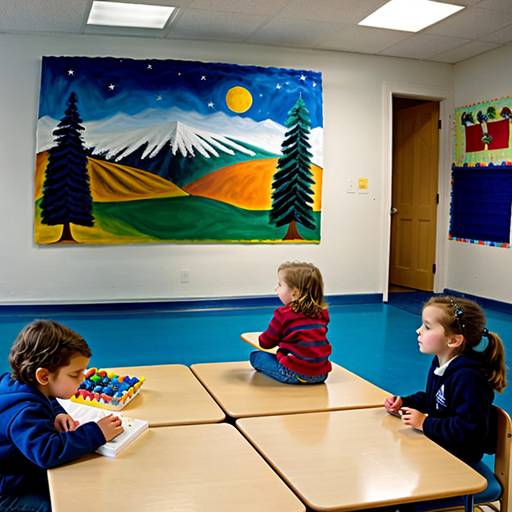
In this 45-minute lesson, preschool students will engage in a creative activity that combines visual arts with storytelling. The objective is for children to create their own imaginative landscapes inspired by storybooks while integrating elements of literacy, mathematics (specifically shapes and spatial awareness), and art.
The lesson begins with a circle gathering where a selected storybook is read aloud, focusing on descriptive landscapes. This sparks a discussion on the various colors, shapes, and feelings conveyed through the landscapes in the story. Following this, students receive large sheets of colored construction paper and are guided to illustrate their landscapes using crayons, markers, or watercolors. They will incorporate shapes with provided templates and enhance their artwork with natural materials such as leaves and twigs for added texture.
The final part of the lesson involves students sharing their creations with the group, allowing them to express their inspirations and the stories behind their landscapes. Throughout the activity, the emphasis is placed on imagination and expression, highlighting the connections between visual arts, literature, and personal creativity. Assessment will focus on each child’s participation and the understanding demonstrated in their artwork.
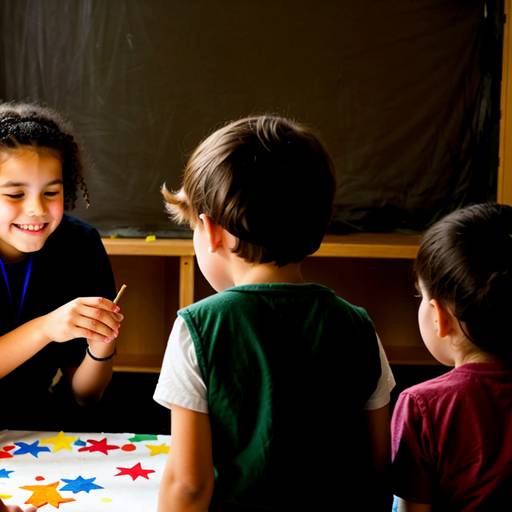
This preschool art lesson focuses on introducing young children to the basics of drama and storytelling through creative movement, improvisation, and collaborative play. The session begins with a discussion to engage children in understanding theater concepts, followed by a warm-up game that encourages expressive movement.
Students then explore a variety of costumes and props, which allows them to choose characters for a group-created story, fostering creativity and teamwork. Small groups practice their improvised dialogues and actions, culminating in a mini-performance where each group shares their interpretation of the story with their classmates.
The lesson concludes with a reflective discussion and an art activity where children illustrate their favorite characters from the performances. Throughout the lesson, children are encouraged to express themselves and engage with peers, collaborating in a supportive and joyful environment. Assessment is based on participation, creativity, and collaboration, with opportunities for extension activities to encourage ongoing imaginative play.
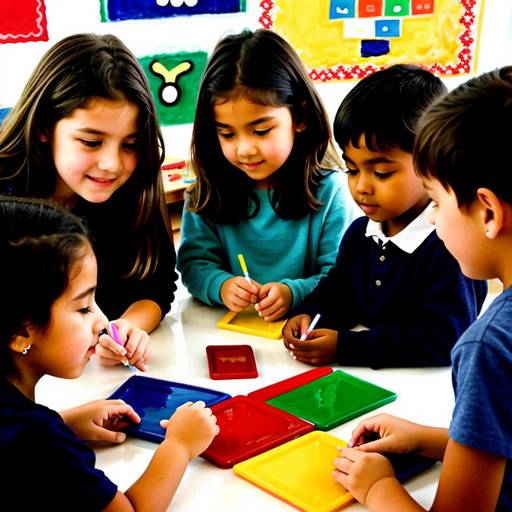
In this preschool lesson plan centered around art exploration, children will engage in a creative activity that emphasizes the use of colors and shapes. The session begins with a focus on understanding colors and their significance in art, followed by guided demonstrations of various painting techniques, including brush painting and sponge stamping. Children will then have the opportunity to create their own artworks using tempera paints, sponges, and colorful tissue paper to enhance their creations with texture and layers.
The structured activity allows for individual expression while developing fine motor skills. Children are encouraged to share their work and describe their artistic choices, fostering a sense of community and reflection. The lesson wraps up with a group clean-up activity, reinforcing cooperative behaviors. Optionally, a gallery walk can be set up to showcase the students' artworks, further enhancing their appreciation for creativity and collaboration. Overall, the plan promotes artistic exploration while nurturing emotional expression and social interaction among young learners.
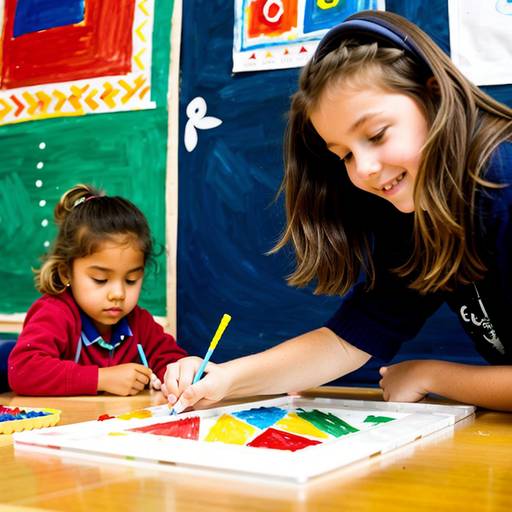
This preschool art lesson focuses on introducing young children to basic shapes and lines through drawing. Starting with an engaging circle time, children are encouraged to identify shapes and mimic drawing motions. A demonstration follows, showcasing how simple shapes can be combined to create recognizable objects, enhancing their understanding of spatial relationships.
The main activity allows children to explore their creativity by drawing freely with various materials, promoting self-expression and fine motor skills. During this time, teachers circulate to provide support and ask open-ended questions to deepen their engagement.
Concluding the lesson, children gather to share their artwork, fostering confidence and communication skills as they explain their creations. A clean-up session emphasizes responsibility for their workspace, and the lesson wraps up with a reflective discussion about their experiences and learnings. Overall, the lesson not only develops artistic abilities but also encourages imagination and fosters a love for creative expression among preschoolers.
This preschool lesson plan integrates technology and art to engage young students in creative expression. The objective is to introduce children to digital art through interactive activities using tablets and art applications. The lesson begins with a discussion about different forms of art, followed by hands-on activities where students can create digital artwork in small groups. They also have the option to express themselves through traditional art using coloring supplies. Throughout the session, students share their creations, fostering collaboration and discussion about their artistic processes. By the end, they reflect on their experiences, celebrating creativity and the blend of technology with traditional art forms, while developing fine motor skills and confidence in expressing their ideas. The plan encourages future exploration of art and technology, aiming to nurture a sense of imagination and individuality among the children.

In this preschool science lesson, students will explore the fascinating world of animals through observation and hands-on activities. The session begins with a group discussion where children share their knowledge about various animals, including sounds and habitats. Students then work in small groups to examine pictures of animals using magnifying glasses, focusing on details such as colors and textures.
Following this, the children engage in a creative craft activity where they build dioramas representing different habitats, such as jungles or oceans. Each group selects animal figures or pictures to populate their habitat and prepares a brief presentation to share their work with the class. This promotes collaboration and communication skills as they articulate their choices and learning.
The lesson concludes with a recap of what students learned about animals and their environments, encouraging them to reflect on their favorite parts of the day. Optionally, if time permits, students can engage in a fun movement exercise, mimicking the actions and sounds of their favorite animals. Throughout the lesson, educators assess student participation and understanding, fostering curiosity and a love for inquiry-based learning.
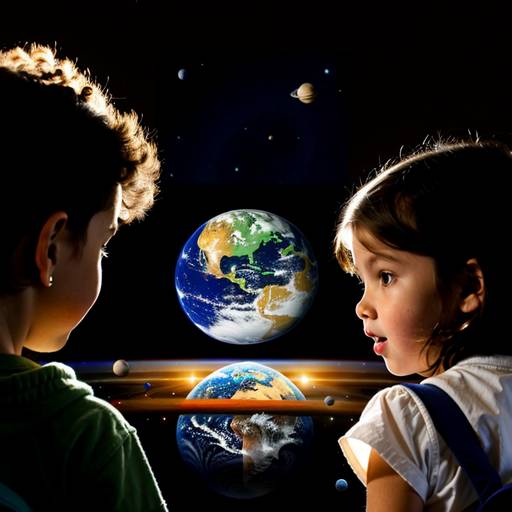
This preschool science lesson introduces young children to the solar system, focusing on Earth as their home planet and providing a general overview of other planets. The lesson begins with an engaging introduction where kids discuss Earth and share their thoughts about it. A story is read to the group to further explore the solar system, followed by a discussion of each planet's unique characteristics.
Children then participate in a craft activity where they create their own imaginative planets using various art supplies, fostering creativity and fine motor skills. Next, they engage in a fun role-playing activity in a makeshift "space shuttle," encouraging active participation and physical movement while enjoying space-themed music.
The lesson concludes with a recap of what they've learned and a brief sharing session. Follow-up activities are suggested to reinforce learning, such as creating a solar system display in the classroom. Overall, the session aims to stimulate curiosity about space, promote creativity, and enhance understanding of basic astronomical concepts.
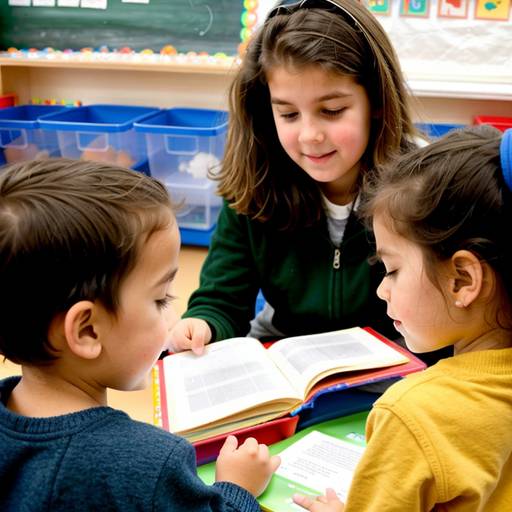
This preschool language lesson plan focuses on introducing emergent reading concepts to young children through engaging and interactive activities over a 35-minute duration. The session begins with a warm welcome and a discussion about the importance of reading. A large picture book is read aloud to the class with expressive storytelling, inviting participation from students through predictions and repeated phrases.
Following the read-aloud, students explore letter recognition and sounds through flashcards, engaging in a call-and-response activity to reinforce the letters and their associated sounds. This is complemented by an interactive game where children jump to the correct letter based on verbal prompts.
Phonemic awareness is further developed through a rhyming game, where students suggest words that rhyme with a given example, accompanied by a fun song that encourages movement. The lesson continues with vocabulary building, where key words from the read-aloud are introduced, allowing children to act them out in a playful manner.
The lesson concludes with a reflection period, where students share their favorite parts and newfound knowledge. Throughout the session, the emphasis is placed on fostering excitement about reading and encouraging exploration of books both in class and at home. Assessment is based on observation of engagement and understanding, with potential extensions to further support literacy development. Overall, the lesson aims to create a joyful and supportive environment for children to begin their journey into reading.

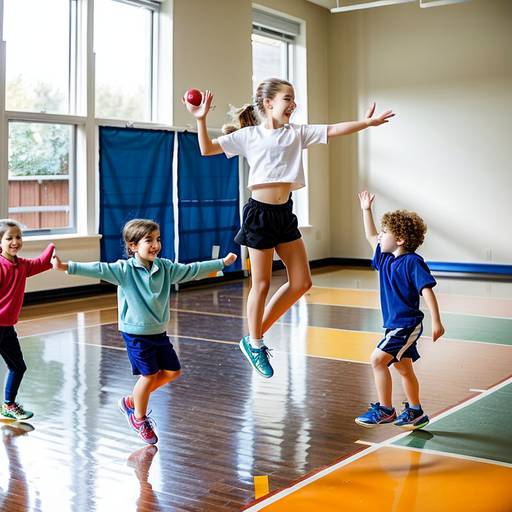
In this preschool physical education lesson, students will engage in a variety of activities focused on understanding and practicing healthy habits related to physical activity, nutrition, and hygiene. The session will begin with a brief introduction and a fun warm-up routine to get students moving.
Students will then rotate through four interactive stations: a nutrition sorting activity with play food, a physical activity obstacle course, a hygiene role-play station focused on handwashing and dental care, and a water station promoting hydration. After a short transition break, children will participate in a relay race that incorporates physical movements and nutrition knowledge questions, reinforcing their learning in a playful way.
The lesson will conclude with a cool-down period where students will reflect on what they learned, discussing their favorite healthy foods and the importance of exercise. Observations throughout the activities will help assess student participation and understanding. Families will receive a follow-up activity sheet to encourage continued discussion of healthy habits at home. This engaging lesson aims to instill lifelong healthy behaviors in preschoolers.