
Filters
Level
Grade
Subject
Subject Area
Subject Topic
Standard(s)
Audience
Keyword
DurationMinutes
Preschool Lesson Plans

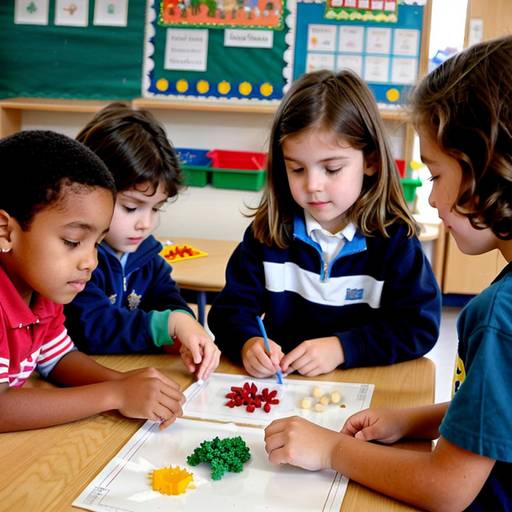
In this preschool lesson, students will explore the concepts of living and nonliving things through engaging discussions, interactive activities, and outdoor exploration. The session begins with a circle time where children share their thoughts on what they believe is alive or not, followed by a direct instruction segment that highlights key characteristics of living and nonliving entities. Through a collaborative sorting activity using picture cards, students will categorize examples and enhance their understanding.
Participants will then have the opportunity to explore their environment, either outdoors or indoors, using magnifying glasses to observe and gather items for further classification. A short interactive story will reinforce the concepts, inviting further discussion among students. The lesson concludes with a reflection circle where students share their discoveries, ensuring they internalize the differences between living and nonliving things. Assessment will occur through observation during activities and discussions, while extensions may include creative collages and songs to further embed the concepts in their learning environment.
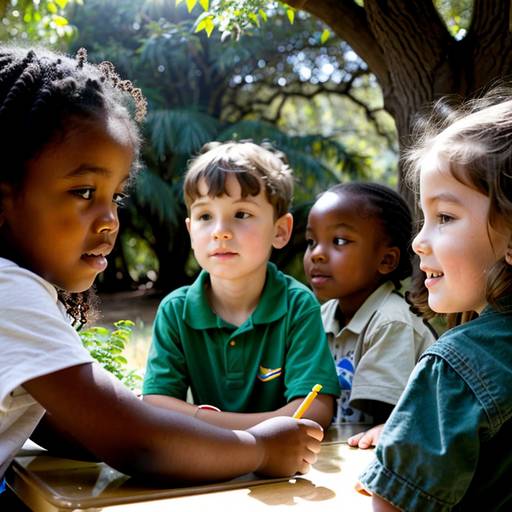
In this preschool language lesson plan, students will enhance their listening and speaking skills through engaging activities centered around the sounds of nature. The lesson begins with a group gathering where children participate in sound identification exercises by listening to various nature sound clips and discussing what they hear. Following this, a story related to animals or nature is read aloud, with opportunities for the children to predict and share their thoughts.
Students then create their own drawings of their favorite animal or a nature scene, providing a chance for each child to present their artwork to the group and articulate their choices. The lesson concludes with a collaborative sound-making activity where children use instruments to mimic nature sounds, encouraging turn-taking and respectful listening. Assessment will focus on the children's participation and ability to express themselves throughout the activities, with additional extension activities suggested for further exploration of nature and sound.

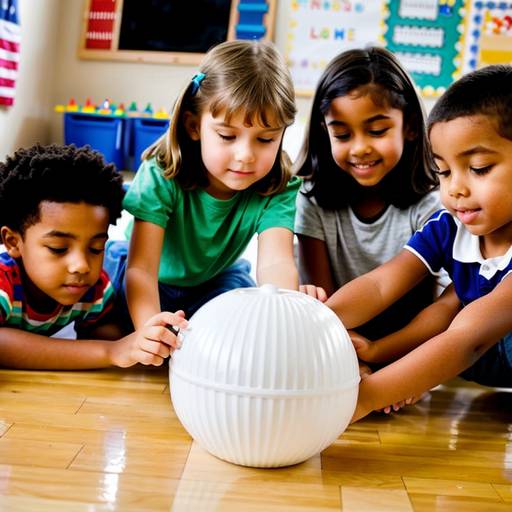
This preschool physical education lesson plan focuses on enhancing fine motor skills through a series of engaging and creative activities designed for children aged 3 to 5 years. The 75-minute lesson begins with an introduction to the importance of fine motor skills, followed by a fun warm-up involving hand exercises and movement.
The core of the lesson consists of several activity stations, each lasting 15 minutes, where children can explore and develop their skills. Activities include building with various types of blocks, crafting with playdough, cutting and gluing paper shapes, threading beads, and participating in a scoop-and-toss game.
After the individual activities, students come together for a collaborative creation project, allowing them to work as a team to make a large mural or sculpture from their previously crafted items. The lesson concludes with a cool-down and reflection period, encouraging children to share their experiences and discuss what they learned about teamwork and creativity. This immersive approach fosters skill development in a fun, hands-on environment.
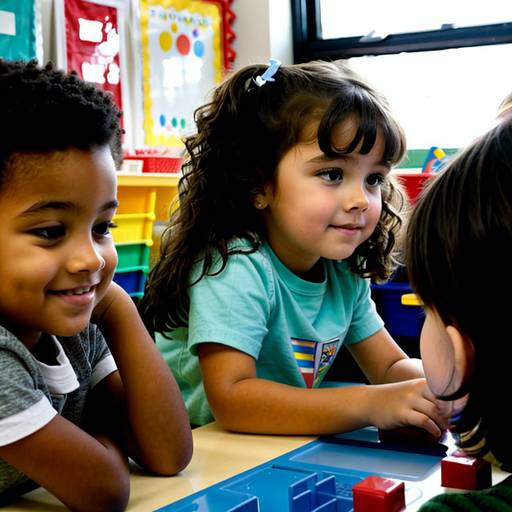
This preschool lesson focuses on introducing young children to basic technology concepts and devices. It begins with an interactive discussion where students explore various technology items, identifying their functions and sharing personal experiences. Following that, they engage in hands-on activities, rotating between stations with real devices such as tablets and toy laptops, emphasizing safe and respectful usage. The lesson continues with a creative component, where students design their own tech devices using craft materials, promoting imagination and artistic expression. The session wraps up with a group discussion for reflection and a fun closing activity, reinforcing the concepts learned. Throughout the lesson, observation of student participation aids in assessing their understanding, with opportunities for future activities to deepen their engagement with technology.
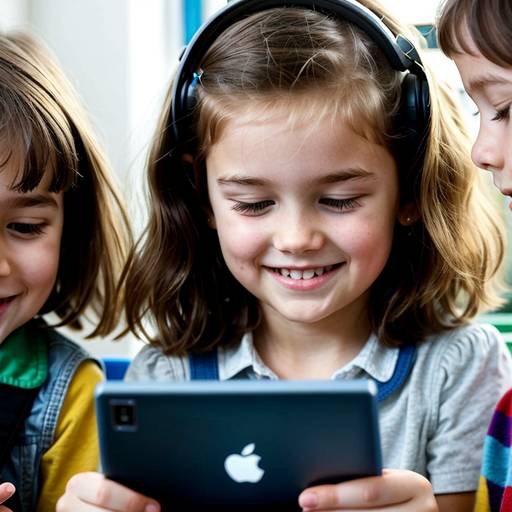
In this preschool lesson plan, students will engage in exploring digital creativity by utilizing technology tools to create their own digital art and stories. The session begins with a discussion about creativity, followed by a demonstration of a graphic design app that allows young learners to express their imaginations.
Students will then break into small groups to experiment with the app, creating their unique pieces of digital artwork based on their ideas or prompts. Throughout the activity, educators will circulate to provide support and encourage dialogue about their creations.
After completing their artworks, each child will present their creation to the class, sharing their thoughts and inspiration, while positive reinforcement is offered through stickers or stamps. The lesson concludes with a recap of key learnings and discussions on future creative endeavors at home. Extensions include providing resources for families and organizing a showcase to celebrate the students' digital creations. Overall, the lesson fosters digital literacy and imaginative expression in a fun and engaging environment.
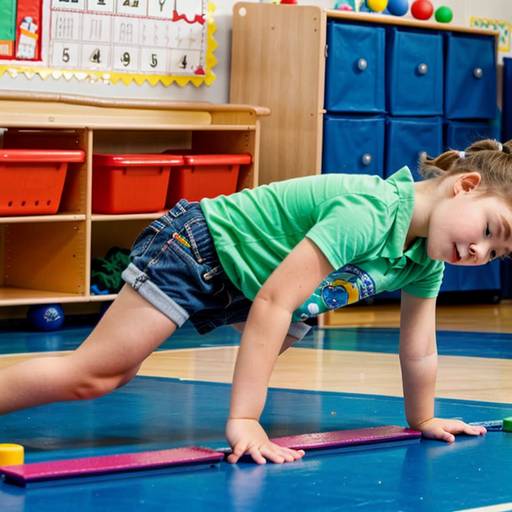
This preschool physical education lesson plan focuses on enhancing fine motor skills through a variety of engaging activities over a 75-minute session. The objective is to help young children develop hand-eye coordination, grip strength, and dexterity in a fun and interactive way.
The lesson begins with a welcome and introduction, highlighting the importance of fine motor skills in everyday tasks. Following a brief warm-up activity that gets children's fingers and hands moving, students are divided into small groups to rotate through four hands-on activity stations, each lasting approximately 10 minutes. These stations include crafting with playdough, bead stringing, practicing scissor skills, and assembling large-piece puzzles, all designed to promote fine motor development while encouraging collaboration and social interaction.
After the station rotations, students participate in a group relay game using tweezers to carry small objects, enhancing their coordination and teamwork. The session concludes with a cool-down discussion, where students reflect on their favorite activities and what they learned about using their hands. Parents receive a take-home activity sheet with suggestions for continuing fine motor skill practice at home.
Throughout the lesson, the instructor observes each child's participation and provides assistance as needed, fostering a supportive and encouraging environment that celebrates individual progress and achievements.
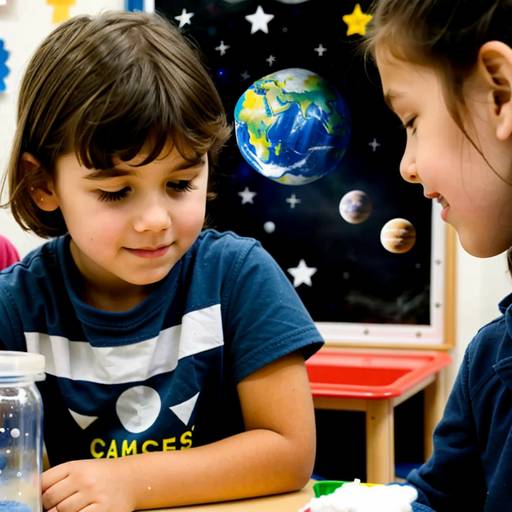
In this preschool science lesson, children will engage in hands-on experiments that introduce them to basic concepts related to Earth and Space. The session begins with a circle discussion to spark curiosity and activate prior knowledge about plants and the night sky. Students will participate in planting seeds in clear cups, learning about what plants need to grow, while also making predictions about their seed growth. Following this, they will create starry night artwork using dark construction paper and glitter, simulating stars while discussing celestial bodies and their twinkling appearance.
Throughout the lesson, children will observe, share experiences, and reflect on their activities, enhancing their scientific curiosity and observation skills. The lesson concludes with a collaborative review of what they learned, reinforcing the concepts introduced, and culminating in a fun song or rhyme related to Earth and Space. This interactive approach aims to foster a sense of wonder and an eagerness to explore the natural world.
This lesson plan is designed for preschool students to introduce them to the fundamentals of digital literacy through engaging activities. The session begins with a short video showcasing various technology devices and their uses, sparking discussions on how technology is integrated into daily life. Students are then divided into small groups to explore different learning stations, where they can interact with tablets to create digital stories, experiment with coding toys to grasp basic programming concepts, and express their creativity through drawing favorite tech devices. Following these activities, the class reconvenes to share experiences and insights from each station. The lesson concludes with a reflection where children can customize their digital stories, emphasizing the fun and helpful aspects of technology. Overall, the plan promotes engagement, collaboration, and thoughtful exploration of digital tools while ensuring that preschoolers grasp essential concepts in a safe and playful environment.
In this preschool science lesson, students will learn to differentiate between living and nonliving things, focusing specifically on various animals and their environments. The lesson begins with an engaging discussion about the definitions of living and nonliving things, where students will share their thoughts.
Next, students participate in a sorting activity using picture cards, categorizing items into "Living Things" and "Nonliving Things." This is followed by a storytime session, where a nature-themed book is read aloud, emphasizing animals and their characteristics.
To further explore the topic, students embark on a scavenger hunt, both indoors and outdoors, to identify and check off items from a checklist that includes both living and nonliving things. Upon returning, students will share their findings and participate in an art project where they create a collage or drawing depicting one living thing and one nonliving thing.
The lesson concludes with a recap of the material learned, encouraging students to reflect on their favorite living things. Throughout the activities, the teacher observes students to assess their understanding and knowledge retention. Adaptations are included for students needing additional support, ensuring inclusivity. The session emphasizes experiential learning and critical thinking through observation and interaction with the environment.
This preschool language lesson focuses on enhancing vocabulary development through interactive activities centered around sight words. The session begins with a group introduction to selected sight words, where students actively participate by repeating the words aloud. Following this, an engaging scavenger hunt is organized, allowing children to explore the classroom and find hidden sight word flashcards, reinforcing word recognition through playful interaction.
After the hunt, students get creative with a craft activity where they make artistic representations of their chosen sight words using construction paper and decorative materials. Each child shares their artwork with the group, further solidifying their understanding and pronunciation.
The lesson concludes with a storytime that features the sight words discussed, giving students the opportunity to see these words in context. A reflective discussion wraps up the activity, allowing the children to express their thoughts and favorite moments from the day. Throughout the session, focus is placed on encouraging participation, enhancing fine motor skills, and building vocabulary in a fun, engaging way.