
Filters
Level
Grade
Subject
Subject Area
Subject Topic
Standard(s)
Audience
Keyword
DurationMinutes
Kindergarten Lesson Plans

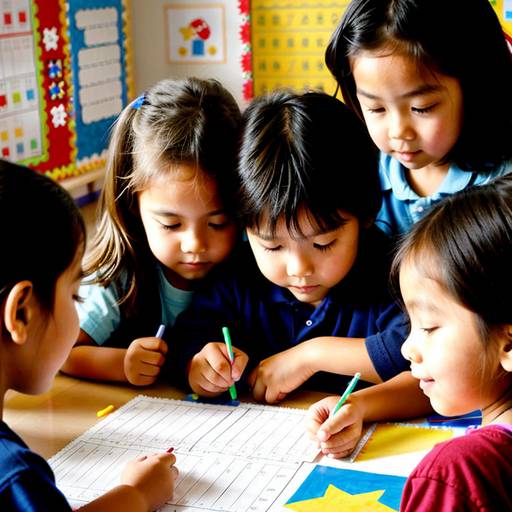
The lesson plan focuses on teaching Kindergarten students the concept of subtraction through interactive and engaging activities centered around a fun theme involving plush animals. The lesson begins with an interactive discussion where students count and take away animals, helping them grasp the idea of subtraction as "taking away." Visual aids, such as a number line and chart paper, are used to reinforce this concept.
Students then participate in a collaborative animal rescue activity, working in pairs or small groups to solve subtraction problems using the plush animals provided. Following this, each student practices independently by solving subtraction problems on their whiteboards.
To conclude, the class reviews the concepts learned and each student reflects on their understanding by drawing a subtraction problem and writing the corresponding equation. Assessment is based on observation during group activities, correctness of whiteboard solutions, and the completeness of exit tickets. Differentiation strategies support students at various learning levels, while extensions encourage real-life applications of subtraction, making the lesson comprehensive and engaging.

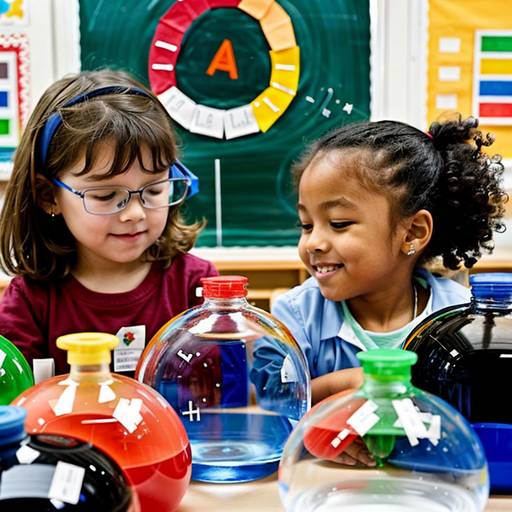
In this kindergarten science lesson, students will explore the concept of matter by learning to identify and classify it into three states: solids, liquids, and gases. The lesson begins with an engaging introduction, using everyday objects to capture students' attention and spark their curiosity about matter. Direct instruction follows, where simple definitions and examples are provided alongside a visual aid to reinforce understanding.
Students will then participate in hands-on exploration stations, where they will interact with solid objects, observe the behavior of liquids, and experiment with gases using balloons. After the exploration, a group discussion will allow students to share their observations and reflect on their experiences at each station.
To conclude the lesson, students will journal about what they've learned by drawing and labeling items from each state of matter. Assessment will include observational notes during activities and review of the journal entries to gauge comprehension. The lesson can be extended in future sessions to include concepts of changing states of matter, fostering further curiosity and engagement.
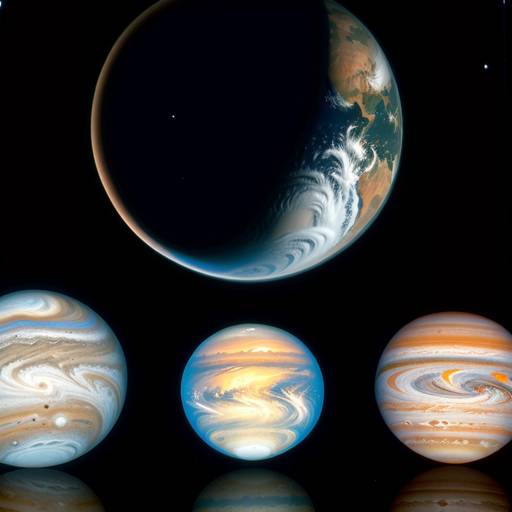
In this kindergarten science lesson plan, students will learn about the solar system and the eight planets that orbit the sun. The lesson begins with an engaging introduction where students share their existing knowledge about space and observe a large poster of the solar system. During direct instruction, students will be introduced to each planet through flashcards, learning unique features, and singing a song that reinforces their understanding of the planets’ orbits.
The hands-on activity allows students to express their creativity by painting Styrofoam balls to represent their chosen planet, while also discussing interesting facts about it. The completed planets will be displayed on a bulletin board, creating a visual representation of the solar system.
The lesson concludes with a reflection where students share what they created and learned, followed by a brief question-and-answer session to clarify any misunderstandings. Overall, the lesson aims to foster curiosity about astronomy and encourage students to explore the night sky with their families. Extensions include a reading corner with books about planets and an invitation for families to engage in stargazing activities together.
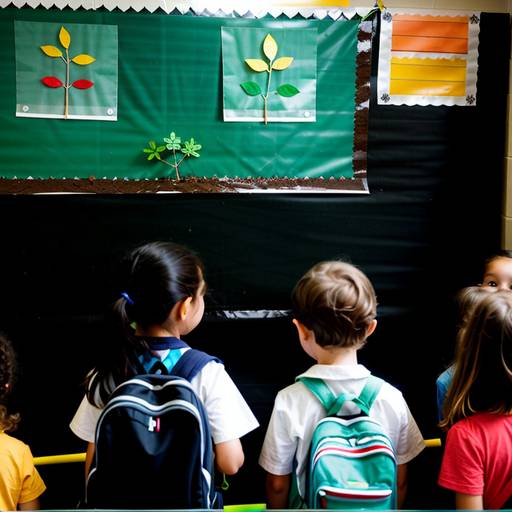
In this Kindergarten science lesson, students will explore the world of plants, focusing on their basic parts and growth requirements. The lesson begins with an engaging story or video to spark interest, followed by a discussion where students share what they know about plants. Through direct instruction, they will learn to identify and understand the roles of roots, stems, leaves, and flowers, using pictures and real plants for demonstration.
Students will then participate in a hands-on planting activity, where they will plant bean seeds in cups with soil while learning about the importance of water and sunlight for growth. Following the planting, they will observe the parts of real plants with magnifying glasses and draw their observations.
The lesson wraps up with a recap where students share their learnings, reinforced by a creative coloring activity. Assessment will be based on student participation and their creative work. Extensions may include maintaining a plant journal and reading a relevant story to further enhance their understanding. Adaptations will be provided for students needing additional support, ensuring inclusivity. Overall, the lesson encourages curiosity and fosters a foundational understanding of life science centered around plants.

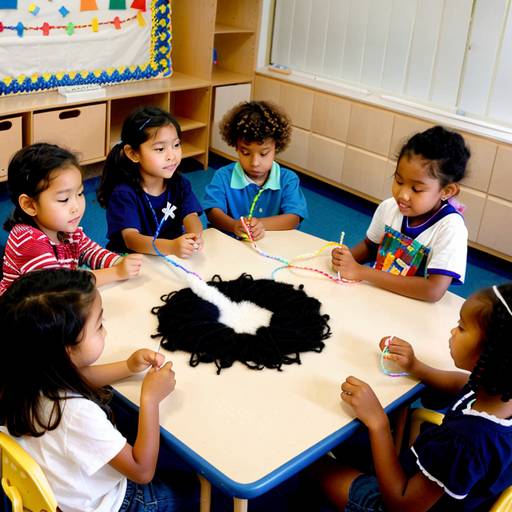
In this kindergarten art lesson, students will be introduced to fiber arts through hands-on exploration and creation. The lesson begins with a discussion about fiber art and its significance in various cultures, followed by an interactive session where students share their experiences with textiles. A demonstration of a simple loom method will guide them in weaving yarn using cardboard plates or paper plates as their loom base.
During the hands-on activity, students will create their own fiber art pieces by weaving colorful yarn and, if time allows, adding fabric scraps for embellishment. The lesson concludes with a sharing session where students present their creations to the class, discussing their choices of colors and textures. The lesson aims to foster creativity, fine motor skills, and an appreciation for different art forms while encouraging students to express their individuality through their artwork. Assessment will be based on participation and creativity, with extensions and adaptations available for varied learning needs.
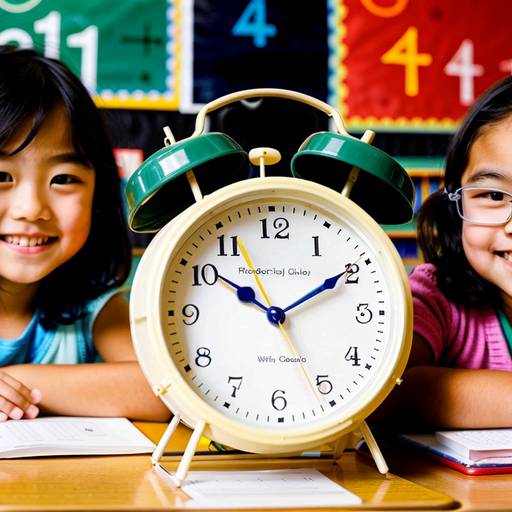
In this Kindergarten math lesson, students will explore the concept of time and learn how to read an analog clock. The lesson begins with an engaging discussion about the importance of time, followed by a storytelling session featuring a book that relates to different times of the day. Afterward, students will participate in a hands-on activity where they create their own paper plate clocks, learning to distinguish between the hour and minute hands. Guided practice will involve identifying specific times on a large clock, with students sharing their creations and demonstrating their understanding. Independent practice will consist of worksheets that reinforce telling time to the hour. The lesson concludes with a class discussion to recap key concepts, and optional extension activities will allow students to connect telling time to their daily routines. Assessment will occur through observation during activities and review of completed worksheets, with differentiated support provided as needed. This lesson aims to build a foundational understanding of time in an engaging and interactive manner.
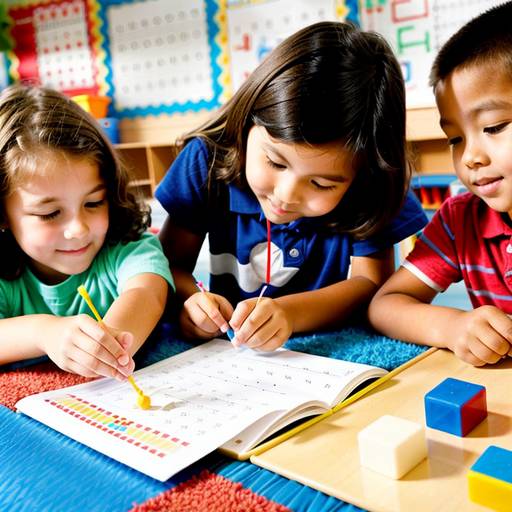
In this Kindergarten math lesson, students will explore the concepts of measurement and time through interactive activities. The objectives include understanding length by measuring objects using non-standard units, such as paper clips and blocks, and grasping the concept of time by discussing daily routines and sequencing activities.
The lesson begins with a group discussion on measurement, followed by a demonstration on measuring length and telling time using a clock. Students will then engage in guided activities where they measure various objects in small groups and arrange picture cards representing their daily activities in sequential order.
After practicing with a worksheet that incorporates both measuring and time-telling, the class will reconvene to share findings and reinforce learning outcomes. Assessment will be based on participation and worksheet accuracy, with differentiation strategies in place to support all learners. Extension activities will promote ongoing measurement practice and daily schedule organization in the classroom.
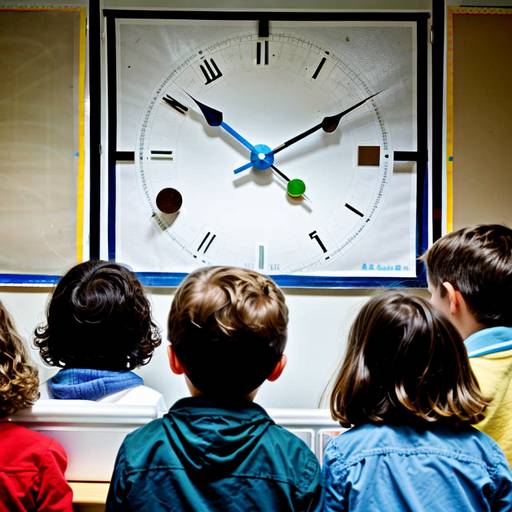
This Kindergarten math lesson focuses on introducing students to the concept of time and teaching them how to tell time using both analog and digital clocks. The lesson begins with a discussion about time, spurred by a story that highlights daily activities occurring at various times. Students learn about the components of a clock—such as the hour and minute hands—through a large cardboard clock demonstration.
In guided practice, each student receives a small paper clock to show different times as the teacher calls them out. Afterward, students work independently on worksheets that involve drawing clock hands and solving simple time-related problems. The lesson concludes with a review and discussion, allowing students to share their clocks and experiences.
Assessment occurs through observation during practice and reviewing worksheets for accuracy. Differentiation strategies are included to cater to varying skill levels, and extensions provide opportunities for further exploration of time concepts. The overall goal is to create an engaging and interactive environment where students can develop a foundational understanding of time.
In this Kindergarten math lesson plan, students will engage in learning about time and how to tell time using an analog clock. The lesson begins with a captivating story that introduces the concept of time and its relevance in daily routines. Students will learn to identify the parts of a clock, including the hour hand and the minute hand, through direct instruction and demonstrations using a large cardboard clock.
As they become familiar with telling time to the hour, students will practice setting their own miniature clocks and participate in a time-matching game that encourages teamwork and peer interaction. To enhance engagement, they will also decorate their clocks, reinforcing their understanding of the clock's components.
The lesson concludes with a review of what they have learned and informal assessments based on observation during activities. Differentiation strategies will cater to varying skill levels, with extension activities promoting further exploration of time-telling in everyday life. Overall, the lesson emphasizes hands-on learning and collaborative experiences, making the concept of time accessible and enjoyable for young learners.


This Kindergarten social studies lesson focuses on helping students understand their community and the importance of rules in maintaining safety and cooperation. It begins with a class discussion to identify elements of their community and introduces various community helpers, such as firefighters and police officers.
Students will work in small groups to match community helpers with appropriate rules that support their roles, promoting teamwork and critical thinking. After sharing their findings with the class, the students will collaboratively create a community map, illustrating places, community helpers, and rules that apply to each area.
The lesson concludes with a reflection discussion about the significance of rules in the community, reinforcing collaborative learning and respect for others. Assessment will be based on participation in discussions and contributions to the community map. Optional extension activities allow for further exploration of community helpers through individual writing or drawing projects. Differentiation strategies are included to support all learners.