

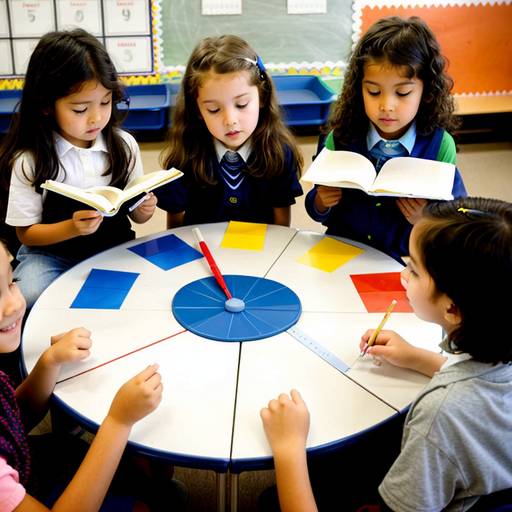
In this Kindergarten math lesson plan, students will engage in learning about time and how to tell time using an analog clock. The lesson begins with a captivating story that introduces the concept of time and its relevance in daily routines. Students will learn to identify the parts of a clock, including the hour hand and the minute hand, through direct instruction and demonstrations using a large cardboard clock.
As they become familiar with telling time to the hour, students will practice setting their own miniature clocks and participate in a time-matching game that encourages teamwork and peer interaction. To enhance engagement, they will also decorate their clocks, reinforcing their understanding of the clock's components.
The lesson concludes with a review of what they have learned and informal assessments based on observation during activities. Differentiation strategies will cater to varying skill levels, with extension activities promoting further exploration of time-telling in everyday life. Overall, the lesson emphasizes hands-on learning and collaborative experiences, making the concept of time accessible and enjoyable for young learners.
| Level | Elementary School |
| Grade | Kindergarten |
| Subject | Math |
| Subject Area | Time |
| Subject Topic | Telling Time |
| Age Range | 5 to 6 |
| Audience | Group |
| Language | English |
| Duration | 35 mins |