
Filters
Level
Grade
Subject
Subject Area
Subject Topic
Standard(s)
Audience
Keyword
DurationMinutes
Kindergarten Math Lesson Plans


This kindergarten math lesson focuses on teaching students the concept of addition using manipulatives. Over the course of 45 minutes, students will engage in hands-on activities to understand and practice basic addition.
The lesson begins with a discussion about addition in everyday life, followed by a demonstration of a simple addition problem using manipulatives such as counting bears or unifix cubes. Students will then participate in guided practice, where they explore addition problems using their own set of manipulatives and work collaboratively to find solutions.
After that, they will create their own addition problems on paper plates or counting mats, reinforcing their understanding by writing equations to match their manipulations. The lesson concludes with a sharing session where students present their work and receive positive feedback.
Assessment will occur through observation during activities and by reviewing students' creations. Differentiation strategies are included to support varying skill levels, and follow-up activities will be suggested to further reinforce the addition concepts in a fun and interactive way. Overall, the lesson aims to make learning addition engaging and accessible for all students.

In this Kindergarten math lesson, students will explore the concept of addition using single-digit numbers through engaging activities and hands-on materials. The lesson begins with an introduction to addition, illustrating how it involves combining quantities in everyday scenarios. Direct instruction follows, where the teacher demonstrates addition using manipulatives, enabling students to visually and physically manipulate objects to understand the process.
Guided practice allows students to work in small groups, solving simple addition problems with manipulatives while sharing their findings with the class. For independent practice, students complete worksheets that reinforce their understanding of addition through visual aids.
The lesson also includes an interactive game, such as Addition Bingo or a matching activity, to reinforce the concepts in a fun and engaging way. The session concludes with a brief review of what students learned, providing an opportunity for them to share their experiences. Assessment occurs through observation of participation and review of worksheets, with differentiation strategies in place for learners at varying levels of understanding. Overall, the lesson is designed to make learning addition enjoyable and accessible for all students.

The lesson focuses on introducing kindergarten students to the concept of addition using a number line as a visual and interactive tool. Students will learn how to represent addition problems through forward movement on the number line. The lesson begins with engaging discussions about counting and combining objects, followed by a demonstration of addition using both the number line and manipulatives.
During guided practice, students will participate in an interactive activity that involves jumping on the number line to solve addition problems, and they will engage in partner work to reinforce their understanding. Independent practice will involve worksheets that allow students to visualize and solve simple addition problems.
The lesson concludes with a review where students can share their experiences, and their understanding will be assessed through both observation and completed worksheets. Modifications will be made to support all learners, ensuring that each student can engage meaningfully with the content. The overall goal is to help students build a strong foundation in addition while fostering an enjoyable and interactive learning environment.

This kindergarten math lesson focuses on teaching students about time and how to tell time on an analog clock. The lesson begins with an engaging discussion about the importance of time in daily routines, followed by an introduction to the clock's components, including the hour and minute hands. Through direct instruction, students learn to recognize and identify times by moving the hands on a large paper clock, reinforced by reading a story related to time management.
In guided practice, each student uses their own paper clock to replicate times called out by the teacher. During independent practice, students complete a worksheet where they create their own clocks to depict various whole hour times. The lesson concludes with a review and sharing session to reinforce their understanding. Assessment occurs through observation during practice and collection of completed worksheets. Extensions and adaptations are included to cater to different learning needs and enhance the lesson further. Overall, the lesson provides a fun and interactive way for students to grasp the concept of telling time.
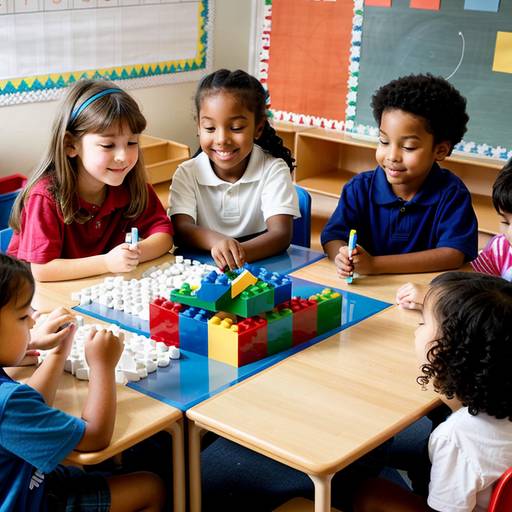
This Kindergarten math lesson focuses on introducing students to the concept of multiplication as repeated addition. The session begins with a warm-up activity that engages students in counting and creating groups with manipulatives, such as counting blocks. Through hands-on activities, students work in small groups to solve simple multiplication problems by visually representing them with blocks and drawings.
The lesson incorporates a storybook that reinforces the multiplication concept, encouraging students to identify groups within the narrative. After the group work, students complete a worksheet where they draw and solve multiplication problems visually.
The lesson concludes with students sharing their work with the class and participating in a fun game to reinforce their understanding. Assessment occurs through observation of group activities and review of worksheet answers, ensuring that students grasp the basic principles of multiplication in a concrete and engaging manner. Extensions for advanced learners are included to enhance their understanding further.
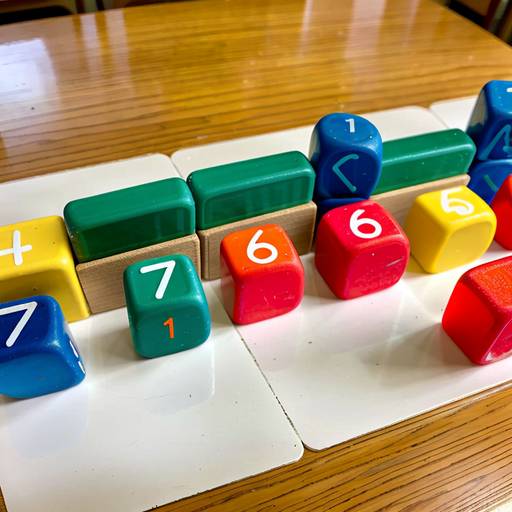
The lesson focuses on teaching kindergarten students the concept of addition through interactive, hands-on activities using colorful building blocks as manipulatives. Starting with an introduction that explains addition, the teacher demonstrates a simple problem using blocks to illustrate how to combine sets visually. Students then work in small groups to solve assigned addition problems, using blocks to visually represent the numbers and practice counting. After guided practice, they complete independent worksheets featuring basic addition problems, which they can also visualize with blocks if needed. The lesson concludes with a class discussion where students share their outcomes, reinforcing their understanding of addition. Assessment is based on participation, problem-solving during group work, and the accuracy of their completed worksheets. Extensions and adjustments are provided to cater to diverse learning needs, ensuring an inclusive and engaging math experience.
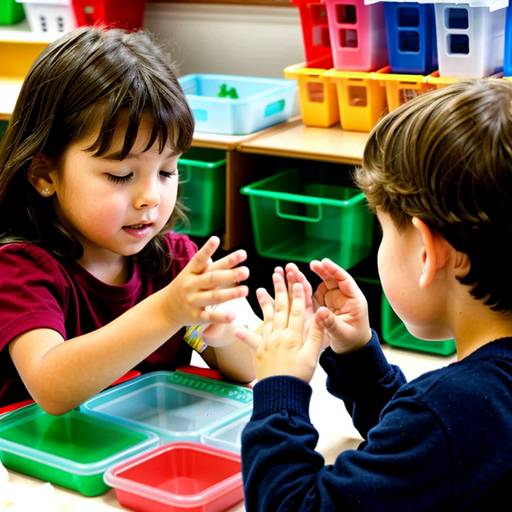
In this kindergarten math lesson, students will explore the concept of addition through hands-on activities using manipulatives. The lesson begins with a warm-up counting song to engage students and introduce the idea of addition through practical examples. Educators will model simple addition problems using visual aids, demonstrating how to group and count manipulatives to find sums.
Students will then work in pairs to solve assigned addition problems collaboratively with manipulatives, fostering communication and teamwork. Following this guided practice, they will complete worksheets where they draw and represent their addition problems using the manipulatives, reinforcing their understanding of the concept.
To conclude, the class will review key takeaways and students will create a simple exit ticket by writing their own addition problems and illustrating them. Throughout the lesson, observation and informal assessments will help gauge students' grasp of addition, with differentiation strategies to support varying levels of ability. This engaging approach promotes foundational math skills while making learning enjoyable and interactive.
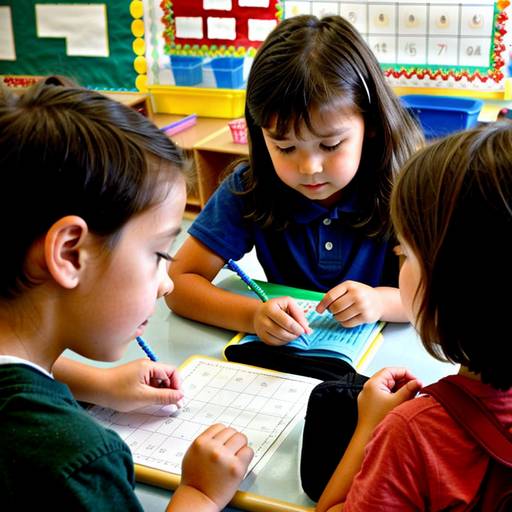
In this kindergarten math lesson, students will explore the concept of addition using single-digit numbers in an engaging and interactive way. The lesson begins with an introduction to addition, where students are encouraged to share their understanding and experiences with adding. Following a direct instruction segment, the teacher demonstrates addition using visuals and manipulatives, such as animal cut-outs.
Students then participate in guided practice by creating their own addition problems in pairs and sharing them with the class. For independent practice, they will complete worksheets featuring images of animals, which reinforces their counting and addition skills. The lesson concludes with a group discussion to review their learning and a fun song to celebrate their understanding of addition.
Assessment will be conducted through observation during activities and by reviewing completed worksheets, ensuring a comprehensive grasp of the concepts taught. Adaptations are available for both advanced learners and those needing additional support, ensuring that all students can engage with the material meaningfully.
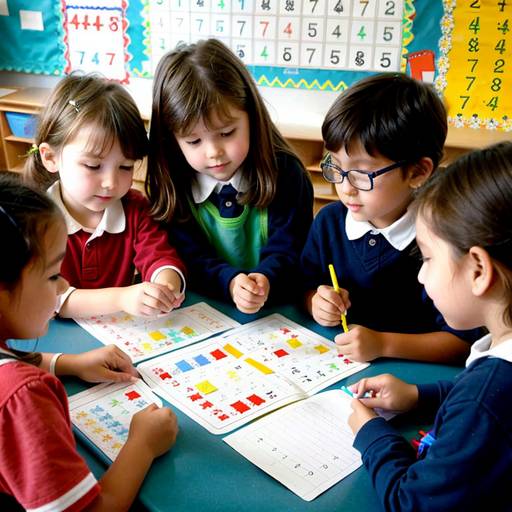
This Kindergarten math lesson focuses on introducing students to the concept of addition with single-digit numbers. The lesson aims to enhance students' understanding and application of addition through engaging activities and hands-on experiences.
The session begins with an engaging story or song about counting to capture students' attention and generates excitement around numbers. During direct instruction, the teacher visually demonstrates addition using drawings and counting manipulatives, allowing students to see the concept in action.
In guided practice, students work with flashcards and participate in small group activities, creating their own addition problems and presenting them to the class. For independent practice, students complete worksheets containing various single-digit addition problems, using manipulatives to assist them if needed.
The lesson concludes with a review of key concepts and a celebration of students' efforts through stickers or stamps. Throughout the lesson, the teacher assesses understanding through observation and worksheet reviews, providing adaptations for different learning needs. Overall, this engaging lesson fosters foundational math skills in a creative and interactive learning environment.
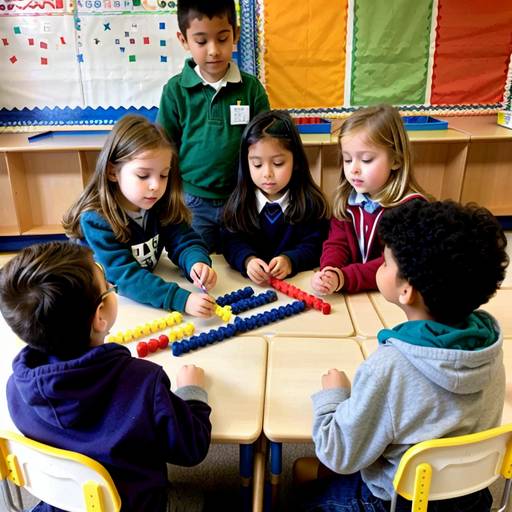
In this kindergarten math lesson, students are introduced to the concepts of measurement and time through engaging, hands-on activities. The lesson begins with a discussion on measurement, where students estimate the lengths of classroom objects and measure them using pieces of yarn as non-standard units. In pairs, they record their findings and share results with the class, fostering teamwork and communication skills.
Next, the lesson transitions to telling time. Students learn about the parts of a clock using a large analog clock and a digital clock poster. They create their own paper plate clocks, labeling the hours and practicing moving the hands to represent different times called out by the teacher.
The lesson concludes with a review of key concepts and a reflection segment where students share their learning experiences. An interactive song reinforces the material, ensuring that students understand both measurement and time by the end of the lesson. Assessment occurs through observation during activities and by checking their understanding of time on their crafted clocks. Extensions for advanced learners involve exploring basic weight concepts. Overall, the lesson provides a fun and interactive way for kindergarteners to grasp foundational math skills.