
Filters
Level
Grade
Subject
Subject Area
Subject Topic
Standard(s)
Audience
Keyword
DurationMinutes
Kindergarten Math Lesson Plans

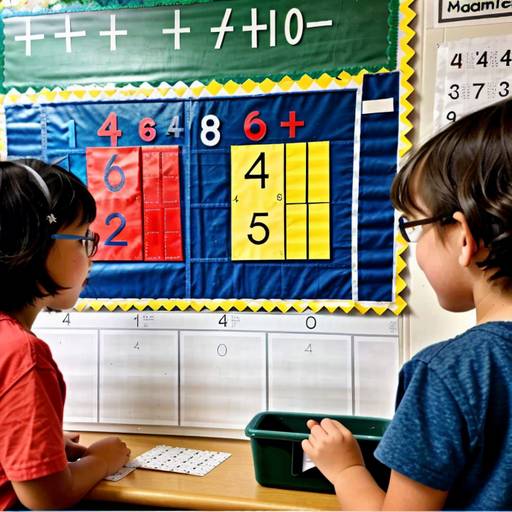
In this kindergarten math lesson, students will explore the concept of addition using a number line as a visual tool. The lesson begins with an engaging introduction where students discuss what addition means and learn about the structured layout of the number line.
Through direct instruction, the teacher demonstrates a simple addition problem, guiding students through the process of finding numbers and making jumps to illustrate addition visually. During guided practice, students will actively participate by selecting number cards and working with partners to create their own addition problems, using the floor number line to demonstrate their results through physical movement.
Independent practice allows students to solidify their understanding by completing worksheets that involve drawing jumps on a number line for given addition problems. The lesson concludes with a recap of key concepts and sharing of experiences, reinforcing learning through group discussion and celebration of participation with rewards.
Throughout the lesson, the teacher will assess student understanding through observation and worksheet completion, ensuring that all learners receive the support they need, with modifications available for diverse learning needs. Follow-up activities will further extend their grasp of addition and encourage creative expression.
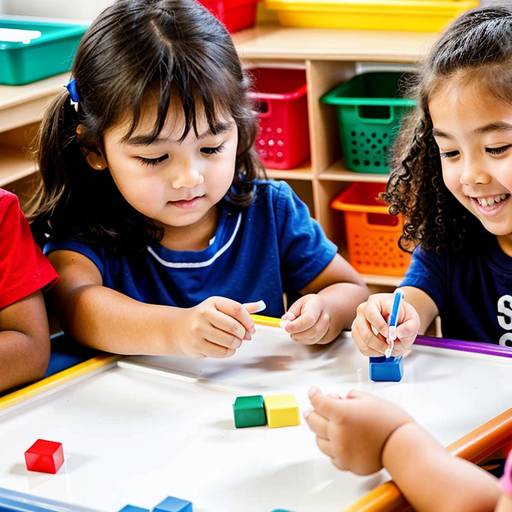
This Kindergarten math lesson focuses on measurement and weight, allowing students to explore and compare the weights of various objects through a hands-on approach. The lesson begins with an interactive discussion about weight, introducing key vocabulary such as heavy, light, balance, and scale. Students are then divided into small groups, each provided with balance scales and an assortment of classroom objects to weigh. As they experiment, they predict and observe which items are lighter or heavier, using the vocabulary to describe their findings.
Following the group activity, the class engages in a sharing session where each group presents their observations, reinforcing the concept of balance and providing a platform for discussion about their discoveries. The lesson wraps up with a reflective conversation and a fun chant to reinforce the vocabulary learned. Assessment is based on student participation, engagement, and the accuracy of their recorded observations. An optional extension activity encourages further exploration with a "Weight Hunt," where students classify additional items as heavy or light. Overall, the lesson aims to build foundational skills in measurement and weight through active participation and collaborative learning.
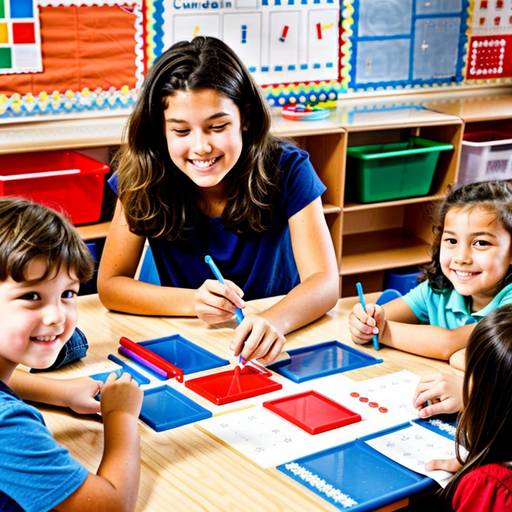
In this kindergarten math lesson, students will explore the concepts of measurement and time through interactive activities. The lesson begins with a storytelling session that introduces measurement and time in relatable contexts. Students will then work in small groups to measure various classroom objects using non-standard units like paper clips, encouraging collaboration and hands-on learning. Following the measurement activity, they will practice telling time using printable clock faces, experimenting with hour and half-hour increments.
The lesson concludes with a group discussion where students share their findings and reflect on what they learned. An extension activity will involve students measuring items at home and drawing a clock to represent a specific time related to their daily routines. Through this engaging approach, students will gain foundational skills in measuring length and understanding time concepts.
In this Kindergarten lesson, students will explore fundamental geometric shapes such as circles, squares, triangles, and rectangles. The lesson begins with a group discussion where students identify and describe different shapes. Following this, students learn about patterns, focusing on how shapes and colors can create sequences that repeat. Through direct instruction, they observe and predict the next shape in a pattern, then move on to creating their own patterns using shape cut-outs on construction paper.
Students engage in guided practice by working in pairs to replicate patterns with pattern blocks using cards provided by the teacher. This interactive experience allows them to apply their understanding of shapes and recognize patterns in a hands-on manner. The lesson wraps up with a reflection session where students share their creations and discuss what they learned. Assessment is based on observation during activities and student participation, providing insights into their understanding of geometric concepts. Extensions include a shape scavenger hunt and the incorporation of songs to further reinforce learning. Overall, the lesson emphasizes exploration and creativity while building foundational skills in geometry and pattern recognition.

In this kindergarten math lesson, students will explore geometry and patterns through various engaging activities. The lesson begins with a discussion on geometric shapes, using flashcards to help students identify and describe shapes they encounter in their daily lives. Afterward, a shape hunt allows students to find and share real-life examples of these shapes in the classroom and outdoors.
Next, the concept of patterns is introduced through visual examples, and students are encouraged to create their own simple patterns using shape manipulatives. They will then have the opportunity to express their creativity by making artistic creations with construction paper, glue, and crayons, ensuring that they incorporate at least three different shapes in a patterned arrangement.
The lesson concludes with a sharing session, where students present their work, fostering discussions about the patterns and shapes used. Assessment will be conducted through observation during activities and evaluation of the final artworks, ensuring students demonstrate their understanding of geometric shapes and pattern recognition. Extensions for advanced learners and additional support strategies for those needing help are also included to cater to diverse learning needs. Reflection on student engagement and understanding will inform future lesson adjustments.
This Kindergarten math lesson focuses on introducing students to the concept of multiplication as repeated addition. It begins with a warm-up discussion about multiplication, followed by a read-aloud of a themed storybook that illustrates the concept. Through direct instruction, students learn to visualize multiplication with the help of counting blocks, making connections to addition.
In small groups, students participate in a hands-on activity where they represent different multiplication problems using blocks and share their findings with the class. This fosters teamwork and communication skills. After a collaborative presentation, students practice independently with worksheets that reinforce their understanding of multiplication through visual groupings. The lesson concludes with a reflective discussion about the importance and application of multiplication in real life.
Assessment is conducted through observation during group activities and the review of worksheets to ensure comprehension. Extensions and adaptations are available to further meet student needs and promote continuous learning. Overall, this lesson is designed to make multiplication engaging and accessible for young learners.
This Kindergarten math lesson focuses on introducing students to the concept of addition through the use of a number line. The lesson begins with a discussion about addition and a demonstration on how to move along the number line to find sums. Students engage in group activities using addition flashcards and manipulatives, practicing counting jumps on the number line collaboratively. After guided practice, they complete worksheets independently, illustrating their understanding of addition with number lines. The lesson concludes with a review and an exit ticket activity that assesses retention of the concepts learned. Accommodations are provided for students who need extra support, while extensions are available for those ready to explore more complex concepts. Overall, the lesson aims to create a hands-on and interactive learning environment that fosters a solid foundation in addition.
In this Kindergarten math lesson, students will engage in activities focused on measurement and length using non-standard units such as paper clips and blocks. The lesson begins with a discussion on measurement, introducing key vocabulary like "length," "longer," "shorter," and "equal." Through demonstrations, students will learn how to measure various classroom objects and compare their lengths.
Groups will participate in hands-on measurement activities, selecting multiple objects to measure and recording their findings collaboratively on large paper. As they explore the classroom for additional items to measure independently, they will document their favorite measurements on sticky notes.
The class will conclude with a review of what was learned, allowing students to share their experiences and measurements. Assessment will involve observation during group work and the collection of individual recordings to gauge understanding. Extensions may include introducing rulers for advanced learners. Ultimately, the lesson fosters exploration and comprehension of the concept of length in an engaging manner.
In this Kindergarten math lesson, students will explore the concept of length through hands-on activities involving measurement. The lesson begins with a discussion of measurement tools and relevant vocabulary, such as longer, shorter, and same length. After a demonstration comparing two classroom objects, students will work in small groups to measure various items using unifix cubes or blocks, counting the number of blocks used for each object. Following this guided practice, students will select an additional object to measure individually and document their findings on a provided recording sheet. The lesson concludes with a group discussion where students share their measurements and reflect on their learning. Throughout the lesson, students will develop their understanding of length, practice measurement skills, and strengthen their vocabulary related to measurement concepts. Assessment will be conducted through observation during activities and the review of students' measurement recordings. Extensions for advanced learners will provide additional challenges to further enhance their understanding.
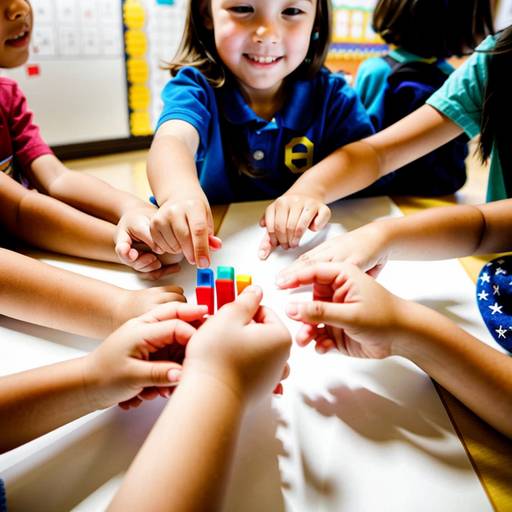
In this kindergarten math lesson, students will explore the concept of measurement and length through engaging and interactive activities. The lesson begins with a discussion on what measurement means, focusing on the comparison of lengths, using everyday classroom items as examples. The teacher will demonstrate how to measure objects using non-standard units, such as Unifix cubes or paper clips.
Students will then work in small groups to measure assigned items, record their findings, and determine which items are longest and shortest. Each group will share their measurements and observations with the class, fostering communication and presentation skills. The lesson concludes with a review of key vocabulary and a reflection on the practical applications of measurement in students' lives. Overall, the lesson emphasizes hands-on learning and encourages collaboration while laying the groundwork for future mathematical concepts.