
Filters
Level
Grade
Subject
Subject Area
Subject Topic
Standard(s)
Audience
Keyword
DurationMinutes
Kindergarten Telling Time Lesson Plans


This kindergarten math lesson focuses on teaching students about time and how to tell time on an analog clock. The lesson begins with an engaging discussion about the importance of time in daily routines, followed by an introduction to the clock's components, including the hour and minute hands. Through direct instruction, students learn to recognize and identify times by moving the hands on a large paper clock, reinforced by reading a story related to time management.
In guided practice, each student uses their own paper clock to replicate times called out by the teacher. During independent practice, students complete a worksheet where they create their own clocks to depict various whole hour times. The lesson concludes with a review and sharing session to reinforce their understanding. Assessment occurs through observation during practice and collection of completed worksheets. Extensions and adaptations are included to cater to different learning needs and enhance the lesson further. Overall, the lesson provides a fun and interactive way for students to grasp the concept of telling time.
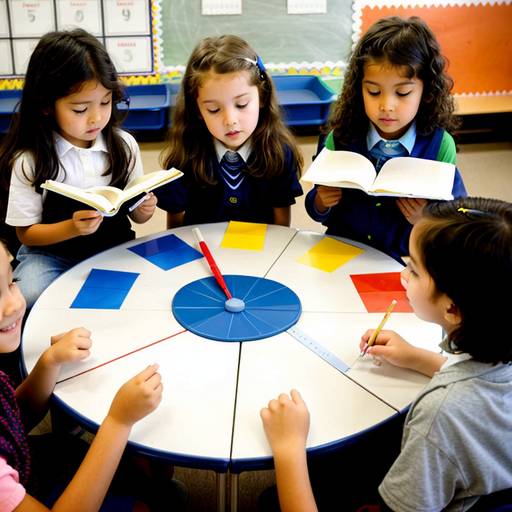
In this Kindergarten math lesson plan, students will engage in learning about time and how to tell time using an analog clock. The lesson begins with a captivating story that introduces the concept of time and its relevance in daily routines. Students will learn to identify the parts of a clock, including the hour hand and the minute hand, through direct instruction and demonstrations using a large cardboard clock.
As they become familiar with telling time to the hour, students will practice setting their own miniature clocks and participate in a time-matching game that encourages teamwork and peer interaction. To enhance engagement, they will also decorate their clocks, reinforcing their understanding of the clock's components.
The lesson concludes with a review of what they have learned and informal assessments based on observation during activities. Differentiation strategies will cater to varying skill levels, with extension activities promoting further exploration of time-telling in everyday life. Overall, the lesson emphasizes hands-on learning and collaborative experiences, making the concept of time accessible and enjoyable for young learners.