
Filters
Level
Grade
Subject
Subject Area
Subject Topic
Standard(s)
Audience
Keyword
DurationMinutes
Kindergarten Lesson Plans

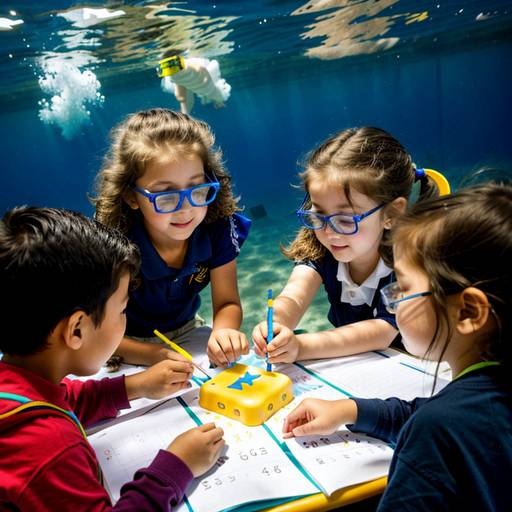
In this Kindergarten math lesson focused on subtraction, students will explore the concept of taking away using visual aids and hands-on activities. The lesson begins with a discussion about ocean life, introducing plastic sea creatures as a tangible resource for understanding subtraction. Through direct instruction, students learn to model subtraction problems on the whiteboard, observing how quantities decrease when items are removed.
During guided practice, students work in small groups with their own sets of sea creatures, engaging in exploration and counting while collaborating with peers. They then complete subtraction worksheets featuring images of sea creatures, allowing for independent assessment of their understanding.
To conclude, students participate in a treasure hunt activity, applying their subtraction skills in a playful context. Throughout the lesson, educators assess student comprehension through observation and worksheet completion, with opportunities for extension activities and adaptations based on varying student needs. This interactive approach aims to make subtraction both enjoyable and understandable for young learners.

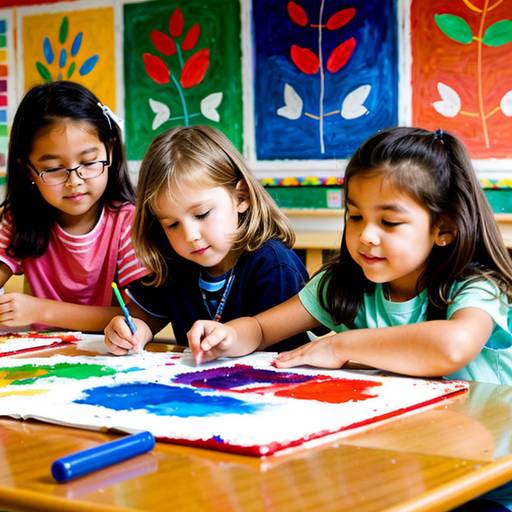
In this Kindergarten art lesson, students will explore fundamental elements of art, including line, shape, and color, while gaining a basic understanding of color theory. The session begins with a discussion that encourages students to identify their favorite colors and observe their use in nature and art. Following an introduction to the color wheel and the relationship between primary and secondary colors, students engage in a hands-on activity that involves mixing watercolors to create new hues.
After mastering color mixing, students will use their newly created colors, along with crayons and other materials, to create original artworks that incorporate various lines and shapes. The lesson concludes with a gallery walk where students can showcase their work and reflect on their learning experience. Throughout the lesson, students are encouraged to express their creativity while gaining foundational knowledge of art elements and color theory. The lesson promotes a supportive and enjoyable environment that allows for artistic exploration and discovery.

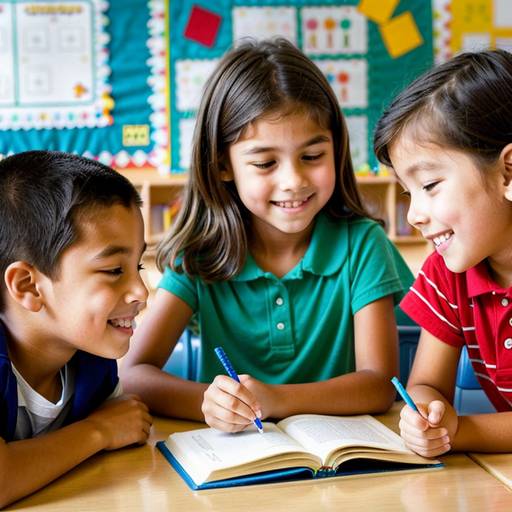
In this Kindergarten Language Arts lesson, students embark on an engaging journey to explore new vocabulary related to a thematic story, such as animals. The lesson begins with an interactive introduction where target vocabulary words are presented through flashcards and discussions. Students listen to a story that incorporates these words, allowing them to hear and understand their meanings in context.
Following the story, students break into small groups to match picture cards with the corresponding vocabulary words, fostering collaboration. Each group then creates a mini poster that illustrates these words through drawings and sentences, promoting creativity and comprehension. Students share their posters with the class, using their vocabulary words in conversation. The lesson concludes with a class review of the vocabulary, encouraging students to use the new words in their own sentences.
Assessment is based on student participation, the accuracy of vocabulary usage, and understanding as demonstrated in their group work and presentations. Extension activities include creating a personal "Word Journal" for further vocabulary exploration and using word chants or songs for reinforcement. This lesson effectively combines storytelling, hands-on activities, and collaborative work to enhance vocabulary skills in a fun and supportive environment.
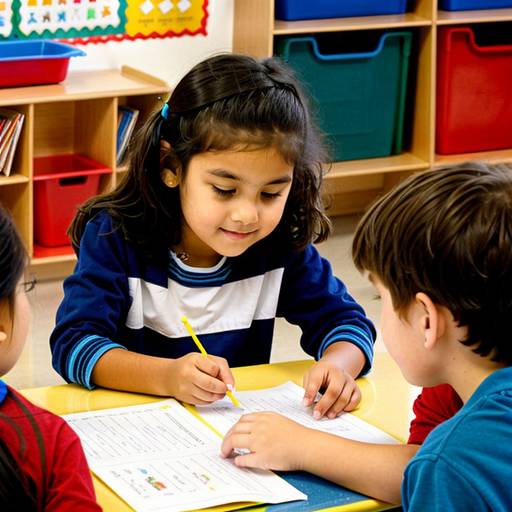
In this Kindergarten Language Arts lesson, students embark on an engaging exploration of new vocabulary words related to adventure and discovery. The lesson begins with an introduction to five key vocabulary words: adventure, journey, explore, discover, and treasure. Each word is presented with visual aids and discussions to ensure students understand their meanings.
Next, students work collaboratively in small groups to create drawings that represent their assigned vocabulary word, fostering teamwork and creativity. Following this group activity, students individually create a "Word Explorer" booklet, where they choose three vocabulary words to illustrate and use in original sentences, further reinforcing their understanding.
The lesson culminates with students sharing their booklets with the class, promoting confidence and skill in verbal expression. Throughout the lesson, the teacher assesses participation, comprehension, and creativity, while encouraging ongoing use of the new vocabulary in daily conversations and future classroom activities. By the end, students will have gained a deeper understanding of the vocabulary and how to apply it in meaningful contexts.


This Kindergarten music lesson plan focuses on engaging young students in the joy of singing through various activities. The lesson begins with a discussion about singing and vocal warm-ups, followed by a fun game where students mimic animal sounds to explore different vocal qualities. The main portion of the lesson involves singing well-known children's songs, such as "Twinkle, Twinkle, Little Star" and "The Wheels on the Bus," with opportunities for movement and the use of simple percussion instruments to enhance rhythm. Students are then divided into small groups to create and perform their own melodies, fostering teamwork and creativity. The lesson concludes with a calming goodbye song and a reflective discussion about their experiences. Assessment is based on participation and engagement, and follow-up activities encourage continued singing at home and the possibility of a seasonal performance. Overall, the plan emphasizes experiential learning and builds foundational musical skills in a fun and interactive environment.

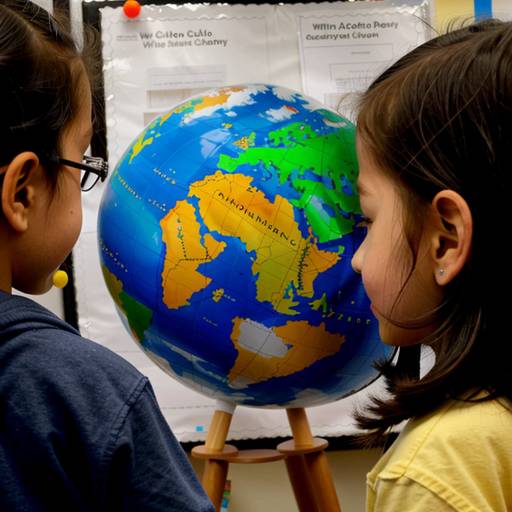
In this Kindergarten Earth Science lesson, students explore various types of weather, including sunny, rainy, cloudy, and snowy conditions. The lesson begins with a discussion about personal experiences with weather, allowing students to engage and share their thoughts. A weather chart is created to track daily weather patterns, fostering an understanding of changes over time.
Students then engage in a creative art activity, where they use finger paints or markers to illustrate their favorite type of weather. This is followed by a fun dress-up role-play activity, enabling them to act out different weather scenarios while their peers guess the type being represented.
The lesson concludes with a recap, allowing each student to share their favorite weather and its significance to them. Throughout the activities, students are assessed on their participation and comprehension, while extensions encourage ongoing weather tracking and further exploration through literature. Adaptations are provided to support varying needs, ensuring an inclusive learning environment. Reflection on the lesson's effectiveness will help inform future teaching strategies.
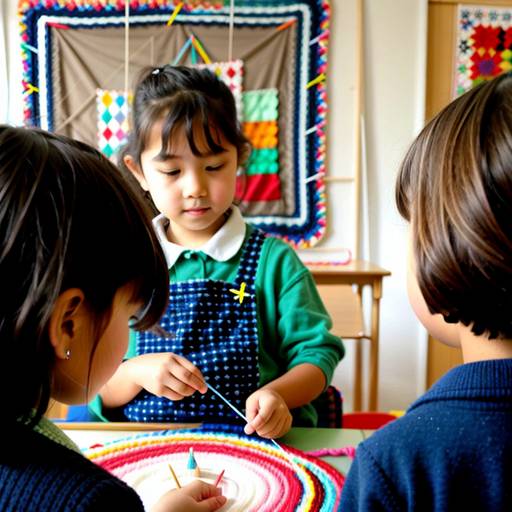
This Kindergarten art lesson focuses on introducing students to fiber arts through a hands-on weaving activity. Over the course of 60 minutes, students will learn about the various materials and techniques involved in weaving. The lesson begins with a brief introduction to fiber arts, followed by a demonstration of how to use a cardboard loom and simple weaving techniques.
Students will then have the opportunity to create their own woven pieces using colorful yarn and fabric scraps, promoting creativity and fine motor skills. They will share their creations with classmates, explaining their color choices and design processes, fostering a sense of community and collaboration. The lesson concludes with a cleanup and a discussion on the importance of maintaining a tidy workspace. Adaptations are included to support various learning needs, ensuring that all students can engage with the activity successfully. An extension activity encourages students to work together to create a class tapestry, further enhancing their understanding of collaboration in art.
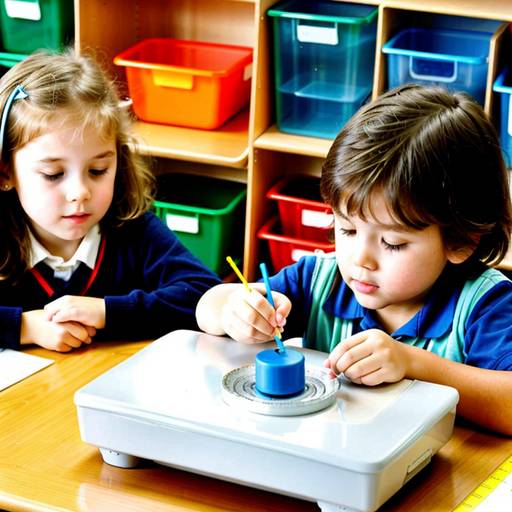
This Kindergarten math lesson focuses on introducing students to the concepts of measurement and weight through engaging, hands-on activities. The lesson begins with a discussion about measurement and weight, encouraging students to express their understanding and observations. In the instructional phase, the teacher demonstrates how to use a balance scale and non-standard units, such as blocks or cups, to measure the weight of various objects.
Students then participate in a guided practice where they work in pairs to weigh their chosen objects using the balance scale and measure them with blocks or cups. They record their findings on worksheets and share their results with the class, allowing for collaborative learning and discussion.
Following this, students complete an independent worksheet where they illustrate and categorize objects based on their weight (light, medium, or heavy). The lesson concludes with a recap of the key concepts learned, reinforcing the understanding of weight and measurement through class participation and rewards. The lesson also includes adaptations to support diverse learning needs and offers extensions to connect measurement to real-life contexts. Overall, the lesson promotes active engagement and critical thinking skills while fostering a foundational understanding of measurement and weight.

In this kindergarten social studies lesson, students will explore the concepts of maps and geography. The class will begin with a discussion about maps, focusing on their purpose and key features such as titles, symbols, legends, and directions. Using a large world map and a local neighborhood map, students will learn to identify and interpret various map elements.
During guided practice, students will work in small groups to create a simple map of their classroom, incorporating important features and symbols. Following this, each student will individually draw a personal map of their home or bedroom, labeling significant items and using symbols as needed.
To conclude the session, students will share their maps with the class, fostering a sense of community and reinforcing their understanding of map features. Throughout the lesson, the instructor will assess student engagement and comprehension, ensuring a grasp of the mapping concepts introduced. The lesson may also include extensions, such as introducing digital maps or organizing a "Map Walk" to further solidify the students' understanding of mapping in real-world contexts.
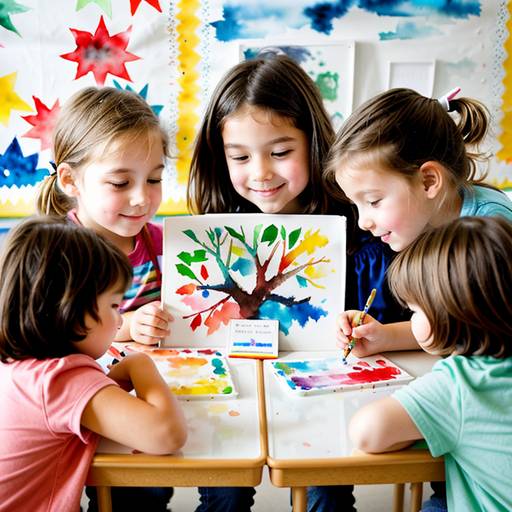
This kindergarten art lesson focuses on introducing students to watercolor techniques and the creative process of painting. The lesson begins with a discussion about watercolor painting and a presentation on the color wheel, highlighting primary and secondary colors. Following this, the teacher demonstrates essential watercolor techniques, including wash, blending, and creating texture.
Students are then guided to choose a simple nature scene to inspire their artwork, sketching their ideas lightly on watercolor paper. They are given time to independently paint their scenes, encouraging the use of the techniques learned and exploration of color mixing. Throughout the painting process, the teacher circulates to provide support and feedback.
After the painting session, students participate in a clean-up and then gather to share their creations with the class, explaining their artistic choices and techniques used. The lesson promotes creativity, self-expression, and introduces foundational skills in watercolor painting, while also encouraging peer sharing and appreciation of diverse artistic interpretations. Extensions are provided for early finishers and those wishing to integrate storytelling into their art.