
Filters
Level
Grade
Subject
Subject Area
Subject Topic
Standard(s)
Audience
Keyword
DurationMinutes
Kindergarten Lesson Plans

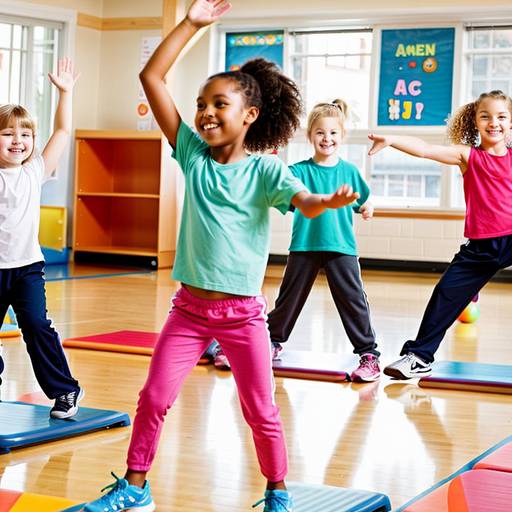
In this Kindergarten Physical Education lesson, students will engage in various activities designed to promote fitness and flexibility. The lesson begins with a warm-up session featuring dynamic movements like jumping jacks and high knees to energize the children. Following the warm-up, students will rotate through several stretching stations, each focusing on different stretches, such as the toe touch and butterfly stretch, allowing them to practice and hold each position while concentrating on their breathing.
Next, students participate in a fun movement game, "Freeze Dance," which combines dancing with stretching prompts, reinforcing the day's theme in an interactive way. To conclude the lesson, children will cool down by lying on mats for a calming body scan and reflection on their experiences, discussing the importance of movement and stretching.
Assessment will be based on observation of the students' participation and ability to follow instructions during stretches and activities. To accommodate diverse abilities, modifications will be offered to ensure inclusivity. The lesson aims to instill an understanding of the significance of fitness and flexibility, encouraging students to continue these practices at home.
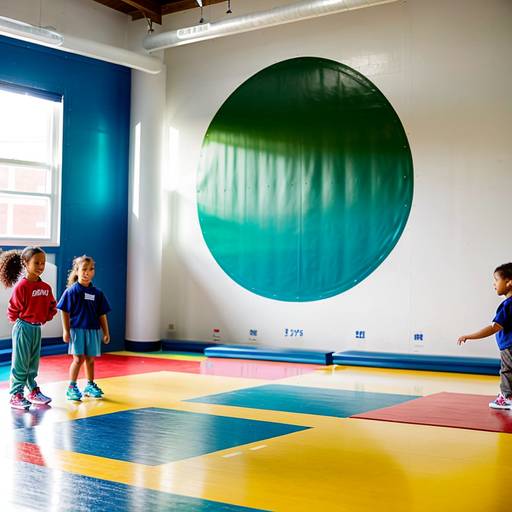
In this kindergarten physical education lesson, students will engage in a series of fun activities designed to enhance their gross motor skills while exploring the fundamentals of sports and gymnastics. The session will begin with a warm-up, including stretching and movement to prepare the students for physical activity.
Following the warm-up, students will rotate through four engaging activity stations: balance beam walking to develop balance, hula hoop games for coordination, soft ball tossing to practice aiming and teamwork, and jump rope challenges to promote jumping skills. These activities will encourage social interaction and cooperation among peers.
After the stations, a cool-down period will allow students to relax through deep breathing and gentle stretches, coupled with a reflection on their favorite activities from the lesson. Throughout the session, instructors will assess participation and teamwork while providing encouragement and feedback. The lesson aims to foster an appreciation for physical activity in a playful and supportive environment, with opportunities for extension and adaptations based on individual needs.

This Kindergarten math lesson focuses on introducing the concept of multiplication as repeated addition through hands-on activities and visual aids. The class begins with a warm-up counting song to activate prior knowledge. The teacher demonstrates multiplication using manipulatives, explaining the concept as "groups of" using simple examples. Students then participate in small group activities where they create their own multiplication problems with blocks or counters. Following group work, they complete worksheets that reinforce their understanding of matching groups to multiplication equations. The lesson concludes with a class discussion and exit tickets, allowing students to share real-world examples of multiplication they encounter. The assessment is based on informal observations and review of students' work, ensuring that each child grasps the foundational concept of multiplication. The lesson is designed to be interactive and engaging, catering to diverse learning styles through visuals, hands-on practice, and collaborative learning.

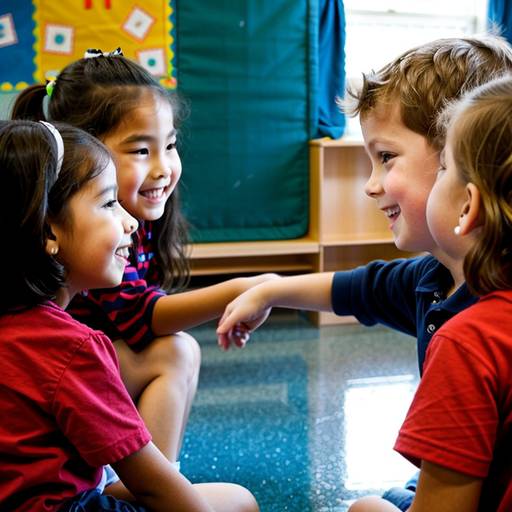
This Kindergarten music lesson plan focuses on fostering an appreciation for music through active listening and creative expression. The objectives include developing students' listening skills, introducing various musical genres and instruments, and encouraging movement in response to music. The lesson begins with a discussion about music, followed by listening activities where students share their feelings and thoughts on different music clips.
Students engage with simple percussion instruments, participating in rhythm echoing and exploration. To enhance their physical connection to music, they partake in a movement activity, expressing their feelings through dance with props like scarves. The lesson concludes with a reflective sharing session, allowing students to discuss their favorite musical experiences. Assessment focuses on participation and expression, while extension activities can deepen their understanding by exploring global music instruments and creating original rhythms. Adaptations ensure inclusivity for all learners, making the lesson accessible and enjoyable.
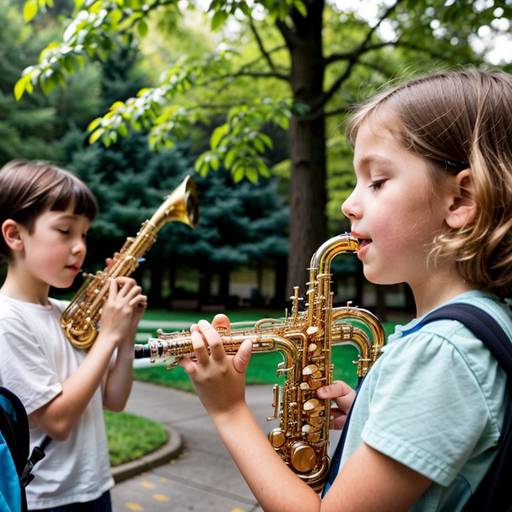
In this Kindergarten music lesson, students will explore the world of woodwind instruments through a combination of listening, hands-on activities, movement, and creative expression. The lesson begins with an introduction to various woodwind instruments, engaging students in a discussion about their sounds and features. Following this, students will listen to audio clips of different woodwinds and identify changes in sound. A demonstration showcases how to produce sound using simple flutes or recorders, allowing a volunteer to try the instrument.
To incorporate movement, students will use scarves or ribbons to dance and express themselves while listening to woodwind music. They will then transition to a creative art activity, drawing their favorite woodwind instrument and sharing their artwork with the class. The lesson concludes with a closing circle, where students reflect on their experiences and share their favorite parts of the lesson. Assessment will focus on student engagement, recognition of instruments, and creativity displayed in the art activity. Modifications will be made to ensure all students can participate fully.
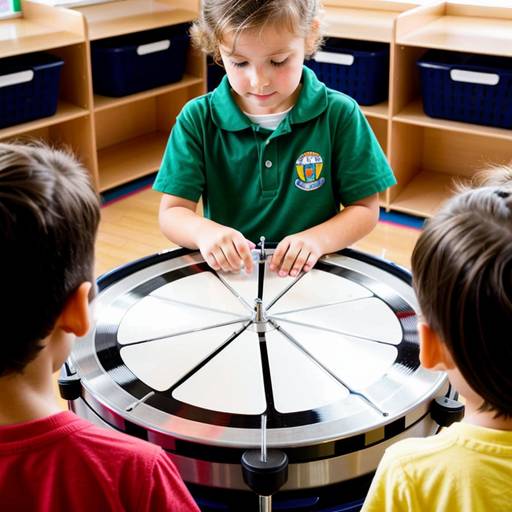
In this kindergarten music lesson, students will explore the concept of rhythm through engaging activities that emphasize body percussion and instrument play. The lesson begins with an introduction to rhythm, explaining the importance of beat and pulse in music. Students will participate in a body percussion warm-up that encourages them to create and combine various sounds using their bodies. Following this, they will explore hand-held instruments like drums, shakers, and claves, learning to imitate simple rhythmic patterns while being introduced to basic rhythmic terms such as quarter and eighth notes.
Students will then work in small groups to create their own short rhythm patterns, which they will perform for the class. This collaborative activity fosters creativity and teamwork as they experience making music together. The lesson concludes with a group performance, allowing all students to play their instruments in unison, reinforcing the feeling of musical unity. Throughout the lesson, the teacher will assess participation and understanding, providing feedback to encourage growth. Extensions may include exploring rhythms from various cultures or creating a classroom display to showcase favorite rhythms learned.

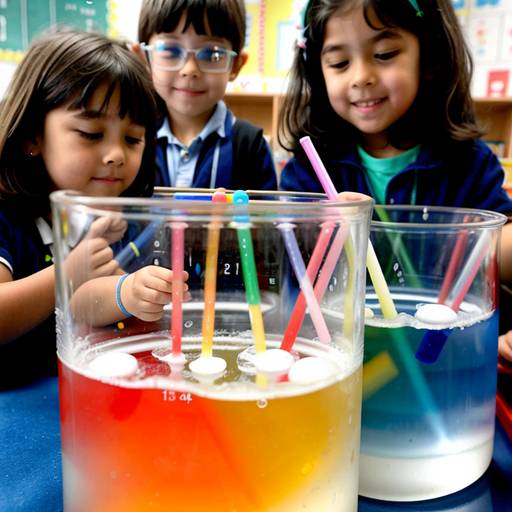
This kindergarten science lesson focuses on exploring the three states of matter: solids, liquids, and gases. Students engage in discussions to define and identify matter, using various objects and visual aids. Through hands-on activities, they sort items into categories based on their state and perform an experiment observing the transformation of ice (solid) into water (liquid). The lesson emphasizes participation and critical thinking as students share their observations and examples from daily life. Assessment is conducted through observation and a sorting worksheet to evaluate understanding. Extensions may include cooking activities and read-alouds to deepen knowledge on the topic. Overall, the lesson promotes an interactive approach to understanding physical science concepts related to matter.
In this Kindergarten math lesson, students will explore the concept of addition using single-digit numbers through engaging and interactive activities. The lesson begins with a warm greeting and an engaging storybook that introduces basic addition concepts. The teacher will then model addition using manipulatives while explaining the process of combining groups.
Students will be divided into small groups where they will create and solve their own addition problems using counting manipulatives, promoting teamwork and critical thinking. Afterward, they will illustrate their problems through drawings, showcasing their understanding of addition visually.
The lesson will conclude with a recap of key concepts and an exit ticket activity to assess individual understanding. Various check-ins and adjustments ensure that students of different proficiency levels receive the support they need. Finally, follow-up activities will encourage students to reinforce their skills at home and in math centers, making the learning experience comprehensive and collaborative.
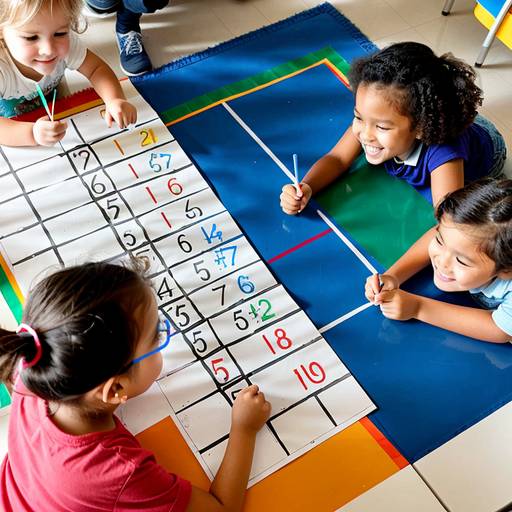
In this Kindergarten math lesson, students will explore the concept of addition using a number line as a visual aid. The primary objective is for students to understand how to add numbers by counting forward on the number line. The lesson begins with a discussion on addition and a demonstration using a large number line to solve simple problems. Students will then engage in guided practice using their individual number lines to solve several addition problems together. Following this, they will work independently with addition flashcards, employing their number lines and counters to visualize their answers. The lesson concludes with a review where some students share their solutions and the strategies they used. Ongoing assessment will take place through observation and collection of the flashcards. Additional activities and extensions are suggested to support and challenge students in their understanding of addition. The lesson emphasizes interactivity and hands-on learning to help students build a solid foundation in math.

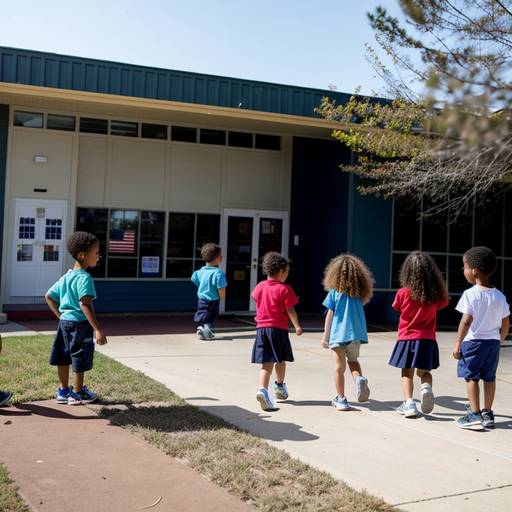
This lesson plan introduces kindergarten students to the concepts of community and the importance of rules. It begins with a discussion about what a community is and the various community helpers, such as police officers and firefighters, highlighting their roles. A read-aloud of a selected picture book reinforces these ideas, fostering engagement and comprehension through questions about the story.
Following this, students explore the significance of rules, discussing why they are essential for safety and kindness. Together, they brainstorm and create classroom rules, illustrated through drawings or pre-made visuals. An interactive role-play activity allows students to dress up as community helpers, practicing the rules associated with their roles.
The lesson concludes with a circle discussion to review key concepts. Assessment includes observing student participation and sharing individualized drawings of their favorite community helpers. Opportunities for extensions include inviting a community helper to the classroom for a Q&A session and organizing a community walk. Overall, the lesson emphasizes engagement, collaboration, and hands-on learning to reinforce students' understanding of their community and the rules that keep it safe.