
Filters
Level
Grade
Subject
Subject Area
Subject Topic
Standard(s)
Audience
Keyword
DurationMinutes
Lesson Plans

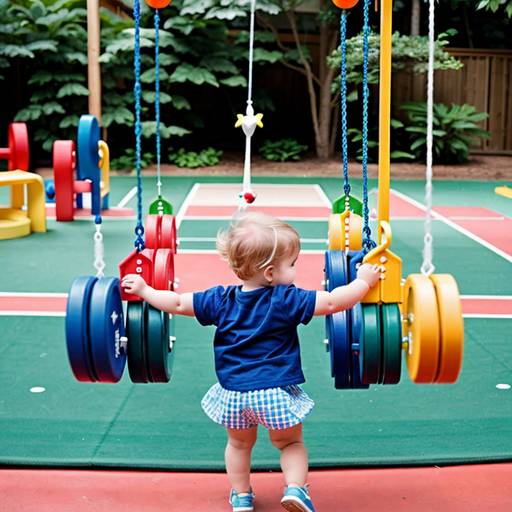
This lesson plan aims to enhance gross motor skills in toddlers through exciting and engaging swinging activities. The session is designed for children aged 2-3 years and lasts for 30 minutes, taking place on a playground or in an indoor playroom equipped with toddler-friendly swings.
The lesson begins with a warm-up involving simple stretches and movement songs to prepare the children physically and mentally. Following this, an introduction to swinging is given, demonstrating safe entry and exit techniques.
The core of the lesson consists of free swinging, allowing children to explore swinging at their own pace, as well as structured games that reinforce coordination and teamwork through activities like counting swings and passing balls while swinging. A group activity utilizing a parachute fosters cooperation and adds an element of fun by simulating swinging motions.
The class concludes with a cool-down session featuring gentle stretching and a sharing circle where children reflect on their favorite moments from the lesson. Emphasis on safety is maintained throughout, with close supervision and a focus on safe practices around the swings. This lesson not only promotes physical development but also encourages social interaction and joyful experiences among toddlers.

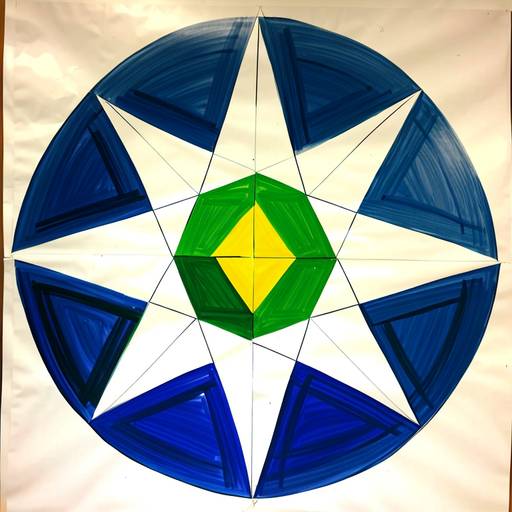
In this 3rd-grade math lesson, students will explore the concepts of geometry and symmetry through interactive activities and hands-on experiences. The lesson begins with a warm-up discussion where students share their understanding of symmetry and identify symmetrical objects in their environment. The teacher will review basic geometric shapes—circle, square, triangle, and rectangle—emphasizing their properties and demonstrating how to find lines of symmetry using drawings and, optionally, a mirror.
In guided practice, students will create their own geometric shapes on construction paper, draw their lines of symmetry, and collaborate with a partner to discuss their findings. For independent practice, students will design symmetrical creations using colored construction paper, ensuring their designs reflect symmetry through careful arrangement of shapes.
The lesson concludes with students presenting their symmetrical designs to the class, reinforcing their understanding through verbal explanation. Assessment will be based on observation during activities and the accuracy of their symmetrical creations. Extensions include encouraging students to find real-world examples of symmetry and creating a classroom art gallery to showcase their work. The lesson is designed to engage students with geometry in a fun and creative way.
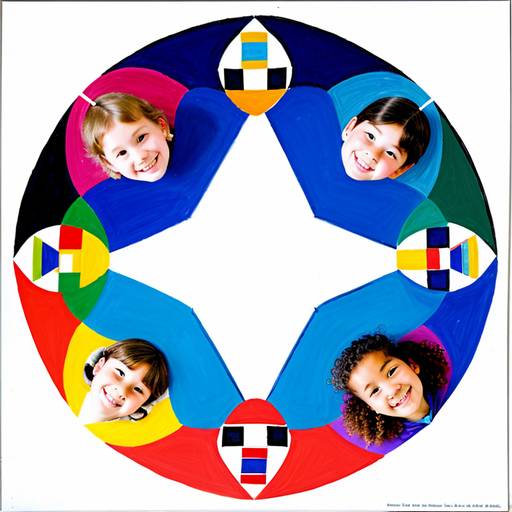
In this 60-minute lesson plan designed for 2nd-grade students, the focus is on introducing and exploring the concepts of symmetry and geometric shapes. The lesson begins with an engaging discussion to assess prior knowledge, followed by a clear explanation of symmetry and its applications in various shapes. Students will participate in guided activities, where they will identify and draw lines of symmetry on provided cut-outs, encouraging teamwork and collaboration.
As part of the independent practice, each student will create their own symmetrical design on paper, showcasing their creativity while applying their understanding of symmetry. The lesson concludes with a review of key concepts and an exit ticket activity that assesses individual comprehension through a drawing exercise.
Throughout the lesson, opportunities for differentiation and extensions are included to cater to varying student needs and abilities. The integration of art with math makes the learning experience engaging and interactive, helping students grasp the concept of symmetry in a meaningful way.
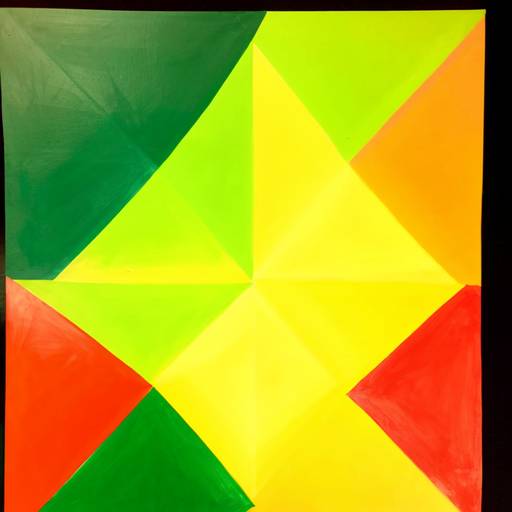
This lesson plan is designed for 4th-grade students to explore the concepts of geometry and symmetry. The objectives include defining symmetry, identifying symmetrical shapes and their lines of symmetry, and creating original symmetrical designs. The lesson begins with a discussion to introduce the idea of symmetry, followed by hands-on activities where students work in pairs to find lines of symmetry using mirrors and geometric cutouts. They will also design their own symmetrical shapes using construction paper and colored pencils. The session concludes with students sharing their creations and discussing the relevance of symmetry in art and nature. Assessment methods include observation during activities, evaluation of worksheets, and feedback on the students' designs. Extensions and differentiation strategies are provided to cater to varying learning needs and encourage deeper exploration of the topic.

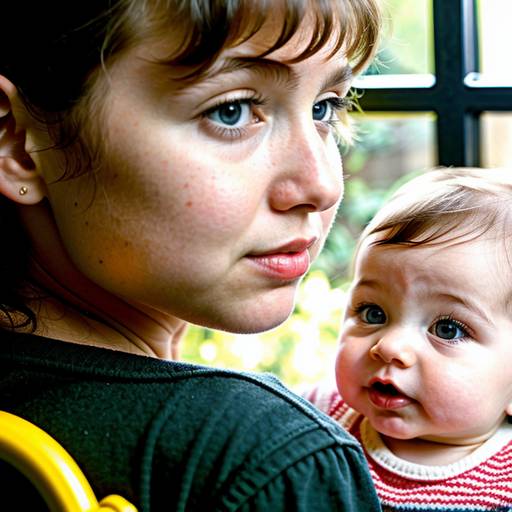
This lesson plan focuses on enhancing infants' sensory development by engaging them in a hands-on exploration of various textures. Designed for children aged 6-12 months, the hour-long session includes interactive activities aimed at fostering curiosity and fine motor skills.
The lesson begins with an introduction to the theme of texture exploration, encouraging caregivers to participate. Infants then rotate through several sensory stations featuring a touch box with different materials, a sensory bin filled with rice or pasta, texture books with tactile elements, and textured toys that promote play and manipulation.
Following the exploration stations, infants engage in a creative art activity using finger paint, where caregivers encourage discussions about texture while infants create their unique artworks. The session concludes with a group reflection, allowing caregivers to share observations about their child's tactile experiences and introducing new vocabulary related to textures.
Caregivers are encouraged to continue the learning at home by finding and exploring everyday textures, making it an enriching experience that extends beyond the session. All materials used are safe for infants, with a strong emphasis on supervision throughout the activities.

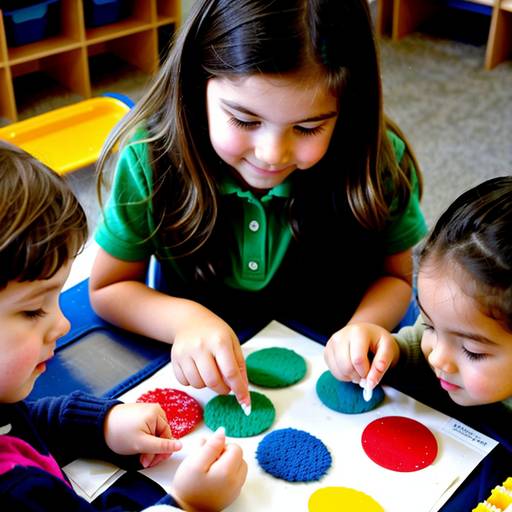
In this preschool art lesson, students will explore and create with various textured materials to enhance their understanding of texture and pattern. The session begins with an introduction to different textures, allowing children to touch and describe the materials provided. Following this exploration, the concept of patterns is discussed, highlighting how they can incorporate different textures.
Students will then engage in a hands-on art activity where they select their favorite materials to create a textured art piece, learning to layer and arrange the items thoughtfully. Once their artworks are complete, a show-and-tell session will allow each child to present their pieces, fostering communication and appreciation among peers. The lesson will conclude with a clean-up activity, encouraging responsibility and teamwork. Through observation and active participation, educators can assess students' grasp of texture and pattern concepts, promoting creativity and tactile engagement in a supportive environment. Extensions may include storytime focused on textures or collaborative group projects.
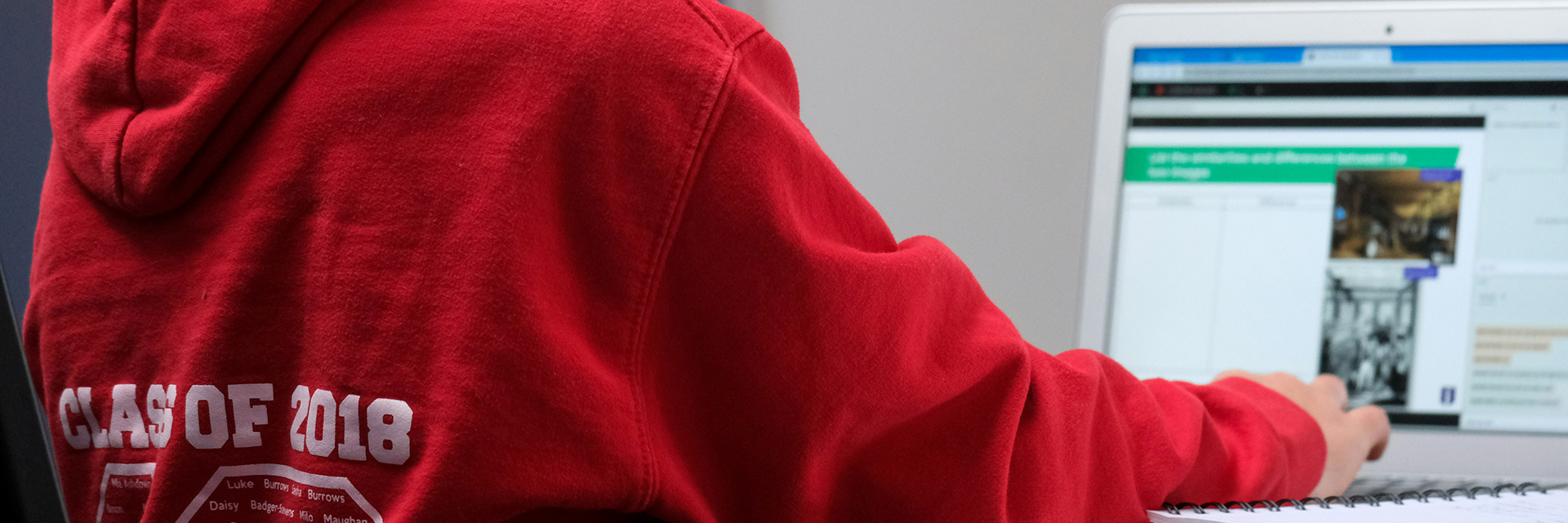
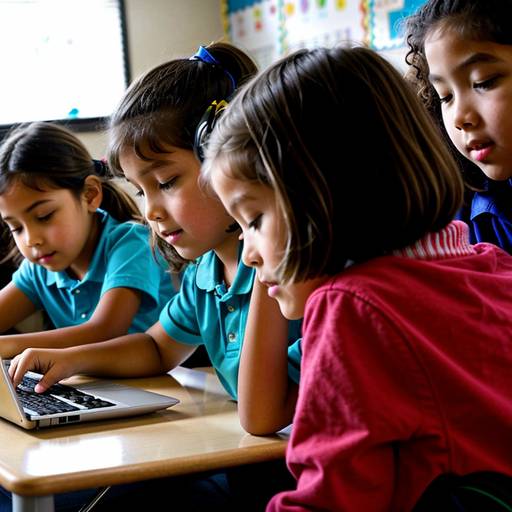
This 1st-grade technology lesson focuses on teaching students the importance of device maintenance and proper handling of technology tools. It begins by engaging students in a discussion about their favorite devices, followed by an overview of essential care practices, such as keeping devices clean, avoiding food and drinks near them, and handling them gently. Students participate in a "Do's and Don'ts" activity, where they create their own lists of device care practices. The lesson includes a hands-on component, allowing students to use tablets or laptops while reinforcing proper handling techniques. At the conclusion, students share their learnings, and the class collaborates on a poster of “Tech Care Rules” for display. Assessment is based on observations during the hands-on activity and the quality of group work. Overall, the lesson aims to instill a sense of responsibility and care toward technology in young learners.
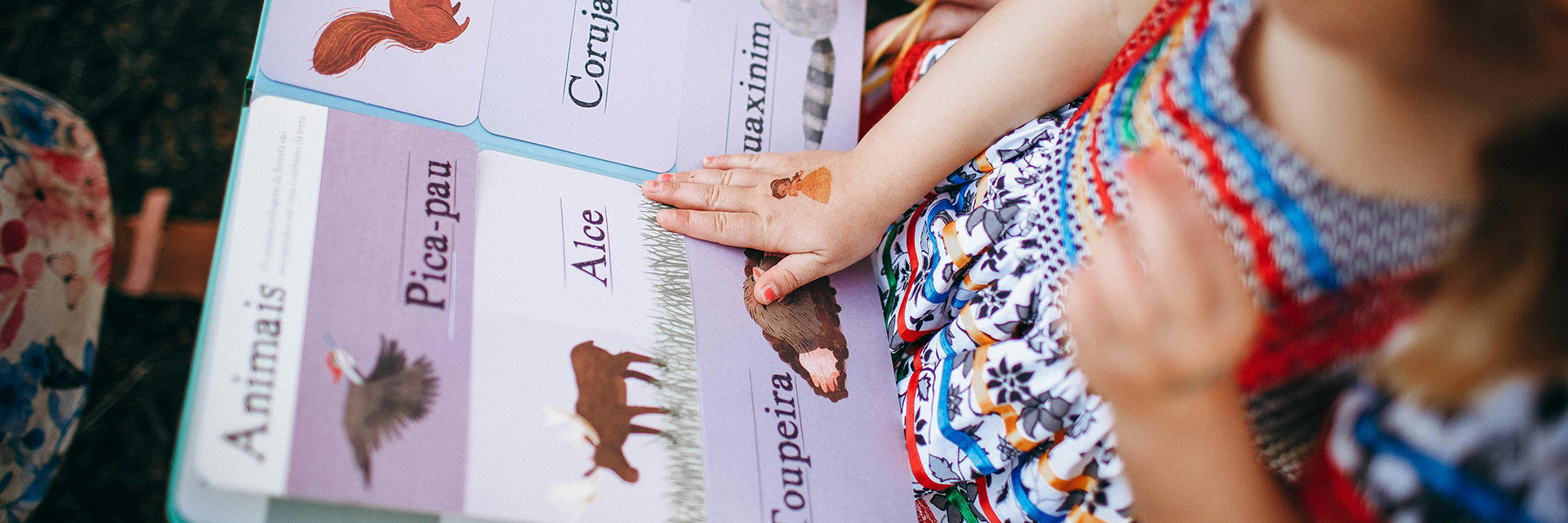
This lesson plan focuses on enhancing toddlers' narrative skills through a series of engaging storytelling activities. The session begins with an interactive story reading, designed to capture the children’s attention and encourage them to think about the story's flow. Following this, interactive storytelling allows children to use props to act out characters, fostering creativity and expression.
Next, the group collaborates on a story sequence activity using illustrated cards to help children learn about story structure while sharing their ideas. The lesson transitions to a creative expression segment where toddlers draw their favorite story elements, providing an opportunity for verbal sharing and communication.
The session concludes with a recap of what was learned about stories, complemented by a fun, themed song. Throughout the lesson, children are encouraged to participate actively, fostering both comprehension and expression of narrative skills in a supportive environment. Adaptations are included to cater to diverse learning styles, ensuring all toddlers can engage with the material effectively.
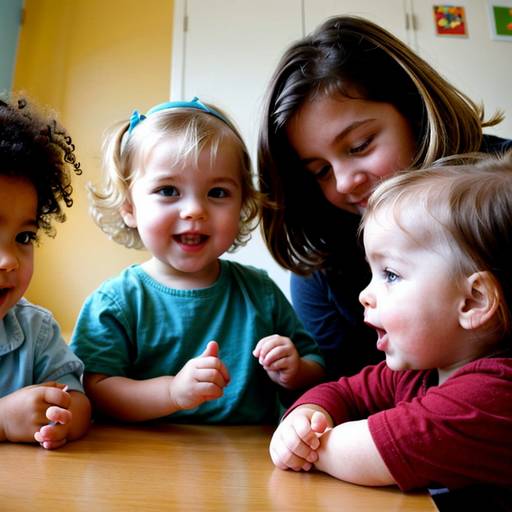
The lesson plan aims to enhance toddlers' conversation skills through interactive activities designed to promote listening, turn-taking, and expressive language. Activities include reading a lively picture book and encouraging open-ended discussions, using conversation cards to spark dialogue about images, and engaging in imaginative play with toy phones to practice greetings and sharing. Additionally, toddlers will collaborate in building projects with colorful blocks, further fostering communication and teamwork. The session concludes with a group reflection on learned concepts and encourages caregivers to continue practicing these skills at home. Assessment focuses on observing children's participation and dialogue during activities.

This lesson plan centers on enhancing communication skills in toddlers through engaging, play-based activities. Designed for children aged 2-4 years, the session lasts 30-45 minutes and accommodates a small group of 4-8 children.
The plan includes various components such as vocabulary building using picture flashcards, interactive storytime, puppet play for expressive language, and an art activity where children create and describe their artwork. The session starts with a welcoming introduction, followed by activities that foster vocabulary expansion, encourage expressive language through dialogue, and promote social interaction through turn-taking.
Throughout the lesson, educators observe and provide feedback to assess each child's engagement and language development. The conclusion features a sharing circle, allowing children to express what they learned and build confidence in their speaking abilities. Extensions like a Communication Corner and a planned "Show and Tell" offer opportunities for continued practice. Overall, this lesson plan aims to create a lively environment that supports toddlers in developing essential communication skills through fun and interaction.