
Filters
Level
Grade
Subject
Subject Area
Subject Topic
Standard(s)
Audience
Keyword
DurationMinutes
Lesson Plans

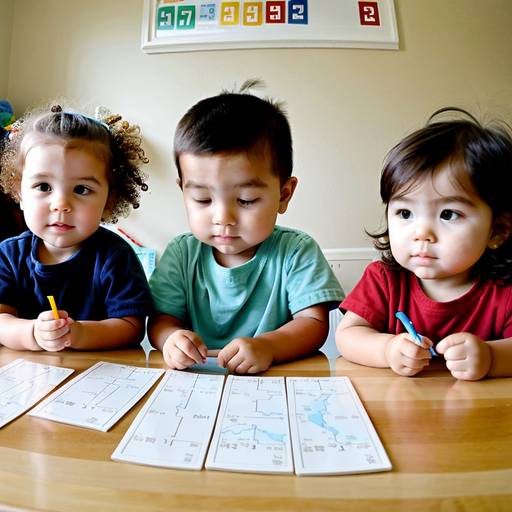
In this toddler lesson plan, children will explore the concept of quantity through engaging activities that include counting, comparing, and identifying numbers. The session begins with a group circle where students participate in a lively counting song to introduce the lesson. Following this, they will engage in a hands-on activity where they each receive a small set of objects to count and compare with their peers, encouraging discussions about more, less, or equal amounts.
Next, students will embark on a treasure hunt for number cards, collecting a corresponding number of objects from a designated area. This interactive exploration allows them to practice one-to-one correspondence while reinforcing their counting skills. The lesson concludes with a group sharing session, where children showcase what they collected and a fun musical game that combines movement with counting.
Throughout the activities, teachers will assess children’s understanding of numbers through observation and informal questioning. To extend the learning, there are suggestions for creating a number wall in the classroom and incorporating counting-themed stories during circle time. This lesson fosters a joyful learning environment that encourages toddlers to engage with numbers in a playful and meaningful way.
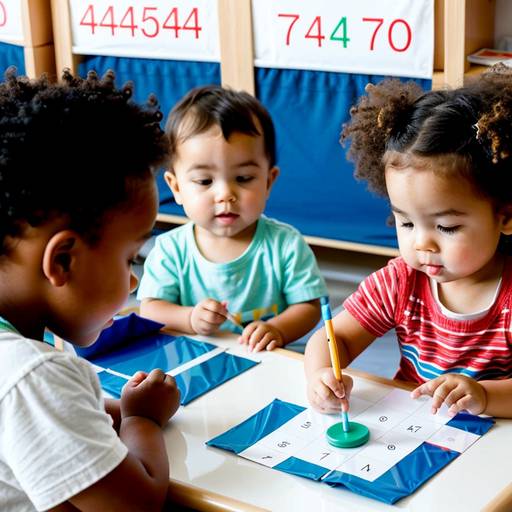
This lesson plan focuses on introducing toddlers to the concepts of counting and comparing quantities. It is designed for a group of 2- to 3-year-olds and lasts for 30 minutes. The session begins with a warm-up activity involving a lively counting song to engage the children.
In the main part of the lesson, children participate in hands-on activities where they count and compare various colorful objects. They first practice counting their assigned items aloud, ensuring they connect numerical values with physical quantities. Following that, children explore a sensory bin filled with small objects, allowing them to select and compare their quantities with their peers. They engage in discussions about which group has more or less, further reinforcing their understanding of quantity relationships.
The lesson concludes with a reflection segment where children share their favorite numbers and reiterate the counting song, cementing the day's learning in a fun way. Assessment occurs through observation of the children's counting accuracy and their grasp of the comparison concepts. Opportunities for extension are provided for those who master the basics quickly, including introducing simple addition and creating a visual "Number Wall." Overall, this engaging session fosters foundational math skills in a playful environment.

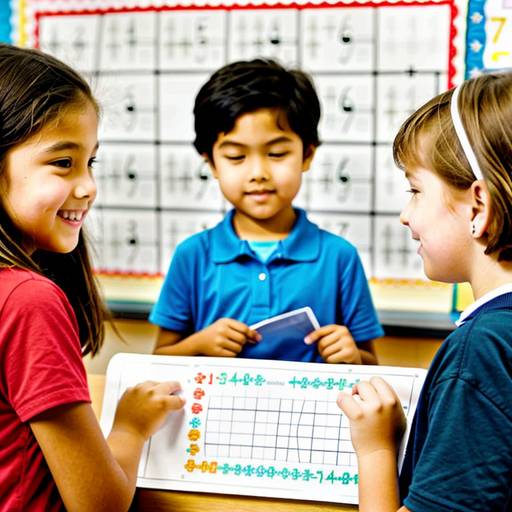
In this 2nd-grade math lesson, students will explore addition using a number line as a visual and practical tool. The lesson begins with a brief review of addition concepts, followed by a demonstration of how to use a number line to solve an addition problem. Students will participate in guided practice by solving example problems together, utilizing their own individual number lines. After that, they will engage in independent practice by completing worksheets that involve various addition problems, reinforcing their understanding of the concept. To conclude the lesson, students will share their answers and methods with the class, allowing for discussion and reinforcement of the importance of the number line in addition. Continuous assessment will be conducted through observation and worksheet evaluation, with accommodations provided for differing learning needs. Extensions include introducing two-digit addition or using technology to further enhance understanding.
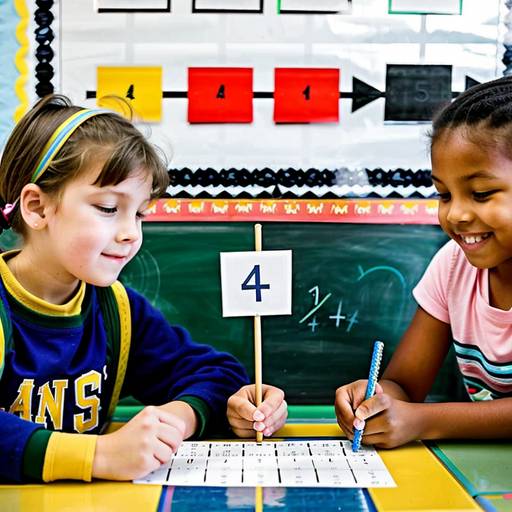
In this 2nd-grade math lesson, students will explore the concept of addition using a number line. The lesson begins with a review of addition basics, followed by a demonstration illustrating how to use the number line to add numbers by hopping forward. Students will then participate in guided practice, where they work in pairs to solve addition problems on the number line, allowing them to actively engage with the material. Afterward, they will complete independent worksheets featuring several addition problems that encourage them to use the number line for finding sums. The lesson concludes with students sharing their favorite problems and discussing how the number line helped them understand addition better. Assessment will be conducted through observation and collection of worksheets, and adaptations will be made to support varied learning needs, including extensions for advanced students. Overall, the lesson aims to make addition interactive, fostering both understanding and enjoyment among the students.
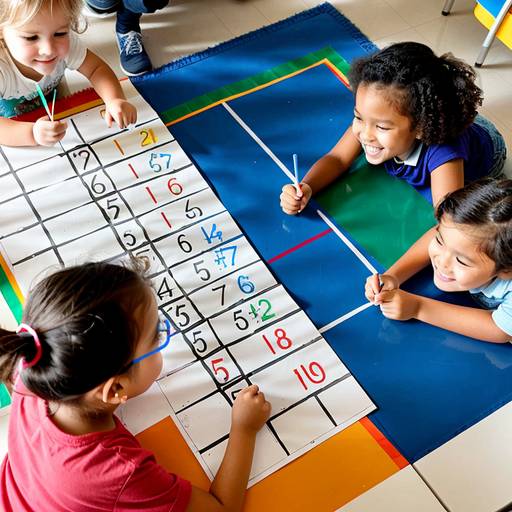
In this Kindergarten math lesson, students will explore the concept of addition using a number line as a visual aid. The primary objective is for students to understand how to add numbers by counting forward on the number line. The lesson begins with a discussion on addition and a demonstration using a large number line to solve simple problems. Students will then engage in guided practice using their individual number lines to solve several addition problems together. Following this, they will work independently with addition flashcards, employing their number lines and counters to visualize their answers. The lesson concludes with a review where some students share their solutions and the strategies they used. Ongoing assessment will take place through observation and collection of the flashcards. Additional activities and extensions are suggested to support and challenge students in their understanding of addition. The lesson emphasizes interactivity and hands-on learning to help students build a solid foundation in math.

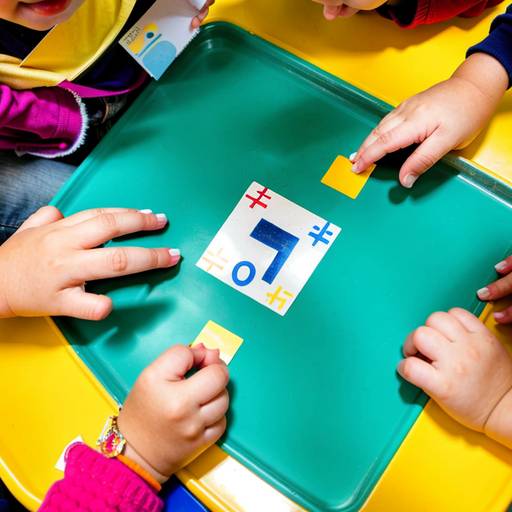
This preschool math lesson is designed to engage students in number recognition and counting through interactive activities and hands-on learning. The session begins with a group gathering where children are introduced to number flashcards, encouraging participation by having them express what they see related to numbers in their environment.
Following this introduction, a dynamic warm-up activity involves dancing to music, with a freeze game where students form groups according to the displayed numbers. The main activity involves distributing counting manipulatives, allowing children to count and select items corresponding to number cards. They work in small groups for a game that enhances their counting skills while promoting collaboration and social interaction.
To conclude the lesson, students complete worksheets featuring objects to count, reinforcing their skills through coloring and counting activities. The session wraps up with a reflection on what they learned, encouraging students to share their experiences and favorites from the day's lesson.
Overall, the lesson focuses on interactive learning, making math enjoyable while promoting essential skills in number recognition and counting. It also includes provisions for extending learning beyond the session and accommodating diverse learning needs within the classroom.
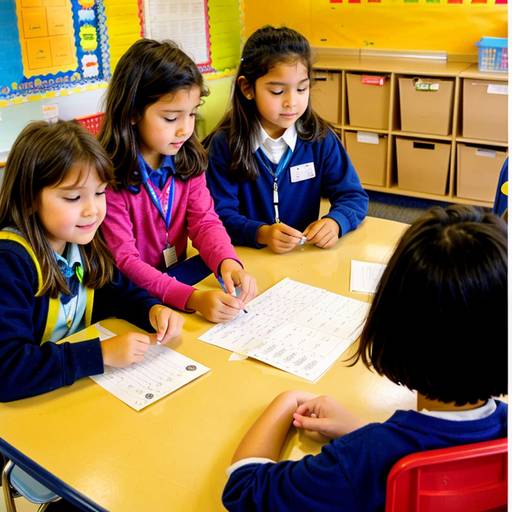
In this 1st-grade math lesson, students will explore addition through engaging word problems. The class will begin with a discussion about addition and its everyday applications, introducing key vocabulary such as total, sum, and together. The teacher will demonstrate the process of solving a word problem using visual aids and manipulatives, guiding students through identifying numbers, recognizing operations, and formulating complete sentence answers.
Students will then work collaboratively in small groups to solve word problems, encouraging teamwork and discussion. Afterward, they will have the opportunity to practice independently with worksheets featuring simple addition word problems, utilizing counters or drawings as needed. The teacher will provide support throughout the activity and assess understanding through observation and review of completed worksheets.
To conclude, the class will reflect on the lesson by sharing solutions, reinforcing the practical importance of addition. The lesson will cater to varying learning levels, with extensions for advanced students and additional support for those needing it, ensuring a comprehensive understanding of addition through word problems.
This lesson plan is designed for toddlers aged 2-4 years and focuses on introducing number sequencing through interactive and hands-on activities. The session begins with a group circle time where children are engaged in a counting song to create a fun atmosphere. Flashcards featuring numbers 1-10 are then introduced, and children are encouraged to help arrange them in the correct sequential order, promoting both number recognition and teamwork.
Next, toddlers participate in a creative counting activity using colorful beads or blocks to reinforce their counting skills, while they also explore sequencing by creating simple patterns. Following this, a number line activity allows children to physically engage with numbers by jumping to the correct digit as it is called out, reinforcing their understanding of numerical order.
The lesson continues with a playful egg hunt, where children search for hidden plastic eggs containing numbers. Upon finding the eggs, they work together to sort and line them up in the correct sequence, further solidifying their grasp of counting and order.
Finally, the lesson concludes with a group review and a goodbye song, reinforcing the concepts learned throughout the session. Assessment is conducted through observation of participation and understanding, with adaptations available for varying skill levels among toddlers. Overall, this lesson aims to cultivate foundational math skills while fostering a playful and engaging learning environment.
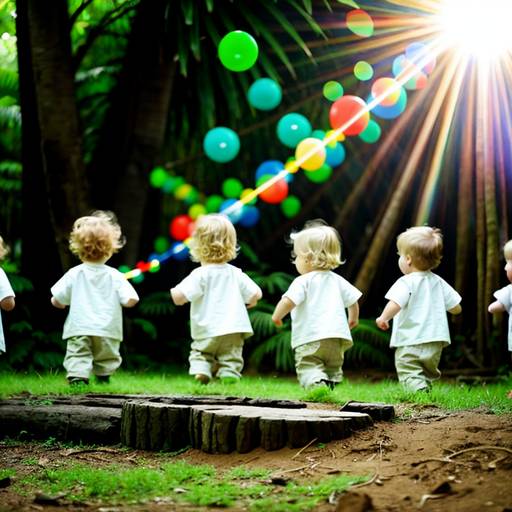
This lesson plan focuses on helping toddlers recognize and identify numbers from 1 to 10 through a series of interactive and hands-on activities. The session begins with a welcome and an introduction to the theme, using number flashcards for repetition. It progresses to a matching activity where children connect plush animals to corresponding number cards, reinforcing counting skills. Small groups then engage in a practical counting adventure with various objects, while a creative component allows children to draw items corresponding to chosen numbers. The lesson includes a recap and an energetic counting song that encourages movement, concluding with a closing circle where children share their learnings. Throughout the lesson, children are assessed based on their participation and ability to recognize and count numbers, with adaptations available for varying skill levels. Overall, the lesson promotes number recognition in a fun and engaging manner.
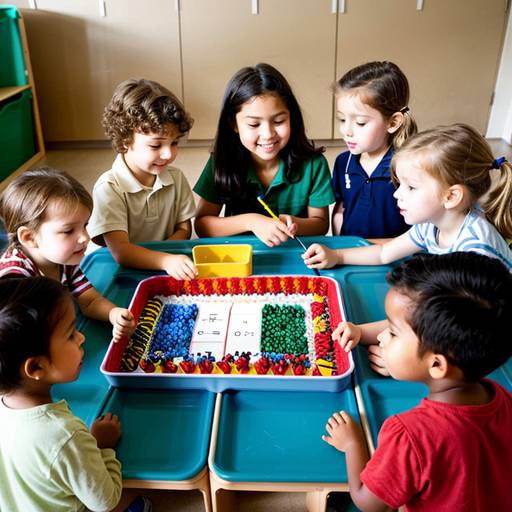
In this preschool math lesson, students will embark on an interactive journey focusing on counting with a jungle animal theme. The lesson begins with students gathering in a circle for a story that introduces various jungle animals, helping to set the stage for the day's activities. Following the story, children will engage in hands-on learning by participating in two main activities.
In the first activity, students will work in pairs to search for and count plush or figurine animals located around the classroom, using counting mats to record their findings. As they identify and count the animals, they will receive guidance from the teacher to ensure understanding of numbers 1 to 10.
The second activity involves matching the animals found to large number cards displayed in the classroom. Each student will present an animal and connect it to the corresponding number, reinforcing their counting skills through peer interaction.
To conclude, students will participate in a group discussion reviewing the animals they have counted, followed by a lively counting song related to jungle animals. Each child will finish the lesson with a coloring activity featuring a jungle animal, practicing their counting skills by identifying the animals illustrated on their sheets. Throughout the lesson, the teacher will assess students’ counting abilities and encourage engagement, ensuring a fun and educational experience that promotes early math skills.