
Filters
Level
Grade
Subject
Subject Area
Subject Topic
Standard(s)
Audience
Keyword
DurationMinutes
Lesson Plans

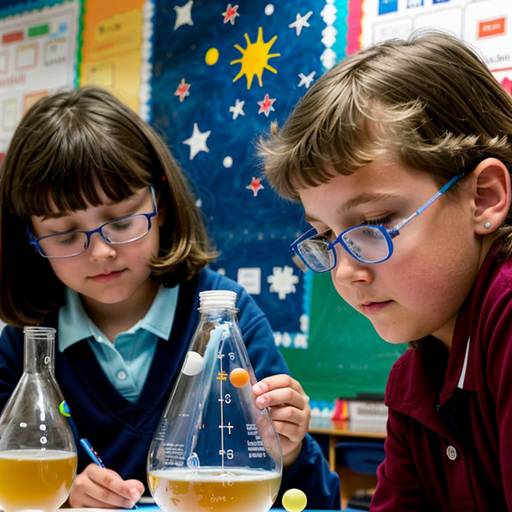
In this 4th-grade science lesson, students will explore the three states of matter: solids, liquids, and gases. They will engage in hands-on activities at various stations that allow them to observe and categorize different materials based on their properties. At the solid station, students will examine various objects to identify characteristics such as hardness and shape. At the liquid station, they will measure and pour liquids to observe how they take the shape of their containers. The gas station will include an activity with a balloon filled with air, helping students understand the concept of gas filling space.
The lesson will also include a demonstration where students observe water changing from a liquid to a gas when heated, facilitating a discussion on how states can change due to temperature. Through participation in group activities and class discussions, students will enhance their understanding of matter and its properties. They will conclude the lesson by writing an exit ticket that summarizes their learning and any remaining questions. Extensions, such as finding examples of each state of matter at home and engaging in interactive games, provide opportunities for further exploration and reinforcement of the concepts. Adaptations will be made to ensure all students can engage with the material effectively.


In this third-grade math lesson, students will explore multiplication through the context of word problems. The session begins with an engaging discussion about their experiences at markets or stores, leading to an introduction of multiplication as a shortcut for repeated addition. Key vocabulary associated with multiplication will be highlighted, along with essential keywords that signal multiplication in word problems.
During guided practice, students will work in pairs to collaboratively solve example problems, using counters for a visual representation of the concepts. This will encourage them to identify keywords and apply multiplication effectively. Following this, students will complete the "Mystery Market" Word Problem Worksheets independently, showcasing their understanding by solving various multiplication problems and explaining their reasoning.
The lesson concludes with a group review of selected problems, emphasizing the strategies used and allowing students to share insights. An exit ticket will prompt each student to create their own multiplication problem, providing a quick assessment of their comprehension. Accommodations will be made for diverse learners, ensuring all students are supported and challenged according to their individual needs. The overall goal is to strengthen students' multiplication skills while fostering critical thinking and problem-solving abilities.
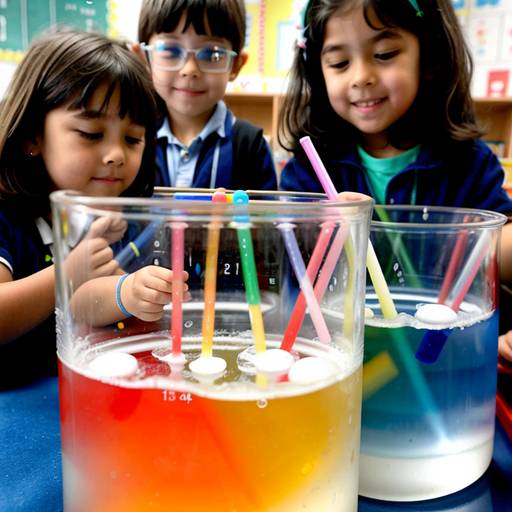
This kindergarten science lesson focuses on exploring the three states of matter: solids, liquids, and gases. Students engage in discussions to define and identify matter, using various objects and visual aids. Through hands-on activities, they sort items into categories based on their state and perform an experiment observing the transformation of ice (solid) into water (liquid). The lesson emphasizes participation and critical thinking as students share their observations and examples from daily life. Assessment is conducted through observation and a sorting worksheet to evaluate understanding. Extensions may include cooking activities and read-alouds to deepen knowledge on the topic. Overall, the lesson promotes an interactive approach to understanding physical science concepts related to matter.
In this 5th-grade science lesson, students will explore the properties and changes of matter, focusing on the three states: solid, liquid, and gas. The lesson begins with a discussion to define matter and its different states, followed by group activities where students observe various materials' physical properties. They will then engage in hands-on experiments to witness changes in states of matter through the melting of ice in warm water and the expansion and contraction of air in balloons. Through these activities, students will learn to identify characteristics of matter and understand how temperature affects state changes. The lesson concludes with a recap of key concepts and a homework assignment where students will find real-life examples of matter changing states at home. Assessment will be based on observations during group work and the quality of the homework assignment. Safety precautions will be emphasized throughout the activities.

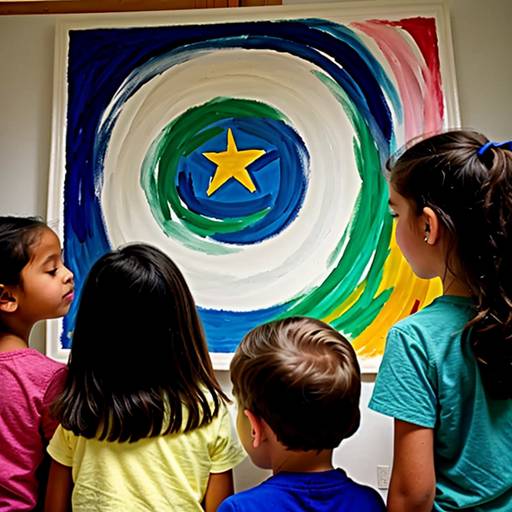
In this preschool art lesson, children will explore the exciting world of colors and color blending. The session begins with an engaging discussion about primary colors—red, blue, and yellow—and how they combine to create secondary colors. After a demonstration on mixing colors, students will participate in a guided painting activity, where they will use paintbrushes to create their own artwork on watercolor paper. They will be encouraged to experiment with mixing colors to discover new shades and express their creativity.
Following individual exploration time, the class will regroup for a reflection session, allowing each child to share their artwork and the colors they used. This will foster discussion about their creative processes and feelings related to their art. The lesson will conclude with a clean-up session and a closing circle where children are thanked for their participation and encouraged to observe colors in their everyday surroundings. Overall, the lesson promotes creativity, fine motor skills, and an appreciation for color in a fun, collaborative environment.

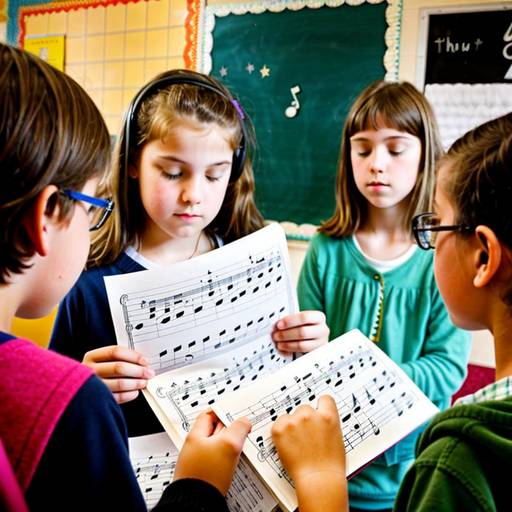
In this 5th-grade music theory lesson, students will learn to identify and name notes on the musical staff, focusing on both treble and bass clefs. The lesson begins with an engaging discussion about the importance of note names in music, followed by interactive instruction on reading notes, including memorable mnemonics for easy recall. Students will then participate in guided practice activities where they match note names to their positions on the staff and identify notes played on a keyboard.
To foster collaboration and creativity, students will be divided into small groups to create simple melodies using selected notes, which they will present to the class. The lesson concludes with a fun "Note Art" activity, where students illustrate their favorite note and write its name, allowing for artistic expression while reinforcing their learning. Throughout the lesson, teachers will assess understanding through observation and participation, ensuring students develop a strong foundation in music notation and theory.

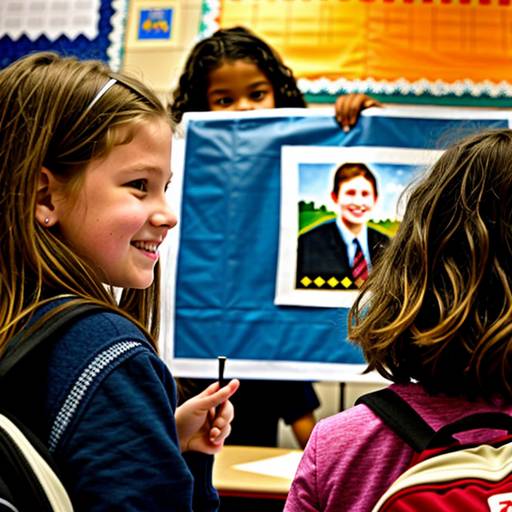
In this 4th-grade language arts lesson, students will learn about narrative writing by exploring its key elements, including characters, setting, plot, conflict, and resolution. The lesson begins with a read-aloud of a picture book or short story to engage students and highlight these components. Following a direct instruction segment, students work in pairs to brainstorm and outline their own story ideas using a graphic organizer. Each student then writes an independent narrative based on their outlines, focusing on descriptive language and clear sequence of events. The lesson concludes with selected students sharing their stories aloud, fostering a supportive environment for peer feedback and reflection on the writing process. Assessment includes observation of participation and review of written narratives to evaluate understanding of narrative elements. Differentiation strategies and extension activities are included to meet diverse student needs and encourage further creativity.
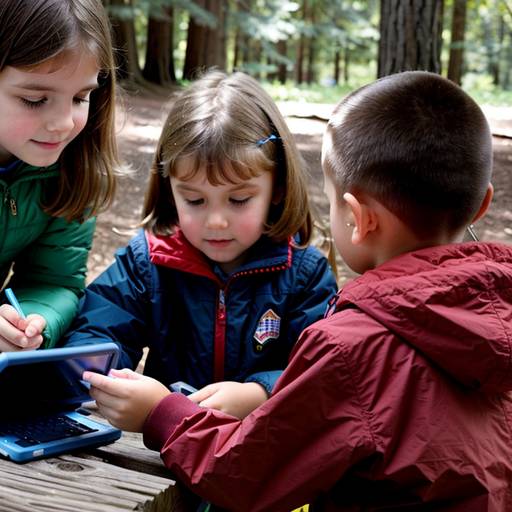
This preschool lesson plan focuses on exploring the relationship between technology and nature. Over the course of an hour, children will engage in activities that promote curiosity about the natural world using simple tech tools. The lesson begins with an introduction to how technology helps us learn about nature, followed by a tech adventure walk where students use tablets or smartphones to identify plants and insects in their environment. They will also collect a natural item of interest to observe and draw, encouraging deeper appreciation and understanding of nature. The class will culminate with students sharing their findings, discussing their experiences, and reflecting on how technology enhances their exploration of the outdoors. Assessment will be based on participation, observations, and the ability to articulate learning outcomes. Follow-up activities will further encourage children to document their discoveries and explore specific technological tools related to nature.

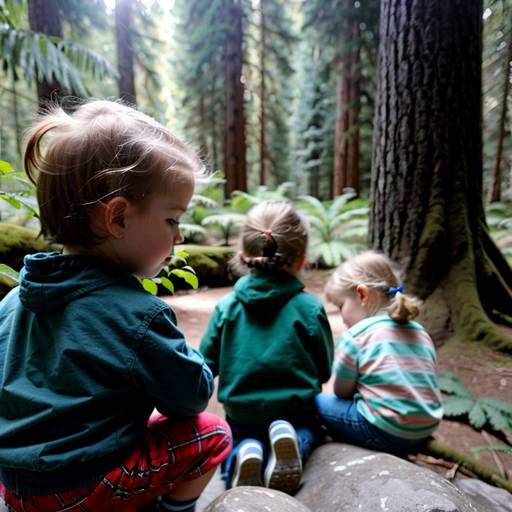
In this toddler-focused outdoor exploration lesson, students will engage in a hands-on adventure, developing observation skills and a sense of wonder for the natural world. The session begins with an introduction where children become "nature detectives," learning to use magnifying glasses and collect natural items like leaves, flowers, and stones. They will explore the outdoor environment in small groups, guided by adults, and encouraged to observe and describe their findings. After the exploration, children will create nature-inspired drawings using paper and crayons, allowing them to express their experiences. The lesson concludes with a storytime and sharing session, where each child reflects on their discoveries. Throughout the activity, emphasis will be placed on communication, sensory experiences, and fostering a love for nature, providing a rich foundation for future learning and exploration.

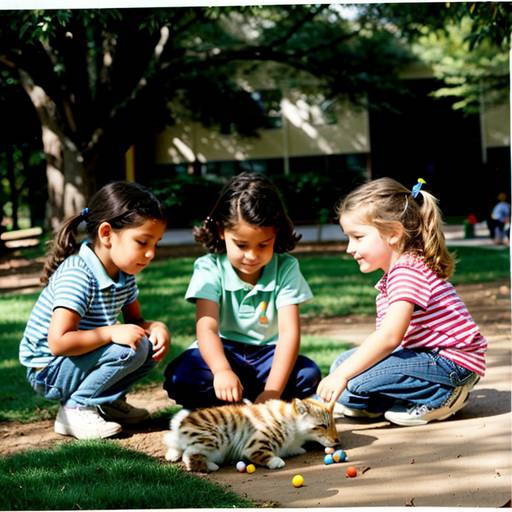
In this preschool science lesson, children will engage in a hands-on exploration of different animal habitats, including forests, deserts, oceans, and grasslands. The session begins with a group discussion to spark curiosity about animals and their environments, encouraging children to share their knowledge.
Next, a matching activity involves using picture cards to identify various habitats and animal flashcards to associate animals with their correct homes. Following this, the children will venture outdoors for a nature exploration, equipped with magnifying glasses and bags to collect interesting items such as leaves and stones, fostering their observational skills.
Upon returning, students will create drawings of their favorite habitat and the animals that inhabit it. To celebrate their discoveries, each child will receive a “Nature Detective” badge. The lesson concludes with a review of what was learned and a fun song about animals or habitats, reinforcing the concepts explored throughout the session. Observations made during activities will assess children's understanding and participation, with potential extensions for further learning at home or on a special habitat-themed day.