
Filters
Level
Grade
Subject
Subject Area
Subject Topic
Standard(s)
Audience
Keyword
DurationMinutes
Lesson Plans
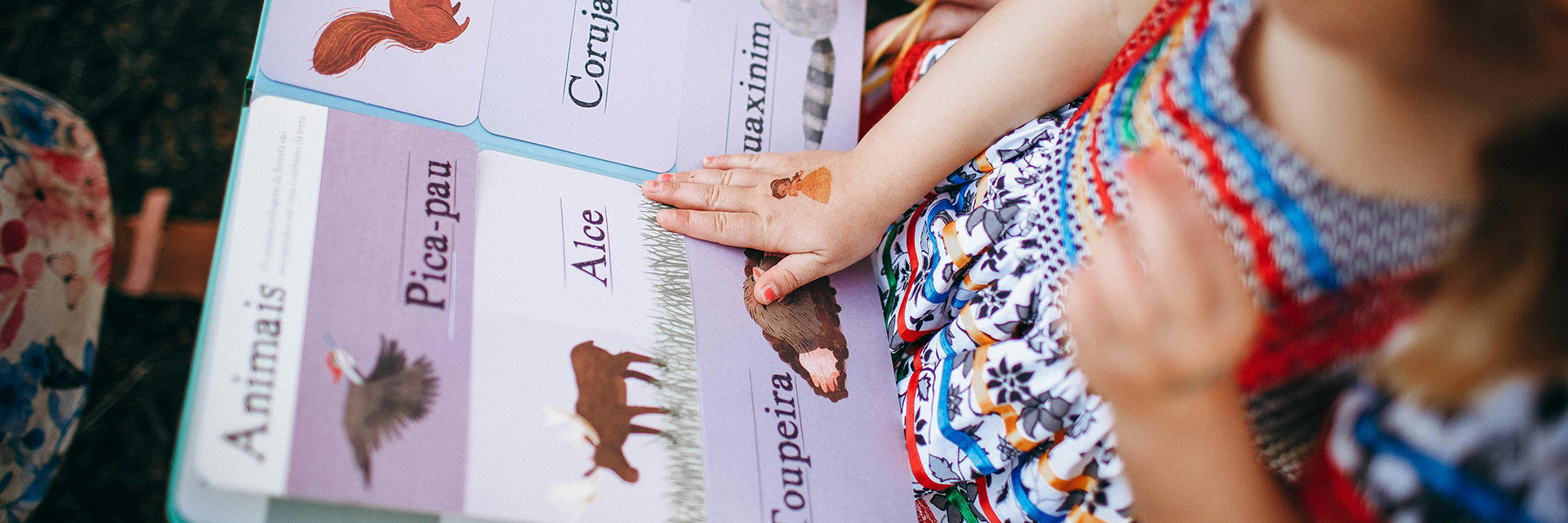
This lesson plan focuses on enhancing toddlers' conversation skills through engaging activities that promote interaction and communication. The session begins with a circle time where children introduce themselves and share their favorite things to build familiarity and encourage listening. A storytime activity follows, featuring a picture book that prompts responses and discussions, fostering the ability to express thoughts and ask questions.
Children then participate in a conversation cards activity, taking turns asking and answering questions based on the images or prompts provided. The lesson includes imaginative play in a pretend cooking scenario, encouraging collaborative conversation as they engage in role-play and practice turn-taking.
Finally, the session concludes with a closing circle where children can share their experiences. Throughout the lesson, observation of each child's participation offers insight into their conversational abilities, while positive reinforcement helps build their confidence. Parents are encouraged to extend these conversation skills at home through open-ended questions and interactive storytelling. Overall, the plan aims to create a fun and supportive environment that fosters essential communication skills among toddlers.

This lesson plan is designed to engage toddlers in a fun and interactive music and movement experience. The activity begins with a welcoming circle where children participate in a simple song that encourages clapping and movement. Following the introduction, a warm-up session allows the kids to shake out their energy through active movements.
The core of the lesson includes a sing-along featuring animal sounds, where children mimic both the sounds and movements of different animals. This is followed by a scarf dance activity, encouraging creativity as they express themselves through gentle movements while waving their scarves.
Next, children explore various musical instruments, joining together to create a rhythmic band as they play along with music. The session concludes with a calming circle where a soft lullaby is sung, allowing for a peaceful cool-down time. Throughout the lesson, participation is observed, focusing on children’s interaction and joy in making music together, fostering both their musicality and social skills.

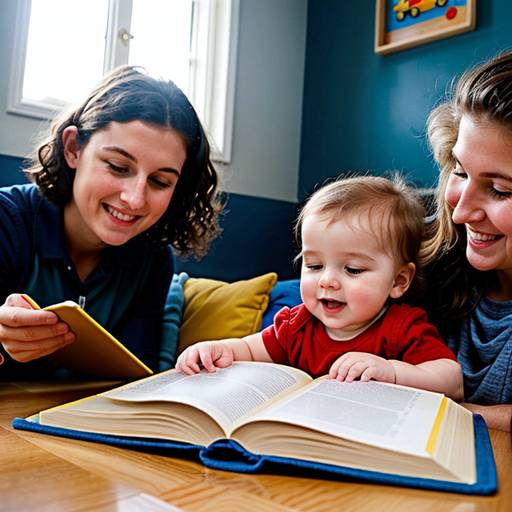
This lesson plan focuses on vocabulary building for infants aged 6-12 months through engaging and interactive activities. The session begins with a welcoming song to create a cozy atmosphere before transitioning into interactive storytime using colorful picture books. Caregivers are encouraged to engage with the infants by pointing to images and repeating words aloud, promoting responsive language skills.
Following the story, puppets are introduced to create dialogues using simple, repetitive phrases that allow infants to mimic sounds and actions. The plan incorporates a musical movement segment with nursery rhymes, where infants can shake instruments in time with the music, further enhancing their auditory and motor skills.
Additionally, a sensory vocabulary exploration activity is included, where infants interact with flashcards showcasing images and textured materials related to the vocabulary. This hands-on experience reinforces learning through touch.
The session concludes with a circle time, inviting caregivers to share new words their infants enjoyed, and wraps up with a farewell song to celebrate participation and learning. Assessment methods involve monitoring infants' engagement and verbalizations throughout the activities, while extensions suggest ways caregivers can continue supporting vocabulary development at home. Adaptations ensure inclusivity for infants at varying developmental stages. Overall, the plan aims to create a fun, interactive environment that fosters early language skills.
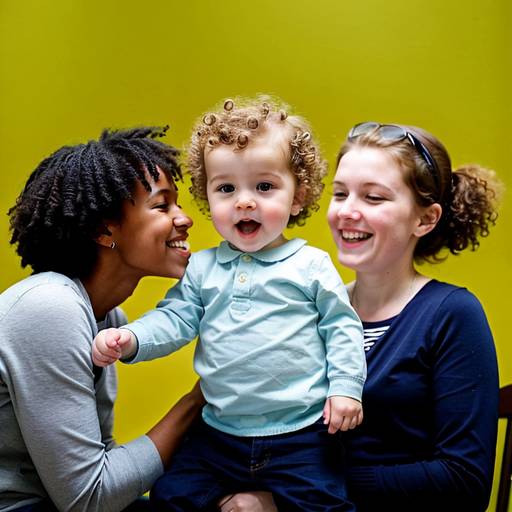
The lesson plan focuses on enhancing language development in infants aged 6 to 18 months through engaging activities centered around rhymes. It begins with a welcoming song to create a comfortable environment, followed by an interactive storytime using a vibrant picture book that highlights rhyming words. Infants participate in a rhythmic activity using simple instruments, engaging with nursery rhymes through clapping and tapping that emphasizes rhythm. A movement song encourages physical activity and bonding between caregivers and infants. The session concludes with a final rhyme and encourages caregivers to explore flashcards and picture books with their infants, reinforcing the importance of shared reading. The plan emphasizes observation of engagement and interaction to assess participation, while also suggesting follow-up activities for ongoing rhyme exploration at home.

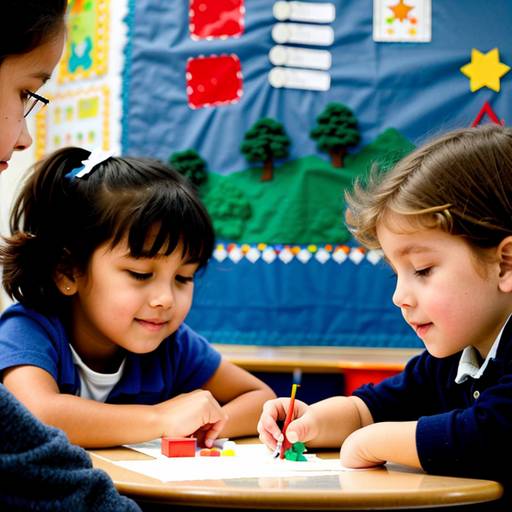
In this preschool science lesson, students will learn to differentiate between living and nonliving things, focusing specifically on various animals and their environments. The lesson begins with an engaging discussion about the definitions of living and nonliving things, where students will share their thoughts.
Next, students participate in a sorting activity using picture cards, categorizing items into "Living Things" and "Nonliving Things." This is followed by a storytime session, where a nature-themed book is read aloud, emphasizing animals and their characteristics.
To further explore the topic, students embark on a scavenger hunt, both indoors and outdoors, to identify and check off items from a checklist that includes both living and nonliving things. Upon returning, students will share their findings and participate in an art project where they create a collage or drawing depicting one living thing and one nonliving thing.
The lesson concludes with a recap of the material learned, encouraging students to reflect on their favorite living things. Throughout the activities, the teacher observes students to assess their understanding and knowledge retention. Adaptations are included for students needing additional support, ensuring inclusivity. The session emphasizes experiential learning and critical thinking through observation and interaction with the environment.

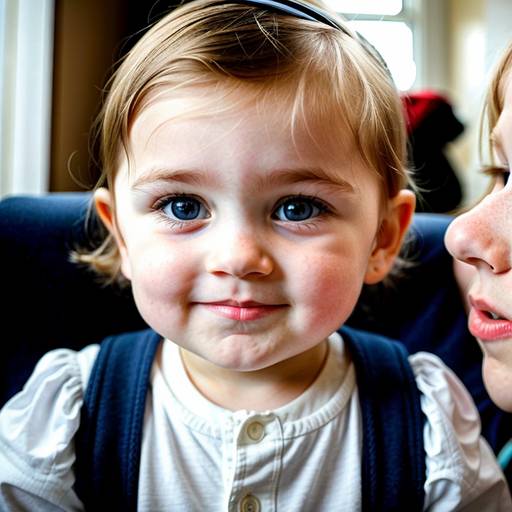
This lesson plan focuses on teaching infants and their caregivers the importance of eye contact in developing social skills. Designed for infants aged 6-12 months, the 30-minute session includes engaging activities that help promote connection and communication between caregivers and their babies.
The lesson begins with a warm welcome and an introduction to the concept of eye contact. It then features a "Meet the Faces" activity, where caregivers read picture books with various facial expressions, encouraging infants to look at the faces and make corresponding eye contact while discussing emotions.
Following this, a "Mirror, Mirror" session allows infants to explore their own reflections alongside their caregivers, fostering self-recognition and emotional awareness. The plan includes interactive games where caregivers and infants play peek-a-boo with colorful scarves and participate in a fun music session, reinforcing eye contact through play.
The lesson concludes with a wrap-up discussion, where caregivers reflect on the activities and learn how to integrate eye contact into everyday interactions at home. The take-home activity encourages further practice, with a checklist of ways to incorporate eye contact into daily routines. Observations throughout the lesson focus on infants' engagement and connection with caregivers, emphasizing positive reinforcement and the building of social skills.

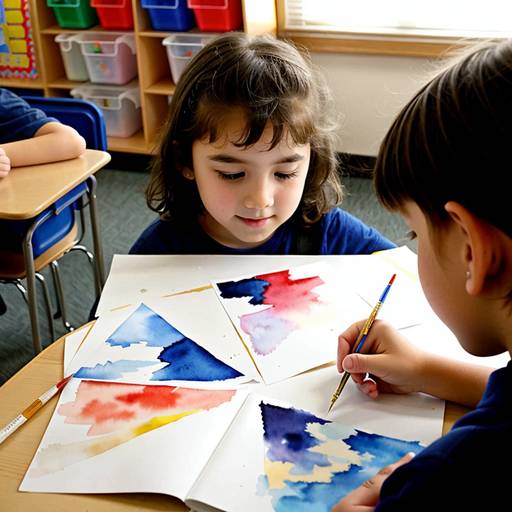
In this 1st Grade art lesson, students will learn basic techniques of watercolor painting, focusing on wet-on-wet and wet-on-dry methods. The lesson begins with a discussion and demonstration of these techniques, showcasing how colors blend and create textures. Students will then practice each technique before using them to create their own landscape paintings, incorporating primary colors and mixing them to form secondary colors. As they work, they will be encouraged to share their thoughts and artistic choices with the class. The lesson concludes with a reflection on their experiences and what they learned about watercolor techniques, along with a focus on cleaning up their work areas. Assessment will be based on observation during the activities and the final paintings, emphasizing creativity and the application of techniques. Extensions for future lessons will also be suggested to further explore watercolor art.

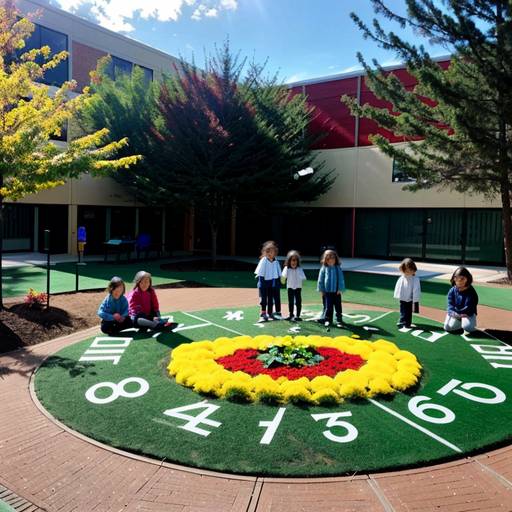
In this Kindergarten math lesson, students will explore the concept of subtraction through a hands-on activity involving garden-themed cut-outs and colorful pom-pom "seeds." The lesson begins with reading a subtraction-themed story to introduce the idea of "taking away." Students will then engage in direct instruction where visual aids help illustrate subtraction as they remove seeds from flowers on the whiteboard.
During guided practice, each child will have cut-out flowers and seeds, allowing them to physically manipulate the objects as they solve simple subtraction problems called out by the teacher. Students will then complete worksheets that feature visual subtraction problems involving the flowers and seeds, reinforcing their understanding through coloring and recording their answers.
The lesson concludes with a class discussion where students share their experiences, emphasizing key subtraction concepts. Assessment will occur through observation and worksheet review, with differentiated support available for varying student needs. Overall, this interactive lesson aims to foster a solid foundation in subtraction while keeping students engaged and enthusiastic about math.
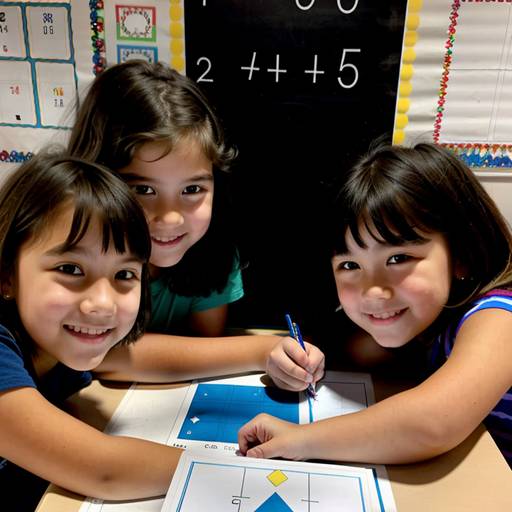
This 2nd-grade math lesson focuses on teaching students addition and regrouping using engaging, hands-on activities. Students will learn to add two-digit numbers both with and without regrouping, enhancing their understanding of place value. The lesson begins by capturing students' interest through a treasure hunt theme, followed by an introduction to regrouping with a visual example.
In direct instruction, students work with base ten blocks to concretely represent numbers and solve addition problems. Guided practice involves collaborative problem-solving as pairs tackle a new addition problem together, promoting communication and critical thinking. Following this, students complete a worksheet featuring a variety of addition problems to demonstrate their understanding independently.
The lesson concludes with a review of answers, encouraging students to share their methods, followed by a fun math game that reinforces their skills in a collaborative setting. Throughout the lesson, assessment is conducted through observation and worksheet evaluation, with differentiation strategies provided to support diverse learners. Extensions incorporate creative writing, allowing students to design their own addition story problems. Overall, the lesson aims to improve addition skills while maintaining an exciting and interactive learning environment.

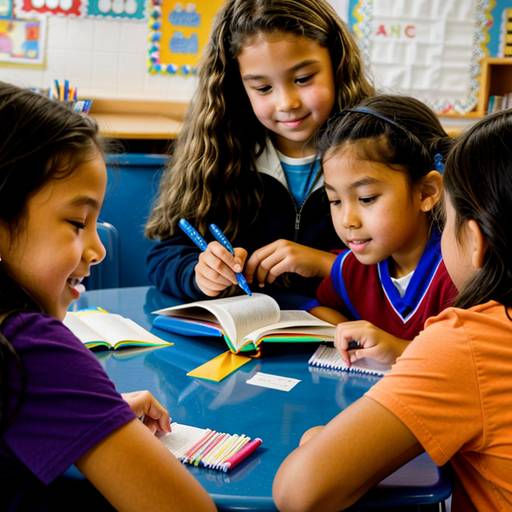
In this 3rd-grade language arts lesson, students will explore the fundamentals of narrative writing by learning about the five essential elements: characters, setting, plot, conflict, and resolution. The lesson begins with a class discussion on storytelling, where students share their favorite stories and what makes them engaging. Next, the teacher provides direct instruction on each narrative element, supported by examples and visual aids.
Afterward, the class collaboratively selects a character, setting, and plot to create a shared story outline. Students then engage in independent writing, using the outline to craft their own imaginative narratives, incorporating descriptive details and the narrative elements they’ve learned.
The lesson concludes with students sharing their stories with the class, followed by a discussion highlighting the unique aspects of each narrative. Assessment includes monitoring participation and reviewing written work for the presence of narrative elements. Extension activities invite students to illustrate their stories or engage in peer feedback, fostering further development of their storytelling skills. The lesson aims to ignite creativity, enhance writing ability, and promote collaboration among students.