
Filters
Level
Grade
Subject
Subject Area
Subject Topic
Standard(s)
Audience
Keyword
DurationMinutes
Lesson Plans

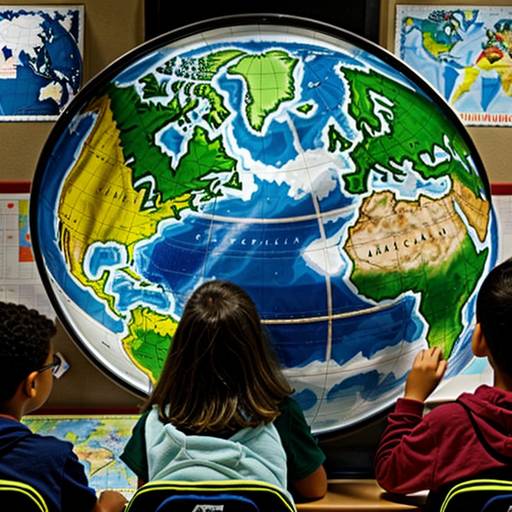
In this 5th-grade social studies lesson, students will explore the fundamental concepts of geography and map features. The lesson begins with a discussion where students share their prior knowledge about maps, followed by an introduction to key map elements such as titles, legends, scales, and compass roses. Students will engage in guided practice by identifying continents, oceans, and major countries on a world map, using color-coding for visual differentiation.
Next, students will apply their understanding by creating their own fictional maps, incorporating essential features like a title, compass rose, and a legend for significant landmarks. This creative activity encourages individuality and artistic expression. The lesson concludes with a sharing session, allowing students to present their maps and explain the choices they made.
Assessment will be conducted informally through observation and evaluation of the finished maps, focusing on the inclusion of required elements and creativity. Extensions could involve researching a specific country or creating a collaborative class map. Overall, the lesson aims to build students' geographic skills and foster a deeper appreciation for maps and their practical applications in everyday life.

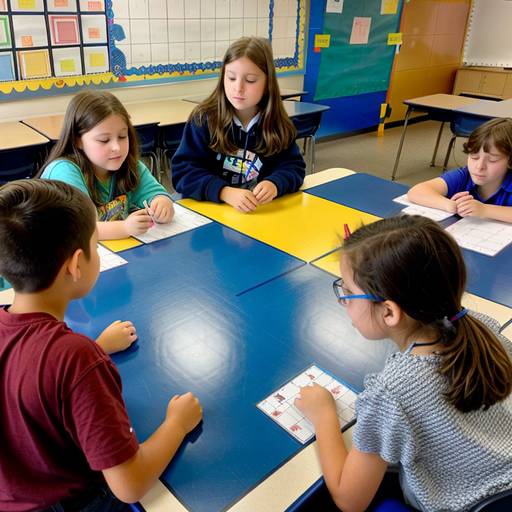
In this 60-minute math lesson designed for 4th graders, students will explore the concepts of measurement and area through hands-on activities involving objects in their classroom. The lesson begins with a discussion of area and its practical applications, followed by a demonstration of how to calculate area using the formula Area = Length x Width.
Students will then engage in guided group practice by measuring various classroom objects, recording their findings, and calculating their areas. After that, they will work independently to measure and draw another object of their choice, applying what they've learned to calculate its area on grid paper.
The lesson concludes with a class discussion where groups share their calculations and observations, reinforcing their understanding of area. Assessment will be informal, through observation and review of students’ completed work, ensuring they grasp the concept. Extensions and support strategies are included for diverse learners to enhance engagement and understanding.
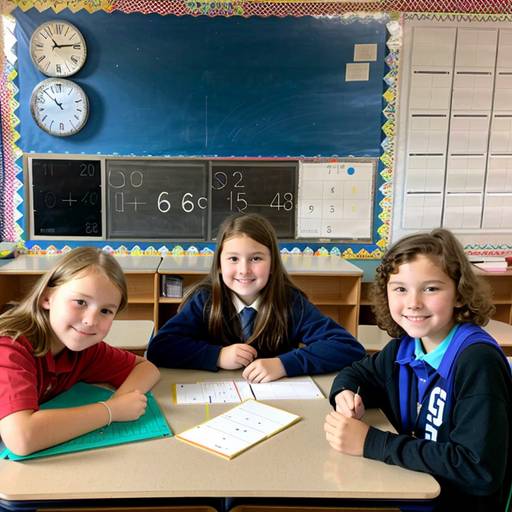
In this 5th-grade math lesson, students will learn about reading clocks, understanding time zones, and calculating time differences across the globe. The lesson begins with a discussion about the concept of time zones and their significance in daily life. Students will practice reading both analog and digital clocks, and they will learn to convert times between different time zones using a time zone chart.
In small groups, students will engage in a creative mapping activity where they will cut out and color different time zones on a world map, presenting their findings to the class. Additionally, they will complete worksheets with real-world math problems related to time zone calculations to deepen their comprehension. The lesson will conclude with a reflection on the practical implications of time zones in everyday situations, reinforced by an exit ticket activity that encourages individual thinking. Throughout the lesson, various assessment methods will be utilized to evaluate students' understanding, with adjustments made to accommodate different learning needs.

In this preschool lesson, children will engage in dramatic play centered around a marketplace theme, encouraging creativity and social interaction. The activity begins with a discussion about marketplaces, allowing children to share their experiences and ideas. They will then help set up various stations for different products, such as groceries, clothing, and toys, while exploring the roles of shopkeepers and customers.
During the main role-playing activity, children will don costumes and use play money to simulate buying and selling items, promoting communication and polite interactions. Following the role play, the group will reflect on their experiences, sharing their favorite aspects and what they learned about commerce.
To further enhance their creative expression, children will create their own store signs or shopping lists, reinforcing their understanding of the activity. Overall, the lesson emphasizes imaginative play, social skills, and the basics of buying and selling goods in a fun, engaging environment.

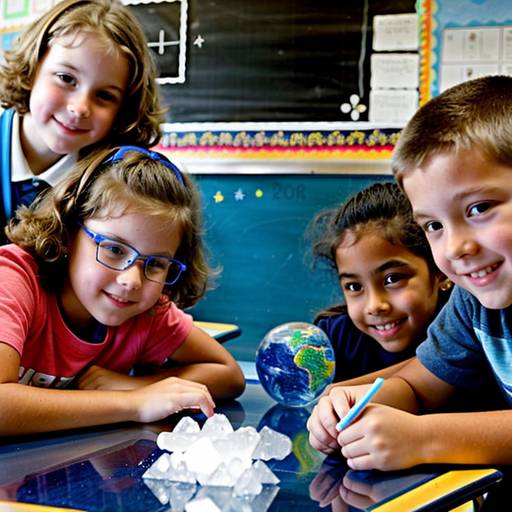
This 3rd-grade science lesson introduces students to the three primary states of matter: solid, liquid, and gas. The lesson begins with a class discussion to gauge prior knowledge and introduces the characteristics of each state using visual aids. Students participate in hands-on activities, exploring ice cubes, water, and balloons to observe and describe the properties of each state. They work in small groups to share their findings and complete drawings based on their observations. The lesson concludes with a recap of key concepts and a worksheet to reinforce learning through examples from everyday life. Informal assessments are conducted through group interactions and worksheet completion, while differentiation strategies ensure all students can engage with the material effectively. Extensions and additional explorations of matter changes provide opportunities for further investigation.
This 5th Grade Physical Science lesson focuses on understanding the concepts of forces and motion, specifically exploring push and pull through engaging activities. Students begin by discussing everyday examples of forces before learning about contact and non-contact forces, as well as the concepts of balanced and unbalanced forces. In small groups, they conduct hands-on experiments using various objects and a ramp to observe how distance traveled is influenced by factors like weight and the incline of the ramp. Each group records their findings and shares insights with the class, promoting collaborative learning and discussion. The lesson concludes with a summary of key concepts and encourages students to reflect on what they learned. Assessment includes monitoring participation and reviewing group presentations, with extensions available for further exploration through virtual simulations or individual projects. Modifications are provided to support diverse learners, ensuring an inclusive and interactive educational experience.
This 5th-grade life science lesson focuses on the major systems of the human body, including the circulatory, respiratory, digestive, and skeletal systems. Students will begin by engaging in a discussion about what they already know, followed by direct instruction using an interactive poster to introduce each system and its key functions. They will then work in small groups to create informative posters highlighting the organs and functions of their assigned body system, incorporating creativity and collaboration. Each group will present their findings to the class, fostering discussion and questions to enhance understanding. The lesson concludes with a reflection on the interconnectedness of the body systems and the opportunity for students to share new facts they learned. Assessment will include evaluating group participation and poster content, along with an exit ticket to gauge individual understanding. Accommodations will be made to support diverse learning needs, ensuring accessibility for all students while promoting curiosity and comprehension of the human body.
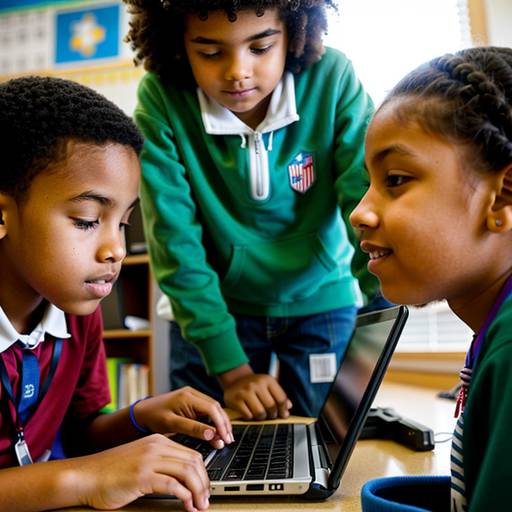
This lesson plan for 5th-grade students focuses on developing essential internet skills and online research abilities. Over the course of one hour, students will learn about internet safety, effective search strategies, and how to evaluate the credibility of online sources. The session begins with a discussion on the significance of online research, followed by direct instruction on using keywords and search techniques. Students will then work in groups to research assigned topics, applying their knowledge to find reliable sources while practicing evaluation criteria. After the guided research, groups will present their findings to the class, facilitating a discussion on the challenges and successes of their research. The lesson concludes with a recap and a short writing assignment, encouraging students to summarize their findings and reflect on the research process. Adaptations and an extension activity are included to support diverse learners and promote creativity.
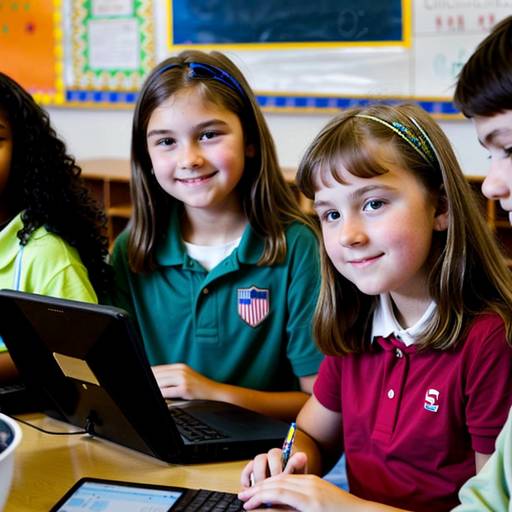
This lesson plan focuses on teaching 5th-grade students essential internet skills and email etiquette. The objective is for students to understand safe and responsible online practices, identify the components of an email, and compose polite and effective messages. The lesson begins with an engaging discussion about the internet and its importance in daily life, followed by direct instruction on internet safety and the structure of emails, including etiquette tips. Students will participate in guided practice by drafting emails in response to a given scenario, utilizing a provided template to ensure they follow the etiquette guidelines discussed. After peer review and revisions, students will send their final emails to the teacher for assessment. The lesson concludes with a brief quiz to evaluate students' comprehension of the material. Differentiation strategies are included to support diverse learners, along with opportunities for extensions into further topics related to internet safety. Overall, the plan aims to equip students with vital digital communication skills for their future interactions.
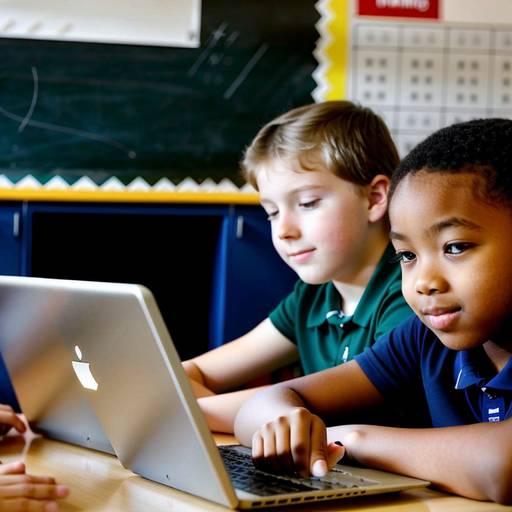
In this 4th-grade technology lesson, students will learn the fundamentals of email communication and appropriate online etiquette. The lesson will begin with a discussion to gauge prior knowledge and interest in emails, followed by a structured overview of the essential components of an email, such as the subject line, greeting, body, closing, and signature. The significance of polite and clear communication will be emphasized through an introduction to email etiquette.
During guided practice, students will draft an email based on a provided scenario, allowing them to apply what they have learned. They will then engage in a peer review to share their emails and offer constructive feedback to one another. The lesson will conclude with selected students sharing their drafts while reinforcing key takeaways about effective communication.
Assessment will be conducted through observation of student participation and evaluation of their email drafts. Optional extensions may include discussions about attachments and internet safety. By the end of the lesson, students will be better prepared to communicate effectively via email, cultivating essential skills for their digital interactions.