
Filters
Level
Grade
Subject
Subject Area
Subject Topic
Standard(s)
Audience
Keyword
DurationMinutes
Lesson Plans

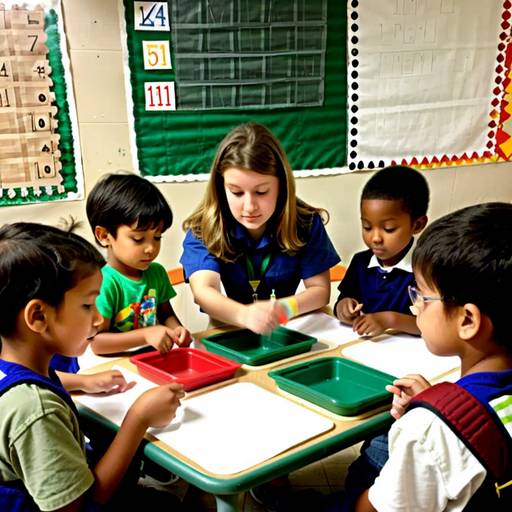
In this engaging preschool lesson, students will explore basic addition and subtraction concepts through a jungle-themed experience. The session begins with a circle time where children are introduced to the theme, followed by a read-aloud of a counting story featuring jungle animals to pique their interest.
The main activities involve hands-on group work, where students use toy animal counters to solve simple addition and subtraction problems collaboratively. This interactive approach allows them to visualize mathematical concepts and encourages peer discussion. An interactive game further reinforces these concepts, as children find and mark numbers on a jungle scene poster based on the problems presented.
To wrap up the lesson, students gather to reflect on what they learned, share insights, and complete a simple worksheet featuring jungle-themed math problems. If time permits, extension activities such as a dance and count session or a creative art project allow for movement and artistic expression while reinforcing the lesson's objectives.
Throughout the lesson, the teacher assesses understanding by observing participation and reviewing completed worksheets. The overall goal is to create a fun and dynamic environment where children can readily connect math concepts to their surroundings.

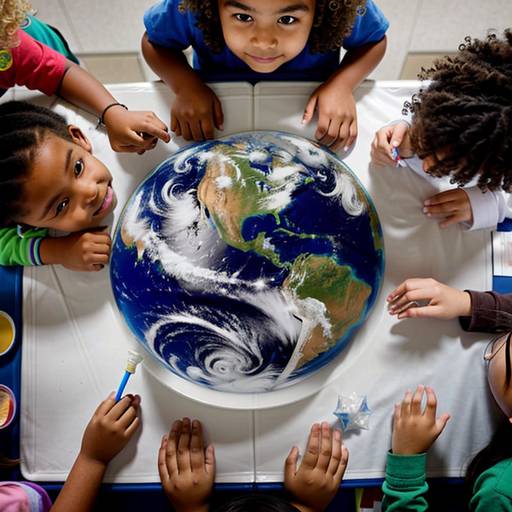
This lesson focuses on introducing 2nd-grade students to the concept of matter, specifically the three states: solid, liquid, and gas. Students will begin by defining matter and discussing its characteristics through a combination of direct instruction and visual aids. The lesson includes engaging demonstrations using ice, water, and air to illustrate the properties of each state.
In guided practice, students will classify various everyday objects as solids, liquids, or gases in small groups, fostering collaborative learning. The hands-on activity involves observing the melting of ice and the evaporation of water to illustrate state changes. Throughout the lesson, students will share their observations and engage in discussions to reinforce their understanding.
To assess learning, participation will be monitored, worksheets will be reviewed, and an informal quiz will help gauge comprehension. Extensions encourage students to explore real-life matter examples at home. Accommodations will be provided to ensure all students can engage effectively with the material. Overall, the lesson aims to make the concept of matter visually and practically accessible to young learners.
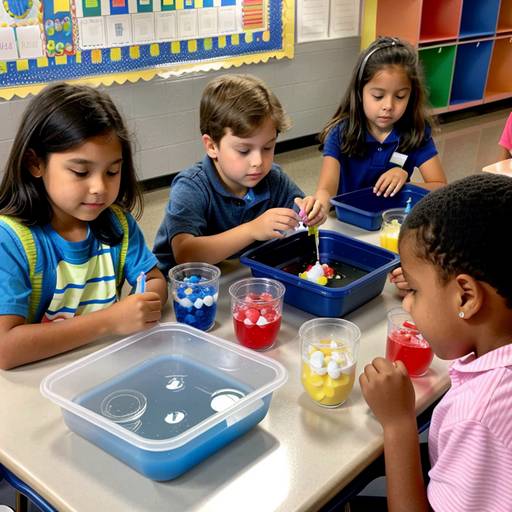
In this 1st grade science lesson, students will explore the concept of matter by identifying and classifying materials as solids, liquids, or gases. The lesson begins with a discussion where students share examples from their surroundings, followed by an explanation of the properties of each state of matter.
The class will then divide into small groups to engage in hands-on exploration at three different stations: observing solids with magnifying glasses, pouring water to understand liquids, and inflating balloons to demonstrate gases. After completing the stations, students will reconvene for a group discussion to share their findings, contributing to a class chart that summarizes the characteristics and examples of each state of matter.
An interactive sorting game will allow students to classify various objects into the appropriate category. The lesson concludes with a recap of the states of matter, encouraging students to reflect on their learning. For homework, students will find items at home that represent each state and prepare to share them in the next class. This engaging and interactive lesson fosters curiosity and a foundational understanding of physical science concepts related to matter.
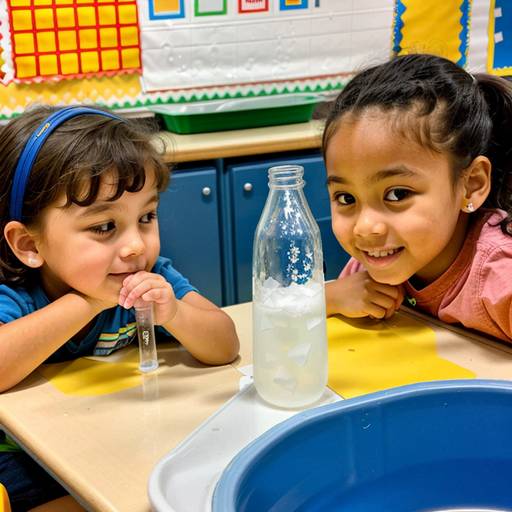
This Kindergarten science lesson introduces students to the concept of matter by exploring its three states: solids, liquids, and gases. The lesson begins with a discussion about everyday objects to help students recognize different forms of matter. Demonstrations using ice cubes, water, and balloons illustrate the unique properties of each state. Students engage in a hands-on activity where they classify a variety of materials into the three categories while practicing observation skills. A collaborative Venn diagram activity allows them to visualize the characteristics and overlaps between states of matter. The lesson culminates in a fun outdoor experience with bubble-making, reinforcing the concept of gas in a playful manner. Throughout the lesson, students participate in discussions and group work that fosters understanding and retention of key scientific concepts related to matter. Finally, a simple exit ticket provides an assessment of their learning, allowing for reflection and additional exploration if desired.
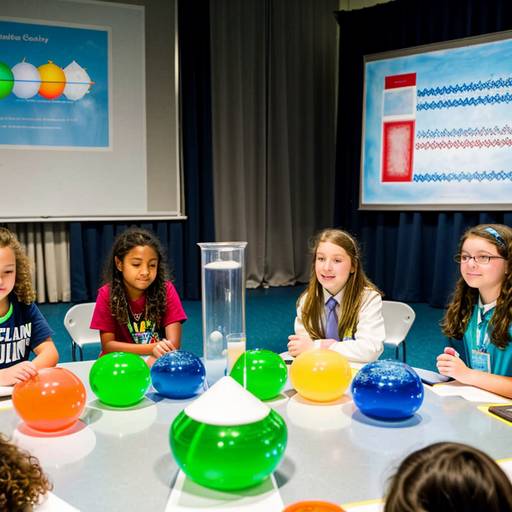
In this 5th-grade science lesson, students will explore the concept of matter, focusing on the three states: solids, liquids, and gases. The lesson begins with a discussion about the importance of matter in everyday life, followed by direct instruction that defines and describes the properties of each state. Using hands-on activities, students observe ice as a solid, water as a liquid, and air in inflated balloons. They record their observations in science journals.
On the second day, students recap their findings and learn about phase changes, such as melting and evaporation. They conduct an experiment to observe the melting of ice on a hot plate, measuring temperature changes and documenting their observations. The lesson concludes with a class discussion where students share their insights and reflect on the conservation of mass during state changes. Assessments will be based on participation, journal entries, and students' ability to explain the properties and transitions of matter. Extension activities may include exploring additional states of matter or conducting simple home experiments related to liquids.
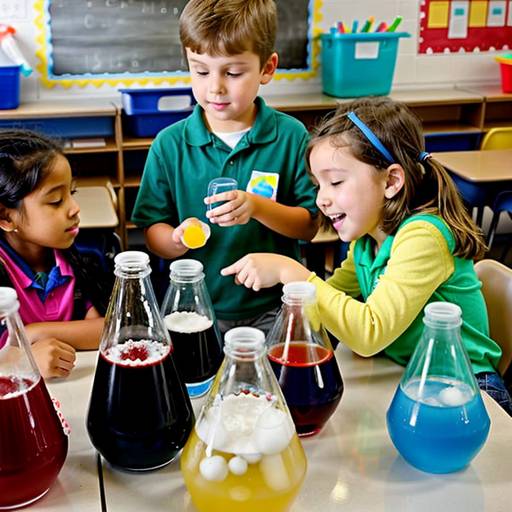
This lesson plan for 2nd-grade students focuses on the concept of matter, specifically exploring the three states: solids, liquids, and gases. The lesson begins with an engaging discussion where students share their favorite drinks, linking their experiences to the states of matter. Through direct instruction, students learn simple definitions and characteristics of solids, liquids, and gases, supported by visual aids.
Students then participate in hands-on experiments at designated stations, where they examine ice cubes, pour water into cups, and explore the properties of air in an inflated balloon. After rotating through the stations, the class comes together for a discussion to share their observations and consider how temperature can affect the states of matter.
The lesson concludes with a review of key concepts and an exit ticket activity where students draw and describe their favorite state of matter. Assessment is based on participation in discussions and experiments, as well as the reflections expressed in their exit tickets. Extension activities encourage students to connect what they’ve learned to their home environment. Overall, the lesson combines exploration, critical thinking, and creativity to foster a foundational understanding of matter.
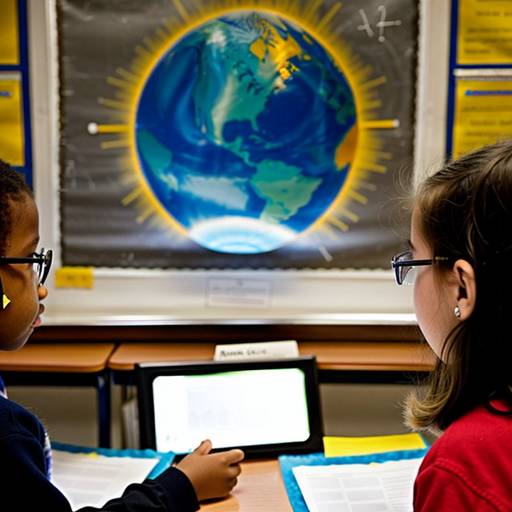
In this 3rd-grade science lesson on physical science and matter, students will explore the three states of matter: solid, liquid, and gas. The lesson begins with a discussion to define matter, followed by an explanation of its states and properties using visual aids.
Students will participate in hands-on experiments at three different stations where they engage with various materials representing each state. They will observe and compare the characteristics of solids, liquids, and gases, and complete worksheets to document their findings.
The lesson concludes with group presentations where students share interesting facts about what they learned, fostering a collaborative discussion about the relevance of matter in everyday life. Assessment will be based on worksheets and observations of group work. Extensions include a field trip for further exploration and home-based experiments to encourage ongoing learning. Adaptations are provided for diverse learners, ensuring comprehension and engagement throughout the lesson.
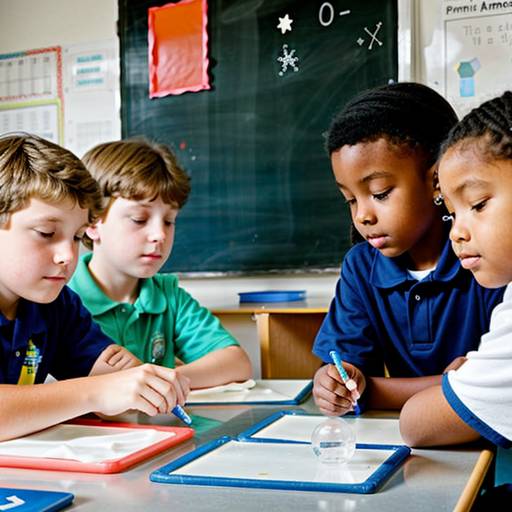
This 4th-grade science lesson focuses on the fundamental concepts of matter within the realm of physical science. Students will learn to identify and classify matter into three states: solids, liquids, and gases. Through hands-on activities, such as measuring mass and volume, and observing the properties of various objects, they will develop a deeper understanding of how matter behaves and interacts in different circumstances.
The lesson begins with an engaging introduction that prompts students to think about what matter is and how they encounter it daily. Direct instruction follows, where students will observe and discuss the characteristics of different states of matter and the processes involved in state changes, such as melting and evaporation.
In guided practice, students will work in groups to classify various objects and measure their properties. They will also engage in an independent worksheet activity to consolidate their learning. The class will conclude with a review of key concepts and an exit ticket where students reflect on their newfound knowledge and pose any remaining questions.
Overall, the lesson aims to foster curiosity and comprehension of matter while catering to diverse learning styles through interactive and collaborative elements.

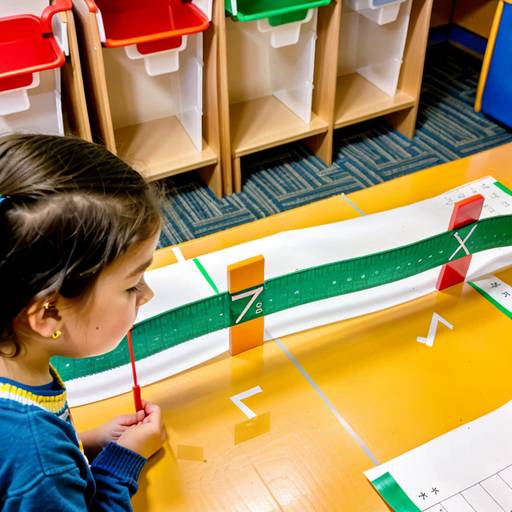
In this kindergarten math lesson, students will explore the concept of length and measurement through hands-on activities and group collaboration. The lesson begins with a discussion about length, encouraging students to use vocabulary words such as "longer," "shorter," and "equal length." They will learn to measure everyday objects using non-standard units, such as unifix cubes, by selecting items, measuring their lengths, and recording their findings.
Throughout the activity, students will work in small groups to measure various objects, compare their lengths, and present their results to the class. This collaborative approach fosters communication and reinforces their understanding of comparing lengths. The lesson concludes with a guided practice session using a comparison worksheet, allowing students to apply what they've learned. Assessment will be based on participation in group discussions and the accuracy of completed worksheets. Additionally, differentiation strategies will be included to support diverse learning needs. Overall, the lesson aims to engage students in interactive learning experiences while developing foundational measurement skills.
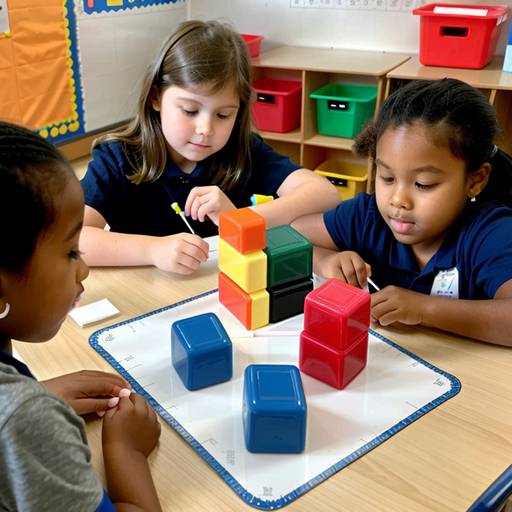
This 2nd-grade math lesson focuses on measurement and volume, engaging students through hands-on activities to explore these concepts. The lesson begins with an introduction to volume, including discussions about its real-life applications and relevant vocabulary. A demonstration showcases how to measure volume using a measuring cup with rice, promoting observational learning.
Students then work in small groups, experimenting with various containers to fill them with rice and record their findings on worksheets. This activity allows them to compare different containers in terms of their capacity. Afterward, groups share their results in a class discussion, emphasizing concepts like "more," "less," and volume-related vocabulary.
To conclude, students create a drawing or poster representing their favorite container and what they learned about its volume. Assessment is based on participation, worksheet accuracy, and the creativity of their final artwork. Extensions are suggested for advanced learners, including challenges with liquid measurements. Overall, the lesson aims to foster a comprehensive understanding of measurement and volume through interactive learning.