
Filters
Level
Grade
Subject
Subject Area
Subject Topic
Standard(s)
Audience
Keyword
DurationMinutes
Lesson Plans

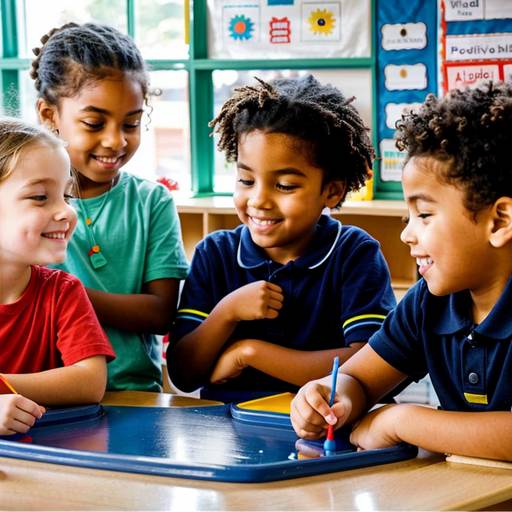
In this preschool lesson, students explore the concepts of friendship and community through engaging activities that promote cooperation, empathy, and connection with their peers. The session begins with a group discussion about friendship, followed by a read-aloud of a story that illustrates these themes. Afterward, children participate in a crafting activity where they create friendship bracelets, symbolizing their connections with others.
The lesson includes a collaborative puzzle activity to reinforce the idea that everyone plays a valuable role in a community, just as each puzzle piece is essential for completion. The session wraps up with a closing circle, allowing students to share their feelings about friendship and community. An optional dance party adds an element of joy and fun, emphasizing the positive experiences shared among friends. Reflection on student engagement helps inform future lessons.

This lesson plan aims to introduce toddlers to the four seasons through engaging and sensory-rich activities. It begins with a circle time discussion using seasonal photo cards to describe the characteristics and activities associated with each season. The children then participate in hands-on sensory stations, exploring textures like cotton balls for winter, artificial flowers for spring, sand for summer, and dried leaves for autumn. Following the sensory exploration, a short nature walk allows children to observe seasonal changes and find items related to each season using a simple checklist.
Back in the classroom, children engage in a creative art project where they create seasonal collages using various craft supplies, encouraging self-expression and artistic creativity. The session concludes with a closing circle, where children share their artwork and reflect on their favorite seasons. Throughout the lesson, the focus is on fostering observation skills, encouraging creativity, and enhancing children's appreciation for nature's cycles in an interactive and playful environment.

In this first-grade physical education lesson, students will participate in a fun, interactive session focused on cardiovascular fitness. The lesson begins with a warm-up activity called "Follow the Leader," where students engage in exercises that raise their heart rates. Following a brief discussion on the importance of cardio fitness, students will rotate through four activity stations designed to promote movement and teamwork. These stations include hopping in hula hoops, tossing bean bags at targets, participating in a relay race, and enjoying free dance time to upbeat music. After completing the stations, students will cool down with stretching exercises while reflecting on their experiences and feelings about the importance of physical activity. The lesson emphasizes enjoyment, cooperation, and inclusivity, ensuring that all students are engaged and active throughout the session. Informal assessment will be based on observation of participation and enthusiasm.

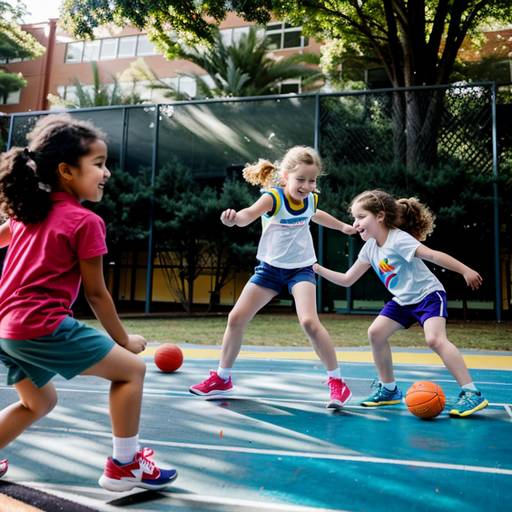
This preschool physical education lesson plan focuses on enhancing gross motor skills through a series of engaging activities designed for young learners. The session begins with a warm-up circle that includes stretching and light dancing to energize the students. Children are divided into small groups to rotate through five interactive activity stations lasting ten minutes each, including bean bag toss, hula hoop jumping, an obstacle course, ball rolling and kicking, and a dance-and-freeze game.
After a short water and snack break, the children participate in group games like "Simon Says" and "Animal Walks," which promote listening skills and imaginative movement. The lesson concludes with a cool-down reflection, allowing children to share their favorite activities, followed by gentle stretching exercises. A final creative activity involves drawing their preferred movement from the day, reinforcing their learning experience in a fun and inclusive atmosphere. Throughout the lesson, observation of participation and the ability to follow directions will help assess progress, ensuring modifications are available to accommodate children’s varying abilities.
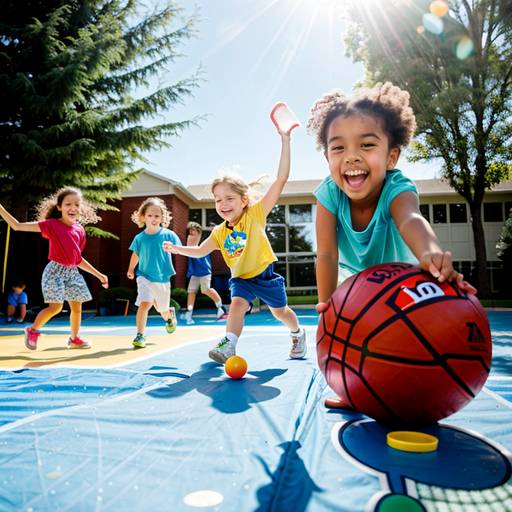
This 90-minute preschool physical education lesson focuses on engaging young children in outdoor play while developing their gross motor skills, teamwork, and appreciation for outdoor activities. The session begins with an introduction to the day's activities, followed by warm-up exercises that promote flexibility and movement through imaginative animal walks and simple stretches.
Children will participate in five activity stations, each designed to enhance various physical skills, including hula hoop tossing, jump rope challenges, parachute play, an obstacle course, and a free play area with different outdoor toys. A group game of "Duck, Duck, Goose" encourages social interaction and cooperation, rounding out the active play.
To conclude, students will cool down with stretching and deep breathing exercises, followed by a reflection on their favorite activities. The lesson emphasizes hydration and sun protection, ensuring a fun and healthy outdoor experience for all participants. Adaptations are included to meet individual needs, ensuring inclusivity and engagement throughout the lesson.

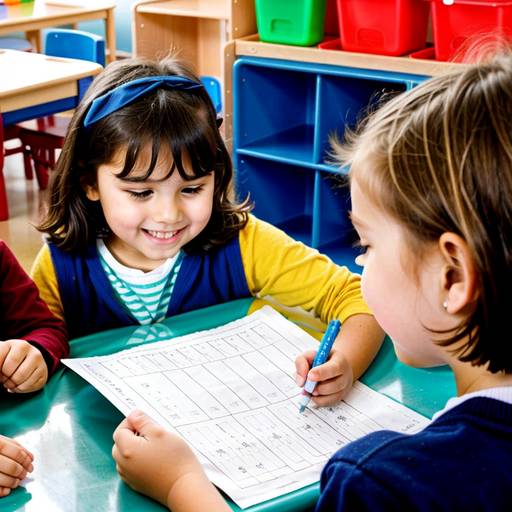
Students participate in hands-on activities at various math stations. In the first station, they use counting manipulatives to create and solve their own addition problems. The second station focuses on subtraction, where they practice taking away items from a larger group. The final station involves matching number cards to corresponding quantities.
The class then comes together for a fun relay activity that reinforces both addition and subtraction. As they take turns running to collect items and forming equations, they deepen their understanding of these mathematical operations.
To conclude the lesson, children reflect on their learning and share the equations they created. The session ends with another engaging song, ensuring a positive and memorable experience. Throughout the lesson, teachers assess students' understanding through their participation, responses, and ability to solve basic problems, providing opportunities for further challenge or support as needed.
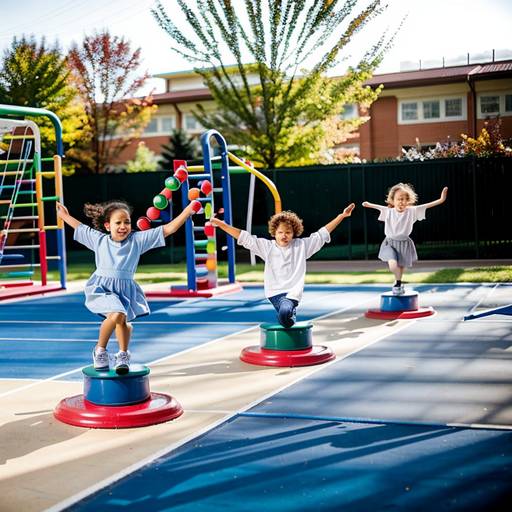
This Kindergarten Physical Education lesson focuses on developing coordination and balance skills through engaging activities. The session begins with a fun, movement-based warm-up where students follow a leader in a dance, promoting creativity and physical engagement. After the warm-up, students participate in walking exercises on balance beams, where they practice maintaining balance and attempting different movements, such as walking backwards or sideways.
The lesson continues with an obstacle course designed to challenge students' coordination skills. They navigate a series of tasks involving hula hoops and cones, allowing them to practice hopping, weaving, and sprinting. Students are divided into small groups, taking turns to complete the course while encouraging each other, and their times are recorded to promote a sense of achievement.
The session concludes with a cool-down period that includes gentle stretching and a reflective discussion, where students can express what they enjoyed and learned about balance and coordination. The lesson emphasizes safety and includes adaptations for students requiring additional support, ensuring an inclusive environment for all participants.
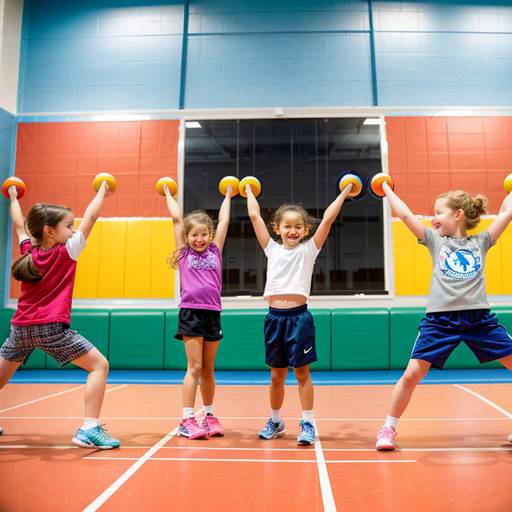
This Kindergarten Physical Education lesson plan focuses on introducing students to fundamental movement skills through engaging activities related to sports and gymnastics. The lesson begins with a warm-up session featuring fun exercises to energize the children. Students then rotate through four activity stations: Hula Hoop Hops, Balance Beam Walk, Creative Gymnastics Movement, and Target Toss, promoting skills such as hopping, balancing, and teamwork. After engaging in these activities, students cool down with deep breathing and gentle stretches. The lesson concludes with a group discussion to reflect on their experiences and emphasize the importance of being active in a fun and supportive environment. Overall, the plan aims to foster physical literacy and encourage cooperation among young learners.
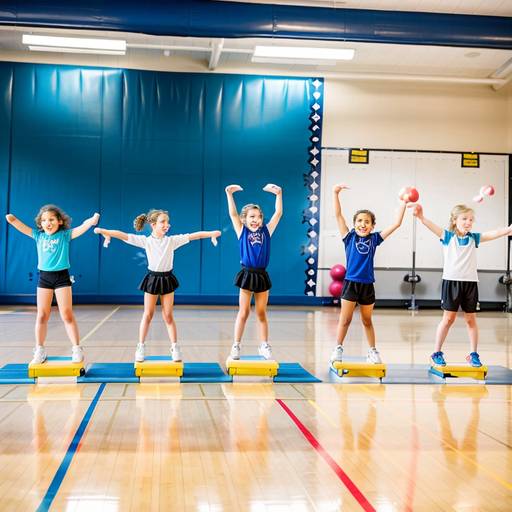
This 1st-grade physical education lesson focuses on introducing students to basic gymnastic skills and sports concepts through fun and engaging activities. The lesson begins with a dynamic warm-up to prepare the students' bodies, followed by a series of activity stations where they practice rolling, balancing, and jumping. Each station encourages skill development and teamwork through cooperative games. After the main activities, students participate in a cool-down that includes gentle stretches and a discussion reflecting on what they learned. The lesson provides opportunities for assessment through observations of student participation and skill execution, while also offering adaptations for different skill levels. To reinforce learning, students are encouraged to practice their newfound abilities at home, and plans for a mini showcase are suggested to further motivate and celebrate their progress.
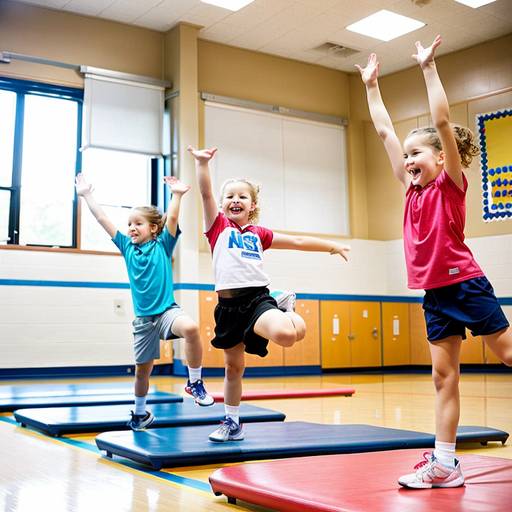
This lesson plan focuses on engaging 2nd-grade students in physical education through gymnastics and cooperative sports activities. The session begins with a warm-up that includes stretches and light jogging to prepare students for movement. Following the warm-up, students practice basic gymnastics skills such as forward rolls and balance activities on makeshift balance beams. The lesson also incorporates team-based relay races, where students work in groups to complete various physical challenges, promoting teamwork and communication. The session concludes with a cool-down period that includes deep breathing and gentle stretches, allowing students to reflect on their experiences and skills learned during the class. Throughout the lesson, the emphasis is on participation, encouragement, and skill development, ensuring a fun and inclusive atmosphere for all students.