
Filters
Level
Grade
Subject
Subject Area
Subject Topic
Standard(s)
Audience
Keyword
DurationMinutes
Lesson Plans

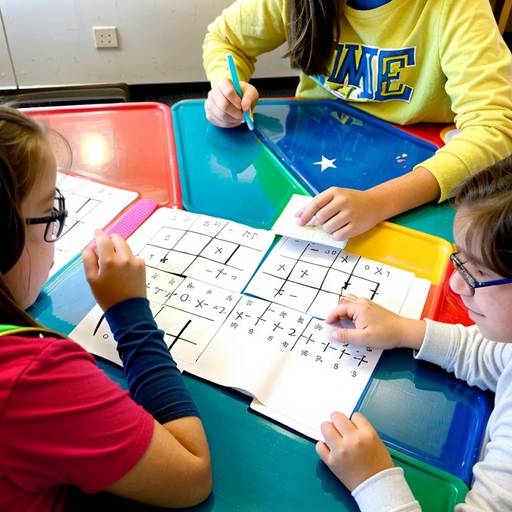
This 5th-grade mathematics lesson focuses on understanding and applying the concept of multiplying fractions. Students will begin with a discussion about fractions in everyday life, followed by a direct instruction segment where the rules for multiplying fractions are introduced. Visual aids, such as fraction circles or bars, will help illustrate the concept.
After learning the multiplication rule, students will work in pairs on a worksheet containing various fraction multiplication problems to reinforce their understanding. They will then engage in independent practice by solving real-world scenarios that require the application of their skills in multiplying fractions and simplifying results.
The lesson will conclude with a review of the answers and a class discussion to reinforce learning. Students will provide feedback on their understanding through an exit ticket that prompts them to reflect on what they learned and any further questions they may have. The plan incorporates differentiated strategies to meet diverse learning needs and encourages critical thinking through real-life applications.
This lesson plan focuses on teaching 3rd-grade students the concept of fractions and equivalent fractions through engaging activities. The lesson begins with a discussion that introduces fractions as parts of a whole, illustrated using visual aids like pizza diagrams. Students learn to identify equivalent fractions by using fraction circles or bars, while direct instruction includes drawing equivalent fractions on the whiteboard and using a number line.
During guided practice, students collaborate in small groups, using fraction circles to explore and find various equivalent fractions, then sharing their findings with the class. The hands-on activity allows students to create their own fraction strips, cutting them into equal parts and labeling the corresponding fractions, which reinforces the concept of equivalence.
The lesson concludes with a recap of key points and assigns a homework worksheet to assess students' understanding. Throughout the lesson, various methods are employed to accommodate different learning levels, ensuring that all students are engaged and able to grasp the concepts effectively.
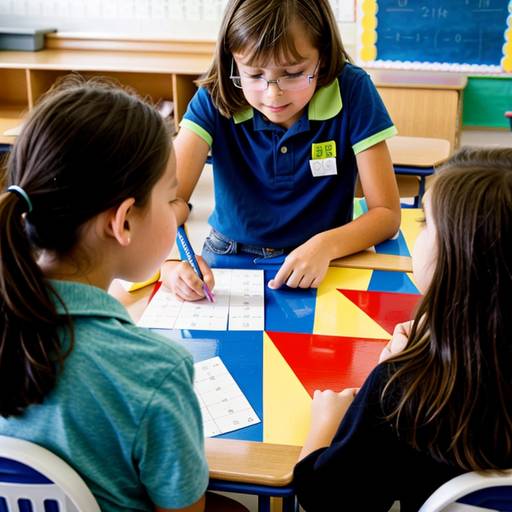
This 1-hour lesson for 3rd-grade students focuses on the concept of fractions and how to compare them. The lesson begins with an interactive game using visuals of food items to engage students and introduce the idea of fractions. Direct instruction follows, where students learn about the parts of a fraction and how to compare fractions with like and unlike denominators using fraction circles or bars for visual support.
During guided practice, students participate in a "Fraction Wall" activity, creating and ordering fraction cutouts on chart paper to enhance their understanding. They also complete worksheets with fraction comparison problems, allowing for further practice with teacher assistance. Independent practice includes a worksheet for comparative fraction problems and an optional matching game for equivalent fractions.
The lesson concludes with a review discussion, where students share what they've learned and complete an exit ticket that assesses their understanding of fractions and comparisons. Differentiation strategies are provided for advanced students and those needing additional support. Overall, this lesson cultivates students' understanding of fractions through interactive and visual methods, ensuring engagement and comprehension.
In this 3rd-grade math lesson, students will explore the concept of fractions as parts of a whole and learn to solve simple fraction word problems. The lesson begins with an engaging discussion about dividing favorite foods into parts, followed by an introduction to fraction terminology, including numerators and denominators. Visual models, such as fraction circles, will be used to demonstrate how to represent different fractions.
Students will participate in a group activity where they will solve fraction word problems by creating visual representations and writing corresponding fractions. After the guided practice, they will work independently on a worksheet with various fraction word problems, allowing them to apply their understanding.
The lesson concludes with a review of key concepts, and students will create their own fraction word problems as an exit ticket, ensuring they grasp both the creation and solution of fraction problems. Assessment will include observations during group work, worksheet review, and evaluation of exit tickets to measure comprehension. Extensions may involve introducing equivalent fractions and simple fraction addition for advanced learners.
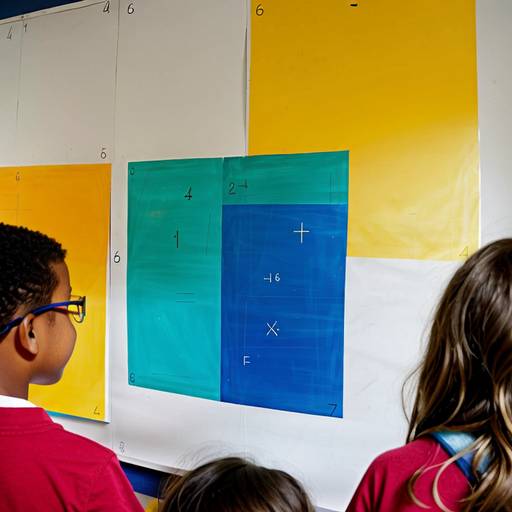
In this 5th-grade math lesson, students will explore the concept of dividing fractions through a combination of direct instruction, hands-on activities, and collaborative learning. The lesson begins with a review of fractions, followed by an explanation of the division of fractions, highlighting the process of multiplying by the reciprocal. Students will engage in guided practice using fraction circles and bars to visually represent and solve their own fraction division problems in pairs. They will then work independently on worksheets that feature various division problems involving fractions. The lesson concludes with a class discussion to clarify concepts and an exit ticket that assesses individual understanding. Throughout the lesson, the teacher will monitor student progress and provide support as needed, ensuring all learners grasp the material and feel confident in their skills. Extensions will be offered for advanced learners and additional support will be provided for those who need it. A reflection on the effectiveness of the lesson will inform future instruction.
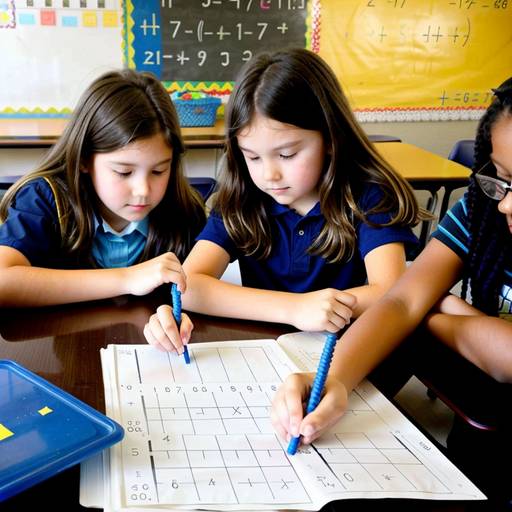
This 5th-grade math lesson focuses on introducing students to the concept of multiplying fractions. The lesson begins with a review of fractions, encouraging students to share real-life examples. Through visual aids, such as rubber fraction circles or DIY paper models, students learn to represent and visualize the multiplication of fractions. Guided practice involves solving a series of gradually more complex problems while illustrating their thinking.
Students then receive worksheets for independent practice, including problems based on real-world scenarios, such as cooking or measuring ingredients. After a group discussion on real-world applications, the class reconvenes to recap the key concepts learned. Assessment includes collecting the worksheets to gauge understanding and observing group interactions. Extensions and modifications are provided to accommodate diverse learner needs, ultimately reinforcing the connections between fraction multiplication and practical applications in everyday life.
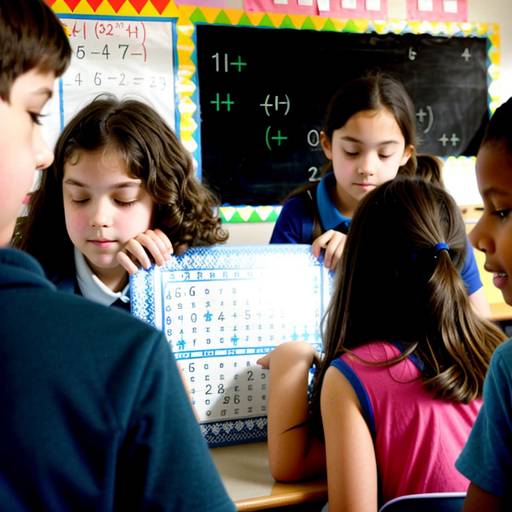
In this 5th-grade math lesson, students will explore the concept of dividing fractions through a variety of engaging activities. The lesson begins with a review of fractions, encouraging students to share real-life examples. The teacher will introduce the process of dividing fractions, emphasizing the rule of multiplying by the reciprocal, and will model this through simple examples on the whiteboard.
Students will then participate in a guided group activity where they will use fraction tiles or circles to solve division problems and visualize their answers. Afterward, they will complete a worksheet that includes both direct division problems and word problems related to real-life scenarios, fostering independent practice and collaborative discourse among peers.
The lesson will conclude with a recap of key concepts, followed by an exit ticket where students will reflect on what they learned and any lingering questions they may have. Extensions for further practice will be provided, including interactive games and a project involving adjusting recipes to apply their understanding of dividing fractions in a practical context. Assessment will be based on participation, worksheet accuracy, and reflections shared in exit tickets.
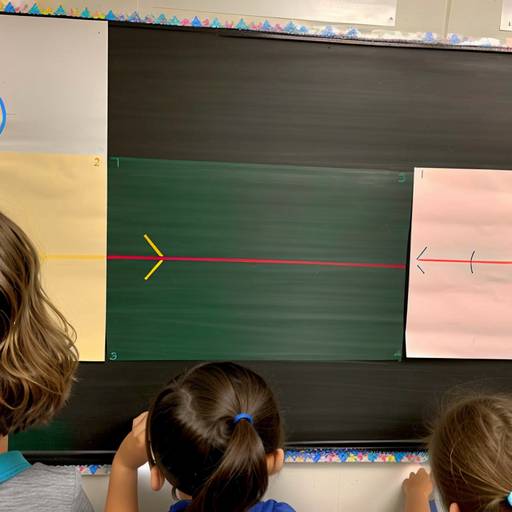
This lesson plan focuses on helping 3rd-grade students understand the concept of fractions and the importance of equivalent fractions. It begins with an engaging discussion about sharing food items, like pizza, to illustrate how fractions represent parts of a whole. Students then receive direct instruction on creating and identifying equivalent fractions using visual models, such as paper plates and fraction strips.
Guided practice involves students cutting their plates into different fractions and discussing their findings with peers. Independent practice reinforces learning through a worksheet containing fraction problems, where students identify and create equivalent fractions. The lesson concludes with a recap of the key concepts, where students share their insights, and an exit ticket that asks them to write down a pair of equivalent fractions they learned during the lesson.
The plan includes strategies for assessment by observing student participation and evaluating their worksheets. Additionally, differentiation is incorporated to provide support for students who need extra assistance and challenges for those ready to explore more complex fractions. Overall, the lesson fosters both understanding and engagement in the topic of fractions and equivalent fractions.

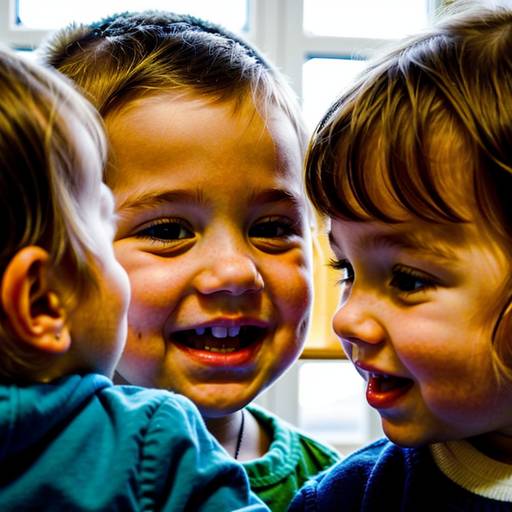
In this toddler social skills lesson, children will explore the concept of cooperation through a series of interactive activities designed to foster teamwork and collaboration. The session begins with a group gathering where students are introduced to the idea of working together, followed by a movement-based warm-up to engage their energy.
Participants will then work in teams using colorful blocks to construct collaborative structures, encouraging communication and idea sharing. A creative drawing project on large paper will allow each child to contribute, fostering an environment of sharing and cooperation as they take turns adding to the mural.
Further, the children will pair up to complete simple puzzles, promoting teamwork as they assist each other in finding and fitting pieces. If time permits, a parachute activity will introduce cooperative games where students must coordinate their movements collectively.
The lesson concludes with a group circle discussion, allowing children to reflect on their experiences and feelings about working together. Throughout the session, observations will be made regarding the children's ability to express themselves, share, and engage with peers, reinforcing the importance of cooperation in social interactions. All activities are designed to be engaging and fun, helping toddlers develop essential social skills in a playful setting.
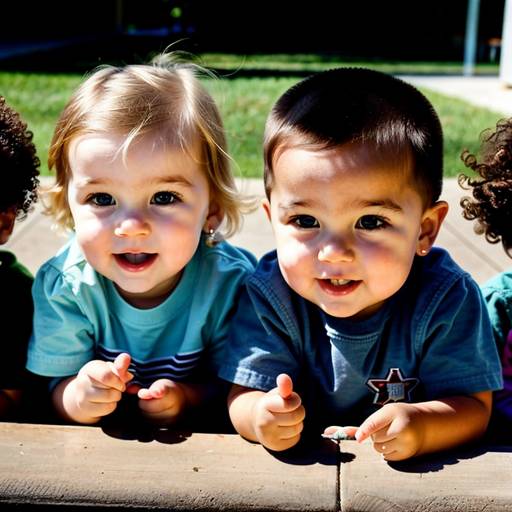
In this lesson focusing on friendship for toddlers aged 2-4 years, students will explore key social skills essential for forming and nurturing friendships. The session begins with an engaging circle time where children share their thoughts about friendship. Following this, a storytime segment introduces enriching picture books that highlight themes of caring, sharing, and helping each other, prompting discussions that reinforce these concepts.
To foster interaction, an activity called the Friendship Circle allows students to express positive feelings about their friends while practicing taking turns. The children then participate in a creative art project where they design their own flowers representing friendships, encouraging self-expression and reinforcement of names of friends they enjoy playing with.
The lesson concludes with a closing circle, where students reflect on what they learned about being good friends, receive stickers for participation, and are encouraged to discuss these ideas at home. Throughout the lesson, educators will assess students' interactions and understanding of sharing, turn-taking, and expressing kindness, while also adapting activities to meet individual needs.