
Filters
Level
Grade
Subject
Subject Area
Subject Topic
Standard(s)
Audience
Keyword
DurationMinutes
5th Grade Lesson Plans

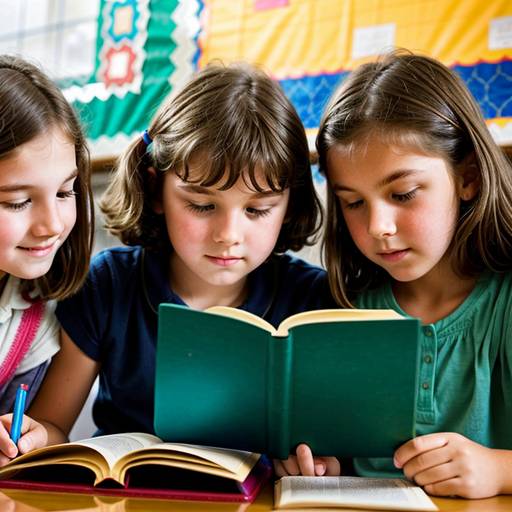
This 5th-grade language arts lesson focuses on enhancing students’ reading comprehension skills through the exploration of key story elements, including characters, setting, plot, conflict, and resolution. The lesson begins with an engaging discussion about favorite stories to spark interest, followed by direct instruction on identifying story elements using a selected short story.
Students participate in guided reading, filling out graphic organizers as the class discusses each story element. Afterward, they work independently to answer comprehension questions while referencing the text. The lesson concludes with a review of answers and a reflective exit ticket activity, allowing students to express new insights gained from the lesson. Differentiation strategies are included to support varying skill levels, and follow-up activities encourage creativity through writing and performance. Overall, the lesson aims to build foundational reading skills and foster a deeper understanding of literature.
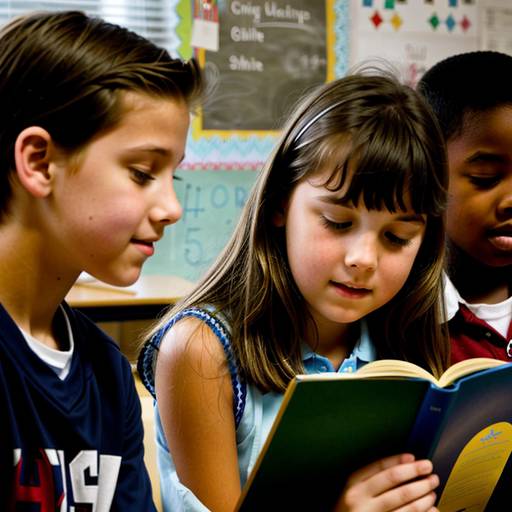
This 5th-grade Language Arts lesson focuses on enhancing students' reading comprehension through the identification of key story elements and the application of effective reading strategies. The lesson begins with a discussion about the components of a good story, such as setting, characters, plot, conflict, and resolution. Students are introduced to four reading strategies: making predictions, visualizing, questioning, and summarizing.
In a guided reading section, the class reads an adapted short story together while engaging with the text using the strategies introduced. As they read, students take notes on sticky notes to capture their thoughts and questions. Following the reading, students work in small groups to complete graphic organizers, known as story maps, where they identify the story elements and summarize their understanding. The lesson culminates in a class discussion where groups share their insights and reflect on how the strategies aided their comprehension.
Assessment includes observing participation, reviewing story maps, and collecting exit tickets in which students summarize what they learned about the reading strategies. Extensions encourage students to apply the strategies to their own book selections at home and create short stories to reinforce the lesson’s concepts. The lesson emphasizes student engagement and interaction, fostering critical thinking skills and a deeper understanding of narrative structure.

This lesson plan focuses on introducing 5th-grade students to the elements of narrative writing. It begins with a discussion about beloved stories, highlighting key components such as characters, setting, plot, conflict, and resolution. Through a mini-lesson, students analyze excerpts from narrative texts to understand how descriptive language enhances storytelling.
In small groups, students brainstorm ideas for their own narratives, addressing character, setting, and conflict. They then independently craft a narrative story in their writing journals, utilizing the narrative elements discussed. The lesson concludes with students sharing their stories with the class, fostering peer feedback and a deeper appreciation for storytelling. Assessment will include observation of participation and review of students' narratives for the application of narrative elements and descriptive language. Extensions and differentiation strategies are provided to support various learning needs, encouraging creativity and collaboration in writing.
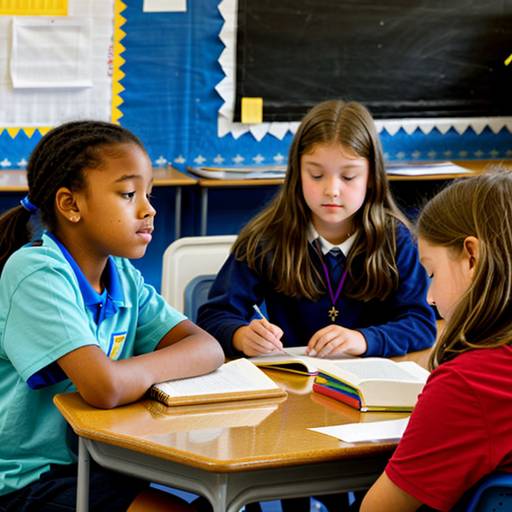
In this 5th grade language arts lesson plan, students will explore the fundamentals of expository writing, focusing on its purpose and key characteristics. The lesson spans two class periods and begins with a discussion on what expository writing is, followed by an analysis of a sample essay to identify its structure. Students will then use graphic organizers to brainstorm and organize their ideas on a topic of their choice.
In the second class period, students will draft their essays based on their organizers, followed by a peer review session where they will provide feedback on each other's work. After revising their essays, students will publish their final drafts, which may include illustrations, for display within the classroom or at a writer’s celebration. Assessment will be conducted through observation during activities and evaluation of the final essays based on criteria for clarity and organization. An extension activity includes sharing student essays in a display area, allowing students to practice public speaking while showcasing their writing. Reflection at the end of the lesson prompts students to consider what they learned and how they can apply expository writing skills in the future.


In this 5th-grade science lesson, students will explore the solar system and the significance of space exploration. They will begin with a discussion to share their prior knowledge, followed by an introduction to the features of each planet and important space missions. Students will then work in groups to research specific planets or space exploration tools, culminating in a quick presentation to the class. Following this, they will create a visual representation of their chosen subject, such as a drawing or poster, showcasing facts and creative elements. The lesson promotes collaboration, creativity, and communication skills as students share their projects and engage with their classmates' presentations. Assessment will be based on participation, group work, and individual projects, fostering a deeper understanding of astronomy and encouraging curiosity about the universe. Extension activities include organizing a Space Day and potentially planning a field trip to enhance learning experiences.
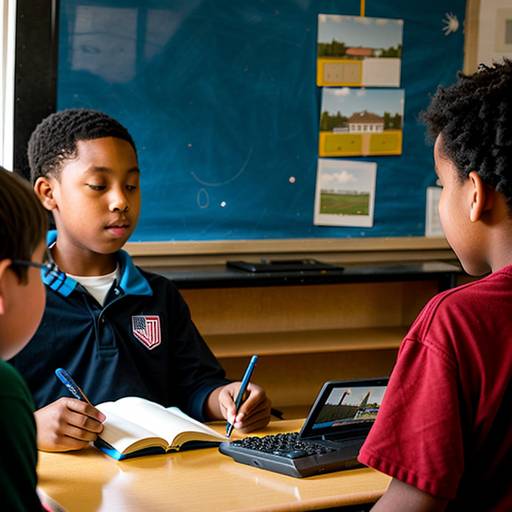
In this comprehensive 5th-grade technology lesson plan, students embark on a hands-on project focused on multimedia creation and video editing. Over the course of five sessions, they will learn the fundamental concepts of multimedia and storytelling, working collaboratively in small groups.
The project kicks off with brainstorming story ideas and creating a storyboard, which will serve as a visual guide for their video. Students will then investigate filming techniques, plan their shoots, and film their segments using digital cameras or tablets.
As they progress into editing, they will gain valuable skills in using video editing software, learning how to import media, cut clips, and enhance their narratives with music, transitions, and voiceovers. Throughout this process, peer feedback plays a critical role, allowing groups to refine their work.
Finally, students will present their completed video projects to the class, highlighting what they learned during the experience. They will also engage in reflective activities to consider their teamwork, technical skills, and the creative process. This lesson fosters multimedia skills, collaboration, and effective communication, equipping students with important tools for digital literacy.
In this 5th-grade Language Arts lesson, students will embark on an engaging exploration of vocabulary by discovering new words and their meanings. The lesson begins with a discussion on recently learned words, fostering an interactive environment. A set of 5-7 new vocabulary words will be introduced, along with their definitions and example sentences, emphasizing the use of context.
Students will then work in pairs to create sentences using the vocabulary words, encouraging collaboration and creativity. After sharing their sentences with the class, each student will independently choose three words to visually represent on chart paper, contributing to a collective vocabulary mural displayed in the classroom.
The lesson concludes with a reflective discussion about the vocabulary learned, where students will write a sentence using one of the new words on a sticky note to add to the mural. Assessment will be informal through observations during activities, with a follow-up quiz to evaluate students' retention of the vocabulary. The lesson incorporates extensions for ongoing vocabulary development and differentiation strategies to support diverse learners.
In this 5th-grade language arts lesson, students will focus on expanding their vocabulary through engaging activities and collaborative learning. The lesson begins with a video or reading passage that introduces several vocabulary words, prompting students to guess their meanings based on context. Following this, the teacher explains how to use context clues and word parts, such as prefixes and suffixes, to understand unfamiliar words.
Students will then work together on context clue worksheets, identifying clues within sentences to predict word meanings and sharing their insights in class discussions. For independent practice, each student will select several vocabulary words to define and use in sentences, culminating in a creative writing activity where they compose a story or paragraph incorporating selected words.
The lesson concludes with students sharing their work with the class and contributing new vocabulary to a classroom word wall to reinforce learning visually. Assessment will include monitoring student participation, reviewing worksheets, and evaluating vocabulary journals for understanding and application. Extensions may include vocabulary games or scavenger hunts for further practice. Overall, the lesson emphasizes interactive and collaborative learning in vocabulary development.
In this 5th-grade Language Arts lesson, students embark on an engaging exploration of new vocabulary words linked to grade-level texts. The lesson begins with a discussion on the importance of vocabulary and introduces a selection of 5 to 10 target words. Students work in small groups to create informative word maps that include definitions, synonyms, antonyms, and creative illustrations. After presenting their maps to the class, students individually craft sentences using two of the new vocabulary words to demonstrate their understanding in context. The lesson wraps up with a reflection activity in their vocabulary journals, where students consider their favorite word and potential usage in their writing and conversations. Assessment focuses on participation during group work, sentence construction, and reflections in journals. Extensions encourage further creativity and use of technology to reinforce vocabulary learning, while differentiation strategies support diverse learning needs within the classroom.

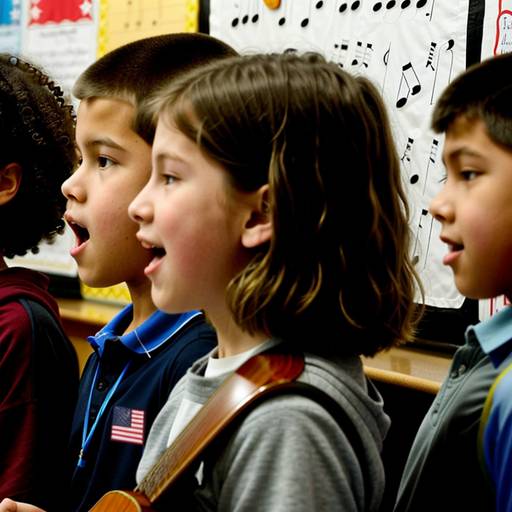
In this 5th-grade music lesson, students will explore the fundamentals of singing in unison and harmonizing through a collaborative performance. The lesson begins with vocal warm-ups and a discussion on the importance of group singing. Students will learn an age-appropriate song, first mastering the melody before being introduced to harmony. Emphasis will be placed on expression and dynamics, encouraging students to convey emotions and storytelling through their performance.
As the lesson progresses, students will practice their respective parts and come together for a group rehearsal, where constructive feedback will guide their improvement. To enhance their performance, simple movements or gestures may be incorporated. The session wraps up with a reflection on what they learned and how they felt about the experience, while preparing for an upcoming class performance. Through this engaging activity, students will develop their vocal skills, teamwork, and self-expression in music.