
Filters
Level
Grade
Subject
Subject Area
Subject Topic
Standard(s)
Audience
Keyword
DurationMinutes
5th Grade Lesson Plans

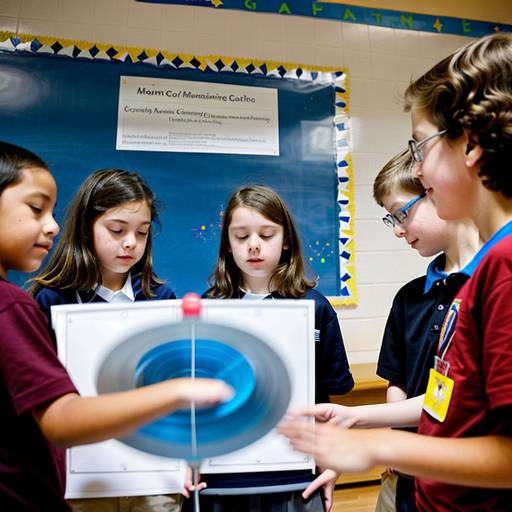
This fifth-grade science lesson focuses on understanding the concepts of motion and forces. Students will learn about different types of forces, including gravity, friction, pushes, and pulls, and explore how these forces affect the movement of objects.
The lesson begins with an engaging discussion to activate prior knowledge, followed by a direct instruction segment that provides definitions and examples of key concepts. Students will then participate in a hands-on experiment where they will work in small groups to test how varying ramp heights and surfaces influence the distance a toy car travels. They will record their observations on worksheets and engage in discussions to analyze their findings.
Finally, groups will present their results to the class, reinforcing their understanding of the impact of forces on motion. Assessment will be based on the collected worksheets and group presentations. The lesson encourages collaboration and critical thinking, with opportunities for extension activities that promote further exploration of the topic.

In this 5th-grade music lesson, students will explore the concept of dynamics in music, focusing on volume variations through interactive activities. The lesson begins with a vocal warm-up where students experiment with soft and loud sounds. They will learn and identify dynamic markings such as piano, forte, mezzo piano, mezzo forte, crescendo, and decrescendo.
Students will then work in small groups to create and perform short pieces that incorporate at least three different dynamics, allowing them to practice their understanding creatively. Following their performances, the class will engage in a listening exercise featuring music that demonstrates varying dynamics, encouraging discussion on the emotional impact of these changes.
Next, students will participate in a movement activity where they physically express dynamics through assigned movements corresponding to each dynamic term. The lesson concludes with a recap of the concepts learned, followed by a group performance where students will sing a simple song together, alternating between soft and loud sections. Participation in discussions, group activities, and an optional homework assignment will help assess their understanding of dynamics in music.
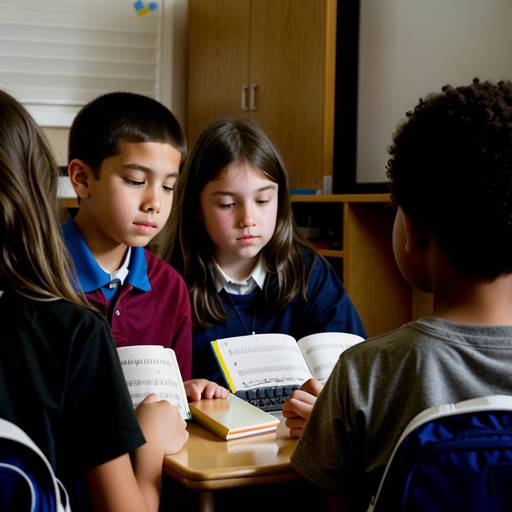
In this engaging 5th-grade music lesson, students will explore the concept of dynamics in music, focusing on volume levels such as piano, mezzo piano, mezzo forte, and forte. The class will start with an introduction to these terms, accompanied by audio examples to illustrate each dynamic. Students will then participate in a movement activity, using physical expressions to embody each dynamic, fostering a deeper understanding of how dynamics can convey emotions.
Next, students will engage in a discussion about the impact of dynamics on music's mood and feeling, supported by a dynamic chart. In small groups, they will create and rehearse a short performance piece that incorporates at least three different dynamics, using body movements, clapping, or classroom instruments. The lesson will culminate in group performances, allowing students to showcase their work while reflecting on the emotional effect dynamics had on their presentations and their audience. Assessment will focus on participation, understanding of dynamics, and the ability to express how dynamics influence music's emotional impact. Modifications will be available for students needing additional support. Optional homework will encourage students to analyze a song at home for its dynamic elements.

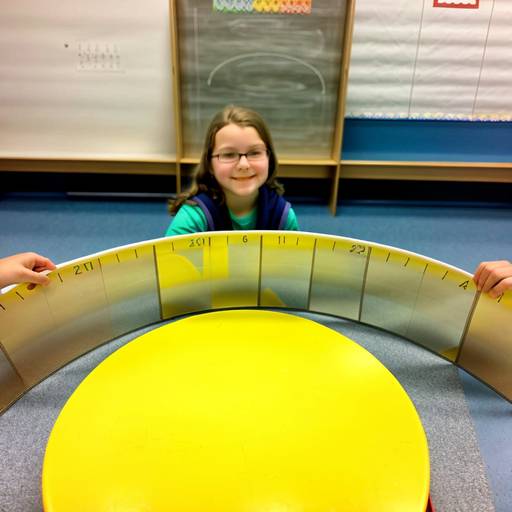
In this 5th-grade math lesson on measurement and weight, students will explore the concepts of length and weight using both standard and metric units. The class will begin by discussing the importance of measurement in everyday life, leading into direct instruction on how to accurately measure objects with rulers, measuring tapes, and digital scales.
Students will engage in guided practice by working in small groups to measure and weigh a variety of objects, recording their findings in both metric and standard units. Following this collaborative activity, they will complete a worksheet that includes conversion problems and word problems related to the measurements taken.
The lesson will conclude with a class discussion where groups share their findings, reinforcing the key concepts learned. Assessment will focus on group participation, individual worksheet completion, and engagement in discussions. Additionally, extension activities will provide opportunities for further exploration of measurement standards and creative presentations. This lesson emphasizes hands-on learning and real-world applications of measurement skills.
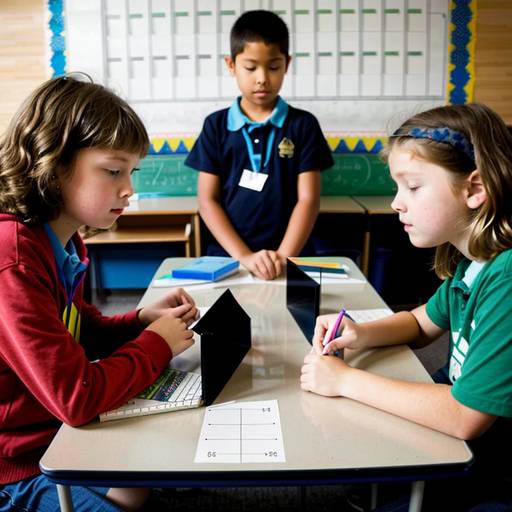
In this 5th-grade math lesson plan focusing on subtraction, students will explore various subtraction concepts through engaging activities. The lesson begins with a quick quiz to assess prior knowledge, followed by a mini-lesson that reviews subtraction methods, including borrowing and real-life applications, with visual aids such as counters.
Guided practice involves worksheets and flashcard challenges in pairs to reinforce skills. Students then participate in a team-based competition where they solve subtraction problems including word problems and scenarios relevant to daily life, fostering teamwork and collaboration.
The lesson concludes with a reflection discussion, allowing students to share their insights, and assigns a homework task that connects subtraction to their everyday experiences. Assessment will take place through observation during activities and evaluation of completed worksheets. Extensions and additional support options are provided to cater to different learning levels.
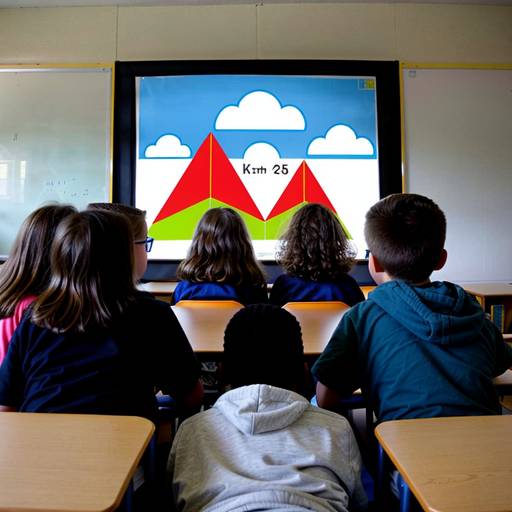
This 5th-grade math lesson focuses on measurement and volume, guiding students to understand how to calculate the volume of geometric solids such as cubes and rectangular prisms. The session begins with an engaging discussion about the importance of measuring volume in real-world contexts. Students learn the volume formula (Length × Width × Height) through direct instruction and hands-on demonstrations involving measuring dimensions and using water for practical volume measurement.
During guided practice, students work in small groups to measure geometric shapes, calculate their volumes, and document their findings in Volume Adventure Journals. Independent practice involves solving related problems on a worksheet. The lesson concludes with a class discussion where groups share their observations and reflections on the utility of knowing an object's volume. An exit ticket prompts students to express their thoughts on the importance of volume measurement. Assessment includes reviewing journals and worksheets for calculation accuracy, participation in discussions, and group activities, with opportunities for extension and accommodations to meet diverse learning needs.
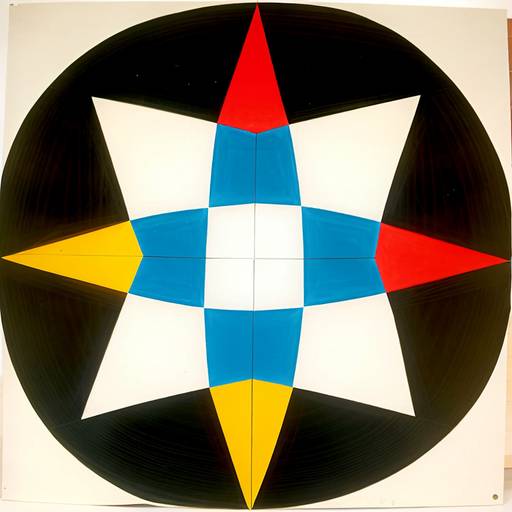
In this 5th-grade mathematics lesson, students explore the concepts of geometry and perimeter through a series of engaging activities. The lesson begins with an introduction to shapes and the importance of understanding perimeter in real-world contexts. Students learn how to calculate the perimeter of various polygons using formulas and direct measurement, working in groups to identify and categorize different shapes.
During guided practice, students use rulers to measure the sides of their shapes and compute their perimeters. They then engage in independent practice, which includes a worksheet with perimeter calculations and real-life scenarios involving fencing a garden. To reinforce their understanding, students participate in a hands-on activity where they create their own polygons on graph paper, measure them, and find their perimeters using string.
The lesson concludes with a review of the concepts learned as students share their findings and discuss the interesting shapes they measured. The teacher assesses understanding through observations and collected worksheets, supplemented by a quick exit ticket to gauge individual comprehension. Optional extensions are provided for students seeking further challenge, allowing them to explore irregular shapes and compare perimeter with area. Overall, the lesson fosters teamwork and practical application of mathematics, promoting an engaging learning experience.
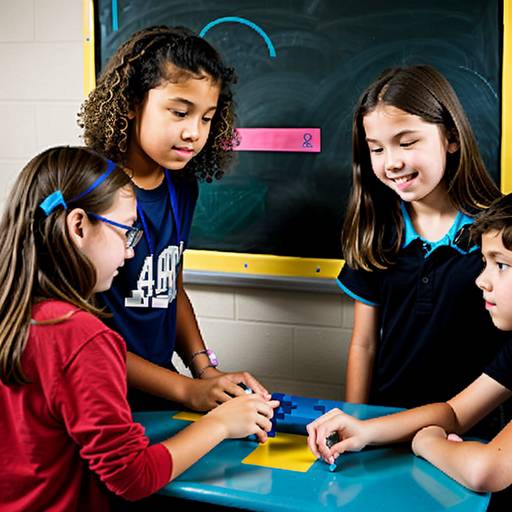
In this 5th-grade math lesson, students will explore the concept of perimeter through a hands-on and engaging approach. The lesson begins with an introduction to perimeter, highlighting its importance in real-world scenarios. Students will learn how to calculate the perimeter of shapes, specifically rectangles and squares, using established formulas.
After a demonstration and guided practice with worksheets, students will work in small groups to create their own shapes using string and graph paper. They will measure the length of the string to determine the perimeter of their unique creations. Each group will then present their shape and findings to the class, fostering discussion about their experiences and any challenges faced during the activity.
The lesson concludes with an assessment of student understanding through the collected worksheets and group presentations, along with a quick exit ticket to reflect on their key learnings. Extensions for advanced learners and support for those needing additional help are also provided. This interactive lesson encourages students to apply measurement concepts in practical situations and fosters collaboration and problem-solving skills.


In this 5th-grade Language Arts lesson, students explore the essential rules of capitalization and their significance in writing. The lesson begins with a discussion on why capitalization matters, followed by direct instruction on key rules, such as capitalizing the first word in a sentence, proper nouns, days, months, and the pronoun "I." Students then engage in guided practice by correcting capitalization errors in a provided short story excerpt, promoting teamwork and collaborative learning. For independent practice, they complete a worksheet with fill-in-the-blank and multiple-choice questions on capitalization rules. The lesson concludes with a review of the key concepts, allowing students to share examples of their writing. Assessment is conducted through observation of participation and evaluation of the worksheets, while an extension activity encourages students to write a paragraph about their favorite holiday, applying their capitalization skills.
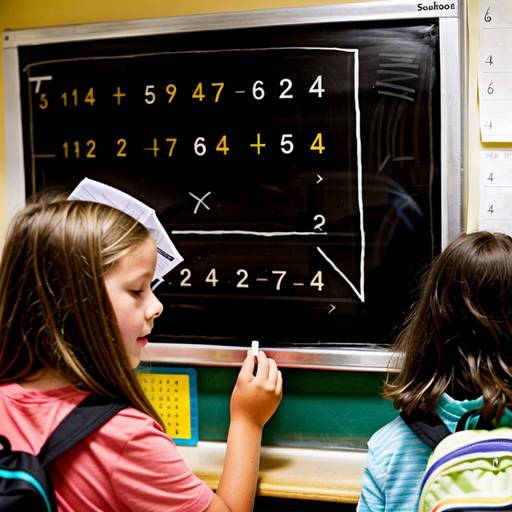
In this 5th-grade math lesson, students will explore subtraction through an engaging, real-world context. The objective is for students to confidently solve two-digit and three-digit subtraction problems while enhancing their critical thinking skills.
The lesson begins with a captivating introduction involving a safari story that sets the stage for subtraction. Direct instruction follows, where the teacher reviews subtraction concepts and demonstrates problem-solving with the whole class.
Students then participate in hands-on learning through "adventure stations," where they work in small groups to solve various themed subtraction problems. After this guided practice, they complete a worksheet independently and engage in peer discussions to check their work.
The lesson concludes with a summary of key concepts, where students reflect on their learning through written notes. Finally, the teacher assesses understanding through worksheet reviews and observations of group interactions. Additional opportunities for extension and modifications ensure that all students can engage meaningfully with the material.