
Filters
Level
Grade
Subject
Subject Area
Subject Topic
Standard(s)
Audience
Keyword
DurationMinutes
5th Grade Lesson Plans

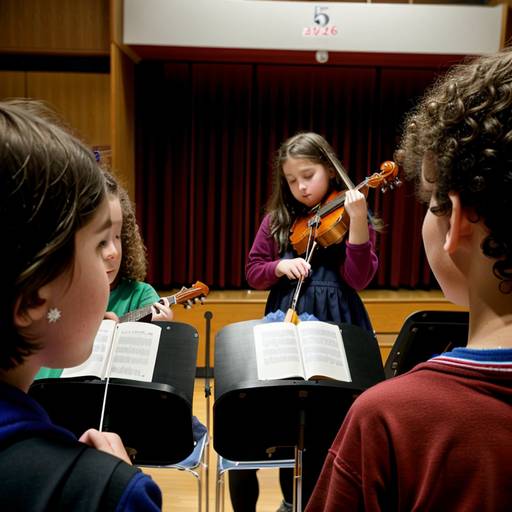
In this 5th-grade music theory lesson, students will explore the fundamental concepts of musical notes and their placements on the staff. The lesson begins with an engaging discussion about music and its relationship to everyday sounds, followed by introducing the musical staff, including the notes found on the lines and in the spaces, through acronyms to aid memorization. Students will also learn about different note values, including whole, half, quarter, and eighth notes.
During guided practice, students will work in small groups with flashcards to name notes and place them onto an illustrated staff on the board. They will also have a hands-on opportunity to play these notes on a keyboard or xylophone. For independent practice, students will create their own melodies on a blank staff worksheet, applying what they’ve learned.
The lesson concludes with a recap and a discussion about how notes create melodies, with opportunities for students to share their work. Assessment will include observation of participation and review of worksheet completion. Additional extensions are available for advanced learners, while support is offered to those who need it, ensuring an inclusive learning environment that fosters collaboration and creativity.

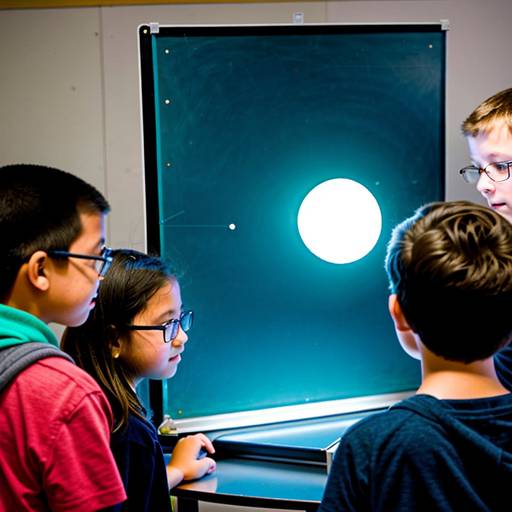
In this 5th-grade physical science lesson, students will explore the concepts of forces such as gravity, friction, and magnetism, and how these forces influence motion. The class will begin with an introduction to the topic, discussing real-world examples of forces in everyday life. Students will then engage in interactive group activities, conducting hands-on experiments where they test how different surfaces affect the distance and speed of toy cars on ramps. Each group will observe and record their findings about the effects of different types of forces on motion. The lesson concludes with a class discussion, where students can share their observations and insights, reinforcing key vocabulary and concepts. Assessment will be based on the accuracy of their worksheets and participation in discussions, providing a comprehensive understanding of the dynamics of forces and their practical applications. Safety measures will be in place during all experimental activities. Extensions for advanced learners include mini-projects related to forces in sports and simple machine concepts.

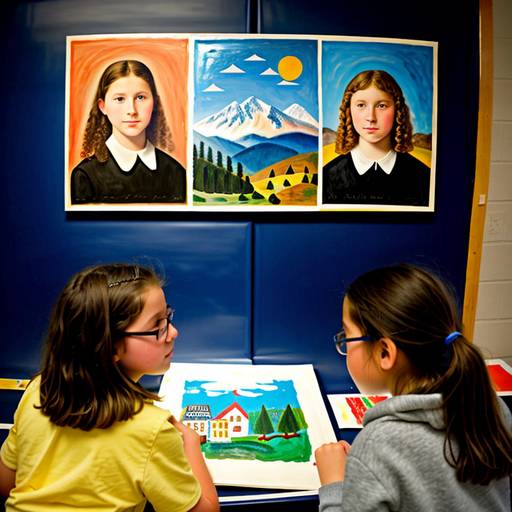
In this 5th-grade art lesson, students will explore key art movements and their historical significance. The class will begin with a visual presentation of famous artworks from various movements, followed by group presentations where students will research and share details about assigned movements, including their characteristics and notable artists. After the presentations, students will create their own artwork inspired by a chosen art movement, incorporating its unique styles and techniques. The lesson will conclude with a sharing session where students can showcase their creations and reflect on what they learned. A fun Bingo game will reinforce the vocabulary and concepts discussed. Assessment will focus on participation, creativity in the art project, and reflections in art journals. Adaptations will be provided for diverse learning needs, ensuring all students can engage meaningfully with the material.

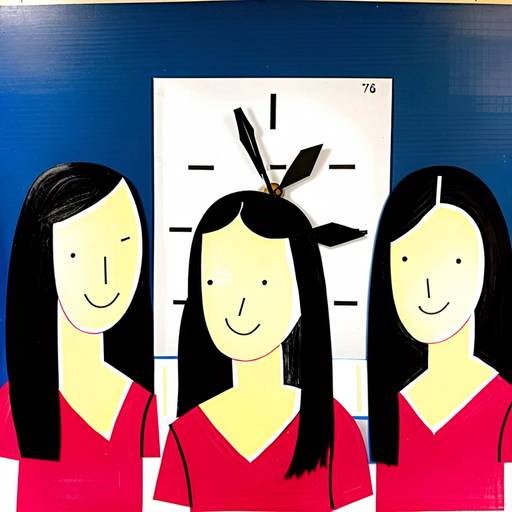
In this 5th-grade math lesson, students will learn to read both analog and digital clocks, calculate elapsed time, and recognize patterns in time intervals. The lesson begins with a discussion about the significance of time in daily life, followed by a review of clock reading. Students will be introduced to concepts of elapsed time and time patterns using group activities with worksheets and time cards. As part of a guided practice, they will work collaboratively to solve time-related problems and identify patterns. To reinforce their learning, students will create their own clocks using craft supplies, demonstrating their understanding of time intervals. The lesson concludes with a wrap-up discussion to consolidate their learning, followed by assessments through worksheets and a potential short quiz in the next session. Homework assignments will further reinforce their skills in calculating time intervals and tracking daily activities. Overall, the lesson prioritizes student engagement and creativity while covering essential mathematical concepts related to time.
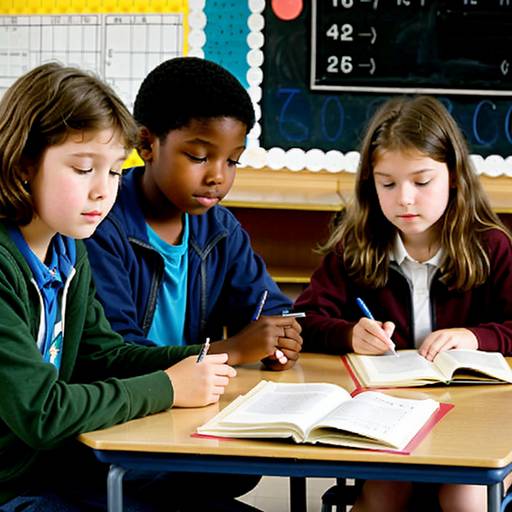
In this 5th-grade mathematics lesson, students will explore the concepts of time and time zones, focusing on understanding how to read clocks and convert time between different time zones. The lesson begins with an engaging discussion about personal experiences with time differences, followed by a direct instruction segment that covers how to read both analog and digital clocks, as well as the structure and significance of various time zones.
Students will participate in guided practice by solving time conversion problems using worksheets that present real-world scenarios, allowing them to apply their knowledge collaboratively. For independent practice, students will select two cities in different time zones and write a short paragraph detailing how time would differ between these locations based on a specified time in their own city.
The lesson concludes with a review of key concepts about the relevance of time zones in everyday life, with an emphasis on their importance in communication and travel. Assessment will involve evaluating students’ worksheets and independent work. Extensions will be provided for advanced learners, introducing more complex time calculations or the impact of technology on global time awareness. Overall, this lesson aims to enhance students' understanding of time and its significance across different regions.
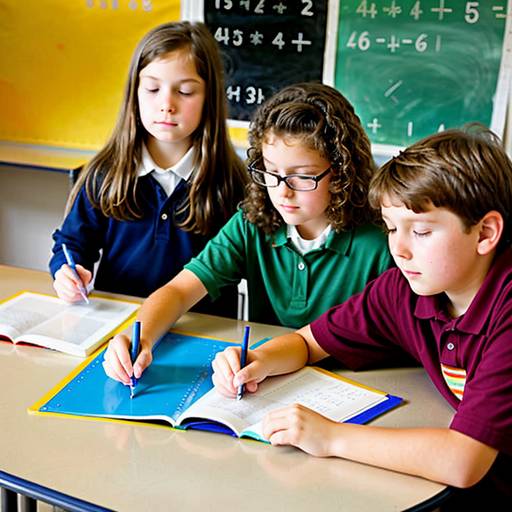
This 5th-grade math lesson focuses on understanding and manipulating time, specifically hours and minutes. Students will begin by reviewing how to read an analog clock and discussing the significance of time in their daily activities. Through a hands-on relay activity, they will practice setting clocks to specific times in small groups, fostering collaboration and discussion.
Following this, students will work individually on worksheets that involve converting between hours and minutes, strengthening their calculation skills. They will also create and present time patterns in groups, reinforcing their understanding of intervals and how they relate to everyday routines. The lesson concludes with a reflection on the importance of time usage, reinforcing the concepts learned. Assessment will be based on class participation, worksheet accuracy, and the quality of group presentations. Extensions and additional support will be provided for students as needed to ensure understanding and mastery of the topic.
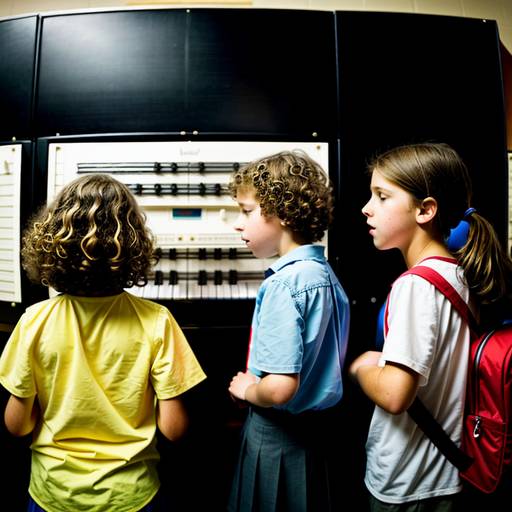
This 5th-grade music lesson focuses on exploring the evolution of music through various historical periods, including the Medieval, Renaissance, Baroque, Classical, Romantic, and Contemporary eras. The lesson begins with an engaging audio guessing game to pique student interest, followed by a presentation that outlines the characteristics, key composers, and instruments associated with each period. Students participate in a listening exercise to analyze pieces from different eras, discussing their observations and feelings about the music.
For the main activity, students work in small groups to create a visual timeline, summarizing their assigned music periods, highlighting notable composers, and illustrating key elements. Each group presents their section to the class, fostering discussion and collaborative learning. The lesson concludes with a recap of the key concepts, emphasizing the relevance of historical music to contemporary life, with opportunities for extension such as homework and a family music appreciation night. Assessment focuses on participation, the completed timeline project, and optional quizzes. Students engage creatively and collaboratively while developing a deeper understanding of music history.

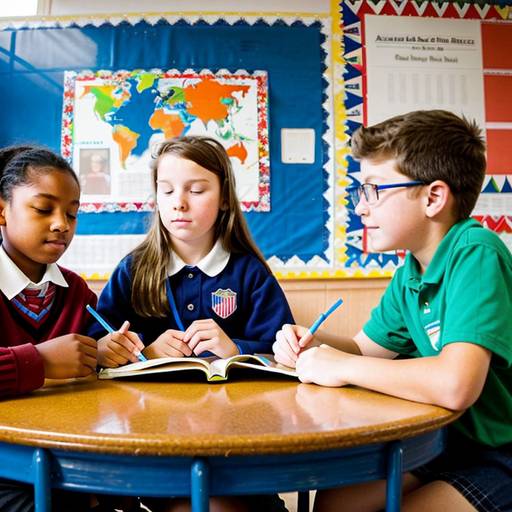
In this 5th-grade social studies lesson, students will explore the concept of timelines and their importance in understanding historical events. The lesson begins with a class discussion to engage students and introduce the idea of tracking time. Key vocabulary related to timelines will be taught, followed by a guided activity where students work in pairs to place historical events on a timeline.
Students will then have the opportunity to create their own personalized timelines, selecting five significant events from American history to illustrate and describe. This creative project encourages individual expression and reinforces their understanding of chronological order.
The lesson concludes with students sharing their timelines with peers, fostering communication skills and collective learning. Throughout the lesson, assessment will focus on participation, the accuracy of timelines, and a reflective exit ticket to gauge student understanding. Extensions include a digital timeline project for advanced learners and a timeline fair to engage parents. Overall, this lesson promotes critical thinking, collaboration, and creativity while deepening students' appreciation for history.
This 5th-grade social studies lesson focuses on helping students understand the components of their community and the significance of rules for maintaining a safe and functional environment. The lesson begins with students collaboratively defining what a community means to them and discussing the roles various individuals play within it. In small groups, they identify key community roles and the corresponding rules that support those roles.
Following this discussion, students will participate in a hands-on activity, where they will write down roles and rules on sticky notes and create a visual representation in pairs. Each pair will develop a poster that illustrates a specific role in the community along with its associated rule.
The lesson closes with presentations of the posters, allowing students to share their understanding and reflect on how rules contribute to the safety and functionality of their community. Assessment will be based on participation in discussions, the quality of group projects, and a brief exit ticket reflecting their learning. Differentiation strategies will ensure that all students, regardless of their learning styles, are engaged and supported throughout the lesson. Follow-up activities will encourage exploration of their immediate environments, reinforcing their newly acquired knowledge.
In this 5th-grade social studies lesson, students will learn about influential American historical figures who made significant contributions through their innovations and leadership. The session begins with a captivating video showcasing transformative inventions, followed by a discussion that encourages students to share their thoughts on how these figures changed the world. A mini-lecture introduces notable innovators such as Thomas Edison, Rosa Parks, Neil Armstrong, and George Washington Carver.
Students will work in small groups, each researching one assigned figure, focusing on their backgrounds, contributions, and impact on society. They will create a poster that highlights key facts, includes an inspiring quote, and features a portrait of the figure. After completing their posters, the class will engage in a gallery walk, where students will present their findings to their classmates.
The lesson concludes with a reflection activity, where students share what they learned about innovation and its importance in history. An optional homework assignment invites students to write about a modern innovator they admire, inspired by the historical figures studied. Throughout the lesson, students will develop critical thinking and teamwork skills while exploring the legacies of these groundbreaking individuals.