
Filters
Level
Grade
Subject
Subject Area
Subject Topic
Standard(s)
Audience
Keyword
DurationMinutes
5th Grade Lesson Plans
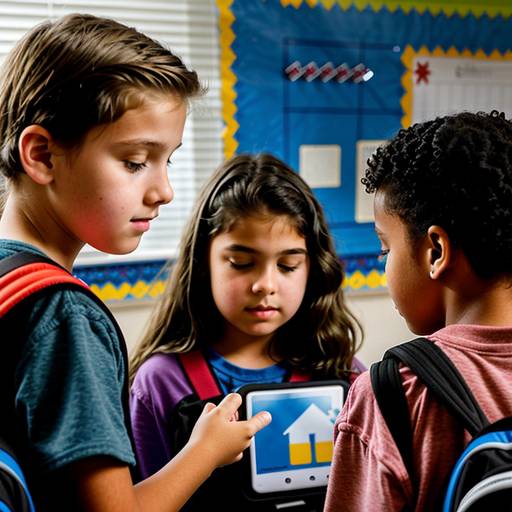
In this 5th-grade technology lesson, students will explore the critical aspects of device maintenance and organization. The session begins with an interactive discussion on the importance of caring for technology. Students will learn various cleaning techniques for devices, such as using microfiber cloths and compressed air, through a demonstration.
After understanding cleaning methods, students will engage in hands-on practice, applying the techniques to their own devices in pairs. They will also create personalized organization plans that encompass both digital file management and physical organization of their tech-related materials.
The lesson emphasizes collaborative sharing of ideas and strategies, allowing students to enhance their plans while reflecting on the importance of maintaining clean and organized devices. For assessment, teachers will observe students’ cleaning practices and review their organization strategies. An extension challenge encourages students to create tutorial videos to share their knowledge with peers. Finally, students will be tasked with implementing their organization plans at home and documenting their experiences in a journal.
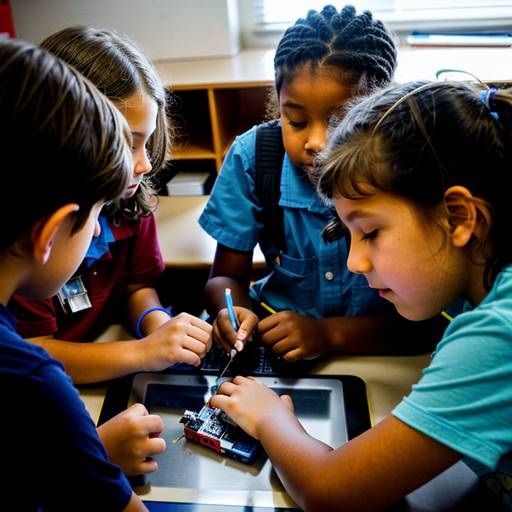
This lesson plan for 5th-grade students focuses on the fundamentals of device maintenance and troubleshooting basics. Over the course of 60 minutes, students will engage in discussions about common technology issues and learn why proper maintenance is essential for device longevity and performance. Instruction will cover key maintenance practices, such as cleaning screens and ensuring proper connections, as well as basic troubleshooting steps for typical problems like frozen screens and charging issues.
Students will participate in group activities where they will collaboratively work on scenario cards that depict various technical challenges, applying the troubleshooting methods discussed. Following this collaborative practice, they will engage in hands-on activities at maintenance stations, where they can practice techniques like cleaning screens and checking device connections.
The lesson concludes with a recap of the key points learned and an exit ticket activity that allows students to reflect on what they found most valuable. Assessment will focus on participation, collaboration in group work, and the completion of the exit ticket. The lesson encourages students to take responsibility for their technology and empowers them with practical skills to manage their devices effectively. Differentiation strategies are included to support diverse learners and extend learning for those who seek additional challenges.
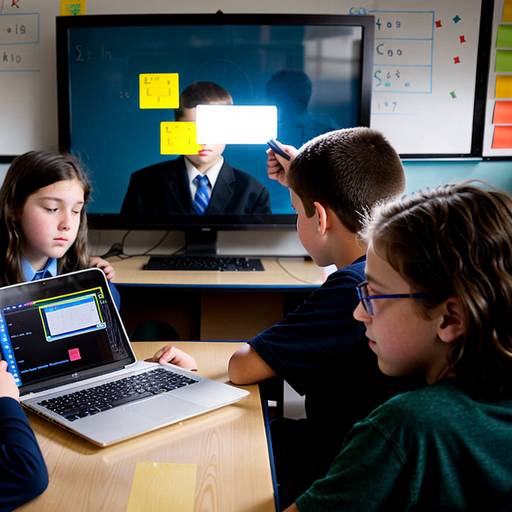
This 5th-grade technology lesson plan introduces students to the fundamentals of coding and programming languages. It begins with a discussion about what coding is and its role in communicating with computers, followed by an exploration of algorithms and their importance in programming. Students engage in a fun activity where they write algorithms for simple tasks, enhancing their understanding of the concept.
The core of the lesson involves a hands-on coding activity where students work in pairs or small groups on a block-based coding platform to create their own projects, such as animated stories or simple games. Throughout this process, they learn how to debug their code and collaborate effectively with peers.
The lesson concludes with presentations where groups share their projects, discussing what they learned and any challenges they faced. This wrap-up reinforces the importance of collaboration in coding and encourages students to reflect on their experiences. Assessment is based on participation, project creativity, and understanding of key concepts, with extensions offered for those interested in further exploration of coding. The lesson aims to empower students with foundational skills in technology and problem-solving.

In this 5th-grade language arts lesson, students will explore the elements of storytelling as they create their own imaginative stories. The lesson begins with a discussion on the components of a good story, followed by a read-aloud of an engaging excerpt. Students will participate in brainstorming and outline activities, developing characters, settings, and plotlines using a structured template. After collaborating with a partner to refine their ideas, each student will independently draft their story in their journals, focusing on using descriptive language. The lesson concludes with a sharing session where students can present their ideas and favorite excerpts to the class. Assessment will involve reviewing the story templates and drafts to provide feedback on creativity and storytelling elements. Extension activities will involve illustrating scenes from their stories, and differentiation will accommodate varying skill levels among students.

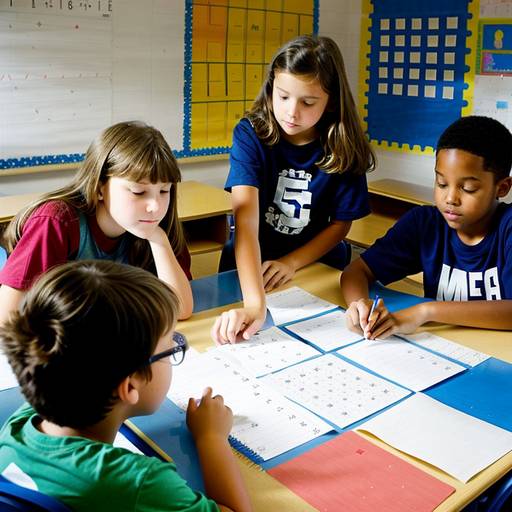
In this 5th-grade math lesson, students will explore the concepts of measurement and time through engaging activities. The lesson begins with a discussion on the significance of measuring time and distance in everyday life, followed by direct instruction on reading analog and digital clocks, as well as measuring lengths with rulers and measuring tapes.
Students will engage in guided practice by working with paper clocks to set times and measuring various classroom items in both inches and centimeters. They will then complete independent worksheets that include word problems related to elapsed time and distance calculations, allowing them to apply their newly acquired skills.
The lesson concludes with a review of key concepts through Q&A and encourages students to understand the importance of accuracy in both timekeeping and measurement. An optional extension activity allows for further exploration by calculating walking pace over a specific distance. The overall goal is to enhance students' confidence and competence in measurement and time, making these essential skills relevant and practical.
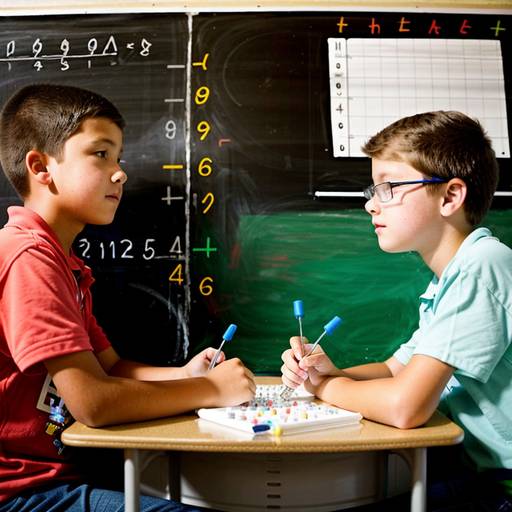
This 5th-grade math lesson focuses on measurement and temperature, helping students understand how to measure temperature and convert between Celsius and Fahrenheit. Beginning with an engaging introduction about the role of thermometers in everyday life, the lesson progresses to direct instruction on temperature units and conversion formulas. Through guided practice in small groups, students gain hands-on experience measuring different temperatures and applying conversion formulas to real-world scenarios. Independent practice involves completing a worksheet with temperature conversions and a mini temperature diary. The lesson concludes with a review of key concepts and an opportunity for questions. Assessment methods include evaluating completed worksheets and observing group collaboration. Extensions involving art and science are provided for further engagement, while modifications offer support for diverse learning needs. Overall, this lesson aims to foster a practical understanding of temperature in both mathematical and real-life contexts.
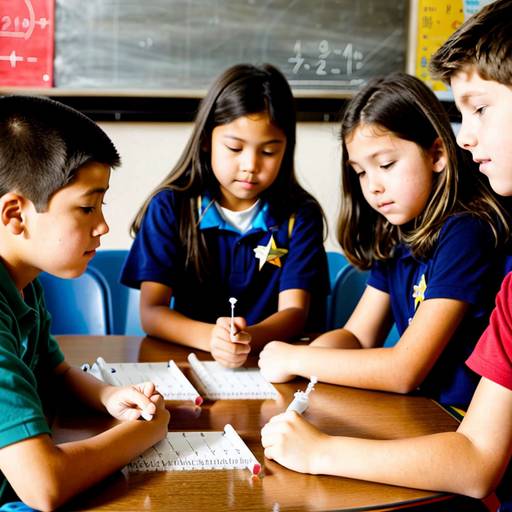
In this 5th-grade math lesson focused on measurement and temperature, students will learn how to measure temperature in both Celsius and Fahrenheit, as well as how to convert between the two units. The lesson begins with an interactive discussion about temperature and its importance in daily life, followed by direct instruction on reading thermometers and performing temperature conversions using established formulas.
Students will then engage in guided practice by working in pairs to complete a worksheet that reinforces their conversion skills. They will subsequently choose a city from around the world, research its current temperature in both measurement systems, and reflect on the differences in climate.
For a closing activity, students will create bar graphs to visually compare the temperatures of their chosen cities and discuss the broader applications of temperature measurement. Throughout the lesson, assessments will focus on students’ completion of the worksheet, participation in discussions, and the accuracy of their graphs. Extensions and adaptations are included to support diverse learners, ensuring that all students can engage meaningfully with the content.

In this 5th-grade art lesson, students will delve into the world of fiber arts, focusing on basic weaving techniques while fostering their creativity and fine motor skills. The lesson begins with an introduction to various forms of fiber arts and their cultural significance, accompanied by visual examples and discussions about notable artists in the field.
Students will learn to set up cardboard weaving frames and practice basic weaving patterns using colorful yarn. After creating their woven pieces, they will enhance their artwork by adding embellishments such as fabric scraps and stitching.
The lesson culminates in a gallery walk where students present their completed projects, sharing their design choices and creative processes with classmates. Assessment will focus on participation, creativity, and students' ability to reflect on their work and experiences. The lesson opens up possibilities for future exploration of other fiber arts techniques.

This 5th-grade physical science lesson focuses on the concepts of motion and forces. Students begin by discussing their observations of movement in everyday life and learn key terms such as motion, force, and friction. The lesson includes direct instruction on how motion is defined and measured and how different forces influence an object's speed and direction.
In small groups, students conduct hands-on experiments using toy cars, ramps, and weights to explore how various factors, such as mass and height, affect motion. They measure the distance and time taken for cars to travel down ramps, recording their findings.
After the experiments, students engage in a guided class discussion to share their observations and analyze the impact of forces on motion, encouraging critical thinking about real-world applications. The lesson concludes with a reflection assignment, prompting students to connect the concepts of motion and forces to their own experiences. Overall, this interactive lesson provides an engaging way for students to grasp fundamental physical science principles.

This lesson plan for 5th-grade social studies focuses on helping students understand the significance of rules within a community. Throughout the hour, students will engage in discussions about the purpose of rules and explore specific examples from their own lives, such as traffic regulations and school guidelines. By watching a video or slideshow, they will learn how rules contribute to safety and order.
Students will work in small groups to brainstorm, share, and identify common community rules on sticky notes. They will then collaboratively create a "Community Rules Poster" that features essential rules, illustrations, and explanations. Each group will present their poster to the class, fostering a collaborative learning environment. The lesson wraps up with a reflective writing task, where students express the importance of a particular rule to them personally. Assessment will be based on participation, creativity in the poster, and the completion of the writing assignment. Extensions include community interviews and observation walks to deepen students' understanding of rules in their neighborhoods.