
Filters
Level
Grade
Subject
Subject Area
Subject Topic
Standard(s)
Audience
Keyword
DurationMinutes
5th Grade Lesson Plans

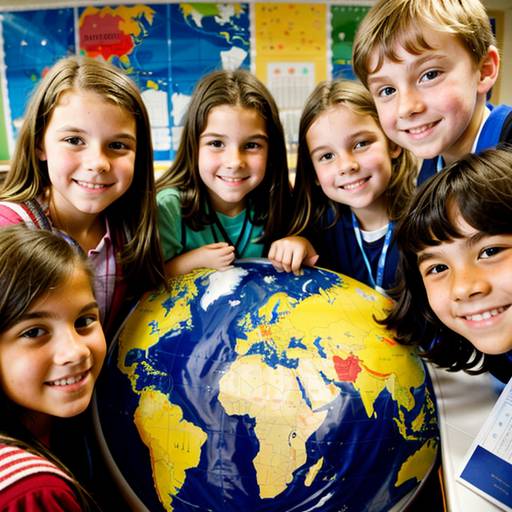
In this engaging 5th-grade social studies lesson, students explore world geography and cultures through collaborative research and creative presentations. Over two class periods, students begin by identifying key geographical features and cultural elements related to various countries. They work in small groups, each focusing on a continent and selecting two countries to research using atlases and digital resources.
The first day involves group discussions, information gathering, and planning for presentations, while the second day focuses on presenting their findings to the class. Students highlight geographical locations, cultural aspects, and notable landmarks of their assigned countries. The lesson concludes with a reflection activity where students share new insights gained from their classmates' presentations. Assessment is based on the effectiveness of the group presentations and individual reflections on learning outcomes. The lesson fosters teamwork, research skills, and a deeper appreciation for global cultures. Additionally, extension activities encourage further exploration and interaction with different cultures.

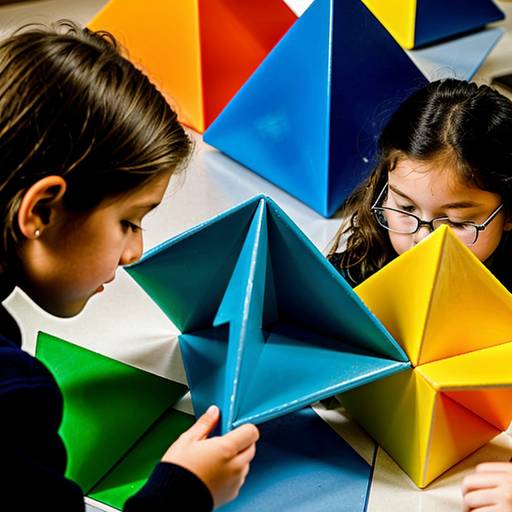
This lesson plan focuses on introducing 5th-grade students to three-dimensional geometric shapes and their properties. The session begins with a discussion about 3D shapes encountered in daily life, using physical models or pictures for visual aid. Students learn to identify different 3D shapes, such as cubes, prisms, and cones, while exploring their characteristics, including faces, edges, and vertices.
In guided practice, students work in small groups to classify shapes based on their properties and share their findings with the class. The hands-on activity allows students to create their own 3D shapes using colored paper, scissors, and glue, reinforcing their understanding of the properties while fostering creativity.
The lesson concludes with a discussion on the presence of 3D shapes in architecture and nature, encouraging students to reflect on their learning. Assessment is based on participation, accuracy in worksheets, and the completed shape project. Follow-up activities may include creating collages of 3D shapes found in their environments and exploring geometry through technology. Overall, the lesson aims to deepen students' understanding of geometry in an engaging and interactive manner.

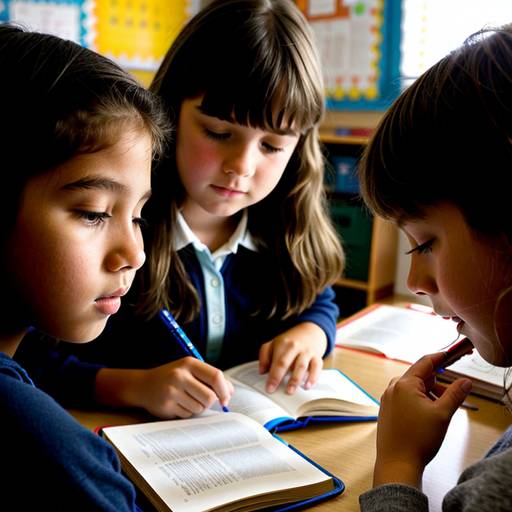
This lesson plan focuses on teaching fifth-grade students effective reading strategies to enhance their comprehension and engagement with texts. The objectives include familiarizing students with four key strategies: predicting, questioning, summarizing, and visualizing. The lesson starts with a discussion on the importance of reading and a modeling session where the teacher demonstrates each strategy using a selected passage.
Following this, students engage in guided practice by forming small groups to read a short story together and create mini-posters summarizing how they applied the strategies. For independent practice, students choose their own chapter book or story to read, applying at least three of the strategies while taking notes. The class concludes with a sharing session, where students reflect on their experiences with the strategies. Assessment is mostly informal through participation, group work, and students’ notes, with a potential exit ticket to gauge individual understanding.
The lesson emphasizes building strong reading habits and the importance of using multiple strategies to become more effective readers.
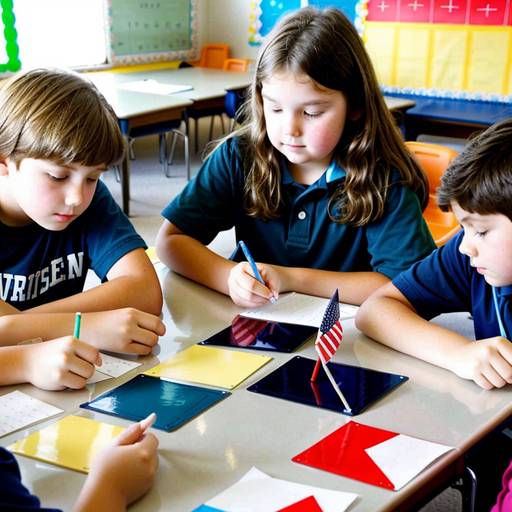
In this 5th-grade math lesson, students will explore the concept of division, focusing on its relationship with multiplication and its application in real-life scenarios. The lesson begins with a discussion about the relevance of division, followed by direct instruction that includes visual demonstrations and examples on the whiteboard. Students will engage in guided practice using worksheets that feature various division problems, allowing them to apply strategies and utilize tools like base-ten blocks for visualization.
After completing the worksheets independently, the class will participate in an interactive game to reinforce their learning in a fun and engaging manner. The teacher will assess understanding through the collected worksheets and students' reflections captured on sticky notes. The lesson provides differentiation to accommodate learners at varying levels, ensuring all students grasp the fundamentals of division. Finally, optional homework is assigned to encourage continued practice and real-world application of division concepts. Overall, the lesson aims to create an interactive and supportive environment for mastering division.
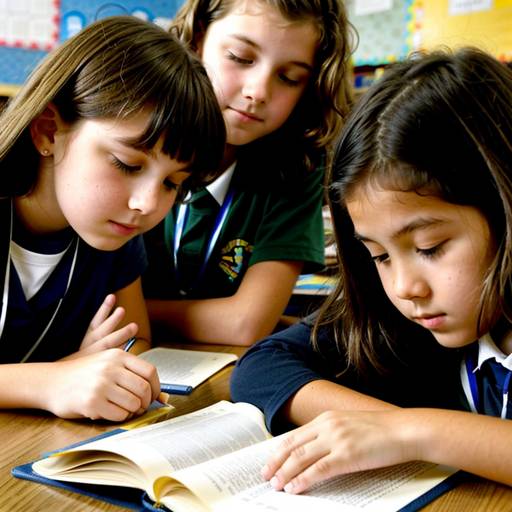
In this 5th-grade Language Arts lesson, students focus on identifying and summarizing the main ideas and supporting details of a text. The lesson begins with a discussion on the importance of understanding the main idea, followed by the introduction of key vocabulary such as "main idea" and "supporting details." Students engage in a guided practice where they work in small groups to analyze a shared passage and fill out a graphic organizer with their findings. Each group then presents their main idea and supporting details to the class. In the independent practice section, students read a different passage on their own and complete their own graphic organizer, utilizing a reading strategy bookmark for support. The lesson concludes with a class sharing activity where students summarize their insights on post-it notes, reinforcing their understanding of the concepts learned. Assessments are based on the graphic organizers, group participation, and the clarity of the post-it note summaries. Extensions and adaptations are provided to cater to varying student needs and abilities.
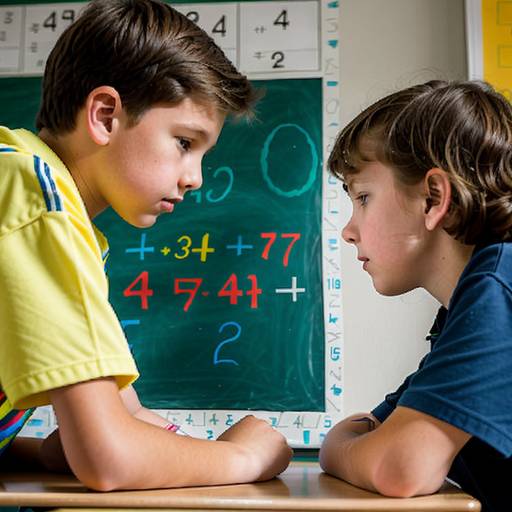
This 5th-grade math lesson focuses on introducing and reinforcing the concept of division through engaging activities. Students will explore division as a method of sharing items evenly, using real-world examples to connect with their experiences. The lesson begins with a brief introduction, where students discuss sharing scenarios and learn division terminology, including dividend, divisor, and quotient.
Guided practice involves using manipulatives to visually demonstrate how division works, followed by small group activities where students tackle specific division scenarios and represent their solutions through illustrations and number sentences. During independent practice, students work on a worksheet with a variety of division problems and real-world applications to solidify their understanding.
The lesson concludes with a review of key vocabulary and concepts, as well as a discussion of student solutions from their independent work. Assessment includes observing student participation, understanding during group activities, and evaluating completed worksheets. Differentiation strategies are provided to support diverse learning needs, with extensions offered through interactive games and exploration of division in everyday contexts. This lesson is designed to create an engaging and thorough understanding of division for 5th-grade students.
In this 5th-grade math lesson focused on division, students will explore the concept of splitting a larger total into equal groups. The lesson begins with a review of multiplication and its relationship to division, followed by an explanation of key division terminology such as dividend, divisor, and quotient. Using counters, students will actively participate in guided practice to visualize and solve division problems collaboratively.
During independent practice, students will complete worksheets containing both direct division questions and word problems, illustrating their thinking through drawings and models. The lesson concludes with a recap of key concepts and real-life applications of division, encouraging students to share their discoveries. Assessment will take place through observation and worksheet reviews, with accommodations provided to support diverse learner needs. Extensions include exploring division with remainders and utilizing technology for further practice. This lesson aims to deepen students' understanding of division while making it relevant and engaging.
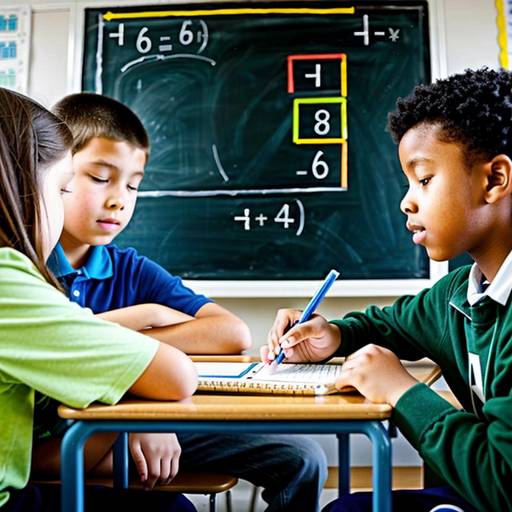
This 5th-grade math lesson focuses on understanding and applying the concept of division through engaging activities. Students will begin by discussing everyday situations where division is applicable, laying a foundation for the topic. The teacher will demonstrate division using visual aids and manipulatives, introducing key terminology such as dividend, divisor, and quotient.
In guided practice, students will work in small groups to solve division problems using manipulatives, encouraging collaboration and discussion. Following this, they will complete worksheets that include both numerical and word problems for independent practice, allowing them to apply what they've learned.
The lesson will conclude with a review of key concepts, where students will share their answers and problem-solving strategies. Moving forward, they will be introduced to real-life scenarios involving division that they will explore in subsequent classes. Assessment will be conducted through observation, worksheet evaluation, and verbal feedback. Extensions and modifications will be provided to cater to diverse learners, ensuring that all students can engage with and understand the material. Homework will involve creating their own word problems to further reinforce the concepts covered.

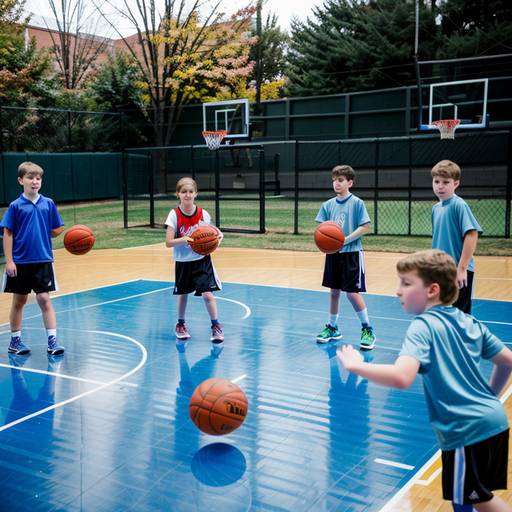
This 5th-grade Physical Education lesson focuses on teaching students fundamental basketball skills, including dribbling, passing, and shooting. The session begins with a dynamic warm-up to prepare students physically while introducing them to basic game concepts and rules. Students participate in skill drills where they practice dribbling using both dominant and non-dominant hands, various passing techniques with a partner, and shooting form using the B.E.E.F. method.
Following the skill development phase, students are divided into small teams for a modified half-court game that emphasizes teamwork and communication, with an emphasis on passing before attempting to shoot. The lesson concludes with a cool-down period involving stretching and group discussion, allowing students to reflect on their skills, teamwork, and sportsmanship throughout the activities. Assessment occurs through observation and student feedback. Adaptations are available for learners of varying skill levels to ensure an inclusive environment where everyone can participate and improve.

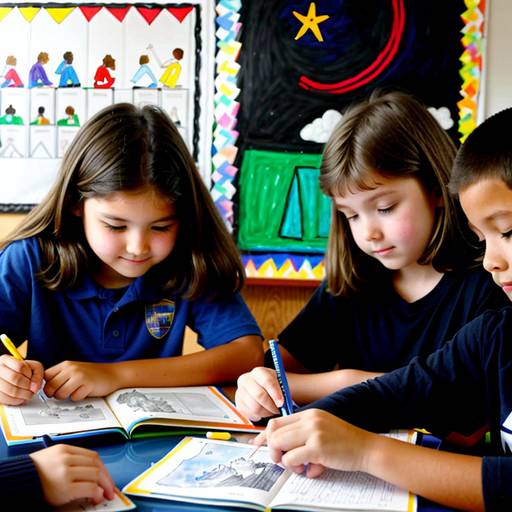
In this 5th-grade art lesson, students will explore the concepts of value and shading to create depth in their drawings. The lesson begins with an introduction to the principles of light and shadow using examples from famous artworks to illustrate how artists achieve dimension. Following this, students will engage in guided practice by drawing simple objects while focusing on the effect of light on form using a value scale. After gaining confidence, they will create their own compositions featuring at least three objects, applying their understanding of shading techniques to enhance depth. The lesson concludes with a gallery walk where students can showcase their artwork, discuss their experiences, and reflect on their learning. Assessment will be based on their application of shading, creativity, and participation. The lesson also includes opportunities for extensions, such as experimenting with colored pencils or drawing from still-life arrangements.