
Filters
Level
Grade
Subject
Subject Area
Subject Topic
Standard(s)
Audience
Keyword
DurationMinutes
5th Grade Lesson Plans

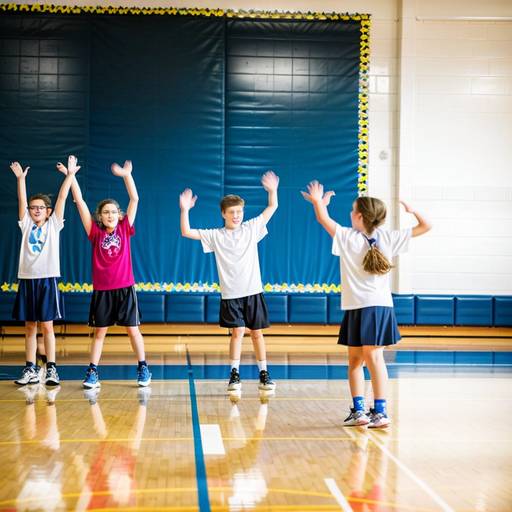
In this 5th-grade physical education lesson, students will focus on improving coordination and balance through a variety of engaging activities. The lesson begins with a brief introduction outlining the importance of these skills in sports and everyday life, followed by a dynamic warm-up to prepare their muscles.
The heart of the lesson consists of five activity stations, each designed to target coordination and balance. Students will practice hula hooping while moving, navigating an obstacle course, and balancing bean bags on their heads. They will also engage in jump rope exercises and relay races that add an element of fun and teamwork.
After the activities, a cool-down session with deep breathing and stretching allows students to relax and reflect on their experiences. The lesson concludes with a group discussion where students share their thoughts on what they learned and enjoyed. Throughout the session, students will receive positive feedback and coaching to help them refine their skills while promoting personal growth. The overall goal is to enhance physical literacy in a supportive and enjoyable environment.
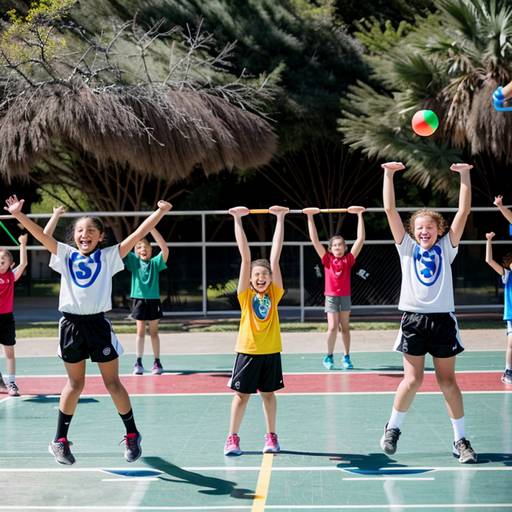
This 5th-grade physical education lesson plan focuses on developing fitness and strength through engaging and diverse activities. The session begins with a warm-up that includes dynamic stretching and a group discussion on the benefits of strength training. Students then rotate through four interactive stations: resistance bands, dumbbells, bodyweight exercises, and an obstacle course, each designed to enhance muscular strength and endurance while promoting teamwork. After completing the stations, students participate in a cool-down session with gentle stretching, followed by a reflection where they share their experiences and learning outcomes. The lesson emphasizes safety, proper form, and the importance of staying active outside of school, while also allowing for modifications to accommodate various fitness levels. Overall, this lesson aims to instill a positive attitude towards fitness in students and encourage lifelong healthy habits.

In this 5th Grade music lesson, students will explore the evolution of music through key historical periods: Baroque, Classical, Romantic, and Contemporary. The class will begin with an introductory discussion on music and its development over time. Students will receive a brief overview of each period, focusing on defining characteristics, notable composers, and their distinct styles.
Following this, students will engage in guided listening activities with audio examples from each period, filling out a listening guide that prompts them to analyze emotions, instrumentation, and connections to other music they know.
In the latter part of the lesson, students will have the opportunity to create their own musical phrase or composition inspired by one of the styles studied, using classroom instruments or composition software. The lesson will conclude with students sharing their compositions and reflecting on the influence of different musical styles.
Assessment will involve participation in discussions, completion of the listening guide, and creativity displayed in the composition activity. The lesson also offers extensions such as creating a timeline of musical periods and researching a composer to present to the class. This engaging lesson blends historical context, critical listening, and creative expression, fostering a deeper appreciation for music's rich history.

This lesson plan is designed for 5th-grade students to enhance their understanding of digital citizenship and online safety. The lesson begins with a discussion about students' online activities, transitioning into a video that covers essential safety concepts. Students then explore the idea of digital footprints and their implications through group discussions, followed by an interactive activity where they analyze different online scenarios to devise safe and responsible solutions. The class concludes with a comprehensive wrap-up that highlights key takeaways and encourages personal reflection on improving online safety practices. Assessment of learning occurs through participation, group work, and individual reflections. An extension activity invites students to create digital posters to share online safety tips with their peers, promoting a safer digital environment for all.
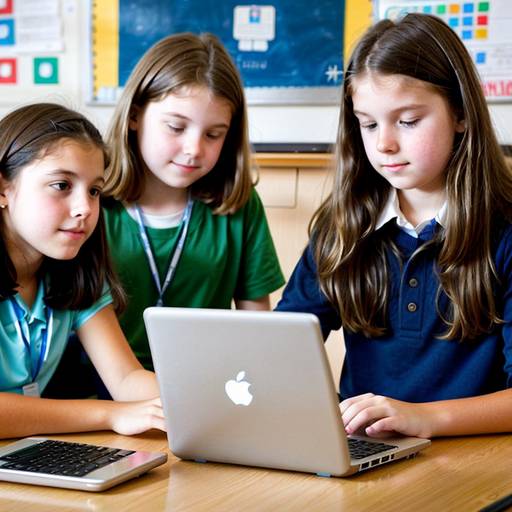
In this 5th-grade technology lesson, students will explore the concept of digital footprints and the importance of safeguarding their privacy online. The lesson begins with a discussion about what a digital footprint is and how it is formed, followed by a short video that illustrates the significance of maintaining privacy in the digital world.
After the video, students will engage in a class discussion about safe versus unsafe information to share online, examining the implications of their online actions. They will then work in pairs to analyze various scenarios that pertain to online sharing, identifying which actions are safe or unsafe.
To conclude, students will create a Personal Online Safety Action Plan outlining strategies to protect their privacy and safe online behaviors. The lesson wraps up with students sharing their action plans with the class, reinforcing the importance of responsible digital citizenship and making informed choices while interacting online. Throughout the lesson, students will gain valuable insights into their digital presence and the impact of their online actions, fostering a sense of responsibility as they navigate the internet.
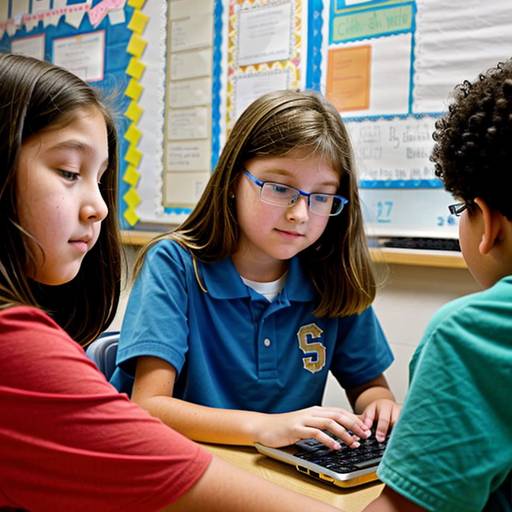
This 5th-grade technology lesson focuses on helping students understand digital citizenship and the issue of cyberbullying. The lesson begins with a group discussion to define digital citizenship and its significance in today’s online environment, followed by an introduction to cyberbullying, including its various forms and impacts on individuals.
Students will watch a short video illustrating cyberbullying and participate in small group activities where they role-play scenarios related to the topic. This exercise encourages them to depict both the bullying incident and a respectful response, promoting positive online behavior.
The lesson concludes with individual reflections in which students express how they can exemplify good digital citizenship and combat cyberbullying. Students will also create awareness posters to reinforce the lesson's concepts in the classroom. By the end of the session, students will have gained valuable insights into responsible online behavior and strategies for addressing cyberbullying.

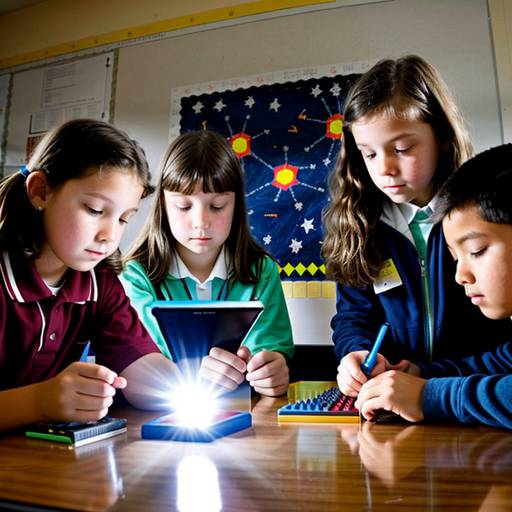
In this 5th grade physical science lesson, students will explore various forms of energy, including kinetic, potential, thermal, and electrical energy, while understanding the concept of energy transformation. The lesson begins with a discussion on the importance of energy in daily life, followed by an overview of different energy types.
Students will engage in hands-on experiments that allow them to witness energy transformation. First, they will use balloons and ramps to observe how potential energy converts to kinetic energy. Then, they will create a simple electrical circuit with light bulbs to explore how electrical energy can be transformed into thermal and light energy.
Following the experiments, the class will engage in a group discussion, sharing their observations and summarizing key points about energy transformation. Students will also be tasked with identifying examples of energy transformation in their own lives for further reflection in their science journals.
Assessment will involve observation of student participation in discussions and experiments, along with reviewing worksheets and homework assignments to gauge understanding. Extension activities will encourage creativity and exploration in energy applications. The lesson concludes with a reflection on student engagement and understanding to inform future instruction.
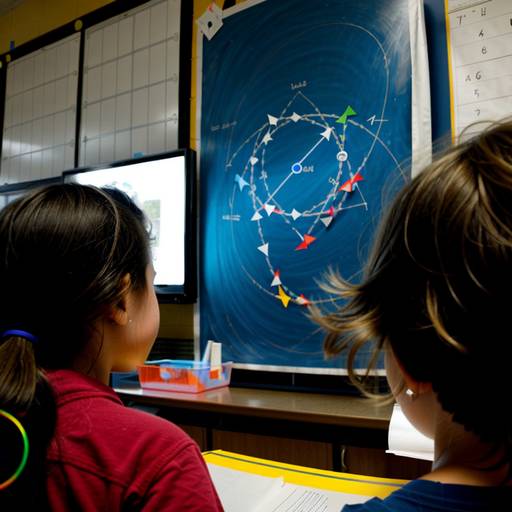
In this 5th grade science lesson, students will explore the concepts of energy, force, and motion. They will learn about potential and kinetic energy through discussions and demonstrations, reinforcing how energy is transformed and transferred. Students will work in small groups to conduct a hands-on experiment involving ramps and toy cars. They will measure the height of the ramp, launch the toy cars using rubber bands, and record data on the distance traveled and time taken. This activity encourages collaboration and critical thinking as students analyze their findings and discuss the relationships between height, energy, and speed. The lesson wraps up with a review of the data and concepts learned, alongside an assessment that includes worksheets and an exit ticket to gauge individual understanding. Extensions and additional resources are provided to reinforce learning for all students.

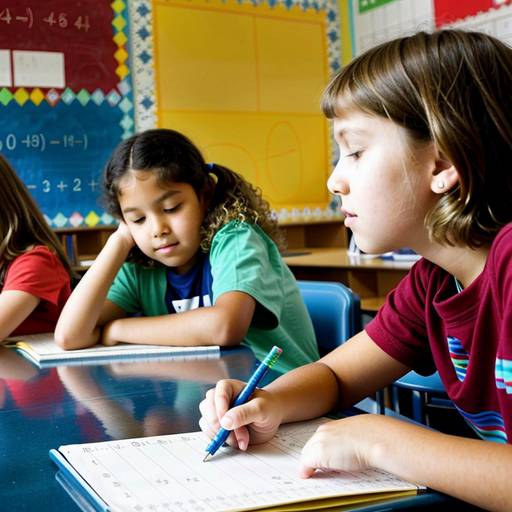
In this 5th-grade math lesson, students will learn how to read and interpret time on both analog and digital clocks. They will explore time intervals and identify patterns within daily schedules and activities. The lesson begins with a discussion on the importance of time, followed by direct instruction on reading clocks and understanding time intervals. Through guided practice, students will work in pairs to complete worksheets and participate in a timed classroom activity. Independent practice includes a worksheet focusing on time patterns and word problems involving addition and subtraction of time. The lesson concludes with a review to reinforce the concepts learned and an exit ticket that asks students to reflect on the significance of understanding time. Differentiation strategies are included to support learners at various skill levels. Assessments will focus on the accuracy of the worksheets and students' responses in the exit ticket.
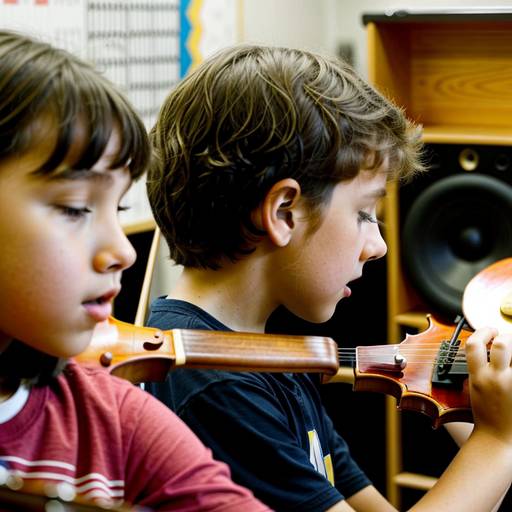
In this engaging 5th-grade music lesson, students will explore the concept of music dynamics, focusing on terminology such as *piano* (soft), *forte* (loud), *mezzo piano* (moderately soft), *mezzo forte* (moderately loud), *crescendo*, and *decrescendo*. The lesson begins with an introduction to dynamics, featuring audio examples to illustrate each term. Students will then be divided into groups, where they will create and perform short musical pieces that highlight their assigned dynamic term, fostering teamwork and creativity. Following the performances, a dynamic movement activity will allow students to embody the different dynamics through physical movement in response to music. The lesson concludes with a discussion that encourages reflection on the emotional impact of dynamics in music. Students will receive handouts summarizing key terms, and homework will involve listening to a favorite song to identify dynamics, reinforcing their learning experience. Assessment will focus on group performances, participation, and understanding of the concepts shared during the lesson.