
Filters
Level
Grade
Subject
Subject Area
Subject Topic
Standard(s)
Audience
Keyword
DurationMinutes
4th Grade Social Studies Lesson Plans

In this engaging 4th-grade social studies lesson, students will explore the lives and contributions of significant historical figures in American history. The lesson begins with a discussion to activate prior knowledge and introduce key concepts related to influential individuals who have shaped society. Students will then participate in a collaborative group activity where they will research specific historical figures using prepared biography cards. Each group will prepare a brief presentation detailing their figure's contributions and significance. The class will come together for presentations, fostering discussion and inquiry among students. Finally, a reflection session will encourage students to think critically about the impact of these figures and their relevance to contemporary society. Assessment will focus on group participation and the quality of presentations, with opportunities for deeper exploration through extension activities. Overall, this lesson aims to inspire students to appreciate the contributions of historical figures and recognize their influence on the world.
In this 4th-grade social studies lesson, students explore the importance of geography by learning about various countries and their cultural aspects. The lesson begins with an introduction to key geographic terms, followed by direct instruction on identifying continents, countries, and capital cities on a world map. Each student or small group is then assigned a specific country to research, helping them locate it on a blank outline map while illustrating cultural elements such as traditional food or landmarks.
Students create mini-posters that include essential information about their countries, allowing for creativity and personal expression. The lesson concludes with a sharing session where students present their posters, fostering a sense of community and appreciation for global diversity. Informal assessments occur throughout the lesson, with opportunities for further exploration through extension activities such as a cultural fair or pen-pal program. Adaptations are made to support diverse learners and challenge advanced students. Overall, the lesson aims to ignite curiosity about the world and its rich variety of cultures.
In this 4th-grade social studies lesson, students will explore the concept of timelines and their significance in understanding historical events. The lesson begins with an engaging introduction where students discuss important events from history and learn the basic structure and purpose of a timeline. After a demonstration of how to create a timeline, students will work in small groups using pre-printed event cards to arrange significant historical milestones in chronological order on blank timelines they will illustrate creatively.
Each group will then present their timelines to the class, discussing the events and their importance, which encourages collaboration and enhances public speaking skills. The lesson concludes with a reflection on the value of timelines in connecting events to help understand cause and effect in history. For homework, students will create a personal timeline highlighting important milestones in their own lives. Assessment will be based on group participation, the accuracy and creativity of the timelines created, and the completion of the personal timeline assignment. Extensions will be offered to enhance learning outcomes and provide opportunities for further research and digital engagement.
In this 4th-grade social studies lesson, students will explore the purpose and types of maps, gaining an understanding of key features such as legends, scales, and compass roses. The lesson begins with a discussion about maps and their uses, followed by an introduction to various types of maps, including political, physical, and thematic maps. Students will then learn about important components of maps through examples.
The heart of the lesson involves a hands-on mapping activity, where students will create their own maps of familiar places, incorporating at least three landmarks, a compass rose, and a simple legend. They will have the opportunity to share their creations with peers, fostering both creativity and collaboration. The lesson concludes with a reflection on the significance of maps in understanding geography. Assessment will be based on participation, the accuracy of maps, and the inclusion of required features. Optional extensions and adaptations are provided to enhance learning for all students.
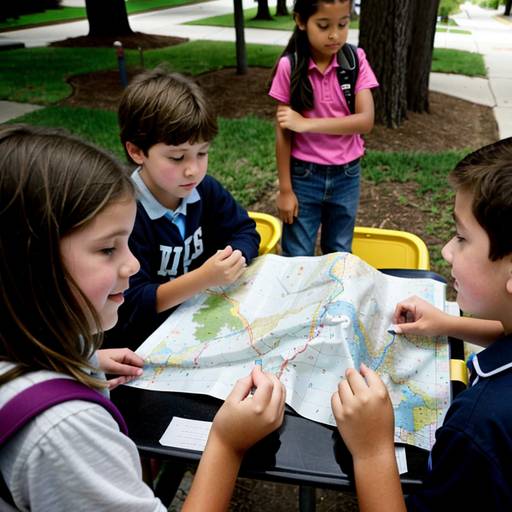
In this 4th-grade social studies lesson, students will explore key geographic concepts while learning about maps and their significance in understanding their neighborhoods. The lesson begins with an engaging discussion on students' experiences with maps, introducing essential terms such as scale, symbols, and cardinal directions. Following this, the teacher demonstrates how to create a basic neighborhood map, highlighting the use of a compass rose, legend, and simple symbols to represent various features.
Students will then participate in a guided activity where they create their own maps, either of imaginary or real neighborhoods, incorporating the elements discussed. They will share their maps with a partner for feedback, encouraging collaboration and communication. The lesson concludes with a class sharing session, where selected students present their maps and reflect on the diverse features included.
Assessment will focus on student participation, the creativity of their maps, and the accuracy of map elements. Extension activities, such as a neighborhood walk or introducing digital mapping tools, will further enrich the learning experience. Adaptations will be provided to support varying student needs, ensuring all learners can engage with the content effectively.
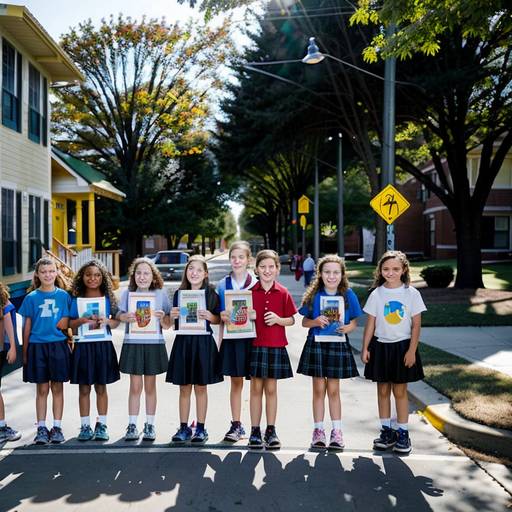
This 4th-grade social studies lesson focuses on the concepts of community and the importance of rules for maintaining a safe and functioning environment. Students will first engage in discussions to define what a community is and brainstorm its key elements. Working in small groups, they will create visual representations of their community, highlighting important locations and features.
The lesson will then transition to exploring community rules, where students will identify and discuss common rules, their purposes, and the potential consequences of not having them. Each student will select a rule they consider important and find images to represent it, compiling their work on a handout.
In the closure of the lesson, students will share their selected rules and contribute to a collaborative poster titled "Our Community Rules," which will be displayed in the classroom. This interactive approach culminates in students understanding how community rules contribute to a thriving and respectful society. The lesson emphasizes participation, creativity, and critical thinking while providing opportunities for discussion and visual learning.
In this 4th-grade Social Studies lesson, students will explore the concepts of community and diversity by investigating the unique cultural, ethnic, and social backgrounds present in their neighborhood. The lesson begins with a class discussion to identify what makes their community special and introduces key terms related to diversity. Students will then work in small groups to research specific aspects of diversity in their area, such as various cultures, languages, and local celebrations.
Following their research, each group will create a visual "Diversity Map" that illustrates their findings, allowing them to creatively express the contributions of different individuals and groups. After completing their maps, students will present their work to the class, fostering a sense of pride and awareness regarding their community's richness.
The lesson concludes with a reflective writing exercise, where students articulate how diversity strengthens their community. Assessment will include participation in discussions and presentations, creativity in their maps, and reflective writing. Extensions might involve inviting community members to share their stories or organizing a “Community Fair” to celebrate and learn more about different cultures. Overall, the lesson aims to instill appreciation for diversity and promote an inclusive community environment.

This 4th-grade social studies lesson focuses on understanding timelines and their significance in organizing historical events. Students will learn about key moments in American history, such as the signing of the Declaration of Independence and the Civil Rights Movement. Through a collaborative activity, they will create a class timeline, placing events in chronological order. Afterward, each student will design their own individual timeline, showcasing at least five significant historical events learned during the lesson. The objectives include enhancing students’ comprehension of time, continuity, and change, while encouraging creativity and critical thinking. The lesson will conclude with a reflection on the importance of timelines in helping to understand the past and make connections to the future. Assessment will be based on participation and the accuracy and creativity of the students' timelines. Extensions and differentiation strategies are included to cater to various learning needs.

This 4th-grade social studies lesson focuses on understanding communities and the significance of rules within them. The lesson begins with a class discussion to establish a shared definition of "community" and explore its various forms. Students engage in a dialogue about the importance of rules, examining how they contribute to safety and well-being.
In small groups, students brainstorm essential rules for their community, sharing their ideas with the class. Following this discussion, they create a community poster that illustrates three important rules, allowing for creativity and individual expression. The lesson concludes with students presenting their posters and reflecting on their commitments to following rules within their community. Assessment includes participation in discussions, evaluation of the posters, and an exit ticket where students identify a personal rule to uphold.
The lesson can be extended through field trips or guest speakers, and adaptations are included to support diverse learning needs. This approach fosters student engagement and deepens their understanding of community dynamics and responsibilities.
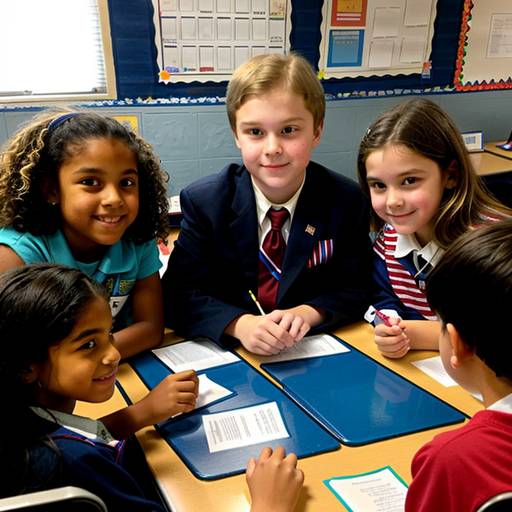
In this 4th grade social studies lesson, students will explore the lives and contributions of influential figures in American history. The lesson begins with an engaging discussion to spark interest and elicit ideas about important historical personalities. Students will then be divided into small groups, each assigned a specific historical figure to research using provided biographical cards and additional resources. After a brief discussion within their groups, students will present their findings to the class, highlighting key facts, achievements, and the significance of their figure.
Following the presentations, students will participate in a creative activity where they create posters showcasing their assigned historical figure, including drawings and important information. A gallery walk will allow students to view and provide feedback on each other's work. The lesson concludes with a class discussion reflecting on common traits of the figures studied and how their lessons can be applicable today, followed by individual reflection through a worksheet. Assessment will be based on participation, the quality of the posters, and the completed reflection. Extensions and modifications are included to cater to different student needs, ensuring an inclusive and engaging learning experience.