
Filters
Level
Grade
Subject
Subject Area
Subject Topic
Standard(s)
Audience
Keyword
DurationMinutes
4th Grade Social Studies Lesson Plans


In this fourth-grade social studies lesson plan, students will explore various landforms, including mountains, valleys, plains, plateaus, and hills, and their impact on human activities and the environment. The lesson begins with a discussion that prompts students to share their observations of landscapes, followed by an informative presentation on each type of landform. Students will work in small groups to create models of selected landforms using clay or playdough, encouraging creativity and teamwork. Each group will then present their models to the class, explaining the characteristics of their chosen landforms and discussing how these features influence human life. Assessment will focus on group participation, model creativity, and the quality of presentations. An optional extension activity involves researching a travel destination with significant landforms for further exploration. Overall, the lesson aims to engage students in understanding geography through hands-on activities and collaborative learning.
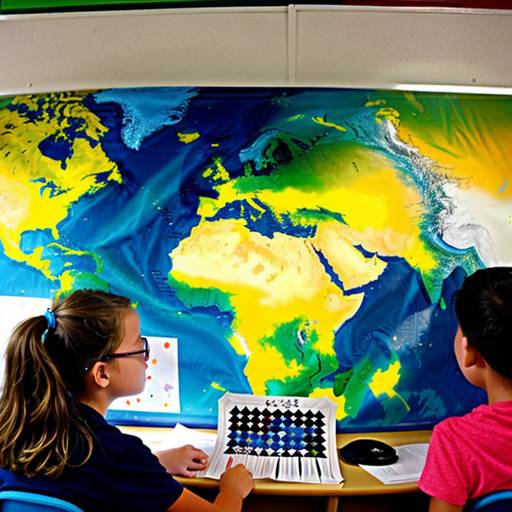
This 4th-grade social studies lesson focuses on exploring geography and landforms. Students will begin by watching a video showcasing various landforms, followed by a discussion about their characteristics and significance. They will learn about different types of landforms, including mountains, hills, plains, valleys, plateaus, and deserts, along with the processes that form them.
In small groups, students will create models of assigned landforms using modeling clay or playdough, promoting teamwork and creativity while reinforcing their understanding. Each group will then present their model to the class, explaining its features and importance. Students will also label and illustrate a blank map of their locality with the landforms they learned about.
The lesson wraps up with a review of what students have discovered and emphasizes the importance of understanding landforms in the context of their own environment. Assessment will include observational notes during group activities and an evaluation of the maps created by students. Extensions may involve further independent research on specific landforms and their cultural impact. This engaging lesson blends visual, tactile, and collaborative activities to enhance students' understanding of geography.
In this 4th-grade social studies lesson, students explore geography and different countries, aiming to understand cultural diversity and the importance of geography. The lesson spans two class periods. In the first session, students learn about the continents and oceans, and then work in small groups to select a country for research. They gather information about the country's population, capital, language, landmarks, and cultural aspects using various resources.
In the second session, groups create informative posters based on their findings. They present these posters to the class, fostering engagement through questions and discussion. The lesson culminates in a wrap-up discussion that reinforces the concepts learned and highlights cultural appreciation. Assessment focuses on group participation, the accuracy of information, creativity, and engagement during presentations. Optional extension activities include creating a class geography book and considering pen pal exchanges to connect with students globally.
In this 4th grade social studies lesson, students will explore the key events and figures of the American Revolution. The class begins with a short video to capture students' interest, followed by a discussion to gauge prior knowledge. The teacher will then provide a focused overview of significant events, such as the Boston Tea Party and the signing of the Declaration of Independence, alongside key individuals like George Washington and Thomas Jefferson.
Students will work in small groups to create visual timelines of the events, which they will present to the class, fostering collaboration and presentation skills. To wrap up, students will complete a reflection worksheet, articulating their understanding of one key event and figure from the revolution. Assessment will include participation, presentation evaluation, and completed worksheets. Extensions and adaptations are included to enhance learning and accommodate diverse needs, making the lesson both engaging and educational.
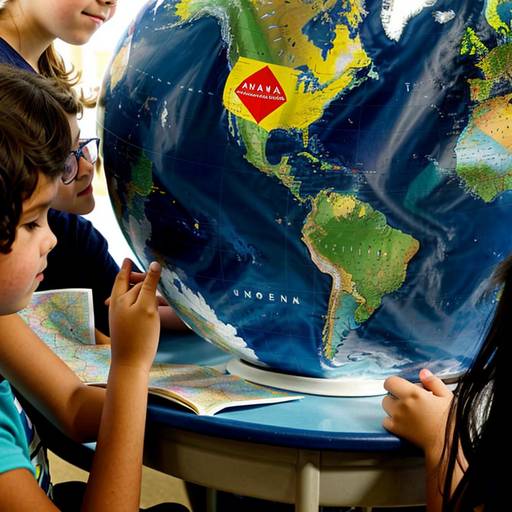
This lesson plan focuses on introducing 4th-grade students to the concepts of geography and maps. The objective is for students to understand key elements of maps, including titles, scales, legends, and compass roses. The lesson begins with an engaging discussion that prompts students to think about the importance of maps.
Direct instruction involves explaining essential map features using a projector to display examples. Guided practice includes completing worksheets that reinforce knowledge of map elements through various exercises, followed by group discussions to promote collaboration.
Students then move into a hands-on activity where they create their own maps of a favorite location, incorporating essential elements learned earlier. This creative component encourages students to use their imagination and apply their understanding of mapping. The lesson concludes with a recap of key concepts and prompts students to consider the role of maps in their daily lives.
Assessment focuses on evaluating students' understanding through completed worksheets and their personalized maps. The lesson also includes extensions and adaptations to meet diverse learners' needs, fostering both creativity and collaboration among peers.
This fourth-grade social studies lesson focuses on exploring the various roles within a community and understanding their significance. Students will engage in a class discussion to identify different community occupations and their responsibilities. They will work in small groups to create a visual representation of their community, incorporating specific roles and illustrating how each contributes to the overall functioning of the community. Each group will present their project to the class, fostering collaboration, critical thinking, and public speaking skills. The lesson culminates with a reflection activity where students write about a community role they find intriguing. Assessment will be based on participation during discussions and the quality of group presentations. Extensions may include field trips or guest speakers to enhance learning further, while accommodations will be provided to support diverse learners.
In this 4th-grade social studies lesson, students will explore the significance of historical figures who have made notable contributions to society. The lesson begins with an engaging story or video about an influential figure, followed by a discussion to help students recognize the qualities that make certain individuals historical heroes.
Students will then work in small groups to research assigned historical figures from a provided list, focusing on their early lives, major accomplishments, and lasting impact. Each group will create a poster to visually showcase their findings and prepare a brief presentation to share with the class.
As presentations occur, students will actively engage by asking questions to deepen their understanding. The lesson concludes with a class recap highlighting the importance of learning about history and its figures, along with an exit ticket activity where each student notes something they learned and a question they still have.
Assessment will be based on the creativity and accuracy of the posters and presentations, while students will have the opportunity for extension through a classroom "Wall of Fame" that allows for further exploration of additional historical figures. Overall, the lesson aims to foster collaboration, critical thinking, and an appreciation for the impact of historical figures on our world.
In this 4th-grade social studies lesson, students will explore various types of landforms, including mountains, valleys, plains, plateaus, hills, and deserts. They will begin by reviewing vocabulary related to these landforms and discussing their characteristics and significance in the context of geography and human activities.
Through partner work, students will choose a landform to research and present interesting facts. The main activity involves creating a detailed map on chart paper that illustrates at least three different landforms, accompanied by descriptions. Additionally, students will have the option to create a collage showcasing images of various landforms, complete with labels.
The lesson includes a gallery walk to encourage peer feedback and sharing of insights. To conclude, students will reflect on the importance of landforms for the Earth and its inhabitants. Assessments will focus on participation, the creativity and accuracy of the maps and collages, and the depth of reflection. The lesson is designed to support various learning styles and align with geographical standards.
This lesson plan for 4th-grade students in social studies focuses on geography and countries, spanning two class periods. The objectives include identifying major countries on each continent, understanding significant geographical features, and appreciating cultural diversity.
The first class begins with a warm-up discussion and a presentation about the continents and selected countries. Students work in groups to create posters that showcase countries, geographical features, and cultural facts related to their assigned continent. The second class includes group presentations where students share their research, followed by an interactive mapping activity where they label countries and features on a blank world map.
The lesson concludes with a reflection discussion and a short homework assignment where students express their personal connections to what they learned. Assessment includes evaluating group projects, individual maps, and reflection papers. Differentiation strategies are provided for varying student needs, and follow-up activities such as a "Cultural Day" are suggested to deepen engagement with the material. Overall, this lesson promotes collaboration, creativity, and a greater understanding of global geography and cultures.
In this 4th-grade social studies lesson, students will explore significant historical events in their local community to understand the impact of these events on their present lives. The lesson begins with a discussion to activate prior knowledge about history and its importance. Students will then learn about key local events through visual aids, followed by small group research on assigned topics. Each group will present their findings to the class. For an independent activity, students will create a timeline highlighting three important local events, complete with illustrations and descriptions. The lesson concludes with student presentations and a reflection on how local history connects to broader historical narratives. Assessment will include observing participation, evaluating the timelines, and collecting exit tickets for further insight into student learning. Extensions such as field trips and guest speakers will provide additional engagement with local history.