
Filters
Level
Grade
Subject
Subject Area
Subject Topic
Standard(s)
Audience
Keyword
DurationMinutes
4th Grade Math Lesson Plans


In this 4th-grade mathematics lesson, students will explore the concept of volume through direct instruction, hands-on activities, and collaborative work. The lesson begins with a discussion to define volume, followed by an introduction to measuring rectangular prisms using the formula Volume = length x width x height. Students will engage in guided practice by measuring various containers, calculating their volumes, and then reinforcing their learning through a practical activity where they use water or sand to fill those containers.
Throughout the lesson, students will work in small groups, encouraging teamwork and communication as they compare their calculated volumes with the amounts required to fill their containers. The lesson concludes with a discussion on their findings and a review of key concepts, ensuring that students reflect on their learning process. Worksheets will be provided for additional practice and assessment of their understanding of volume measurement. Extension activities will also be available for students to delve deeper into the topic, including exploring non-standard units of measurement. Overall, this lesson aims to enhance students' understanding of volume through both theoretical and practical applications.
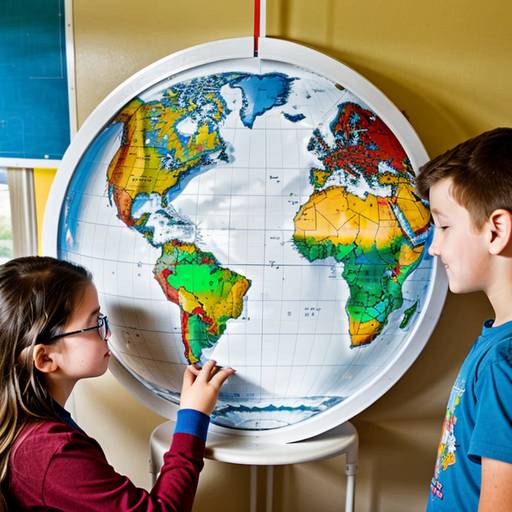
In this 4th-grade mathematics lesson, students will explore the concept of perimeter by learning how to measure the sides of various geometric shapes and calculate their perimeter using appropriate formulas. The lesson begins with an engaging introduction where students discuss their prior knowledge of perimeter. It continues with direct instruction on how to calculate the perimeter of rectangles and squares, followed by guided practice with worksheets that allow students to apply their understanding in pairs.
Students will then participate in a hands-on activity in small groups, creating their own shapes using string and measuring the sides to determine the perimeter. The lesson concludes with a review of key concepts and encourages students to think about real-life applications of perimeter. Assessment will be conducted through the collection of worksheets and observations during group presentations, ensuring that students grasp the importance of measurement and perimeter in both mathematical contexts and everyday situations. Extensions for advanced learners will be provided to deepen their understanding of perimeter in more complex shapes.
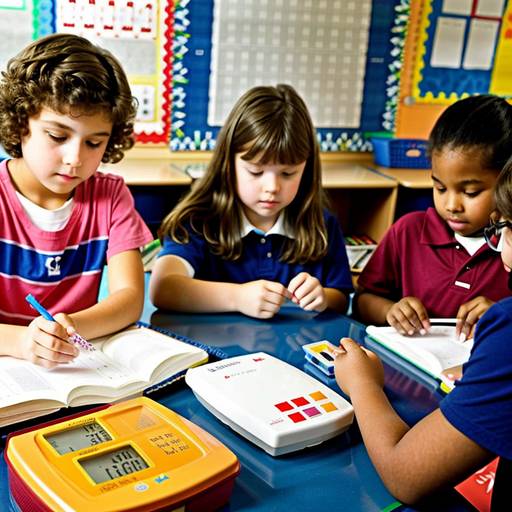
In this 4th-grade math lesson, students will explore the concepts of weight and measurement through engaging activities. The lesson begins with an introduction to the importance of measurement in everyday life and a discussion of weight, distinguishing between weight and mass. Students will learn to use digital and mechanical scales to weigh various objects and understand standard units of weight, specifically grams and kilograms. Guided practice involves small groups weighing selected objects and recording their weights, followed by converting between grams and kilograms.
For independent practice, students will complete a worksheet that includes comparison questions and conversion exercises. Closure involves a group discussion reflecting on the findings from the activities. Assessment will be based on observation during group tasks and review of completed worksheets. Extension activities, such as a scavenger hunt or a cooking project, further reinforce the skills learned. Accommodations will be provided to ensure all students can engage effectively in the lesson, culminating in a reflective evaluation of student performance for future improvements.
In this engaging math lesson for 4th graders, students will learn the fundamentals of money management, focusing on identifying the values of different coins and bills and understanding basic budgeting concepts. The lesson begins with a discussion about money and its role in daily life, followed by hands-on activities that allow students to practice recognizing and using play money.
Next, students will explore common expenses and the components of a budget, collaboratively creating a sample budget for a class project. They will then complete a worksheet where they allocate a hypothetical amount of money to various wants and needs, fostering practical budgeting skills.
In pairs, students will discuss their budgeting choices and share their decisions with the class, reinforcing the lesson’s concepts. The class will conclude with reflections on the importance of managing money and making informed spending choices, alongside considerations for future lessons that could deepen their understanding of financial literacy.
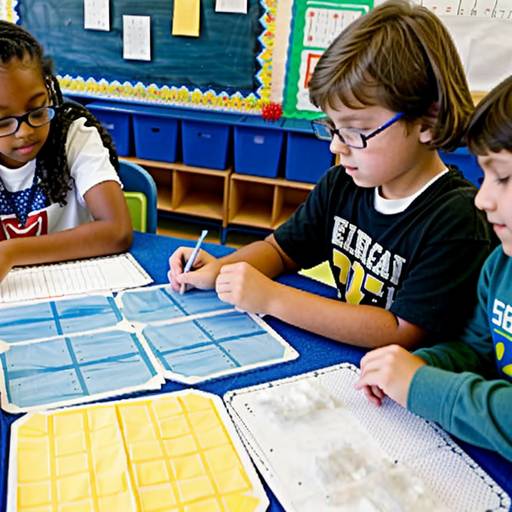
In this 4th-grade math lesson, students will explore the fundamental properties of multiplication, including the commutative, associative, and distributive properties. The lesson begins with an engaging warm-up activity involving multiplication flashcards to activate prior knowledge. Students will learn about each property through direct instruction, with practical examples demonstrating how these properties can simplify calculations.
Following this, students will work in pairs on guided practice problems that require them to apply the properties of multiplication. This collaborative approach encourages discussion and helps reinforce their understanding. Independent practice will then involve worksheets with a variety of multiplication problems and word problems, allowing students to demonstrate their fluency and application of the concepts.
To wrap up the lesson, students will review the key concepts and express their understanding through an exit ticket activity. Assessment will be based on observation during group work, the accuracy of completed worksheets, and the insights gathered from exit tickets. Extensions and modifications will be available to accommodate all learners, ensuring that both advanced and struggling students receive appropriate challenges and support. Reflection following the lesson will help identify effective strategies and areas for improvement in future instruction.
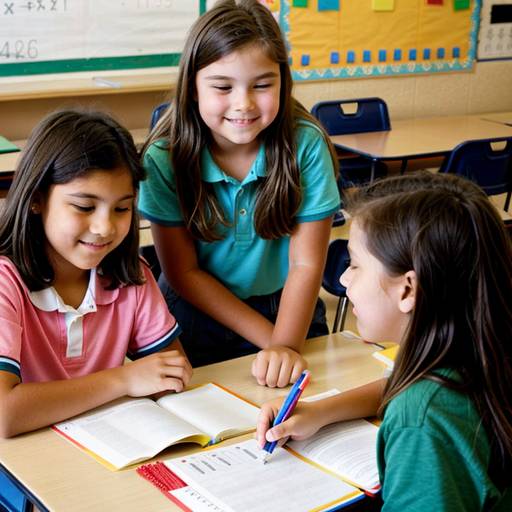
In this 4th-grade math lesson, students will explore the concepts of multiplication and factors through engaging activities and discussions. The lesson begins with a warm-up flashcard game to review multiplication facts and introduces the concept of factors as numbers that multiply together to form a product.
Direct instruction will include teaching multiplication tables and demonstrating how to find factors using factor trees. Students will practice creating factor trees in pairs for specified numbers and use manipulatives to visualize multiplication through arrays.
Following guided practice, students will complete an independent worksheet focused on identifying factors and solving multiplication problems. The lesson concludes with a reflection on key concepts and an exit ticket activity, where each student writes an example of a multiplication fact along with its factors.
To accommodate diverse learning needs, the lesson includes strategies for differentiation, providing support for struggling learners and challenges for advanced students. The understanding of multiplication and factors will serve as a foundation for subsequent lessons on division and their interrelationships.
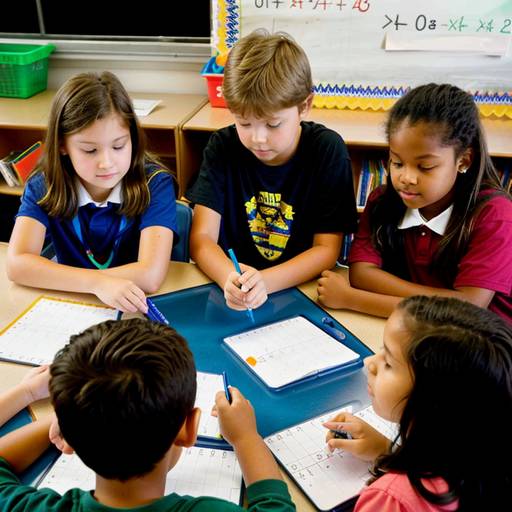
This 4th-grade math lesson focuses on introducing students to the Commutative, Associative, and Identity Properties of Multiplication. The lesson aims to enhance students' understanding and application of these properties through a variety of engaging activities.
Beginning with a discussion about real-life applications of multiplication, the teacher introduces each property with clear definitions and examples. Students then participate in a guided group activity where they explore these properties by rearranging and simplifying multiplication problems using flashcards.
Following this, they work independently on a worksheet that includes various multiplication exercises, word problems, and opportunities to apply the properties they've learned. The lesson concludes with a review, where students share insights and summarize what they learned, reinforced by an exit ticket to assess individual understanding.
This approach not only reinforces multiplication skills but also encourages critical thinking and collaboration among classmates. Extensions and support are provided to cater to diverse student needs, ensuring everyone has the opportunity to grasp the concepts effectively.
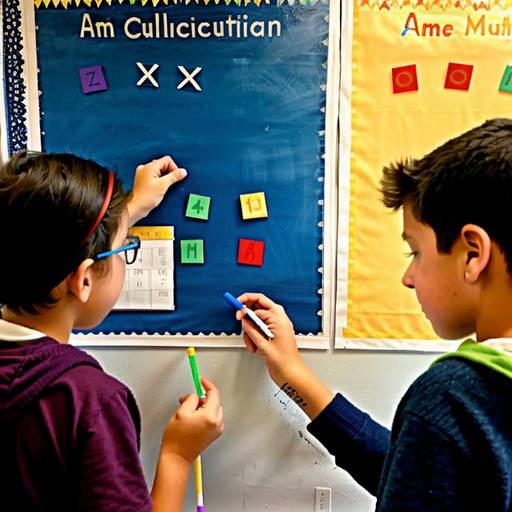
This 4th-grade math lesson focuses on helping students understand and apply the properties of multiplication, specifically the commutative, associative, and distributive properties. It begins with a class discussion about multiplication, followed by guided practice where students explore each property using manipulatives and examples. In small groups, students create posters to illustrate one property each, promoting creativity and collaboration. After group presentations, students work independently on a worksheet that reinforces the concepts learned, and teachers assess understanding through observation and review of completed assignments. The lesson concludes with a quick review and a homework assignment that encourages further practice. Differentiation strategies are included to support various learning needs, and extension activities offer opportunities for deeper exploration of multiplication in real-world contexts. Overall, the lesson aims to build confidence and proficiency in multiplication through engaging and interactive methods.
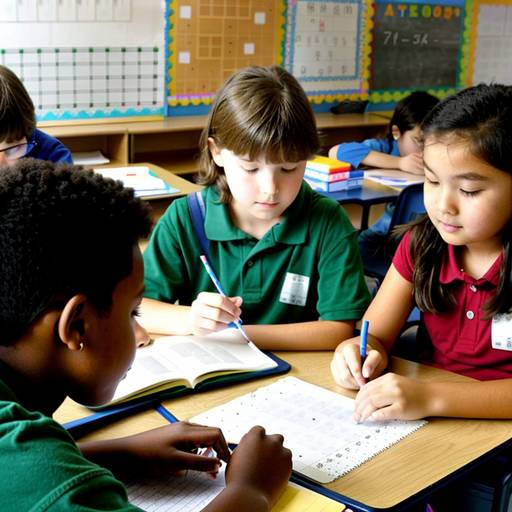
In this 4th-grade math lesson plan, students will develop their understanding of multiplication through interactive activities focused on times tables. The lesson begins with a brief review of multiplication as repeated addition, followed by an exploration of the times tables from 1 to 12, highlighting patterns and relationships among numbers.
Students will engage in guided group work using flashcards to practice multiplication problems collaboratively. The main activity introduces a fun Bingo game, where students will match multiplication problems to their products on their Bingo cards, reinforcing their knowledge in an exciting way.
The lesson concludes with a discussion to reinforce their learning and a take-home worksheet for additional practice. Throughout the lesson, differentiation strategies will be employed to support various learning needs, ensuring all students can engage with the material effectively. Assessment will include review of completed worksheets and observation of participation during activities.
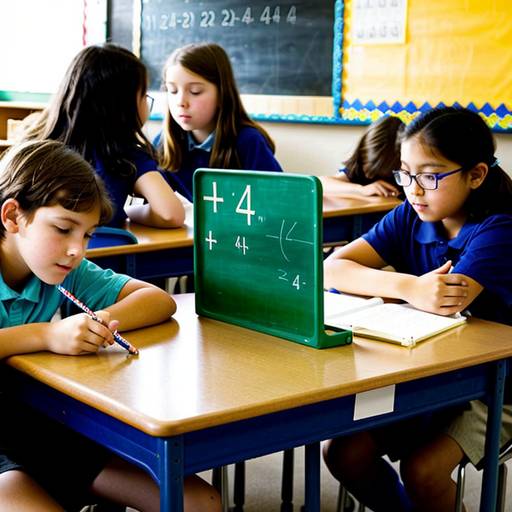
This lesson plan is designed for 4th-grade students to enhance their understanding of multiplication and times tables. The objectives focus on helping students grasp multiplication as repeated addition, learn and recite multiplication facts for numbers 1 through 12, and demonstrate their mastery through engaging activities.
The lesson begins with an interactive introduction featuring a chant or song about multiplication, followed by a discussion that illustrates the concept using real-life examples. Direct instruction involves demonstrating a multiplication table and explaining how it works through visual aids like array models.
Students then engage in guided practice by using multiplication charts and working in pairs with flashcards to quiz each other. For independent practice, they participate in a multiplication bingo game, reinforcing their skills in a fun and interactive way.
To conclude, the lesson involves a brief review where students share their confidence in specific multiplication facts, followed by an exit ticket assessment to evaluate individual understanding. The plan includes provisions for both advanced and struggling learners, ensuring that all students can build their multiplication skills effectively.