
Filters
Level
Grade
Subject
Subject Area
Subject Topic
Standard(s)
Audience
Keyword
DurationMinutes
4th Grade Math Lesson Plans

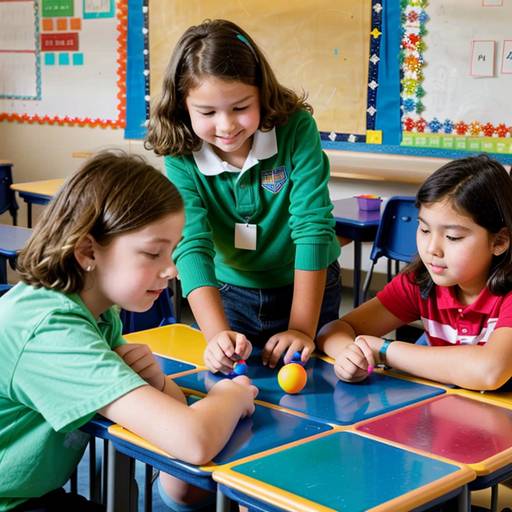
In this 4th-grade math lesson, students will explore multiplication and its key properties, specifically the commutative, associative, and distributive properties. The lesson begins with a review of multiplication concepts, followed by direct instruction where students engage with examples on the whiteboard.
Next, students work in small groups to create posters that illustrate one of the properties, promoting collaboration and creativity while reinforcing their understanding. The class then participates in a fun bingo game, where they solve multiplication problems and match their answers on bingo cards, enhancing engagement through friendly competition.
To solidify their learning, students will complete worksheets independently, applying the properties in various multiplication scenarios. The lesson concludes with a review of the concepts and an exit ticket activity to assess individual understanding. With differentiation strategies in place, the lesson accommodates various learning styles and paces, ensuring all students can grasp the essential principles of multiplication.
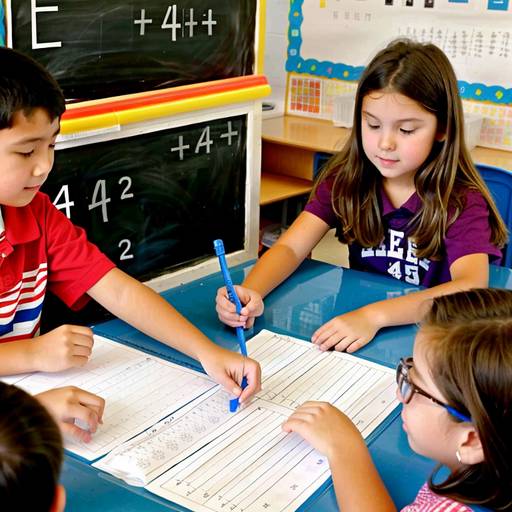
This lesson plan aims to teach 4th-grade students about multiplication and factors through engaging activities and collaborative learning. The lesson begins with an interactive warm-up that reinforces the concept of multiplication as repeated addition, followed by a mini-lesson where students learn to identify factors of numbers using visual aids like factor trees. Guided practice allows students to work in pairs to create their own factor trees for specific numbers, promoting discussion and peer support. Next, students engage in independent practice by designing a multiplication-focused board game that incorporates finding factors, enhancing their understanding through play. The lesson concludes with a class discussion and an exit ticket assessment where students identify factors of a given number. Throughout the lesson, opportunities for extension and support are provided to cater to diverse learning needs. The plan emphasizes observation and reflection to adapt future lessons based on student understanding.
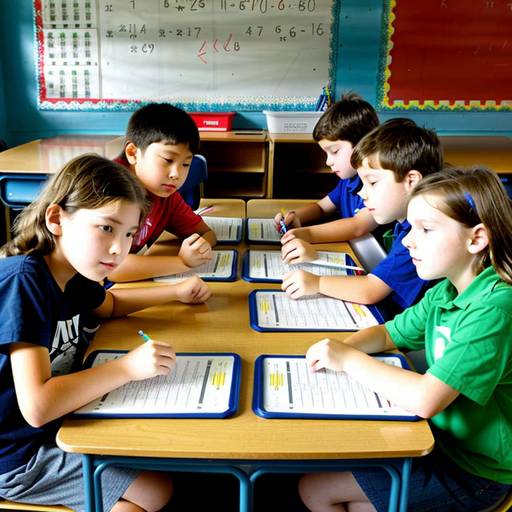
In this 4th-grade math lesson, students will learn about multiplication and times tables through a series of engaging activities aimed at enhancing their understanding and memorization of multiplication facts. The lesson begins with a warm-up that reviews addition, transitioning into an explanation of multiplication as repeated addition. Students will interactively explore the times tables, identifying patterns while practicing multiplication facts.
Following direct instruction, students will participate in timed drills using flashcards and collaborate with peers to check their work. They will then complete a worksheet featuring both multiplication problems and a word problem that requires multiplication for a real-world application.
To reinforce the concepts learned, students will play a fun game of Bingo, where they will match multiplication problems to answers on their cards. The lesson concludes with a review and encourages students to practice at home, with an assignment focused on mastering a specific times table. Overall, this lesson aims to create an engaging and interactive environment, fostering a solid foundation in multiplication for future mathematical concepts.
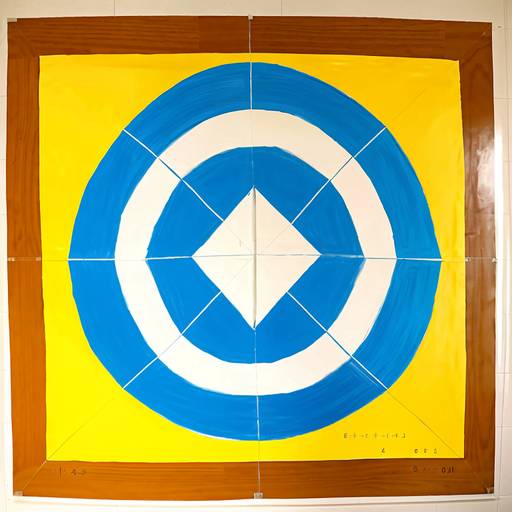
In this 4th grade math lesson, students will explore the concept of perimeter, learning how to measure and calculate the distance around various geometric shapes, such as squares, rectangles, and triangles. The lesson begins with a discussion about measurement, followed by direct instruction on perimeter formulas specific to each shape. Students will engage in guided practice in small groups, using rulers and measuring tapes to accurately measure sides of shape cutouts and calculate their perimeters. Independent practice will involve worksheets with perimeter calculations and real-world application problems. The lesson concludes with a class discussion to reflect on their findings, emphasizing the importance of accurate measurement and real-life applications of perimeter. Assessments will include evaluating group participation and worksheet accuracy, with extensions available for advanced learners. Modifications will also be provided to support diverse learners in the classroom.
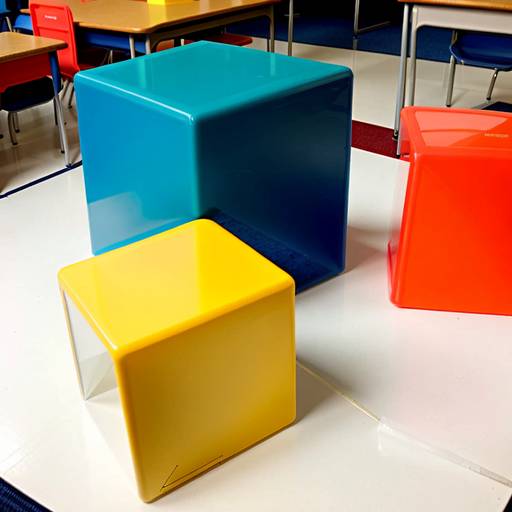
In this 4th-grade math lesson plan, students will explore the concept of perimeter through hands-on learning and real-world applications. The lesson begins with an introduction to shapes and the definition of perimeter, followed by direct instruction on the formulas for calculating the perimeter of rectangles, squares, and triangles.
Students will engage in guided practice with worksheets featuring various geometric shapes, working in pairs to calculate perimeters while explaining their reasoning to one another. Following this, a scavenger hunt will allow students to measure and record the perimeters of objects around the classroom using string or yarn, fostering a deeper connection to the concept.
The lesson concludes with a shared reflection on their discoveries and the significance of perimeter in everyday life. Assessments will include observations during activities and evaluation of the completed worksheets. Differentiation strategies will be implemented to provide support for struggling learners and challenges for advanced students, ensuring that all students benefit from the lesson.
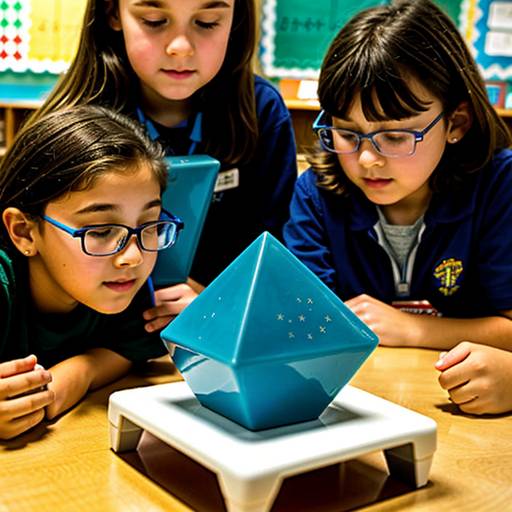
This lesson plan focuses on introducing 4th-grade students to three-dimensional shapes, or solids, emphasizing their properties, classifications, and real-world applications. The session begins with an engaging discussion about 3D shapes, where students identify various examples and learn about their characteristics, including faces, edges, and vertices.
Following the introductory discussion, students participate in a shape sorting activity in small groups, using manipulatives to categorize the solids and share their findings with the class. The lesson continues with a creative component in which each student designs their own unique solid, labeling its properties and dimensions, and then shares their creation with a partner.
To conclude, the class reflects on what they learned throughout the lesson, discussing interesting aspects of the solids they created and their practical applications. Assessment is conducted through observations, reviewing shape sorting mats, and evaluating students' designs based on clarity and accuracy. Extensions to the lesson encourage further exploration of real-world applications of solid shapes and introduce basic volume concepts if time permits. Overall, this lesson promotes hands-on learning, creativity, and collaborative engagement among students.
This 4th-grade math lesson focuses on helping students understand the concepts of geometry and area through hands-on activities and discussions. The lesson begins with an engaging discussion about the relevance of area in real life, followed by direct instruction on calculating the area of rectangles and squares using formulas. Students participate in guided practice by drawing shapes on graph paper and calculating their areas, promoting collaborative learning through partner discussions.
In small groups, students measure various classroom objects with measuring tapes, recording their dimensions and calculating area, further solidifying their understanding through practical application. The lesson culminates in group presentations, where students share their findings, fostering communication skills and reinforcing the importance of area in everyday scenarios.
Assessment is achieved through observation of group work, review of calculations, and graphed shapes. Extensions encourage more advanced learners to explore irregular shapes and introduce the concept of perimeter for future lessons. This comprehensive approach ensures that students gain a solid foundation in geometry and area while engaging in practical, real-world applications.

This 4th-grade math lesson plan focuses on teaching students about measurement and length, emphasizing the importance of these concepts in everyday life. The lesson begins with an introductory discussion, where students explore real-world applications of measurement. Through direct instruction, they learn to use rulers and measuring tapes, becoming familiar with standard units such as inches, feet, centimeters, and meters, as well as unit conversions.
During guided practice, students work in pairs to measure various objects, recording their findings in a worksheet. This is followed by an independent activity that reinforces their understanding through measurement problems and practical applications. The lesson concludes with a class discussion where students share their experiences and measurements, guiding a brief review quiz to assess comprehension.
To accommodate diverse learning needs, differentiation strategies are incorporated, providing challenges for advanced learners while offering additional support for those who need it. Assessment focuses on students’ accuracy in measurement and understanding of the concepts. Extension activities, such as a home project that involves measuring items at home and the introduction of digital measuring tools, encourage further engagement and application of skills learned in class.
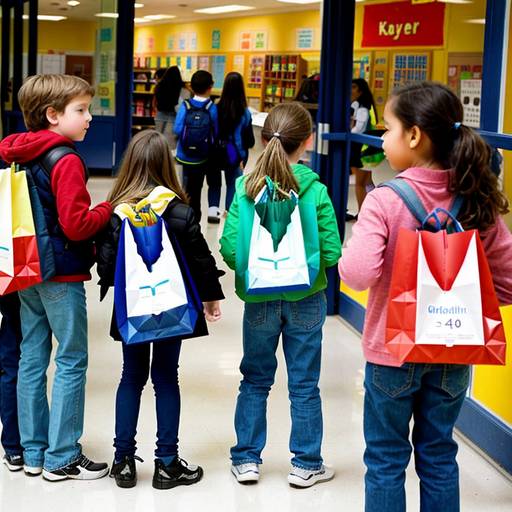
In this engaging 4th-grade lesson, students explore essential concepts related to money, budgeting, and smart spending through interactive activities. The lesson begins with a discussion on the importance of money in everyday life, introducing key vocabulary such as "budget," "expenses," "savings," and "spending." Students learn how to create a simple budget and categorize expenses as needs or wants.
The main activity involves dividing students into small groups, where they receive a set amount of play money to "shop" in a mock store stocked with labeled items. Each group must fill out a budget worksheet while keeping track of their spending and making decisions about their purchases. Afterward, groups present their shopping choices and explain their budgeting strategies to the class.
The lesson concludes with a reflective discussion on the challenges faced in staying within a budget and the importance of distinguishing between needs and wants. Assessment focuses on group participation, completed worksheets, and student reflections on their learning experience. Extensions for the lesson include discussions about saving for larger items and an introduction to understanding interest in future lessons, equipping students with essential life skills in money management.
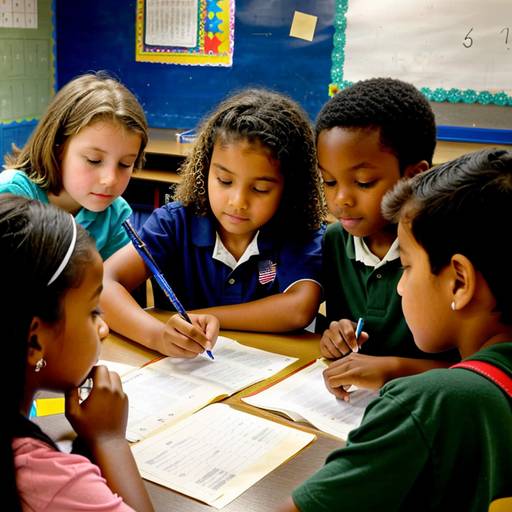
This lesson plan focuses on helping 4th-grade students understand and practice subtraction with numbers up to 1,000. The lesson begins with a review of subtraction concepts and introduces students to visual aids like number lines. Through direct instruction, students learn to solve subtraction problems using real-life scenarios.
In guided practice, they work in pairs with flashcards to reinforce their understanding, followed by independent practice with a worksheet featuring word problems and tasks that encourage problem-solving. The lesson concludes with a recap of key concepts and sharing of answers to assess understanding.
To differentiate instruction, advanced students receive more complex problems, while additional support is available for those who need it. Homework is assigned to reinforce skills further, and the lesson includes an opportunity for reflection on teaching effectiveness and student engagement. Overall, the goal is to create an interactive and supportive learning environment for mastering subtraction.