
Filters
Level
Grade
Subject
Subject Area
Subject Topic
Standard(s)
Audience
Keyword
DurationMinutes
4th Grade Math Lesson Plans

In this 4th-grade mathematics lesson, students will explore the concept of elapsed time through engaging discussions and hands-on activities. The lesson begins with a conversation about daily routines to emphasize the importance of time. Following this introduction, the teacher will explain and demonstrate how to calculate elapsed time using visual aids and interactive exercises.
Students will then work in small groups, utilizing scenario cards that present real-life situations involving start and end times. This collaborative activity allows them to apply their understanding and share their reasoning with their peers. After the group work, students will individually complete a worksheet that reinforces their skills in calculating elapsed time through a variety of word problems and diagrams.
The lesson concludes with a review where students share their calculations and insights, solidifying their understanding. They will also express examples of elapsed time from their own lives as an exit ticket, allowing the teacher to assess their grasp of the topic. The lesson includes suggestions for differentiating instruction based on student needs, with extensions for advanced learners and additional support for those who require it. Overall, this lesson aims to make learning about time relatable and interactive while developing students' problem-solving skills.
In this 4th-grade math lesson, students will explore the concept of multiplication by connecting it to repeated addition and practicing their times tables up to 12 x 12. The lesson begins with a review of multiplication basics and a group chant of selected times tables to bolster recall. Students will then engage in paired quizzes to reinforce their understanding of multiplication facts, using index cards with various multiplication problems.
The main activity involves a treasure hunt in which small groups will search for hidden index cards containing multiplication questions. They will work collaboratively to solve these problems and record their answers on a treasure map handout. The lesson concludes with a class review of the answers and a discussion on the importance of multiplication in real-life scenarios. Small prizes will be awarded to celebrate the students’ participation and efforts. Overall, this lesson aims to enhance multiplication skills through interactive learning and collaboration.
In this 4th-grade math lesson, students will explore the concept of angles through a combination of discussions, hands-on activities, and creative projects. The lesson begins with a warm-up discussion, where students identify different types of angles—acute, right, and obtuse—and observe examples in their daily lives.
Following this, they will engage in an angle scavenger hunt, working in small groups to find and document instances of each type of angle around the classroom or school. Next, students will receive a demonstration on how to measure angles using a protractor, followed by practice worksheets to reinforce their measurement skills.
In a creative activity, students will design their own shapes that incorporate various angles, labeling each angle with its measurement and classification. They will then present their designs to the class, further solidifying their understanding of angles. The lesson concludes with a summary of key concepts and an assignment for students to find additional examples of angles in their homes.
Assessment will be based on participation, accuracy in measuring angles, and the quality of the shapes created by the students, ensuring that all learners are engaged and challenged appropriately.
In this 4th-grade math lesson, students will explore the concept of fractions as parts of a whole and apply their understanding by solving various fraction word problems. The lesson begins with a brief review of fractions, illustrated through examples and real-life contexts, such as sharing food.
During guided practice, students collaboratively solve a sample word problem, learning to identify keywords that help in understanding fraction scenarios. They then engage in independent practice, where they work on a worksheet with a variety of fraction problems, using fraction circles or bars to visualize their answers.
To reinforce learning, students participate in a hands-on activity, creating their own visual representations of fractions from their worksheets. In closing, students share their work and summarize what they've learned about fractions and their real-world applications. Assessment will be based on observation during activities and the evaluation of completed worksheets, with an extension offered for advanced learners. The lesson aims to foster both conceptual understanding and practical application of fractions in everyday situations.
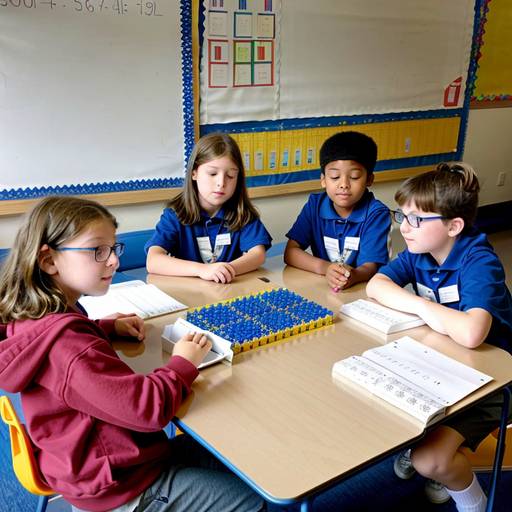
The lesson focuses on helping 4th-grade students understand concepts related to measurement and perimeter. It begins with an introduction to measurement and perimeter, engaging students in a discussion about their real-world applications. Through direct instruction, students learn how to measure shapes using rulers and apply formulas to calculate perimeter for rectangles and triangles.
In guided practice, students work in small groups to measure their assigned shape and calculate its perimeter collaboratively. Following this, they engage in independent practice with worksheets that challenge them to calculate the perimeter of various shapes and create their own shape on graph paper. The lesson concludes with a class discussion to reinforce key concepts and gather student reflections on the learning experience.
Assessment includes evaluating worksheets for accuracy and informal observations during group activities. Extensions may include introducing area and organizing a scavenger hunt to apply measurement skills in a fun, interactive manner. Overall, this lesson fosters hands-on learning, collaboration, and critical thinking skills.
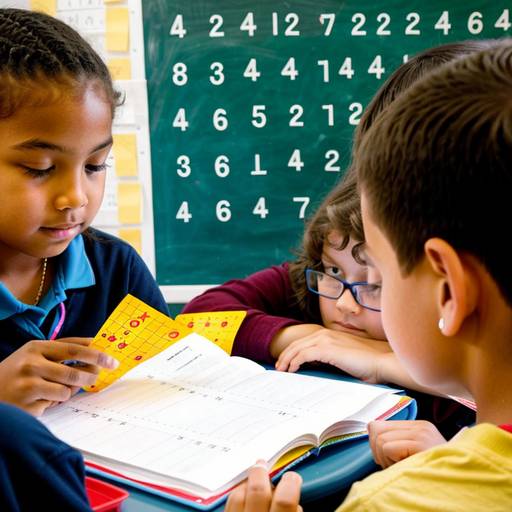
In this 4th-grade math lesson, students explore the concept of subtracting fractions with like denominators. The lesson begins with an engaging hook featuring a real-life scenario related to cooking, which leads to a discussion about the use of fractions in daily life. The instructor introduces the concept of subtracting fractions by explaining the process of subtracting only the numerators while keeping the denominators consistent. Visual aids, such as fraction circles or strips, are utilized to reinforce understanding.
Students participate in guided practice by solving a series of fraction subtraction problems collaboratively, followed by independent work on real-world word problems involving fraction subtraction. The lesson concludes with a class discussion on the solutions to these problems, allowing students to reflect on their learning and build confidence in their skills.
Assessment occurs through participation, accuracy in worksheets, and engagement in discussions. Differentiation strategies ensure that both advanced learners and those needing additional support can succeed. The instructor plans to reflect on the effectiveness of the lesson and consider adjustments for future instruction on fractions.
This 4th-grade mathematics lesson focuses on teaching students about measurement and volume. The lesson begins with an introduction to the concept of volume, explaining how it differs from other types of measurements and introducing standard units such as cubic centimeters and liters.
Students receive direct instruction on calculating the volume of rectangular prisms using the formula for volume, followed by practical demonstrations on measuring volume through water displacement for irregular objects.
In a hands-on activity, students work in groups to measure and calculate the volume of various 3D objects using rulers and water, engaging them in collaborative learning. They also apply their understanding through real-life problem-solving scenarios presented on worksheets, which encourage them to think critically about volume in everyday contexts.
The lesson concludes with a review of key concepts and a discussion, allowing students to reflect on what they learned. Assessment includes evaluating students' worksheets for accuracy in calculations and observations of group dynamics during activities. This approach ensures that students comprehend the concept of volume through both theoretical knowledge and practical experience.
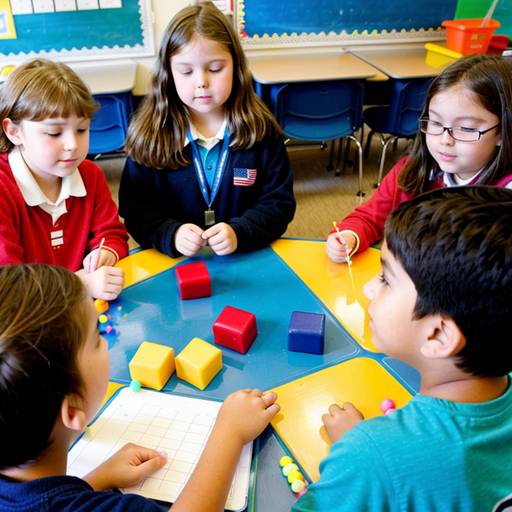
In this 4th-grade math lesson, students will explore the concepts of measurement and weight by engaging in hands-on activities. The lesson begins with a discussion on the importance of measuring weight and the introduction of standard units such as grams, kilograms, ounces, and pounds. Students will learn how to use a kitchen or digital scale, practice taking measurements of various classroom items, and record their findings in tables.
As they work in small groups, they will gain experience in converting between different units of weight using provided charts. The lesson includes independent practice, where students complete worksheets that involve measuring items and answering conversion questions. The session wraps up with a review of key concepts, allowing students to share their findings and reflect on the importance of weight measurement in everyday life. Assessment will be based on participation, accuracy of measurements, and completion of the worksheets. Accommodations will be provided for students who need additional support. Throughout the lesson, students will gain valuable skills in measurement that can be applied in real-world contexts.