
Filters
Level
Grade
Subject
Subject Area
Subject Topic
Standard(s)
Audience
Keyword
DurationMinutes
4th Grade Math Lesson Plans


In this 4th-grade math lesson, students will explore the concept of addition through engaging activities and collaborative learning. The lesson begins with an interactive discussion where students will solve a simple addition problem together, followed by direct instruction on two-digit and three-digit addition, including techniques for carrying over. Hands-on practice with base ten blocks or counters will help students visualize the addition process.
Following this, students will complete worksheets with a variety of addition problems while working independently or in pairs, allowing for guided support as needed. The highlight of the lesson involves an interactive game that reinforces addition skills, where students will navigate a game board, tackling addition challenges at different locations.
The lesson concludes with a group discussion in which students share their experiences and strategies learned during the game. Throughout the class, the teacher will monitor progress and provide assistance to ensure understanding, assessing comprehension through observation and worksheet review. The lesson is designed to accommodate various learning levels, offering differentiated challenges for students ready to advance or requiring additional support.

This 4th-grade math lesson focuses on teaching students addition skills through engaging activities and collaborative learning. The lesson begins with a story that introduces the importance of addition in real-life scenarios, followed by a discussion of various addition strategies such as counting on, making ten, and using base ten blocks.
Students participate in direct instruction where a problem is modeled, allowing them to see different methods in action. They then engage in guided practice through a worksheet containing a mix of straightforward addition problems and word problems, discussing their solutions and strategies with the class.
As an independent practice activity, students play a bingo game that reinforces their addition skills in a fun, competitive format. The lesson concludes with a reflection discussion and an exit ticket exercise where students write and solve their own addition problem.
Assessment is conducted through observation during activities and the review of completed worksheets and exit tickets. Extensions are available for advanced learners and those needing additional support, ensuring a comprehensive approach to mastering addition.
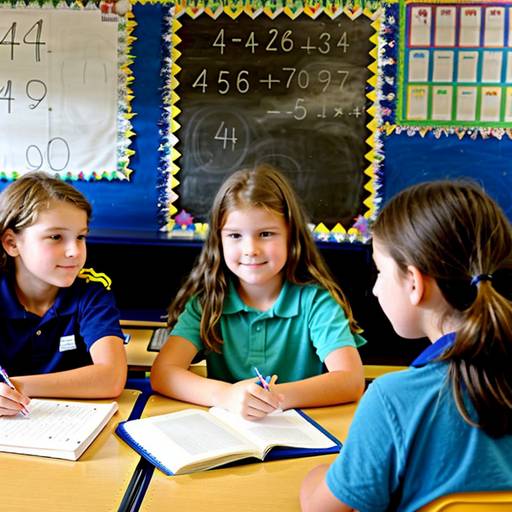
In this 4th-grade math lesson, students will explore the concepts of geometry and angles. They will learn to identify and classify different types of angles—acute, right, and obtuse—through a combination of direct instruction and hands-on activities. The lesson begins with a discussion about angles in everyday life, followed by a demonstration on how to measure angles using a protractor.
Students will practice measuring and classifying angles on the whiteboard and then engage in an independent scavenger hunt to find and record examples of angles around the classroom or at home. The lesson concludes with students sharing their findings, reinforcing their understanding of angle types, and participating in a quick identification quiz.
Assessment will involve observing student participation and reviewing their scavenger hunt worksheets to ensure comprehension of the material. Opportunities for extensions will also be provided for advanced learners. Overall, the lesson aims to create an interactive and relatable learning experience centered around the fundamental concepts of angles in geometry.
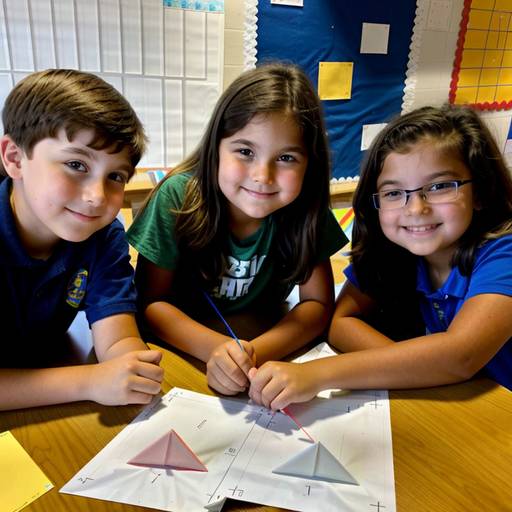
In this 4th grade math lesson plan, students will explore the concepts of geometry and angles, focusing on identifying and classifying angles as acute, right, and obtuse. The lesson begins with a discussion about angles in everyday life, followed by direct instruction that includes definitions and visual demonstrations on the whiteboard. Students will then engage in guided practice by creating and measuring angles using protractors and rulers. Afterward, they will complete worksheets that involve identifying angle types and practicing measurements independently. The session concludes with a review and optional extension activity that encourages students to find and document examples of angles and shapes in their environment. Assessment will include observing student participation and reviewing their completed worksheets to ensure understanding of the material. Overall, this lesson aims to foster a foundational understanding of angles and their applications in geometry.

This 4th-grade math lesson focuses on geometry and angles, specifically teaching students to identify and classify acute, right, and obtuse angles. The lesson begins with a discussion about angles and their importance in real-world contexts, followed by a visual presentation of the different types of angles. Students are guided through measuring angles using a protractor, working collaboratively to practice angle identification and classification on worksheets. They then create their own angles and accompany them with real-world examples on a poster. The lesson concludes with a sharing session where students discuss their work, reinforcing their understanding of the concepts presented. Assessment is conducted through the collected worksheets and group interactions, with differentiation strategies in place to support learners at varying skill levels. This engaging and hands-on lesson helps students connect geometry to their everyday lives.
In this 4th-grade math lesson, students will explore the concept of area and learn how to calculate it for rectangles and squares. The class begins with an engaging discussion about the meaning of area, followed by a demonstration of how to apply the formulas for calculating area. Students will have the opportunity to create their own shapes on grid paper, measure their dimensions, and perform area calculations. Working in small groups, they will apply their knowledge to a real-world scenario involving garden design, sharing their findings with the class. The lesson concludes with a recap of the key concepts, emphasizing the practical applications of area in everyday life. Assessment will involve observing student participation and reviewing their worksheets for accuracy in calculations. An extension activity is available for faster learners, encouraging deeper exploration of area concepts.
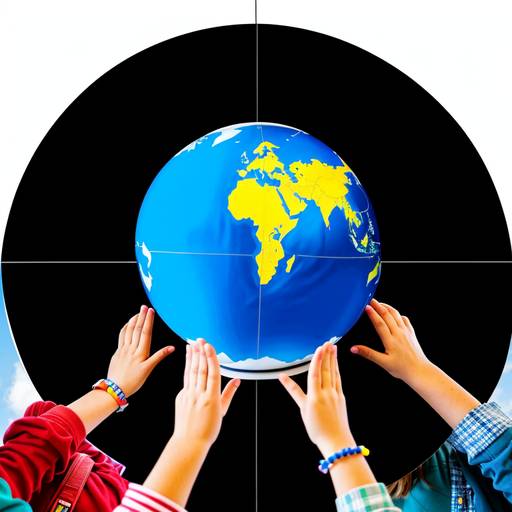
In this 4th-grade math lesson, students will explore the concept of time and time zones, learning how to read both analog and digital clocks. The lesson begins with a discussion about the importance of time and how it varies across the globe. Students will examine a world map to understand the division of the Earth into different time zones and practice converting time between these zones through guided and independent activities. They will work on worksheets that present time conversion problems and create their own scenarios involving different cities' times. The class will come together to review the lesson, emphasizing the significance of understanding time zones in communication and travel. Assessment will be based on worksheet completion and participation, while extensions and adaptations support diverse learners and provide opportunities for deeper exploration of the topic.

In this 4th grade math lesson, students will explore the concepts of money, budgeting, and making financial choices. The class will begin with a discussion about the role of money in everyday life and the importance of budgeting. Following a mini-lesson on how to create a budget template that includes sections for income, expenses, and savings, students will work in small groups to manage a set amount of play money, making decisions about how to allocate funds for various items represented by flashcards.
The lesson consists of two main activities: first, students will collaboratively design a budget, prioritizing their spending based on needs versus wants. Next, they will engage in a marketplace simulation where they can "purchase" items with their play money, reinforcing their budgeting decisions.
To conclude, groups will present their budgets and spending choices, reflecting on their experiences and the lessons learned about financial management. Assessment will be based on group participation, completed budget worksheets, and discussions on budgeting challenges. Extensions could involve tracking personal allowances or discussing real-world budgeting scenarios, furthering their understanding of financial responsibility.
In this 4th-grade math lesson plan, students will explore the concepts of length measurement and temperature. They will learn to measure objects using both inches and centimeters, while also understanding how to read thermometers in Fahrenheit and Celsius scales. The lesson includes direct instruction on measurement techniques and temperature conversions, where students will practice converting between the two temperature scales.
Students will work in small groups, participating in hands-on activities where they measure various objects and conduct a temperature experiment using warm and cold water. They will predict, measure, and then convert the temperatures they record, enhancing their understanding through practical application.
The lesson concludes with group presentations of their findings and a reflection on the real-world applications of measurement and temperature in daily life. Optional homework will involve monitoring and recording daily temperatures, reinforcing the skills learned in class. Assessment will involve observing participation during activities, reviewing group posters for accuracy, and checking the submitted homework for understanding. Extensions of the lesson could explore weather reporting and the impact of environmental factors on temperature.
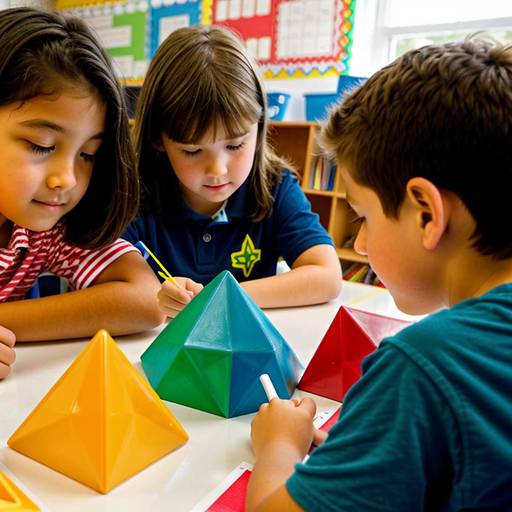
In this 4th-grade math lesson, students will explore the concept of three-dimensional shapes by identifying, analyzing, and creating various solids such as cubes, spheres, cylinders, cones, and pyramids. The lesson begins with a discussion about the shapes found in everyday life, followed by a mini-lecture that highlights the properties of each solid, including the number of faces, edges, and vertices.
Students engage in a scavenger hunt to find real-world examples of 3D shapes, promoting active learning and exploration. They then create their own models using construction paper, applying their understanding of shape properties. The lesson concludes with student presentations, where they share their models and reflect on the applications of these shapes in real life. Assessment will include observation during activities, the evaluation of models, and a quiz on identifying and describing 3D shapes. Differentiation strategies are included to support all learners, and extension activities provide opportunities for deeper exploration.