
Filters
Level
Grade
Subject
Subject Area
Subject Topic
Standard(s)
Audience
Keyword
DurationMinutes
2nd Grade Lesson Plans
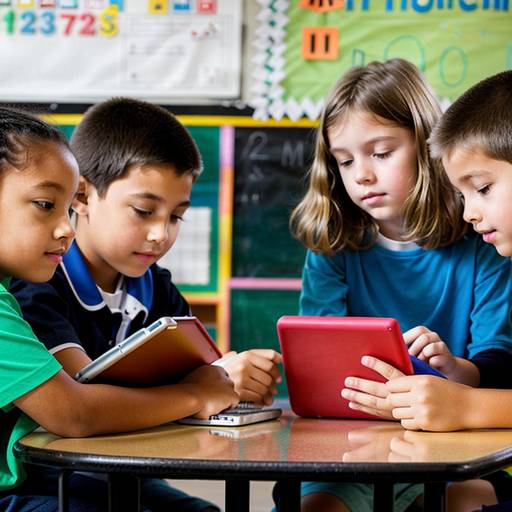
This 2nd-grade technology lesson focuses on understanding the internet and the importance of internet safety. Students will explore what the internet is, discussing its uses and benefits in a relatable manner. The lesson emphasizes key safety practices, such as not sharing personal information and notifying an adult if something feels uncomfortable, through interactive discussions and a scenario identification game.
Students will then engage in an online exploration activity using a pre-selected educational website, allowing them to practice safe navigation under guidance. To reinforce their learning, they will create drawings or write sentences reflecting their understanding of internet safety. The lesson concludes with a recap and a Q&A session to clarify any uncertainties. Overall, the lesson aims to equip students with foundational internet skills while prioritizing their safety in the digital world.

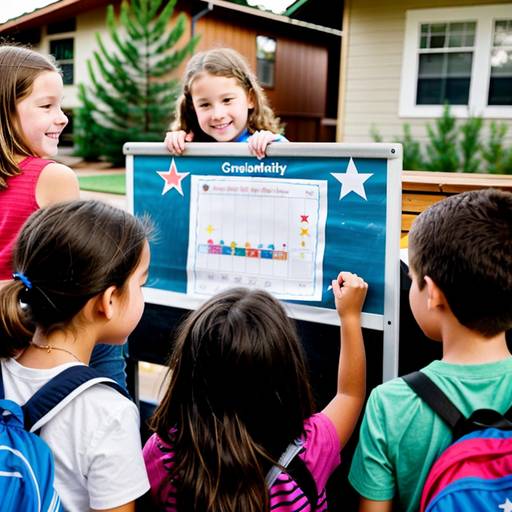
This 2nd-grade social studies lesson focuses on understanding the concepts of community and diversity. Students will explore the different roles within their community and recognize the importance of each individual, including various community workers. The lesson begins with a discussion about what constitutes a community and its essential roles, followed by a matching activity to illustrate diversity within those roles.
Students will then engage in a personal reflection activity by completing "All About Me" worksheets, allowing them to share their unique backgrounds, traditions, and interests with their classmates. This fosters appreciation for diversity among peers. To culminate the lesson, students will create individual squares representing themselves or their cultures, which will be combined into a collaborative "Community Quilt."
Throughout the lesson, students will learn the value of each person's contribution to the community and how diverse backgrounds strengthen their collective environment. The lesson concludes with a recap of the concepts covered and encourages ongoing respect and appreciation for differences among classmates. Assessments will include participation in discussions, completion of worksheets, and the final quilt project.

This music lesson for 2nd grade students focuses on introducing the basics of music theory, specifically the identification and naming of musical notes on the staff. The session begins with a brief explanation of musical notes and their importance in music, followed by an engaging discovery phase where students learn the names and positions of the notes (A, B, C, D, E, F, G).
Students participate in an interactive relay activity that reinforces their understanding through team collaboration and fun competition. They then apply their knowledge by creating rhythmic patterns using small percussion instruments while naming the notes aloud. The lesson concludes with a reflection on what they learned and a creative coloring worksheet to reinforce the note names.
Assessment is conducted through observation during activities and the completion of worksheets, with opportunities for extension activities and group singing planned for future lessons. The focus is on fostering enjoyment and a positive learning environment as students explore the world of music.

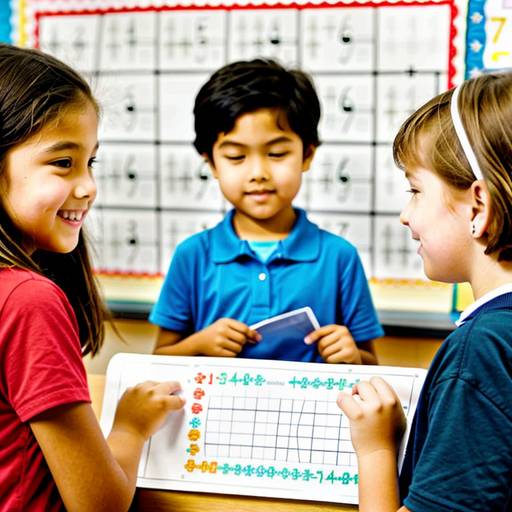
In this 2nd-grade math lesson, students will explore addition using a number line as a visual and practical tool. The lesson begins with a brief review of addition concepts, followed by a demonstration of how to use a number line to solve an addition problem. Students will participate in guided practice by solving example problems together, utilizing their own individual number lines. After that, they will engage in independent practice by completing worksheets that involve various addition problems, reinforcing their understanding of the concept. To conclude the lesson, students will share their answers and methods with the class, allowing for discussion and reinforcement of the importance of the number line in addition. Continuous assessment will be conducted through observation and worksheet evaluation, with accommodations provided for differing learning needs. Extensions include introducing two-digit addition or using technology to further enhance understanding.
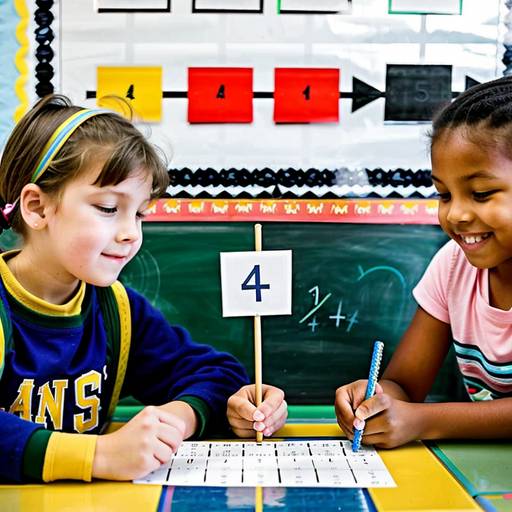
In this 2nd-grade math lesson, students will explore the concept of addition using a number line. The lesson begins with a review of addition basics, followed by a demonstration illustrating how to use the number line to add numbers by hopping forward. Students will then participate in guided practice, where they work in pairs to solve addition problems on the number line, allowing them to actively engage with the material. Afterward, they will complete independent worksheets featuring several addition problems that encourage them to use the number line for finding sums. The lesson concludes with students sharing their favorite problems and discussing how the number line helped them understand addition better. Assessment will be conducted through observation and collection of worksheets, and adaptations will be made to support varied learning needs, including extensions for advanced students. Overall, the lesson aims to make addition interactive, fostering both understanding and enjoyment among the students.

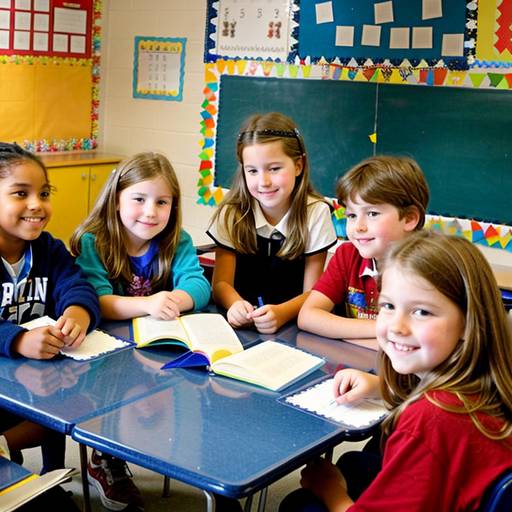
This 2nd-grade language arts lesson focuses on introducing students to the elements of narrative writing. The lesson begins with a read-aloud of a familiar story, prompting a discussion about its characters, setting, problem, and solution. Students then engage in a guided practice where they collaboratively fill out a Story Map template, effectively organizing their ideas for a narrative. Following this, they work independently to create their own stories using the Story Map, incorporating illustrations. After writing, students pair up or form small groups to share their narratives, promoting active listening and peer feedback. The session concludes with a recap of narrative elements and an opportunity for a few students to share their work with the entire class. Assessment is based on participation, the completion of Story Maps, and the sharing of their narratives, with adaptations available to support diverse learning needs and extensions for advanced learners.
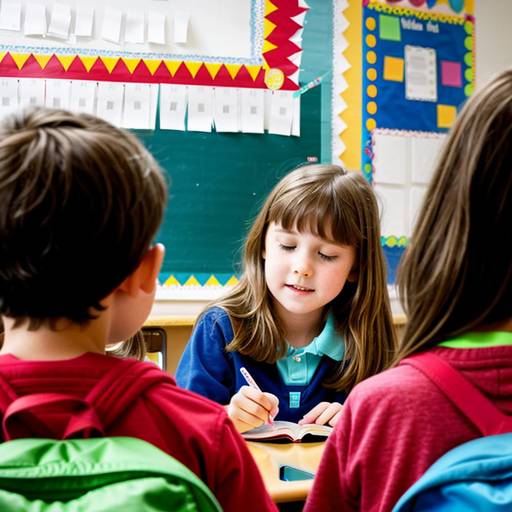
In this 2nd Grade Language Arts lesson, students will explore the concept of antonyms and enhance their vocabulary. The lesson begins with a discussion about vocabulary and the definition of antonyms, followed by examples shared by students. Direct instruction involves using flashcards with images to illustrate pairs of opposite words, prompting students to brainstorm additional antonyms in pairs.
During group activities, students work together to create an "Antonym Chart" that lists pairs of antonyms along with illustrations, which they will present to the class. For independent practice, students fill out a worksheet identifying antonyms for given words and share their favorite pairs with a partner. The lesson concludes with a review of antonyms and an interactive "Antonym Wall" where each student contributes a sticky note with their favorite antonym pair.
Assessment includes observing participation in discussions and activities, reviewing worksheet completion for understanding, and evaluating the group-created charts. Accommodations and extensions are also included to support diverse learners and provide further challenge for advanced students.
In this 2nd-grade social studies lesson, students will explore the concept of timelines to understand the chronological order of events in both personal and historical contexts. The lesson begins with a class discussion about significant life events, leading into the introduction of timelines and their importance. Students will collaboratively create a large group timeline that includes class events, followed by a presentation of historical examples to highlight milestones in history.
After receiving a timeline template, each student will identify and illustrate 3-5 significant events from their own lives. They will share their personal timelines with a partner to practice articulation and reinforce understanding. The class will reconvene to reflect on what they learned about the value of timelines in organizing events chronologically. To conclude, students will complete an exit ticket summarizing one key takeaway from the lesson.
Assessment will be based on participation, creativity, and the ability to convey the significance of the included events. Differentiation strategies will support diverse learners, and opportunities for extensions may encourage deeper exploration of family history or future goals. This engaging lesson aims to instill a foundational understanding of timelines in relation to personal and broader historical narratives.
In this 2nd-grade social studies lesson plan, students will explore the concept of community and the essential rules that help maintain a safe and harmonious environment. The lesson begins with a discussion about what makes their community special and the various elements within it, such as schools, parks, and fire stations.
Following this, students will examine the importance of rules by engaging in a group conversation about why these guidelines are crucial for safety and respect. Students will then collaborate in small groups to create a poster that illustrates their neighborhood, incorporating drawings of community elements and listing community rules. Each group will present their poster to the class, fostering teamwork and communication skills.
The lesson concludes with a reflection activity, where students share one new thing they learned. Through this engaging approach, students will gain a better understanding of their community and the role of rules in promoting a positive atmosphere. Various adaptations and extensions are provided to meet diverse learning needs and enhance the experience further.

In this 2nd-grade science lesson plan, students will explore the solar system by learning about the eight planets, the sun, and the moon. The lesson begins with an engaging discussion about space, followed by a read-aloud of a space-themed book that introduces key concepts. Students will work in small groups to gather and share facts about their assigned planet, promoting collaboration and teamwork.
For a hands-on activity, they will create models of planets using Styrofoam balls or clay, allowing them to apply their knowledge creatively. Once the models are complete, students will present their planet and share one interesting fact with the class. The lesson concludes with a reflection on what students enjoyed and found surprising, reinforcing their learning experience. The plan includes differentiation strategies to accommodate various learning needs and offers extension ideas for further exploration of space. Overall, the lesson aims to foster curiosity about astronomy and help students understand the components and significance of our solar system.