
Filters
Level
Grade
Subject
Subject Area
Subject Topic
Standard(s)
Audience
Keyword
DurationMinutes
2nd Grade Lesson Plans

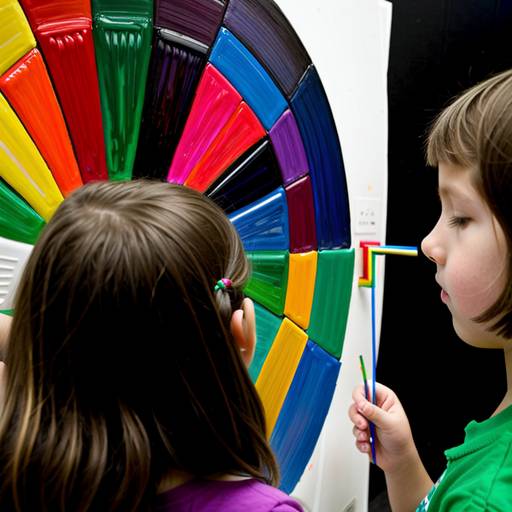
In this 2nd-grade art lesson, students will explore the elements of art with a focus on color theory. The session begins with a discussion about favorite colors and the introduction of primary colors (red, blue, yellow) and how they can be mixed to create secondary colors (green, orange, purple). Students will observe demonstrations of color mixing and complementary colors through the use of a color wheel.
Following the introduction, students will engage in a hands-on activity where they will create their own colorful artwork using watercolor paints. They will paint a background, mix primary colors to form secondary colors, and apply complementary color combinations for contrast and depth in their artwork. Throughout the activity, the teacher will provide support and encouragement, fostering creativity.
Finally, the lesson concludes with a reflection and sharing session, where students will present their completed artworks to their peers, discussing the colors used and their artistic inspiration. The lesson assessment will focus on students' understanding and application of color theory, creativity, and engagement during the activity. Differentiation strategies will be employed to support diverse learning needs, ensuring all students can participate meaningfully.

In this 2nd-grade Language Arts lesson, students will focus on improving reading fluency through a series of engaging activities. The lesson begins with a discussion on reading fluency, followed by a demonstration of expressive reading. Students will then practice together in pairs, taking turns reading and discussing their chosen books. After a guided practice session, each student will read independently and track their fluency progress by measuring the number of words read in one minute. The lesson concludes with students sharing their favorite parts of their books and reflecting on their learning. Throughout the lesson, emphasis is placed on the elements of fluency—speed, accuracy, and expression—encouraging collaboration and enhancing reading skills. Additionally, extensions such as creating a "Fluency Star" poster and organizing a reading day are included to further enrich the learning experience.
In this 2nd grade language arts lesson plan, students will embark on an engaging reading adventure focused on character exploration and reading fluency. The lesson begins with a discussion about the elements that make stories interesting, emphasizing the importance of characters. The teacher demonstrates expressive reading and fluency techniques using a selected text, modeling how to convey emotion through tone and pacing.
Students then pair up for partner reading activities, where one student reads a passage aloud while the other listens and notes character traits they observe. After switching roles, they will complete a character analysis graphic organizer that involves describing a chosen character and illustrating their traits.
The lesson concludes with a sharing session where students present their character analyses to the class, fostering discussion and deeper understanding. Assessment will be conducted through observation during partner reading and the evaluation of character analysis worksheets. Extensions and adaptations are provided to support various learning needs, ensuring that all students can participate effectively in the reading experience while improving their fluency and comprehension skills.
This 60-minute lesson plan for 2nd graders focuses on enhancing reading comprehension skills by identifying main ideas and supporting details in a story. The lesson begins with a group discussion about reading and students’ favorite stories. An engaging read-aloud of a short story captures students' attention, followed by a discussion that prompts them to share their thoughts on the main idea and details of the narrative. Students then complete a story map graphic organizer, outlining elements such as the title, characters, setting, problem, and solution, while illustrating their favorite part. After sharing their story maps with partners, the class wraps up with a brief review of key concepts. Finally, students complete a worksheet with comprehension questions to assess their understanding of the story. Differentiation strategies are included to support various learning levels, and the lesson concludes with reflection on its effectiveness.
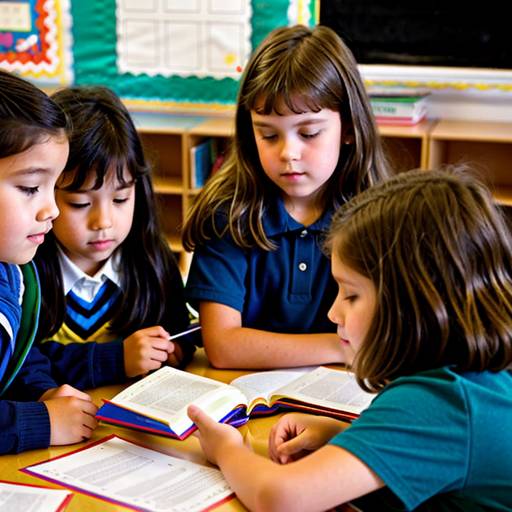
In this 60-minute lesson for 2nd-grade students, the focus is on enhancing reading comprehension by exploring key story elements: characters, setting, and plot. The lesson begins with an engaging read-aloud of a short story, followed by a discussion to elicit students' prior knowledge about these elements. Direct instruction introduces reading strategies, such as predicting, questioning, and summarizing, that students can use while reading.
During guided practice, students work in small groups to identify story elements in the text and create a story map, incorporating predictions and questions. They then engage in independent practice by selecting their own stories from the classroom library to create individual story maps. The lesson concludes with students sharing their story maps and a recap of the concepts learned. Assessment includes observing student participation and reviewing story maps for comprehension.
The lesson is designed to be interactive and collaborative, fostering a deeper understanding of reading while encouraging students to discuss and illustrate their learning creatively. Extensions and supports are provided to meet diverse learning needs within the classroom.
In this 2nd grade Language Arts lesson, students will focus on enhancing their reading fluency by engaging in a variety of interactive reading activities. The lesson begins with a captivating read-aloud, where students will observe smooth and expressive reading. After discussing the concept of reading fluency, students will participate in choral reading to practice pacing and expression together.
In pairs, students will take turns reading short stories or poems while using a fluency checklist to assess each other’s performance. This peer feedback will help them recognize elements of fluent reading. Next, during independent practice, students will rotate through various reading stations, allowing them to practice different texts at their own pace, including the option to record themselves to reflect on their fluency.
The lesson concludes with a group reflection where students share their experiences and insights about fluent reading. Assessment will involve informal feedback during partner reading and evaluations of individual recordings. Extensions to the lesson include creating a display for fluency tips and encouraging ongoing collaboration through a "Fluency Buddy" program. This comprehensive approach aims to foster a supportive and engaging learning environment for improving reading fluency skills.
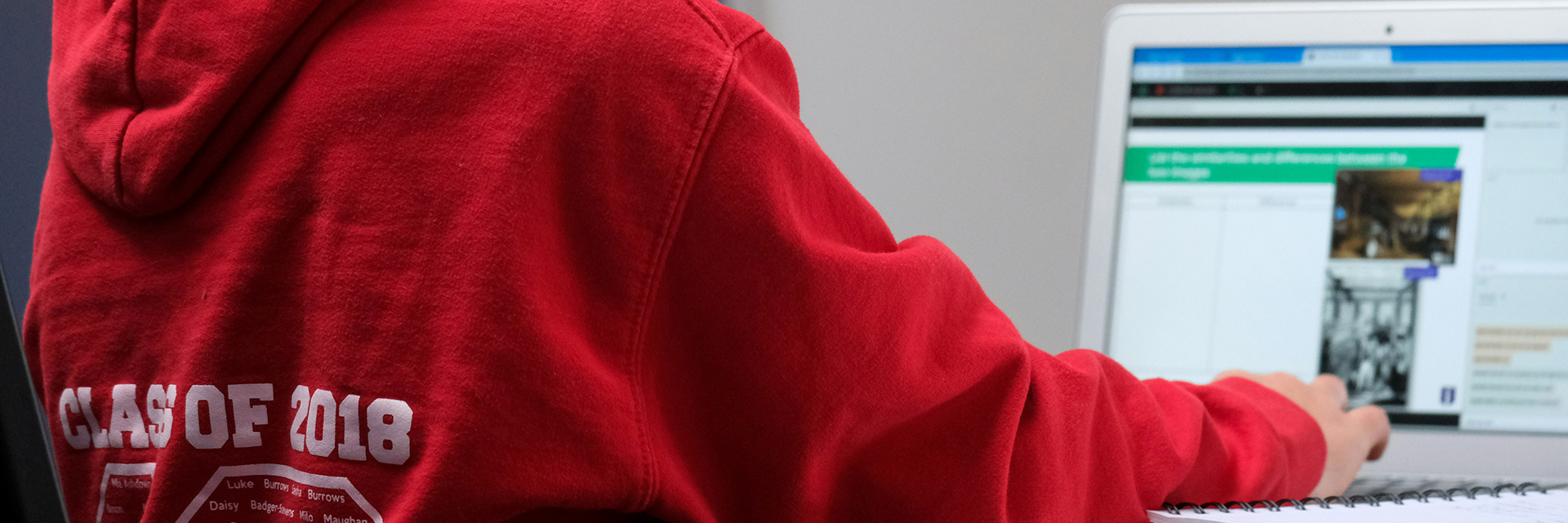

In this 2nd-grade technology lesson, students will explore the concepts of digital citizenship and online safety. They will learn the importance of being responsible online friends by understanding key practices such as respecting others, keeping personal information private, and reporting inappropriate behavior. The lesson will feature a presentation outlining safe and unsafe online behaviors, followed by a group activity where students will discuss various scenarios to determine appropriate responses. Students will then create a personal Online Safety Pledge, committing to positive online interactions. The lesson emphasizes engagement through discussion, creativity, and reflection, enabling students to apply what they learn to their own online activities. Assessments will include observation of group work and review of the pledges, allowing educators to gauge understanding and encourage further exploration of digital citizenship.

In this 2nd-grade music lesson, students explore music theory through an engaging combination of activities focused on note names and rhythm. The class begins with an introduction to the staff and treble clef, where students learn to identify and label musical notes, including those on the lines and spaces of the staff.
Students participate in a relay activity, working in teams to correctly place note name flashcards on a drawn staff, reinforcing their understanding of note identification. This is followed by a clapping circle where they learn about quarter notes and half notes, practicing simple rhythm patterns together.
The lesson concludes with an auditory activity, where students listen to short melodies, identifying notes based on their position on the staff. The session wraps up with a class discussion and a homework assignment that allows students to practice drawing the staff and labeling notes. Overall, the lesson promotes active participation, collaboration, and a solid foundation in basic music theory concepts.
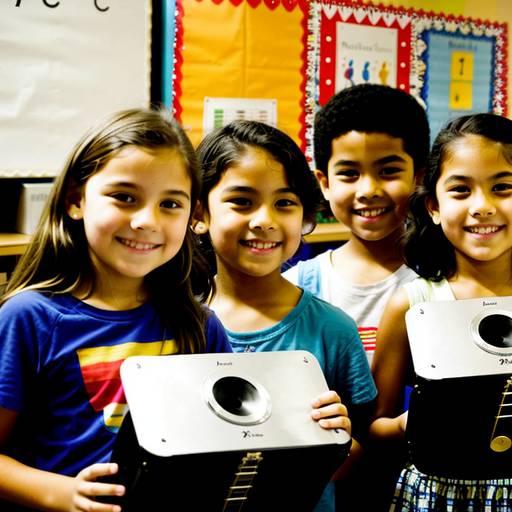
In this 45-minute music lesson for 2nd graders, students explore the concepts of rhythm and basic music notation. The lesson begins with an introduction to rhythm and a distinction between steady beat and rhythm patterns, using clapping as an interactive example. Students engage in a warm-up activity that includes body percussion to build their rhythm skills.
Following this, the teacher introduces basic rhythmic notations such as quarter notes, eighth notes, and half notes, using visuals to enhance understanding. Students are then divided into groups, where they practice and create their own rhythm patterns using body percussion or instruments. Each group shares their rhythm creations with the class, allowing for collaborative learning and expression.
The lesson wraps up with a reflection on what students learned and a discussion about their favorite rhythm patterns. Assessment is based on participation and understanding demonstrated during activities. Extensions include introducing songs that incorporate the rhythmic elements learned, while providing differentiation to support various learning needs within the classroom. By the end, students gain a foundational understanding of rhythm and experience the joy of making music together.
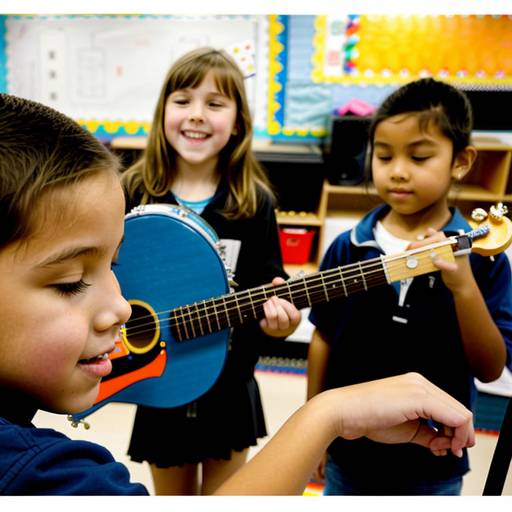
In this 2nd-grade music lesson, students will explore the fundamentals of rhythm and basic music theory by learning about quarter notes, eighth notes, and half notes. The class begins with an introduction to rhythmic values, accompanied by clapping exercises that reinforce counting and timing. Students will then engage with percussion instruments to practice these rhythms in a fun and interactive manner.
Following their instrumental practice, students will have the opportunity to create their own rhythm patterns using the note values introduced earlier. They will work in pairs or small groups to develop their patterns, culminating in a group performance where they can showcase their creativity and collaboration. Throughout the lesson, the teacher will assess student participation and understanding, allowing for feedback and opportunities for further exploration of rhythm outside the classroom. This engaging approach to rhythm aims to foster a love for music and build foundational skills in music theory.