
Filters
Level
Grade
Subject
Subject Area
Subject Topic
Standard(s)
Audience
Keyword
DurationMinutes
Preschool Science Lesson Plans

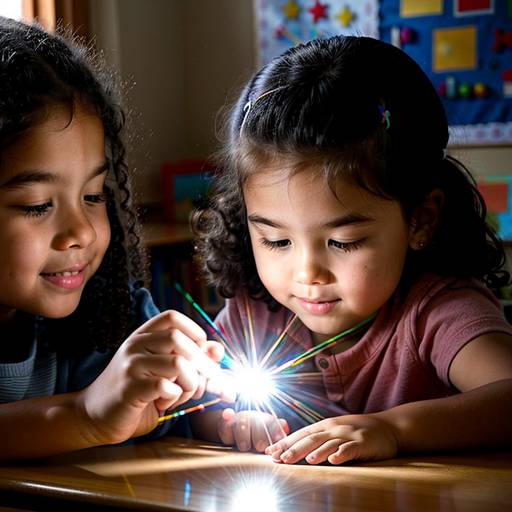
In this preschool science lesson, students will engage in hands-on exploration of the concepts of light and sound. The session begins with an introduction where students discuss their observations and experiences related to light and sound.
During the first activity, students work in small groups to discover shadow play using flashlights and cutout shapes, observing how shadows change with distance and angles. Following this, they experiment with colored cellophane overlays on flashlights to create colorful shadows, deepening their understanding of light properties.
The second part of the lesson focuses on sound exploration. Children experiment with various musical instruments and everyday objects to create sounds. They participate in a sound mystery box activity, allowing them to guess sounds based on their experiences.
The lesson concludes with a group discussion, where students reflect on their favorite activities and share what they learned about light and sound. Through creative exploration, observation, and interaction, students gain foundational knowledge of these sensory concepts while developing vocabulary and fostering curiosity.
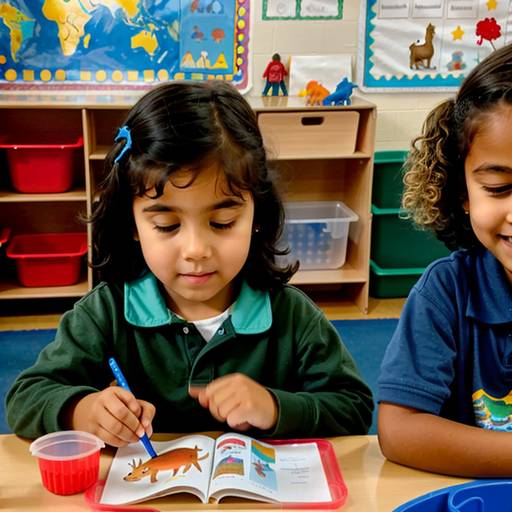
This lesson plan aims to introduce preschool students to the concept of animal adaptations and their importance in helping animals survive in their environments. It begins with a circle discussion to engage students' curiosity about what makes animals unique. Following this introduction, students participate in a series of interactive exploration stations where they observe various animals and their adaptations through hands-on activities.
After visiting the stations, students create drawings of their favorite animal, focusing on specific features that aid in survival. They then share their observations and drawings with the group, fostering communication skills and peer learning. The lesson concludes with a summary of key points about adaptations, encouraging students to reflect on their favorite animals and the adaptations that help them thrive. Assessment occurs through observation of participation and review of their drawings. Extensions include offering related literature or conducting a nature walk for further exploration of local wildlife.
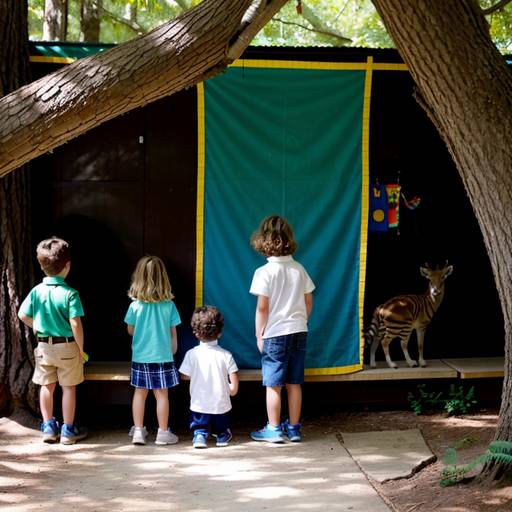
In this engaging preschool science lesson, children will explore various animals and their natural environments. The session begins with an interactive introduction where students discuss animals and their habitats. A story featuring different animals will capture their attention and help them identify where these animals live.
Students will then participate in a group activity where they match animals with the correct habitats using posters and figurines. Following this, they will express their creativity by drawing or creating representations of their assigned habitats, complete with corresponding animals.
Each child or group will have the opportunity to share their habitat creations with the class, promoting language development and collaboration. The lesson concludes with a review of key concepts about habitats and the importance of protecting them.
Assessment will occur through observation during group activities and presentations, ensuring children grasp the relationships between animals and their environments. Extension activities may include a field trip to a local zoo and discussions on animal conservation. Overall, the lesson fosters exploration, creativity, and teamwork while enhancing students' understanding of the natural world.
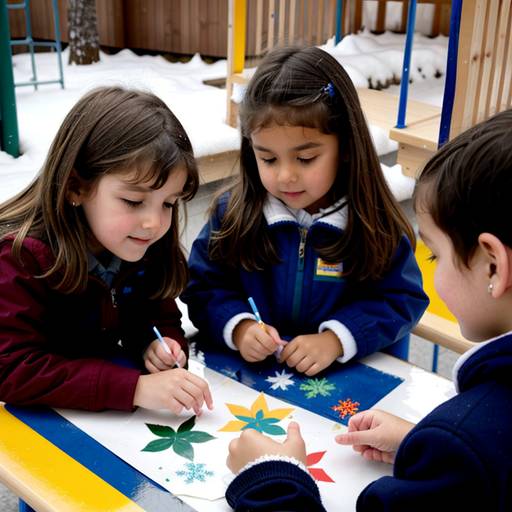
In this preschool science activity, students will explore weather and seasonal changes through hands-on experiences. The lesson begins with a discussion about the current weather using a weather chart. Following this, students will engage in a story related to weather and seasons to spark their interest and understanding.
After the story, children will be divided into small groups to explore different seasons through props and image cards, allowing them to share facts about their assigned season. This collaborative exploration will enhance their comprehension of seasonal characteristics and associated weather patterns.
Next, students will create a weather wheel craft, where they will decorate sections representing different weather types, such as sunny, rainy, snowy, and cloudy days. This creative activity reinforces their understanding of weather phenomena.
The session concludes with a group reflection, where students will discuss their favorite seasons and weather types. Overall, the lesson encourages observation, interaction, and creativity, providing a solid foundation for understanding the dynamics of weather and seasons.
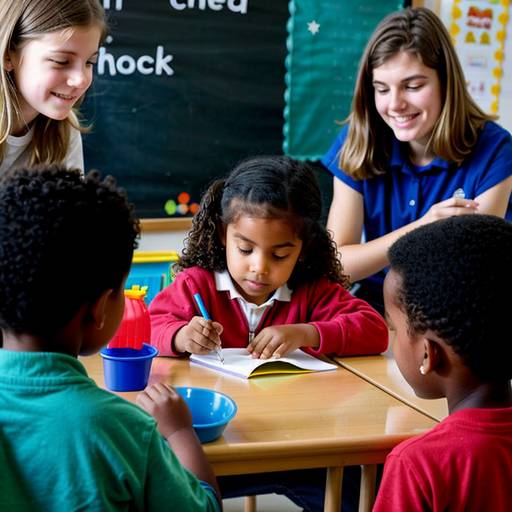
In this preschool lesson, students will embark on an exploration of animals and their habitats, fostering an understanding of environmental awareness. The session begins with a circle time discussion where children identify various animals using flashcards and share thoughts about where these animals live. A picture book reading follows, engaging students with interactive questions about animal sounds and habitats.
Next, children participate in a hands-on activity using a sensory bin filled with natural items where they discover hidden animal figures and match them to habitat drawings displayed on a poster board. The lesson continues with an arts and crafts segment, allowing each child to create their favorite animal while reflecting on its needs for survival.
To deepen their understanding, the group engages in a conversation about simple actions they can take to protect animals and their environments. Finally, the session wraps up with snack time—featuring animal-shaped crackers—where children share details about their crafts while reinforcing the day's learning. The lesson ends with an emphasis on celebrating creativity and awareness of how to support wildlife.
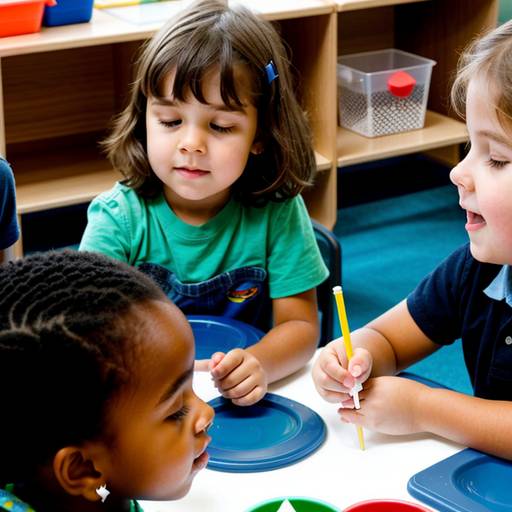
In this preschool science lesson, students will explore their five senses through engaging activities that enhance their observational skills and vocabulary. The lesson begins with a group introduction to each sense, encouraging discussion about what students see, hear, feel, taste, and smell.
Students will then be divided into small groups to rotate through five sensory stations, each dedicated to a different sense: sight, hearing, touch, taste, and smell. At each station, they will participate in hands-on activities such as looking at colorful images, playing musical instruments, exploring various textures, tasting small samples of food, and sniffing different scents.
After visiting all the stations, the class will regroup to share their favorite sensory experiences. To conclude, students will create a collage showcasing their learnings, allowing them to express their favorite aspects of each sense. Throughout the lesson, teachers will assess participation and understanding while emphasizing the importance of utilizing all five senses to explore the world around them. Additionally, extension activities may include a "Sense of the Week" program and nature walks to further reinforce the concepts learned during the lesson.

This preschool science lesson introduces young learners to the basic concepts of Earth and Space through engaging storytelling and hands-on activities. It begins with a discussion that sparks children's curiosity about the universe, followed by reading a captivating children's book that explores space, complemented by visuals of planets and stellar phenomena.
Children then participate in a creative craft activity where they design their own solar system using construction paper, encouraging exploration and imaginative thinking about the colors and characteristics of various celestial bodies.
The lesson also includes a sensory experience with light and dark, using a flashlight to illustrate how the sun lights up the day while stars become visible at night.
It concludes with a sharing session, allowing children to present their crafts and express what they enjoyed and learned. The lesson promotes active engagement, creativity, and a sense of wonder about the universe, while assessment methods focus on participation and individual responses. Opportunities for follow-up activities are also suggested to extend learning beyond the classroom.
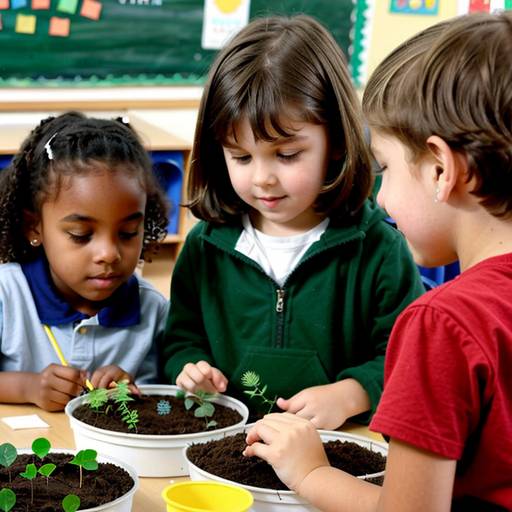
This preschool science lesson focuses on introducing young children to the world of plants, emphasizing their basic parts and the needs for growth. The session begins with an interactive discussion about what plants require, accompanied by visual aids like picture cards. Children engage in hands-on exploration with real plants, using magnifying glasses to observe various plant parts, including roots, stems, leaves, and flowers.
An outdoor discovery walk allows students to observe and identify different types of plants, encouraging them to express their observations. After returning to the classroom, children participate in a planting activity where they pot seeds, learning about the planting process and how to care for their plants at home.
The lesson concludes with a creative reflection, where children draw their favorite plant experiences and share their artwork with their peers. Overall, the lesson encourages curiosity, observation skills, and a basic understanding of plant biology in a fun and interactive manner. Assessments focus on student engagement and comprehension through participation and discussions.
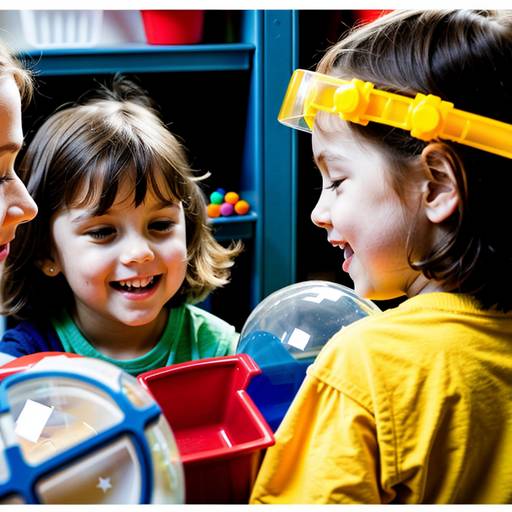
This preschool science lesson introduces young children to the concept of energy through engaging, hands-on activities and exploration. Designed for a group of 4-5-year-olds, the lesson lasts 30 to 45 minutes and includes various activity stations focused on different aspects of energy. Children will experiment with toy cars on ramps to observe how energy affects motion, release air from balloons to see air pressure in action, shake musical instruments to explore sound energy, and go outside to identify forms of energy in nature like sunlight and wind.
The lesson begins with a circle discussion to familiarize children with the idea of energy, prompting them to think about what makes things move or produce sound. After station activities, children gather to reflect on their experiences, sharing their observations and preferences. They then engage in a creative drawing activity, illustrating their favorite energy-related experience from the day. The lesson concludes with a recap of the different forms of energy explored and the distribution of a small energy “passport” for them to take home.
Assessment focuses on children's engagement and understanding during activities and discussions, providing an opportunity for reinforcement of concepts. Extensions encourage families to explore energy at home, fostering ongoing curiosity and learning. Overall, this lesson aims to lay a foundation for scientific inquiry and literacy by making the concept of energy accessible and fun for young learners.
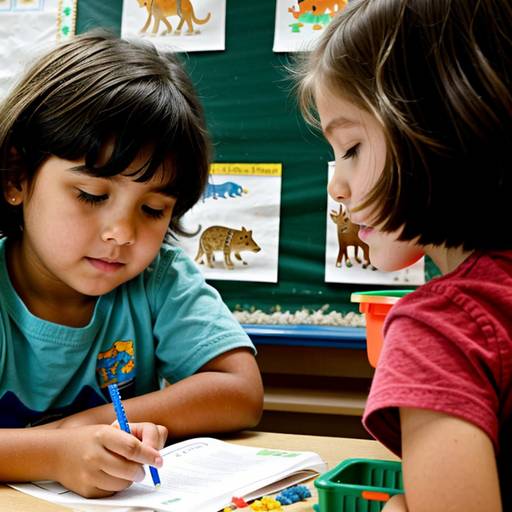
In this preschool science lesson, students will explore the concept of animal habitats through observation and inquiry. The session begins with a group discussion about animals and their homes, followed by a story that highlights various animal habitats. Using a variety of materials, children will work in small groups to create mini-habitats for chosen animals, encouraging hands-on learning and teamwork. Each group will present their habitats, discussing how their animals survive and adapt in different environments. The lesson concludes with a recap of key concepts and encourages students to share their favorite animals. This interactive approach fosters curiosity about nature and promotes critical thinking and discussion among young learners.