
Filters
Level
Grade
Subject
Subject Area
Subject Topic
Standard(s)
Audience
Keyword
DurationMinutes
Preschool Lesson Plans

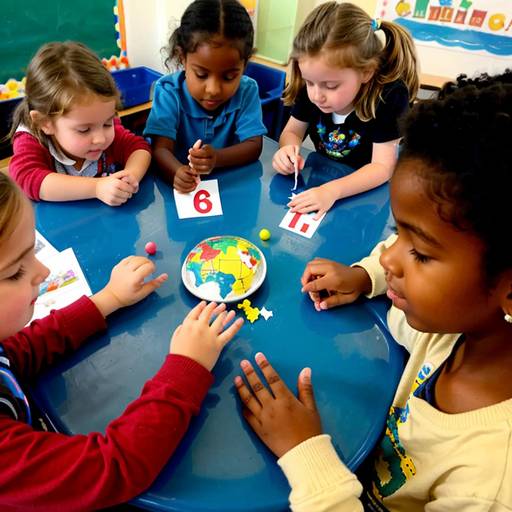
This preschool lesson plan focuses on helping young students explore and understand their local environment and community. It begins with a group discussion about what students see in their surroundings, encouraging them to share their observations. Following this, students engage with a large community map to identify familiar places and learn about the roles of various community helpers through interactive activities.
The lesson continues with a hands-on exploration of natural items like leaves, rocks, and flowers, fostering conversations about the importance of nature and ways to care for the environment. A short reading from a children's book about environmental themes reinforces these concepts.
Students then participate in a mini-clean-up activity, promoting the idea of keeping their community clean and safe. The lesson concludes with a group reflection where students share their experiences and insights. Throughout, the emphasis is on community involvement and environmental stewardship, encouraging curiosity and a sense of responsibility in young learners.

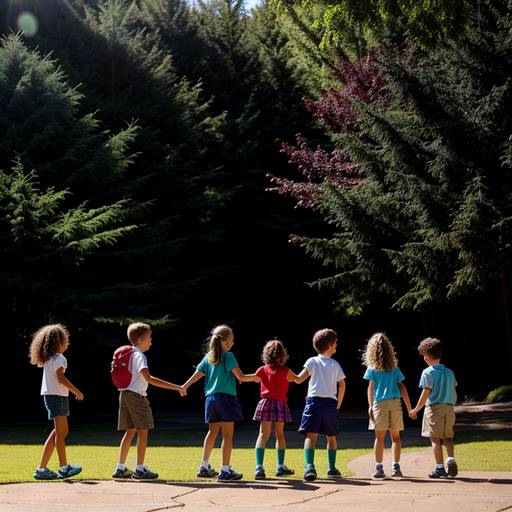
This preschool physical education lesson plan is designed for a 90-minute outdoor session focused on enhancing gross motor skills, teamwork, and sensory awareness through nature exploration and play.
The session begins with an introduction highlighting safety rules, followed by a fun warm-up that incorporates songs and animal movements to prepare the children for activity. Students then participate in several exploration stations, engaging with sensory walks, a scavenger hunt, ball toss, jumping activities, and climbing exercises, rotating through each station to maximize their experience.
A group game called “Nature Tag” encourages active play and teamwork, where students must avoid being tagged while assisting their peers. Subsequently, a creative play segment allows children to make nature-inspired art using materials collected during their explorations, fostering creativity and individual expression.
The session includes a cool-down period with deep breathing and gentle stretching, followed by a group reflection discussion where students can share what they learned and enjoyed throughout the activities. Safety measures are prioritized, with close monitoring throughout to ensure a secure environment for all participants. The lesson not only promotes physical development but also builds an appreciation for nature and healthy social interactions among preschoolers.

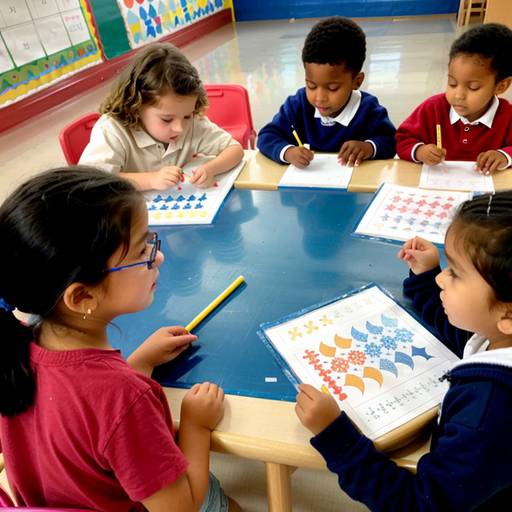
In this preschool mathematics lesson, students engage in activities centered around identifying, creating, and extending patterns using various materials such as colorful pattern blocks, beads, and natural items. The lesson begins with an introduction to patterns where students discuss observations from their environment. They then work in small groups to create their own patterns, fostering teamwork and problem-solving skills. Each group presents their pattern by crafting bead necklaces, articulating their process and pattern structure. The lesson also incorporates a rhythmic patterns activity involving clapping and movements to enhance engagement. Finally, the students reflect on their experiences, sharing their favorite patterns and teamwork moments. The activities aim to develop critical thinking, communication skills, and an understanding of patterns in a playful and interactive setting. An optional extension activity allows for outdoor exploration and discovery of patterns in nature, reinforcing the concept learned in class.
This preschool math lesson focuses on introducing students to the concept of patterns through interactive activities and hands-on learning. The session begins with a brief discussion where students share their ideas about patterns, followed by a demonstration using visual aids like colored shapes.
Students then engage in various hands-on activities at different stations, where they create patterns using materials such as beads, paper shapes, and drawing tools. This allows them to explore patterns in small groups, fostering collaboration and creative thinking.
The lesson concludes with a sharing session, where students present their creations and reflect on what they learned about patterns. Additional extension activities, such as a scavenger hunt for patterns in nature and storytime featuring pattern-themed books, can further deepen students' understanding. Assessment is conducted through informal observations and participation, ensuring that students can identify and create basic patterns. Overall, the lesson emphasizes playful exploration while developing foundational math skills.
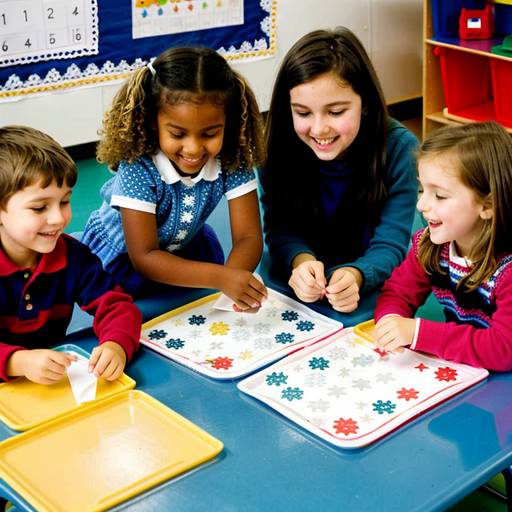
In this preschool math lesson, children will engage in activities designed to explore and understand patterns through various methods. The lesson begins with an introduction to patterns, highlighting their repeating nature using simple examples. Students will identify patterns through visual cards and participate in a sound game using claps and stomps to reinforce their understanding.
Next, children will work in small groups to create their own patterns using colorful manipulatives, promoting collaboration and hands-on learning. Following this, they will engage in a musical activity where they use instruments to create sound patterns, encouraging rhythm and auditory recognition of patterns.
To culminate the lesson, each child will create a piece of artwork incorporating patterns using crayons or markers, which they will share with the group, fostering communication and self-expression. The session concludes with a review of the activities and a fun closure song that reinforces the concepts learned. Assessment will occur through observation during activities, and follow-up activities will encourage students to find patterns in their daily lives.
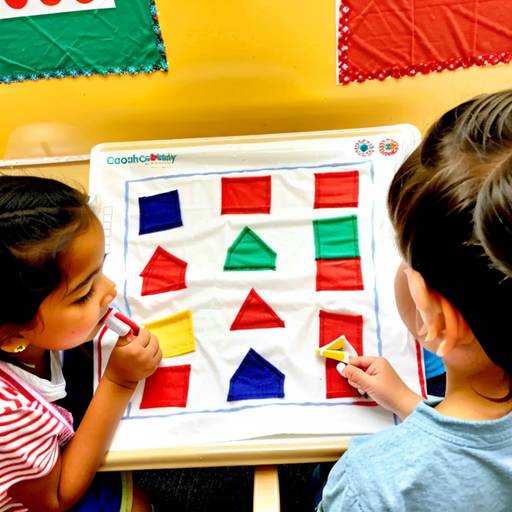
This preschool math lesson aims to introduce students to the concept of patterns through engaging activities that incorporate colors, shapes, and movement. The lesson starts with a group discussion to define patterns and identify them in simple examples, such as alternating colors and shapes. Students then participate in a hands-on activity where they create their own patterns using colorful blocks and shape cutouts in small groups, sharing their creations with the class. To reinforce learning, a movement activity is included, where students follow and create a pattern through dance. The lesson concludes with a reflection session, allowing children to express their favorite patterns and observe their presence in everyday life. An optional extension activity with pattern worksheets is available to further reinforce the concepts learned. The lesson encourages observation, collaboration, and participation, fostering a solid understanding of patterns in a fun and interactive way.
In this preschool lesson plan, students will explore the concept of patterns through interactive activities designed to enhance their problem-solving and critical thinking skills. The lesson begins with a group discussion to introduce patterns and identify examples found in everyday life.
Students will then participate in a hands-on activity where they create simple patterns using colorful counting bears or blocks, sharing their creations with the class to promote verbal communication.
Next, children will rotate through activity stations focused on pattern recognition and creation. These stations include replicating patterns from cards, drawing unique patterns with markers, and engaging in a movement activity that incorporates patterns into body motions.
To conclude, students will gather together to reflect on their learning experiences and share the patterns they created. The session will emphasize the ubiquity of patterns in the environment, encouraging students to observe and identify them in their everyday lives.
Throughout the lesson, educators will assess student understanding through observation, ensuring that all learners are engaged and challenged according to their abilities. Adjustments will be made as needed to support diverse learning needs, fostering a positive and inclusive learning environment.

The lesson focuses on helping preschool students understand and create patterns using colors, shapes, and objects. It begins with a discussion about what patterns are and features interactive demonstrations where students identify and extend simple patterns. During a group activity, students create their own unique patterns using provided materials, followed by a challenge to extend their patterns collaboratively. The session concludes with a sharing discussion to reflect on their experiences and thought processes during the activities. The lesson aims to foster problem-solving and critical thinking skills, encouraging students to communicate their reasoning and discoveries. Assessment of understanding is based on participation and the ability to articulate their approach to pattern-making. Adaptations are included to support diverse learning needs, making the lesson accessible and engaging for all students.
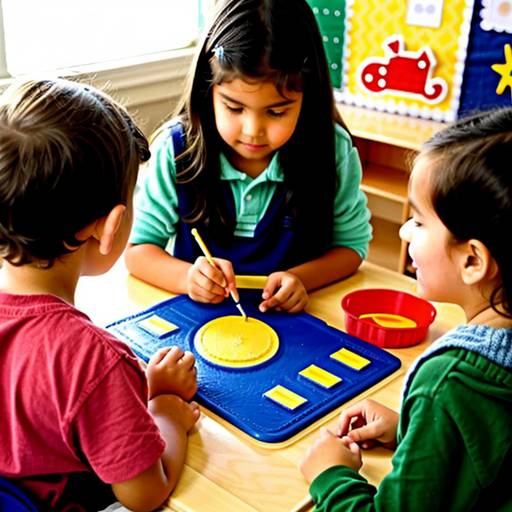
This preschool mathematics lesson plan focuses on introducing young children to the concept of patterns through engaging and interactive activities. The session begins with an introductory discussion about patterns, using visual examples and a story that incorporates pattern recognition.
Children then explore their outdoor environment, collecting natural items such as leaves, stones, and flowers. They sort these items based on various attributes and create their own unique patterns, sharing their creations with peers and justifying what comes next.
Next, students use colorful blocks or counting bears to build their own patterns, followed by a problem-solving challenge where they predict the continuation of various patterns presented by their classmates.
To further reinforce rhythm and patterns, the lesson includes a musical activity where children express patterns through clapping and stomping to a beat.
The lesson concludes with a reflection on the different patterns discovered, encouraging children to notice and share patterns they encounter in their daily lives. Throughout the session, children develop problem-solving skills and critical thinking through hands-on experiences and group collaboration, all while having fun engaging with mathematical concepts.

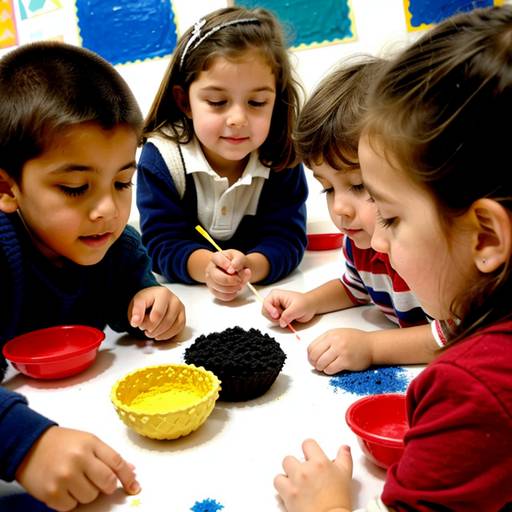
In this preschool art lesson, students will explore the concepts of texture and patterns through hands-on activities that enhance their sensory awareness and fine motor skills. The lesson begins with an interactive introduction where children examine various texture boards and discuss their findings. They will then engage in a creative activity, using art supplies such as paints, sponges, and textured objects to make their own unique artworks that incorporate different textures and patterns.
After the creative phase, students will participate in a clean-up session while reflecting on their experiences and sharing their artwork with peers. Throughout the lesson, educators will encourage descriptive language and inspire exploration, helping children develop an understanding of how texture and patterns are present in the world around them and in artistic expression. Additionally, there are opportunities for extensions, such as sensory play and movement games, to deepen the learning experience.