
Filters
Level
Grade
Subject
Subject Area
Subject Topic
Standard(s)
Audience
Keyword
DurationMinutes
Preschool Lesson Plans

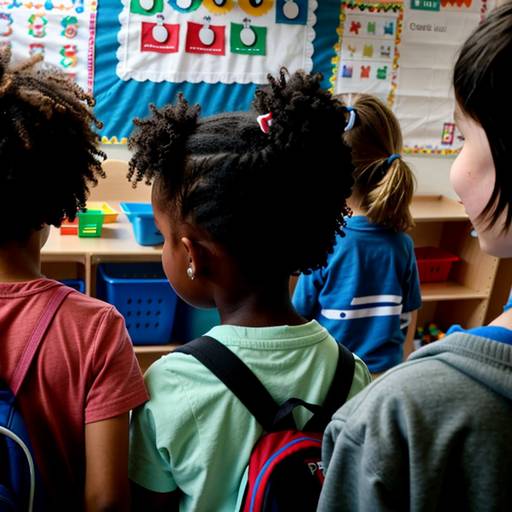
The lesson plan focuses on helping preschool students understand the concept of community and the roles various members play in ensuring it functions well. Beginning with a circle discussion about what community means, students participate in a brief neighborhood walk, recognizing familiar places and expressing their feelings about them. They then engage in a role-play activity where they embody different community helpers, demonstrating how these roles contribute to a happier and safer environment. A reflective discussion follows, allowing students to share their insights about community interdependence. The lesson concludes with a creative activity where students create a mural representing their favorite aspects of the community. This plan emphasizes engagement, collaboration, and creative expression while fostering an understanding of citizenship within the community. Various materials, including art supplies and representations of community places, facilitate a dynamic and interactive learning experience. Assessments are based on observation of participation and understanding throughout the activities.

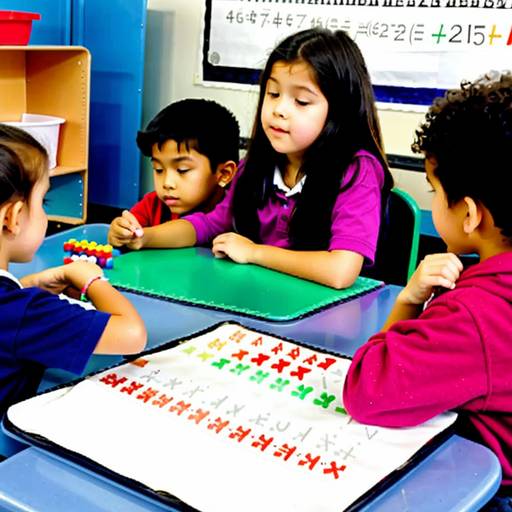
In this preschool math lesson, students engage in an interactive adventure centered around counting from 1 to 10. The session begins with an engaging story that sets the stage for a mystery related to missing cookies, capturing the children's interest. They participate in a series of hands-on activities at various stations, where they practice counting through fun tasks such as matching quantities with number cards, finding and identifying clues, and constructing simple puzzles.
As they rotate through each station, they work collaboratively, enhancing their counting skills in a playful and dynamic environment. After completing the stations, students get the opportunity to showcase their counting abilities by filling treasure boxes with colorful counters, which they present to the group. The lesson concludes with a review of what they learned and the distribution of certificates or stickers to celebrate their accomplishments. Throughout the lesson, careful observation of participation and accuracy in counting serves as an informal assessment of their understanding of the concepts presented. Extensions provide further opportunities for advanced learners to create their own counting challenges for their peers, deepening their engagement and reinforcing foundational math skills.
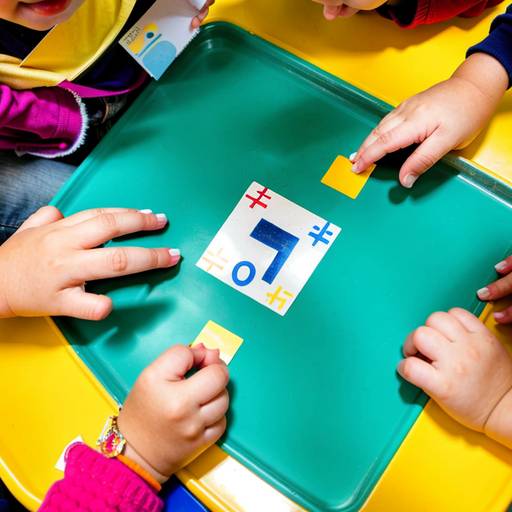
This preschool math lesson is designed to engage students in number recognition and counting through interactive activities and hands-on learning. The session begins with a group gathering where children are introduced to number flashcards, encouraging participation by having them express what they see related to numbers in their environment.
Following this introduction, a dynamic warm-up activity involves dancing to music, with a freeze game where students form groups according to the displayed numbers. The main activity involves distributing counting manipulatives, allowing children to count and select items corresponding to number cards. They work in small groups for a game that enhances their counting skills while promoting collaboration and social interaction.
To conclude the lesson, students complete worksheets featuring objects to count, reinforcing their skills through coloring and counting activities. The session wraps up with a reflection on what they learned, encouraging students to share their experiences and favorites from the day's lesson.
Overall, the lesson focuses on interactive learning, making math enjoyable while promoting essential skills in number recognition and counting. It also includes provisions for extending learning beyond the session and accommodating diverse learning needs within the classroom.
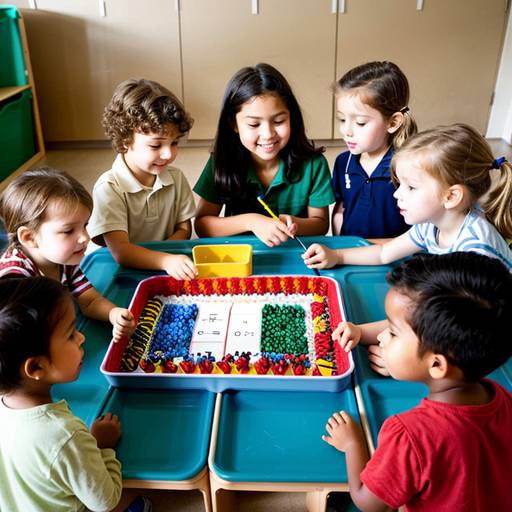
In this preschool math lesson, students will embark on an interactive journey focusing on counting with a jungle animal theme. The lesson begins with students gathering in a circle for a story that introduces various jungle animals, helping to set the stage for the day's activities. Following the story, children will engage in hands-on learning by participating in two main activities.
In the first activity, students will work in pairs to search for and count plush or figurine animals located around the classroom, using counting mats to record their findings. As they identify and count the animals, they will receive guidance from the teacher to ensure understanding of numbers 1 to 10.
The second activity involves matching the animals found to large number cards displayed in the classroom. Each student will present an animal and connect it to the corresponding number, reinforcing their counting skills through peer interaction.
To conclude, students will participate in a group discussion reviewing the animals they have counted, followed by a lively counting song related to jungle animals. Each child will finish the lesson with a coloring activity featuring a jungle animal, practicing their counting skills by identifying the animals illustrated on their sheets. Throughout the lesson, the teacher will assess students’ counting abilities and encourage engagement, ensuring a fun and educational experience that promotes early math skills.
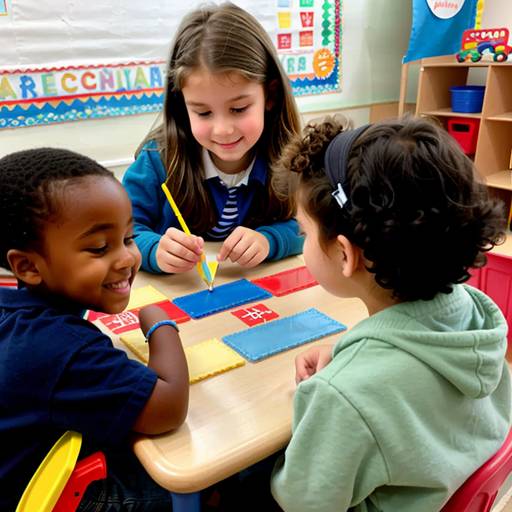
This preschool math lesson focuses on number recognition for children aged 3 to 5 years. The 30-minute session begins with an engaging introduction where students discuss the concept of numbers and their importance. To reinforce number knowledge, the children participate in a lively number song that encourages counting from 1 to 10 with hand motions.
The main activity features a number hunt, where hidden large number cards are discovered by the students, promoting active participation as they identify each number aloud upon retrieval. Following this, the class engages in an animal counting game where small groups match animal cut-outs to their corresponding number cards based on quantity, enhancing their grasp of counting and number identification.
The lesson concludes with a group reflection and the distribution of number recognition worksheets for additional practice. Throughout the session, the teacher assesses students' understanding of numbers, checking for recognition and providing support as needed. Extensions for further learning and parent involvement are also suggested to deepen students' understanding of number recognition.
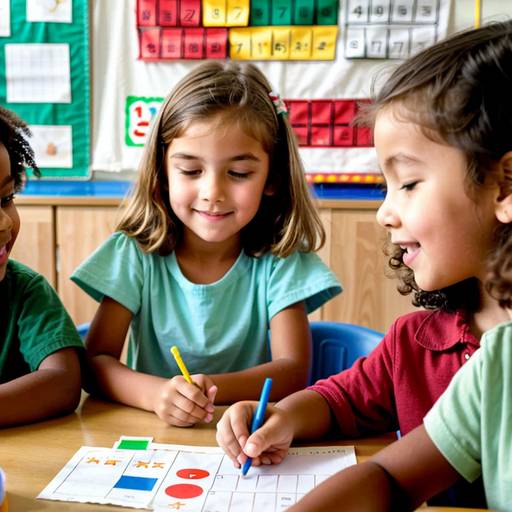
In this preschool math lesson, students will engage in an interactive adventure focused on developing their counting skills through a themed exploration of animals. The session begins with an introduction where students don safari hats and discuss familiar safari animals. They will then participate in a counting game, working in small groups to explore their surroundings in search of animal cutouts corresponding to number cards they select.
Once the animals are collected, groups will return to their counting mats to display their findings and count the animals together, matching them with the correct number cards. The class will reconvene to share their discoveries and count the total number of animals found collectively, reinforcing their counting abilities.
The lesson concludes with a fun reflection, allowing students to share their favorite counted animals and encouraging them to practice counting at home. Throughout the session, the teacher will observe participation and understanding, providing a rewarding and engaging environment for young learners to enhance their number sense.
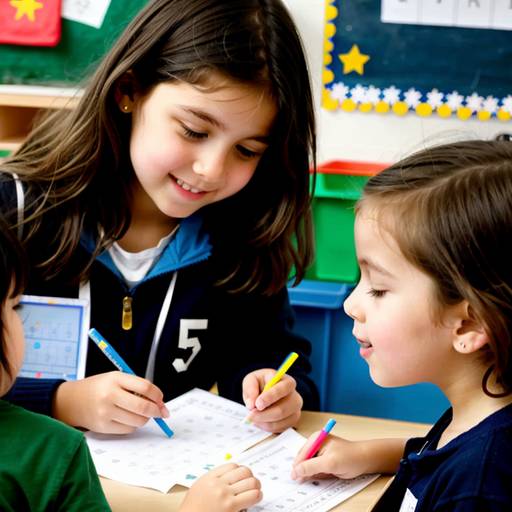
This preschool math lesson focuses on number recognition for children aged 4-5, aiming to help them identify and understand numbers 1 through 10. The session begins with a group circle where students are introduced to numbers through a poster board, followed by a lively number song that incorporates physical movements.
Next, children engage in an interactive treasure hunt using a map that guides them to find objects corresponding to the numbers. Working in pairs, they explore the classroom to collect items and then share their findings with the class, reinforcing their counting and recognition skills.
To conclude the lesson, each child receives a number card that serves as a keepsake, and they participate in a quick game where they hold up their cards when a number is called. This approach not only encourages active participation and collaboration but also provides a fun and engaging way for young learners to develop their foundational math skills. The lesson includes opportunities for informal assessment through observations of children's interactions and understanding.

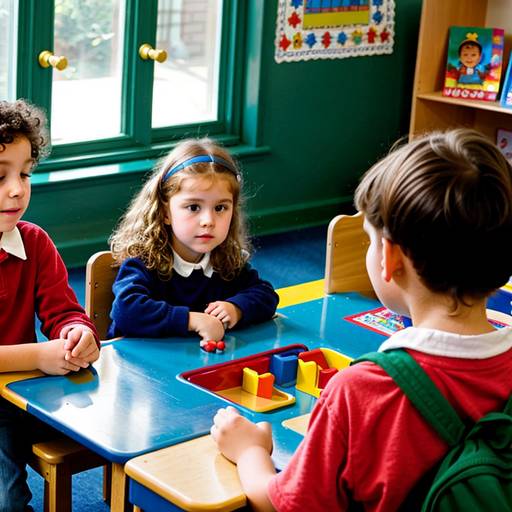
In this preschool lesson, children will engage in a creative and interactive experience focused on dramatic play and storytelling. The session begins with the group coming together to share their favorite stories, leading to a collective decision on which story to act out. Students will then select costumes and props related to the chosen narrative, assigning roles to each participant, such as beloved characters.
The heart of the lesson involves the children acting out the story in a dedicated play area, where they can immerse themselves in their characters and explore imaginative scenarios. Throughout the activity, the teacher will provide support and encouragement, prompting further creativity and interaction among the students. Afterward, the children will regroup for a discussion to reflect on their experiences, discussing challenges and highlights from their play.
To extend the activity, students will create storyboards by drawing their favorite scenes or inventing new stories inspired by their dramatic play experience. The lesson concludes with a wrap-up session, highlighting the importance of storytelling and creativity in their play. Throughout the lesson, the focus is on enhancing communication, cooperation, and imaginative skills within a fun and engaging environment.


This preschool science lesson focuses on introducing young children to the concept of the environment and its significance. The session begins with a circle time discussion where children explore what the environment means, supported by visuals and a nature-themed story.
Following this, students embark on a nature walk, collecting natural items while observing various elements of their surroundings, such as plants and animals. This hands-on experience fosters curiosity and excitement about nature.
After returning to the classroom, children engage in an art activity where they draw their favorite aspect of the environment based on their observations. This is complemented by a group sharing session that encourages discussion about what they learned and how they can help protect the environment.
Overall, the lesson aims to instill a sense of wonder and responsibility for nature in young learners, promoting environmental stewardship through interactive exploration and creative expression. Extensions of the lesson include maintaining an environmental journal and possibly starting a classroom garden to further enhance their understanding and engagement with nature.

This preschool science lesson engages young children in exploring basic concepts related to the Earth and the sky, focusing on elements such as the sun, moon, stars, and clouds. The session begins with a circle time discussion, allowing students to share their knowledge and observations. A read-aloud of a picture book enhances their understanding, prompting discussions about the characteristics of Earth and sky features.
Following the story, students participate in a hands-on creative activity where they use construction paper, cotton balls, and star stickers to create their own sky scenes, reinforcing their learning through artistic expression. The lesson concludes with a sharing session, allowing children to present their artwork and express their favorite aspects of Earth and the sky. An optional outdoor exploration further enriches their experience by providing a chance to observe the natural world directly.
Overall, the lesson fosters curiosity and appreciation for the planet and the universe, while promoting interactive learning and creativity.