
Filters
Level
Grade
Subject
Subject Area
Subject Topic
Standard(s)
Audience
Keyword
DurationMinutes
Kindergarten Lesson Plans

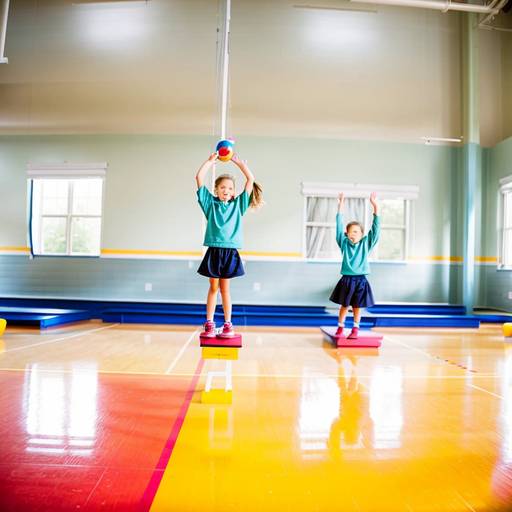
This Kindergarten Physical Education lesson focuses on developing coordination and balance through engaging activities. The session begins with a warm-up involving movement and balance exercises to prepare students physically and mentally. Students then participate in a series of activities, including a relay race using hula hoops, where they practice jumping in and out while fostering teamwork.
Next, they navigate balance beams to enhance their stability and concentration through various movements, with safety mats provided for protection. The lesson also includes a bean bag toss challenge, encouraging hand-eye coordination while maintaining balance by standing on one foot.
The class concludes with a cool-down session that incorporates gentle stretches and a sharing circle, allowing students to reflect on their experiences. Throughout the lesson, instructors observe student participation and provide positive reinforcement, ensuring a fun and supportive environment. Extensions to the lesson include the creation of an obstacle course for further practice at home. Safety is emphasized, with modifications available to cater to diverse skill levels.
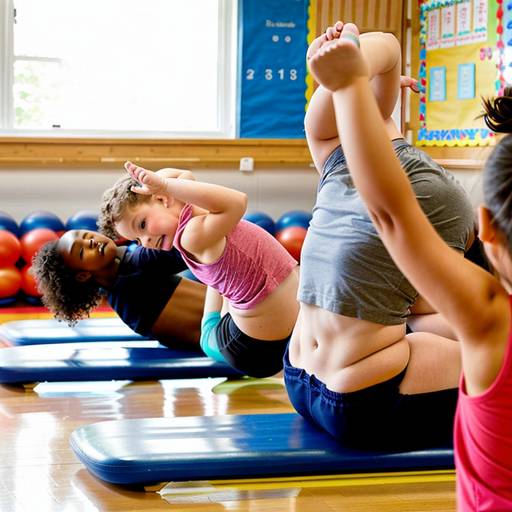
This Kindergarten Physical Education lesson focuses on introducing students to fitness and flexibility through engaging activities. The session begins with a brief discussion on the importance of fitness and stretching, followed by a fun warm-up routine that activates their bodies. Students participate in flexibility stations, where they practice various stretching techniques in small groups. Next, they engage in a lively bouncy ball relay that promotes physical activity and teamwork. The class concludes with a calming cool down, including deep breathing and gentle stretches to relax their bodies. Finally, a reflection circle helps reinforce what they learned and encourages the continuation of flexible practices at home. Overall, the lesson aims to create a positive and enjoyable environment while promoting physical health and well-being among young learners.

In this kindergarten social studies lesson, students will explore the concept of community and the significance of rules in fostering a safe and harmonious environment. The lesson begins with a read-aloud of a picture book highlighting different community helpers and their responsibilities. Through guided discussion, students will identify elements of their community and discuss the importance of rules in promoting respect and safety among its members.
Next, students will collaboratively brainstorm a list of community rules and engage in a group activity where they create posters representing various community helpers and the essential rules they follow. The lesson concludes with group presentations, allowing students to share their findings and reinforce the importance of understanding roles and rules in their community. Assessment will focus on student participation and the creativity of their group work. Opportunities for extension include field trips to meet community helpers and creating a classroom rules pledge, further deepening students' understanding of community engagement and responsibility.

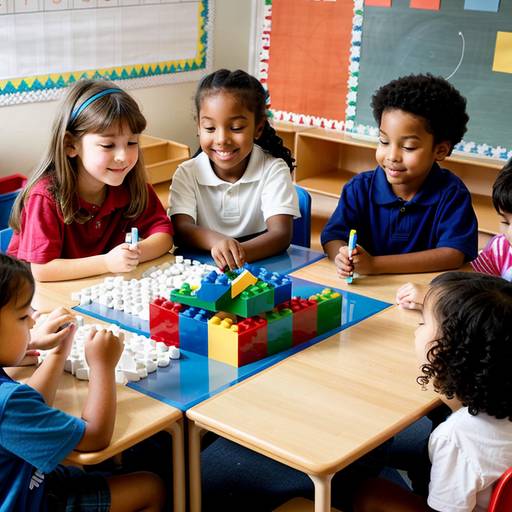
This Kindergarten math lesson focuses on introducing students to the concept of multiplication as repeated addition. The session begins with a warm-up activity that engages students in counting and creating groups with manipulatives, such as counting blocks. Through hands-on activities, students work in small groups to solve simple multiplication problems by visually representing them with blocks and drawings.
The lesson incorporates a storybook that reinforces the multiplication concept, encouraging students to identify groups within the narrative. After the group work, students complete a worksheet where they draw and solve multiplication problems visually.
The lesson concludes with students sharing their work with the class and participating in a fun game to reinforce their understanding. Assessment occurs through observation of group activities and review of worksheet answers, ensuring that students grasp the basic principles of multiplication in a concrete and engaging manner. Extensions for advanced learners are included to enhance their understanding further.
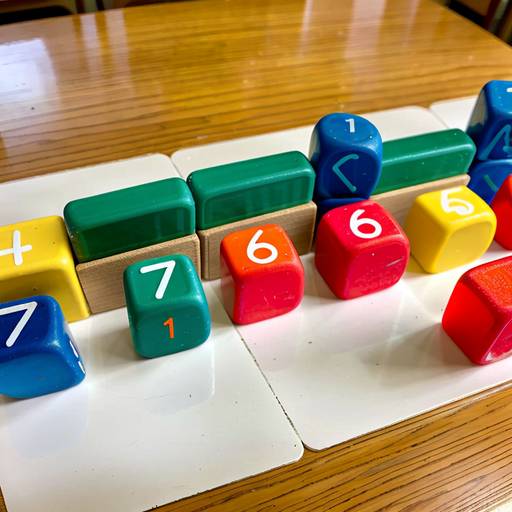
The lesson focuses on teaching kindergarten students the concept of addition through interactive, hands-on activities using colorful building blocks as manipulatives. Starting with an introduction that explains addition, the teacher demonstrates a simple problem using blocks to illustrate how to combine sets visually. Students then work in small groups to solve assigned addition problems, using blocks to visually represent the numbers and practice counting. After guided practice, they complete independent worksheets featuring basic addition problems, which they can also visualize with blocks if needed. The lesson concludes with a class discussion where students share their outcomes, reinforcing their understanding of addition. Assessment is based on participation, problem-solving during group work, and the accuracy of their completed worksheets. Extensions and adjustments are provided to cater to diverse learning needs, ensuring an inclusive and engaging math experience.

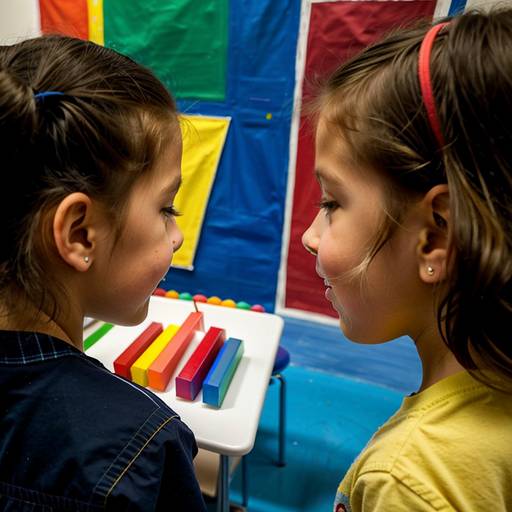
In this Kindergarten art lesson, students will explore the basic elements of art, focusing on line, shape, color, and texture. The session begins with a discussion about primary and secondary colors, incorporating the use of a color wheel. Students will learn color mixing techniques and engage in a group activity where they create a gradient with watercolors.
For the independent activity, each student will use construction paper and various textured materials to create their own artwork, incorporating at least three art elements learned during the lesson. Throughout the activity, the teacher will facilitate discussions about color usage and artistic choices.
After completing their artwork, students will participate in a brief clean-up before sharing their creations with the class. The lesson will conclude with a group reflection on what they learned about colors and the elements of art. Assessment will be based on observation during the activity and the final artwork produced by each student, with differentiation strategies in place to support various learning needs. An extension activity is suggested to promote collaboration by creating a class mural.
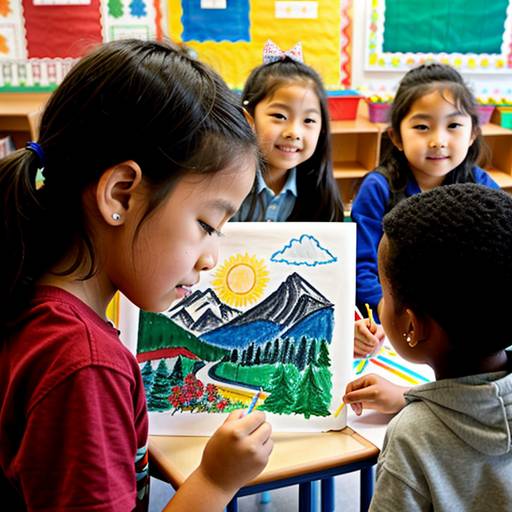
In this Kindergarten art lesson, students will explore various drawing techniques by creating their own colorful nature landscapes. The lesson begins with a discussion about nature and landscapes, allowing students to share their observations and feelings. Following this, the teacher demonstrates basic drawing techniques, such as different types of lines and shapes used to represent elements of nature, and discusses color application for depth and emotion.
Students then engage in a guided practice session, sketching their landscapes on drawing paper while incorporating the techniques learned. After sketching, they enhance their work with watercolor paints, experimenting with brushstrokes and blending colors. The lesson concludes with a mini-exhibition where students share their artwork with peers, fostering a sense of community and encouraging reflection on their creative process. Assessment will focus on student engagement and the application of learned techniques, rather than artistic perfection. Extensions and adaptations are included to support diverse learning needs and enhance creativity.
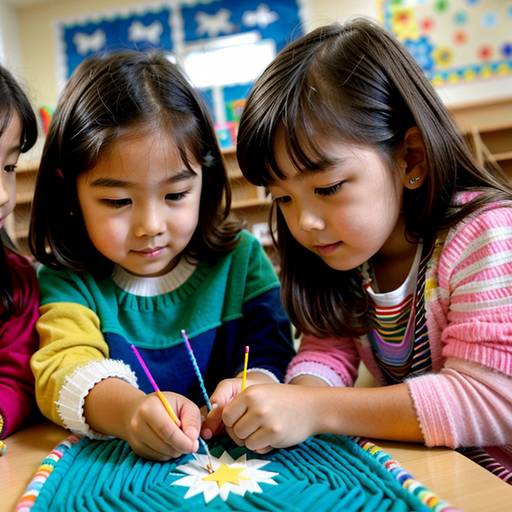
In this kindergarten lesson, students will explore the world of fiber arts through hands-on activities that introduce basic stitching techniques and the creative use of fabric. The session begins with a discussion about various forms of fiber art and an introduction to basic stitching methods using a sample board. Students will then select colorful fabric scraps and threads to create their own unique art pieces on a cardboard or paper plate base. As they engage in stitching, they will have the opportunity to express their creativity through design and color choices. The lesson concludes with a sharing session where students describe their artwork and reflect on their learning experience. The aim is to foster creativity, enhance fine motor skills, and encourage students to appreciate textile art as a means of self-expression. Assessment will focus on student engagement and the creative application of materials.
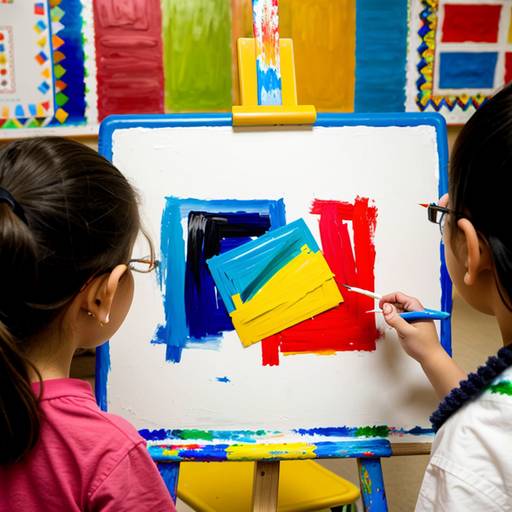
This kindergarten art lesson focuses on introducing students to various painting techniques while fostering creativity and self-expression. Over the course of one hour, students engage in a discussion about colors and painting, followed by a demonstration of different techniques such as sponging, splattering, and blending. Materials like water-based paints, brushes, and sponges are provided for hands-on exploration.
Students are divided into small groups to explore a specific technique before creating their own unique paintings, encouraged to use their favorite colors and combine techniques. Throughout the activity, the teacher circulates to provide guidance and positive feedback. The lesson concludes with a "gallery walk," allowing students to admire each other's work and share their artistic choices. Assessment is based on participation, creativity, and technique application, with opportunities for further exploration in future lessons. Overall, the lesson promotes collaboration and appreciation for individual artistic expression.
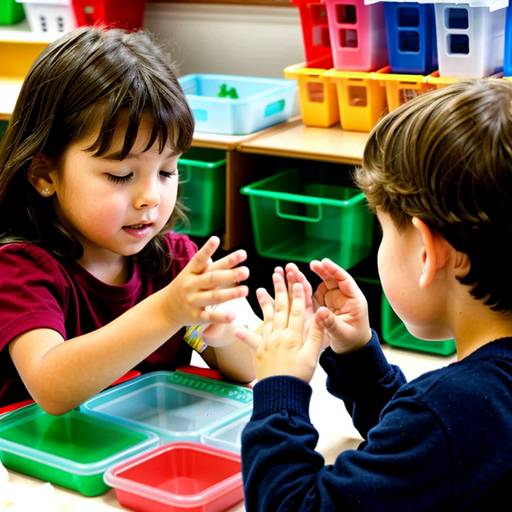
In this kindergarten math lesson, students will explore the concept of addition through hands-on activities using manipulatives. The lesson begins with a warm-up counting song to engage students and introduce the idea of addition through practical examples. Educators will model simple addition problems using visual aids, demonstrating how to group and count manipulatives to find sums.
Students will then work in pairs to solve assigned addition problems collaboratively with manipulatives, fostering communication and teamwork. Following this guided practice, they will complete worksheets where they draw and represent their addition problems using the manipulatives, reinforcing their understanding of the concept.
To conclude, the class will review key takeaways and students will create a simple exit ticket by writing their own addition problems and illustrating them. Throughout the lesson, observation and informal assessments will help gauge students' grasp of addition, with differentiation strategies to support varying levels of ability. This engaging approach promotes foundational math skills while making learning enjoyable and interactive.