
Filters
Level
Grade
Subject
Subject Area
Subject Topic
Standard(s)
Audience
Keyword
DurationMinutes
Infant Lesson Plans

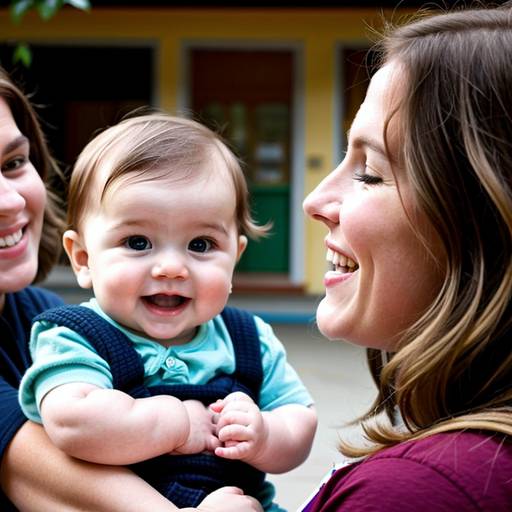
This lesson plan is designed for a group of infants and their caregivers, focusing on fostering bonding through interactive and engaging activities. The session begins with a warm welcome, followed by a tummy time activity that promotes motor skills while encouraging proximity and support from parents.
Caregivers and infants will then participate in playful games such as Peek-a-Boo and "Where’s Baby?" to enhance social interaction and create positive emotional responses. Sensory exploration stations featuring varied textures and sounds will further strengthen communication and bonding, allowing infants to engage with their surroundings in a safe environment.
A music and movement segment encourages parents to sway with their babies while enjoying soft tunes, reinforcing the nurturing connection between them. The session concludes with a group reflection, where parents can share their experiences and insights about the activities. Handouts with additional bonding techniques will be provided for continued practice at home. Overall, this lesson aims to enhance emotional connections and develop essential social skills during early infant development.
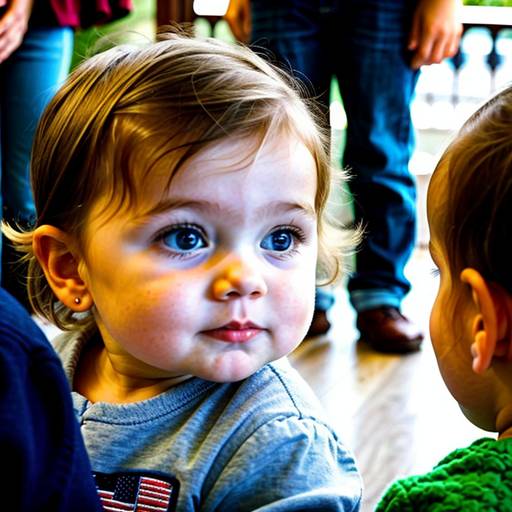
This lesson plan focuses on fostering social skills in infants through the practice of eye contact. Aimed at caregivers and their infants aged 6-12 months, the session lasts for 30 minutes and includes a variety of interactive activities designed to promote engagement and connection.
The session starts with an introduction to the importance of eye contact in communication. Caregivers are then guided through activities, including the use of soft toys to encourage direct eye contact, exploring reflections in mirrors, engaging in a colorful scarf dance, and sharing stories with expressive faces. Each activity is designed to encourage infants to look at their caregivers and express themselves through gaze while building emotional bonds.
The lesson concludes with a group reflection on the experiences shared during the activities, providing caregivers with feedback and suggestions for continuing to practice eye contact at home. Extensions to the lesson include weekly challenges for caregivers and recommendations for joining community groups to further enhance social interactions. Overall, the session aims to nurture social connections and communication skills in a warm and supportive environment.

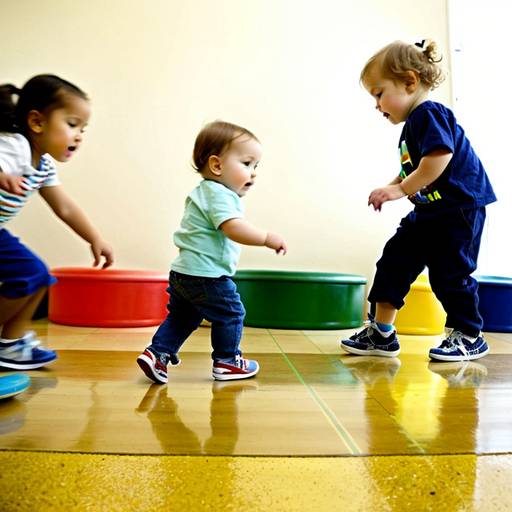
This lesson plan aims to enhance gross motor skills in infants aged 6 to 12 months through engaging, interactive activities. The session begins with a welcoming circle and a fun song, followed by warm-up stretching and tummy time to activate key muscle groups.
The main activities include a mini obstacle course designed to promote crawling, climbing, and coordination, as well as a ball-rolling game to improve hand-eye coordination and arm movements. The session culminates with a lively dance party, allowing infants to bond with caregivers while moving to upbeat music.
To conclude, a gentle cool-down with calming music and story time helps relax the infants and caregivers alike. Caregivers receive observational feedback regarding their child's participation and suggestions for at-home activities to further support gross motor skill development, emphasizing the importance of play in promoting physical movement and confidence in infants.
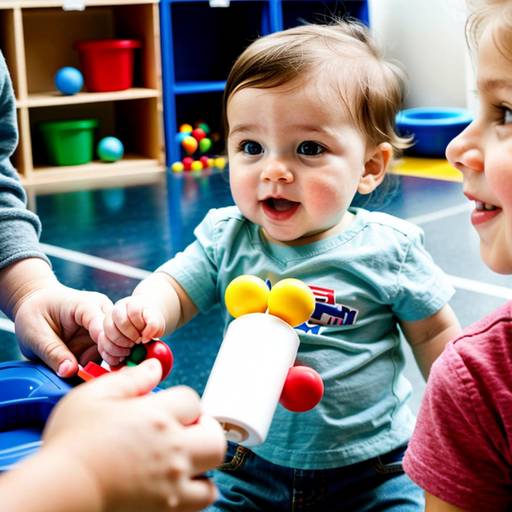
This lesson plan focuses on enhancing hand-eye coordination in infants aged 6-12 months through interactive, play-based activities. The session begins with a welcoming introduction, where caregivers are informed about the objective of developing motor skills.
The warm-up involves engaging infants with toy instruments, promoting sound exploration. The first main activity encourages infants to crawl towards rolling soft balls, fostering movement and visual tracking. Next, colorful scarves are tossed in the air, inviting infants to reach and grasp them as they fall, which further develops their coordination.
Building on motor skills, a stacking blocks activity allows infants to either stack or knock down blocks with caregiver assistance, reinforcing grasping abilities. Additionally, container play encourages reaching and transferring small sensory toys, promoting fine motor skills.
The session concludes with a calming circle time where a familiar nursery rhyme is sung, incorporating hand movements to maintain engagement. Parents receive guidance on safe play practices at home and suggestions for continuing development through daily activities. Overall, the lesson emphasizes fun, interactive learning while fostering essential motor skills in a supportive environment.
This lesson plan focuses on enhancing the fine motor skills of infants aged 6-12 months through a series of engaging, hands-on activities. The session begins with an introduction to the theme of hand movement and exploration. Infants will rotate through three activity stations designed to promote dexterity and coordination: stacking soft building blocks, stringing large beads or buttons, and searching for toys in a sensory bin filled with rice or sand.
Following the station activities, a group sharing time allows the infants to showcase their creations and discoveries, encouraging social interaction and celebration. The session concludes with a creative expression segment, where infants can use finger paints or thick markers to make art, promoting sensory exploration. Throughout the lesson, caregivers receive observations and insights into their child's fine motor development, along with suggestions for fostering these skills at home. Supervision is emphasized to ensure safety and maximize engagement with all materials throughout the lesson.

This lesson plan is designed for infants aged 6 to 12 months to facilitate sensory development through exploration of various textures. The session lasts 30-45 minutes and begins with a warm introduction and a welcome song to create an inviting atmosphere. Infants will engage in hands-on exploration at multiple sensory stations, each featuring different textured materials, such as soft fabrics, smooth stones, and rough surfaces. Caregivers will assist by guiding their infants through interactions and describing the textures in simple terms.
Following the exploration, a group discussion will allow infants to share their experiences while observing their reflections in a baby-safe mirror. The session will then incorporate a creative activity where infants can engage in finger painting on textured surfaces, enhancing their tactile experience. To conclude, calming instrumental music will play while caregivers help relax their infants through gentle motions or massages, reinforcing the textures they’ve learned about. The lesson aims to promote fine motor skills, sensory awareness, and bonding between infants and caregivers in a safe and engaging environment.

This lesson plan focuses on facilitating cognitive development in infants, specifically targeting memory skills through engaging and interactive activities. Designed for a group of infants and their caregivers, the session includes sensory exploration with colorful toys and props, helping infants to stimulate their senses and form associations. Caregivers guide their infants through a memory game using familiar images, enhancing recognition and recall abilities.
Storytime incorporates repetitive rhymes from board books to reinforce memory through rhythm and sound, while a movement activity encourages infants to respond to auditory stimuli, further promoting recognition. The plan concludes with a reflective discussion where caregivers can share insights about their infants' engagement, and offers strategies for enhancing memory development at home. Overall, the lesson aims to create a fun, supportive environment for infants and caregivers to explore the foundations of memory and promote positive learning experiences.


This lesson plan focuses on enhancing early language development in infants through the use of rhymes and rhythmic activities. Designed for infants aged 6 to 24 months, the session aims to improve auditory processing and sound recognition in a playful environment.
The lesson starts with a warm welcome and an introductory sing-along that engages both infants and caregivers. Participants then experience a read-aloud session using rhythmic picture books, allowing caregivers to help stimulate visual and auditory engagement. Following this, movement and music are integrated with nursery rhymes, encouraging active participation through song and rhythm using soft instruments.
Colorful scarves are introduced for a dynamic activity where caregivers and infants explore gestures linked to familiar rhymes, enhancing physical connection and expression. The session concludes with a storytime that incorporates plush toys or puppets, fostering a sense of warmth and interaction. Caregivers are encouraged to share their observations, and resources for rhyming books and songs are provided for further exploration at home.
Overall, this lesson seeks to create a nurturing space for language growth, bonding, and fun, laying the foundation for effective communication skills as infants develop.
This lesson focuses on fostering early language development in infants aged 6-12 months through engaging and playful babbling activities. It aims to encourage infants to experiment with sounds, enhance caregiver involvement, and create a joyful environment for sound exploration. The session begins with a welcoming introduction where the importance of babbling is explained.
It includes five key activities: a warm-up sound circle where caregivers and infants mimic various sounds, a musical exploration segment with soft instruments for vocal play, and an interactive game involving sound and movement with colorful scarves. Additionally, there is a story time involving sound books that invite infants to explore textures and noises, followed by a calming cool-down activity.
Throughout the lesson, caregivers are encouraged to actively engage with their infants, promoting a sense of connection and shared enjoyment. The effectiveness of the session is assessed by observing infants' engagement and vocalizations, while caregivers are invited to share their observations. As a follow-up, resources are provided to help caregivers continue promoting sound exploration and babbling in their everyday routines.
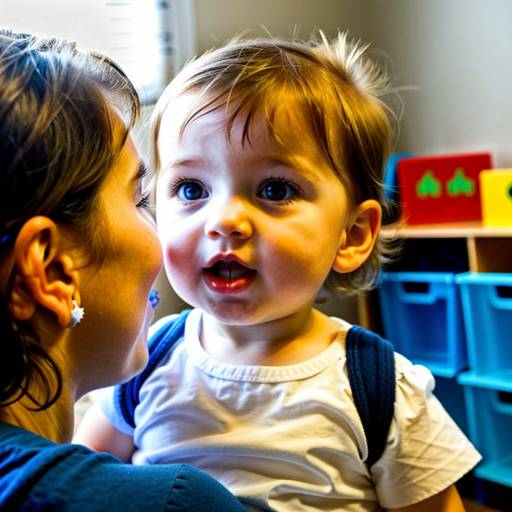
This lesson plan focuses on enhancing listening skills in infants aged 0-12 months through engaging and interactive activities. The session is structured to last 30 minutes and begins with a welcoming song to create a positive environment.
The first activity encourages sound exploration, where infants interact with musical instruments, recognizing different sounds while their caregivers guide them in understanding auditory cues. Following this, a storytime segment introduces infants to auditory storytelling using board books with rhythm and rhyme, where caregivers act out parts of the story with varying tones and sounds.
Next, a movement activity encourages infants to connect listening with physical responses by waving colorful scarves to gentle music. The session concludes with a calming lullaby, helping infants relax while reinforcing their listening skills. Caregivers receive tips to promote listening at home, while assessments focus on observing infants' engagement and responsiveness throughout the activities. Overall, the lesson aims to foster auditory awareness and engage infants with diverse sound experiences.