
Filters
Level
Grade
Subject
Subject Area
Subject Topic
Standard(s)
Audience
Keyword
DurationMinutes
Infant Lesson Plans

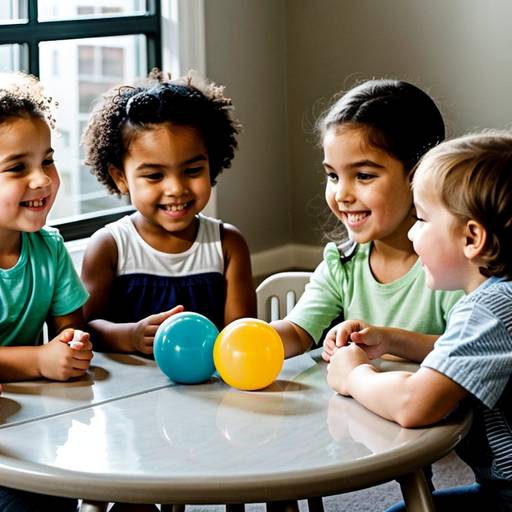
This lesson plan aims to teach infants aged 12-24 months the essential social skill of turn-taking through a series of interactive activities. The session begins with a welcome circle where the concept of sharing and taking turns is introduced, complemented by visual aids.
The first activity involves passing a soft ball around the circle, encouraging patience and participation as each child waits for their turn. This is followed by a musical instruments segment where infants take turns playing different instruments, reinforced by visual markers.
The next activity utilizes stacking blocks, emphasizing cooperative play as children add one block at a time in a turn-taking fashion. The lesson culminates in an interactive storytime, allowing each child to contribute by naming fruits, integrating both language skills and turn-taking.
Throughout the session, educators are advised to provide positive reinforcement, celebrating each child's participation and efforts while observing their social interactions. The goal is to foster communication, cooperation, and patience in a fun and engaging environment.


This lesson plan focuses on enhancing infants' visual development through a series of engaging activities that stimulate their visual senses. Designed for infants aged 0-12 months, the plan outlines a 30-45 minute session that includes hands-on exploration with colorful fabric squares, light-up toys, and black-and-white pattern cards.
The session begins with a brief introduction for caregivers about the significance of visual stimulation in infant development. Infants are then guided through various activity stations to explore textures, watch moving objects, and engage with mirrors, which fosters visual tracking and recognition. Interactive play with bubbles further enhances eye coordination.
To conclude, caregivers and infants gather for a calming reflection period, where they can discuss their observations and experiences during the activities. Overall, the plan emphasizes safe, engaging experiences that promote cognitive and motor skill development while encouraging active participation from caregivers.
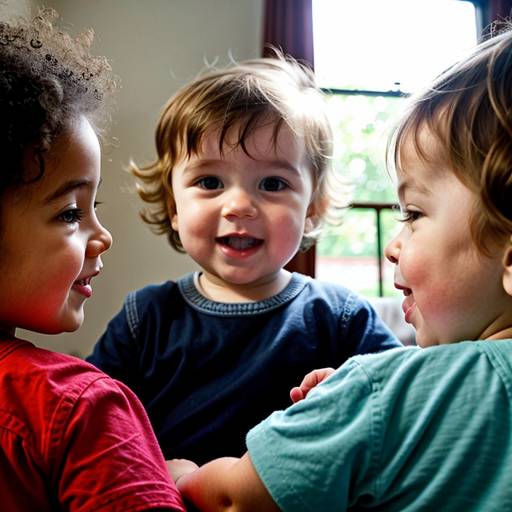
This lesson plan focuses on developing social skills in infants through engaging and interactive play activities. The primary goal is to encourage social interaction, communication, and collaboration among peers.
The session begins with a welcoming introduction to set a joyful tone and involve caregivers in the experience. Activities include exploring soft toys to promote sharing, a sensory ball toss that fosters turn-taking, and a fabric waving activity designed to inspire movement and cooperative play. Infants then engage in a block-building task, working together to create a tower while practicing communication and teamwork.
The lesson concludes with a reflection circle where caregivers can share observations of their infants’ interactions, emphasizing the significance of social play in forming friendships and enhancing social expression. The structure allows for adaptations to accommodate different developmental needs, ensuring an inclusive environment where all infants can thrive socially.


This lesson plan is designed to enhance gross motor skills in infants and toddlers through engaging and interactive activities. Over a 45-minute session, infants and their caregivers will participate in various movement-focused exercises aimed at promoting crawling, walking, and overall physical coordination.
To kick off the lesson, a warm-up period will allow participants to stretch and explore their environment. The activities will flow into a crawling challenge, where infants navigate an obstacle course made of soft toys, encouraging them to develop their crawling abilities while engaging with peers. Following this, walking will be emphasized with the use of push toys and a designated walking path that helps build stability and balance.
Incorporating music, a wiggle and dance segment will provide a fun opportunity for movement and rhythm, allowing infants to express themselves and enjoy physical activity. The session will conclude with a cool-down period, fostering relaxation as caregivers and infants reflect on their experiences.
Throughout the lesson, caregivers will have the opportunity to observe and support their child's growth in gross motor skills while fostering social interaction among participants. The plan also includes provisions for differentiation to accommodate infants at various developmental stages, ensuring an inclusive and supportive environment for all. Feedback from caregivers will also be encouraged to inform future activities and adjust to the needs of the group.

This lesson plan focuses on enhancing bonding between infants and their caregivers through interactive play and communication. Designed for infants aged 0-12 months, the session lasts 30 minutes and accommodates small groups.
The objectives include promoting secure attachment, encouraging non-verbal communication like eye contact and smiles, and fostering a sense of trust and safety. The environment is set up with soft mats and various play stations featuring colorful toys, musical instruments, and engaging picture books.
The lesson begins with gentle touch activities where caregivers can massage their infants while maintaining eye contact. This is followed by a rotation through three interactive play stations, each designed to encourage tactile exploration, musical interaction, and story engagement.
After the play activities, a group reflection allows caregivers to share observations and insights about their infants' responses, reinforcing the importance of these bonding experiences. The session concludes with a calming activity where caregivers cuddle their infants to soothing music, providing comfort and a sense of security.
Assessment occurs through observation of caregiver-infant interactions, and caregivers receive feedback to enhance their engagement. Recommendations for follow-up activities include creating a daily routine that incorporates cuddling, singing, and reading, as well as suggesting local playgroups to further support socialization and bonding. Overall, this plan creates a nurturing environment that fosters the development of foundational social skills through meaningful interactions.
This lesson plan focuses on developing infants' social skills through the practice of eye contact. Designed for a group of infants aged 6 to 12 months, the 30-minute session includes a variety of engaging activities aimed at encouraging eye contact between infants and caregivers as well as among peers.
The lesson begins with a welcoming circle song that incorporates the infants' names, fostering a sense of connection. Participants then engage in an interactive puppet show where caregivers and infants are prompted to maintain eye contact with the puppets. Soft mirrors are introduced, allowing infants to explore their reflections while maintaining eye contact with their caregivers.
Brightly colored toys with faces are utilized to capture the infants' attention, promoting engagement and interaction. The session also includes a relaxation period accompanied by gentle music, encouraging bonding moments between infants and caregivers through direct gaze.
Finally, the lesson concludes with a group reflection on the activities, emphasizing the continuation of eye contact practices at home. Overall, the plan aims to enhance the infants' social interactions and foster early communication skills through the important skill of eye contact.

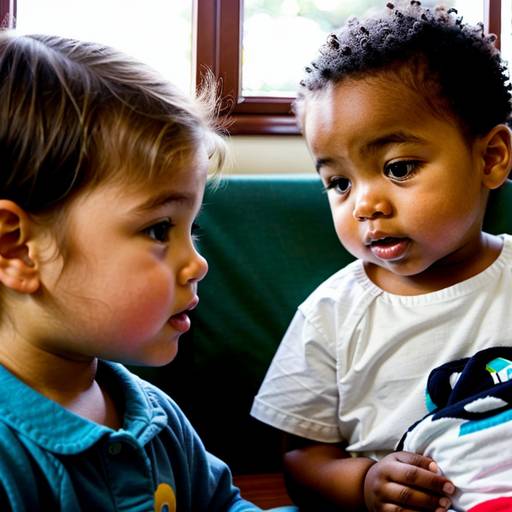
This lesson plan focuses on introducing infants aged 6-12 months to the concept of cause and effect through interactive and sensory activities. The session begins with an engaging introduction to the idea of cause and effect, using simple language and visual demonstrations.
Participants engage in several hands-on activities, starting with rolling soft balls back and forth to explore movement and initiation. Next, a water play table allows infants to pour water from one container to another, observing the resulting splashes and movements. Sound exploration is facilitated with musical instruments, encouraging infants to create noise through their actions, illustrating the connection between cause and effect. The session includes a fun bubble activity, where infants learn that blowing air creates bubbles, which they can then pop.
To reinforce the concept, a cause and effect-themed story is read aloud, prompting infant engagement through interaction with the narrative. The session concludes with a wrap-up discussion that encourages caregivers to identify their child's favorite moments during the activities and provides them with follow-up suggestions on how to reinforce these concepts at home. Throughout the lesson, caregivers and facilitators monitor infants’ reactions, ensuring a supportive environment for cognitive development.
This lesson plan focuses on introducing infants aged 6 to 12 months to the concept of object permanence through engaging activities. The aim is to help infants recognize that objects continue to exist even when they are out of sight. The session begins with a warm-up activity where infants explore a soft toy.
Next, a "hide and seek" game is played, where the toy is concealed under a blanket and then revealed, encouraging the infants to search for it. This is followed by an exploration using a small box containing various toys, allowing infants to discover them while reinforcing the idea that they are still there even when not visible.
To engage the infants further, a sound game is introduced with rattles or crinkly paper, linking sounds to hidden objects. The lesson wraps up with a reflection circle where infants can interact with the soft toy again, and a simple rhyme or song is incorporated for additional engagement.
Throughout the lesson, caregivers are encouraged to observe and interact, helping to support the infants’ developing understanding of object permanence. In addition, optional extensions are suggested to further reinforce the concept at home through books and everyday interactions.
This lesson plan focuses on stimulating infants' sense of smell through a series of engaging activities designed for caregivers and their little ones aged 6-12 months. The session begins with a brief introduction to the importance of scent, followed by exploration stations featuring a variety of scented samples such as herbs, citrus, spices, and sweets. Caregivers will assist infants in sniffing and reacting to the scents, fostering sensory awareness and bonding. The group then participates in a fun interactive game, where infants select scent containers, providing opportunities for guessing and playful reactions. The lesson concludes with a calming activity that incorporates a simple song about smelling, encouraging caregivers to continue exploring scents at home. Observation of infants' responses and feedback from caregivers will be used to assess engagement and learning outcomes. Overall, this experience aims to enhance sensory development and strengthen caregiver-infant connections.

This lesson plan focuses on fostering early language development and reading readiness for infants aged 6-12 months through interactive activities. The session is designed for a small group of infants and their caregivers, lasting 30-45 minutes, and aims to enhance sound recognition, storytelling engagement, and book exploration.
The lesson begins with a welcoming circle, where the importance of language development is introduced. It includes a sound recognition activity that encourages infants to respond to musical instruments and game-like sound associations. Storytime follows, utilizing cloth books and puppets to capture infants' attention and promote visual recognition.
Participants then engage in rhymes and movement, reinforcing rhythm and phonemic awareness through familiar songs. A free exploration segment allows infants to interact independently with books and sensory toys, promoting discussion and inquiry led by their caregivers.
The session concludes with a closing circle, inviting caregivers to share observations and reinforcing the significance of reading at home. Informal assessments are made through observations of infants’ interactions and caregiver engagement. Follow-up suggestions include initiatives for further reading at home and resources to build a reading culture. This comprehensive approach aims to create a joyful and stimulating environment that supports early literacy skills in a playful manner.