
Filters
Level
Grade
Subject
Subject Area
Subject Topic
Standard(s)
Audience
Keyword
DurationMinutes
Elementary School Lesson Plans

This 3rd-grade language arts lesson focuses on teaching students the rules of capitalization in grammar. The class lasts 60 minutes and begins with an engaging song to capture the students' interest and initiate discussion about capitalization. The teacher then presents key capitalization rules, including the importance of capitalizing the first letter of sentences, proper nouns (names, places, and titles), and other relevant terms.
Students participate in a guided practice activity where they work together to identify and correct capitalization errors in sample sentences on the whiteboard. Following this, they complete a worksheet individually, rewriting a paragraph to incorporate the correct capitalization.
At the end of the lesson, students reflect on what they’ve learned by sharing their corrected sentences with the class. Assessment includes reviewing the completed worksheets for capitalization accuracy and the level of participation during discussions. Differentiation strategies and extension activities are provided to cater to diverse learning needs. Homework consists of writing a short paragraph about a favorite place or person, applying capitalization rules correctly. Overall, the lesson aims to enhance students' understanding of grammar and proper writing conventions in an interactive manner.
In this 1st grade language arts lesson, students will learn about proper nouns and the importance of capitalization. The lesson begins with a discussion on nouns, followed by an introduction to proper nouns, including names, places, and days of the week. Students will engage in guided practice by identifying proper nouns in sentences on a worksheet, where they'll circle and rewrite the sentences with the correct capitalization. The lesson incorporates interactive elements, including flashcards and a story reading, where students will shout out proper nouns as they come up. Participation is encouraged with rewards like stickers, and assessment will be done through worksheet reviews and classroom observations. Differentiation strategies are included to support varying student needs, ensuring an inclusive learning environment. Overall, the lesson aims to enhance students' understanding of grammar while making the learning experience enjoyable.

In this 2nd grade Language Arts lesson, students will learn about the rules of capitalization and how to apply them in sentences. The lesson begins with a discussion on the importance of capital letters, followed by an exploration of specific capitalization rules using a chart. Guided practice involves correcting sentences together as a class, where students identify and fix capitalization errors. For independent practice, students receive worksheets with sentences that need capitalization corrections and are encouraged to rewrite their favorite corrected sentence on a sticky note. The lesson concludes with a few students sharing their sentences and a recap of the capitalization rules. Assessment will occur through observation during guided practice and the review of worksheets to gauge understanding. Additionally, extensions are provided for early finishers to promote further engagement with capitalization in writing.
In this 1st Grade Language Arts lesson, students will focus on understanding and applying the rules of capitalization, specifically at the beginning of sentences and for proper nouns. The lesson begins with a warm-up activity where students share their names and observe capitalization in writing. A read-aloud from a picture book reinforces the concept of capital letters.
Following this, a mini-lesson provides direct instruction on how to capitalize sentences and proper nouns, accompanied by examples on the whiteboard. Students will engage in a collaborative activity using sentence strips, where they will identify and correct capitalization errors.
For independent practice, they will work on a worksheet containing sentences that require capitalization corrections. The lesson concludes with students sharing their corrected sentences and receiving rewards for their efforts. Assessment will be conducted through observation during activities and by reviewing the worksheets for understanding. Extension activities are provided for advanced learners and additional support for those who may need it.

This 1st grade Language Arts lesson focuses on teaching students the importance of capitalization in sentences. The lesson begins with a discussion about capitalization, specifically the need to start sentences with a capital letter and to capitalize proper nouns. Students engage in interactive activities where they identify errors in jumbled sentences and distinguish between common and proper nouns. They then complete a worksheet that reinforces these concepts by providing sentences with missing capital letters for them to correct. The lesson concludes with a class review and reflection on what students learned about capital letters. Assessment is conducted through the collection of worksheets, and students receive encouragement through stickers or stamps for their successful participation. Additional support and challenges are provided for students based on their individual needs, and opportunities for extension activities are suggested to further reinforce capital letter usage.

In this 5th-grade Language Arts lesson, students will learn and practice capitalization rules essential for clear writing. The session begins with a discussion highlighting the importance of capitalization, illustrated by examples of sentences with errors. Direct instruction will outline the key rules, including capitalizing the first word of a sentence, proper nouns, and titles. Students will engage in guided practice by correcting sentences on a worksheet, and then work independently to create a short story based on a provided prompt, applying the capitalization rules learned. The lesson concludes with selected students sharing their stories, followed by a review of the importance of proper capitalization in effective communication. Assessment will include collected worksheets and evaluated writing pieces to gauge understanding, with differentiation strategies in place for varying student needs.

In this 4th-grade technology lesson, students will explore the basics of multimedia creation and photo editing. They will learn to combine images, text, and sounds to tell a story effectively. The lesson begins with an introduction to multimedia and a demonstration of photo editing software and multimedia tools. Students will then participate in a hands-on activity, working in pairs to create a simple multimedia project based on a chosen theme. They will edit photos, add text, and optionally incorporate sound, resulting in a presentation that showcases their creativity. The session concludes with a sharing segment where selected groups will present their projects to the class. Assessment will focus on participation, effort, and the overall quality of the completed projects, with opportunities for extensions and adaptations to meet diverse learning needs.

In this engaging two-day lesson plan for 5th-grade students, learners will explore multimedia creation and video editing through a hands-on project. The first day focuses on brainstorming and storyboarding, where students work in small groups to develop their video ideas and create a visual outline of their story, incorporating key elements like message, audience, and scene details. Students will then assign roles and plan their filming strategy.
On the second day, groups will film their projects using available equipment, rotating roles to encourage teamwork. After filming, they will edit their footage, incorporating multimedia elements such as music and images while learning basic editing techniques. The lesson concludes with a reflection on their learning experience and the importance of collaboration.
Assessment will be based on participation, creativity, and the final video presentation. Potential extensions include a video screening day for peer feedback and opportunities to explore more advanced multimedia topics in future lessons.

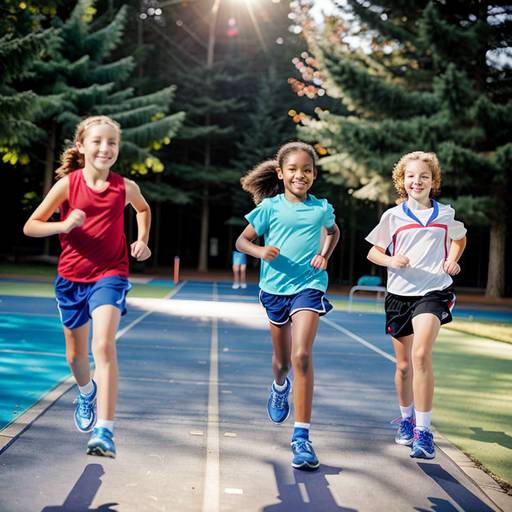
In this 4th-grade physical education lesson, students will explore the importance of cardiovascular fitness through fun and engaging activities aimed at promoting teamwork and cooperation. The lesson begins with dynamic stretching and jumping jacks as a warm-up to prepare the students for physical activity. Following the warm-up, students will participate in four rotating stations, including jump rope challenges, hula hoop relays, a cone fitness sprint, and a cardio freeze dance. Each station encourages heart rate elevation while fostering a sense of community among the participants.
After the vigorous activities, students will cool down with stretching exercises and reflect on their experiences by sharing their favorite parts of the lesson and insights about fitness. The lesson concludes with a homework assignment encouraging students to engage in a family fitness activity and track their heart rates together. Throughout the session, educators will monitor student engagement and ensure proper exercise techniques to promote safety and inclusivity.
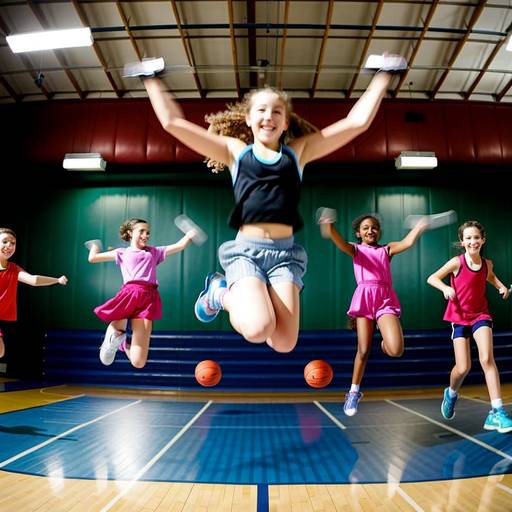
This physical education lesson plan for 5th graders focuses on engaging students in various cardiovascular fitness activities. The lesson begins with a warm-up that includes dynamic stretching and jogging to prepare students for physical exertion.
Students participate in four different activity stations, each designed to promote cardiovascular health and teamwork. These stations include challenges such as jump roping, hula hoop relays, an agility course, and alternating sets of jumping jacks and burpees. Participants rotate through each station, experiencing a variety of cardio exercises while tracking their performance.
After completing the activities, students engage in a cool-down period that incorporates static stretching and deep breathing to help their bodies recover. Assessment occurs through observation and discussion, allowing students to reflect on their experiences and the importance of fitness.
To reinforce learning, students are encouraged to maintain a fitness log at home, tracking their exercise habits. Overall, the lesson aims to make fitness enjoyable and educate students about the significance of cardiovascular exercise in their daily lives.